
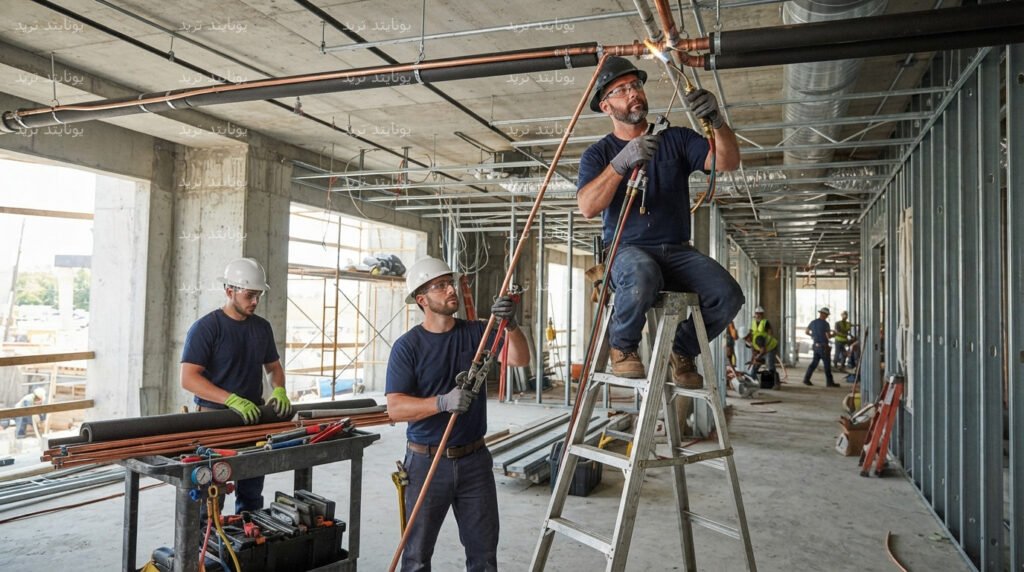
It is a process Air conditioning duct extension The most influential step in determining the efficiency of the cooling system within any facility. Careful planning to choose the appropriate diameters and copper insulation ensures an ideal flow of refrigerant gas, which reduces the operational load on the compressor and contributes to reducing electricity consumption by up to 40% when adhering to sound technical standards. This article aims to provide you with engineering facts that protect your investment in air conditioners and ensure sustainable performance without common leakage faults.
Secrets of successful installation of cooling pipes
Success depends on Air conditioning duct extension Mainly on accuracy in the foundation stage hidden within walls or false ceilings. This stage requires the use of approved copper pipes of sufficient thickness to withstand high gas pressures without causing bends or cracks that may later lead to Freon leakage.
❓ Choose pipe diameters according to the device’s capacity
The diameters of copper pipes depend directly on the air conditioner capacity calculated in BTU. Improper sizing, such as using a smaller diameter than required, restricts gas flow, causing a significant decrease in cooling efficiency and increased stress on the engine.
- ✓1/4-inch diameter pipe: Often used for liquid lines in small air conditioners.
- ✓Pipes with a diameter of 3/8 and 1/2 inch: used for wall-mounted air conditioners with medium capacities.
- ✓5/8 inch diameter ducts: intended for large capacity air conditioners and central systems.
❓ The importance of professional thermal insulation
Thermal insulation with a thickness of at least 9 mm is a technical necessity to prevent moisture condensation on the surface of copper pipes. This insulation helps protect walls from moisture damage, prevents mold growth, as well as maintaining the temperature of the gas within the paths to ensure efficient heat transfer.
Engineering standards to ensure stable cooling performance
Engineering practices dictate that a careful pressure test with nitrogen be performed before sealing the walls or commissioning the system. This process helps ensure that all connections and welds are free of any minute leaks that may not appear under normal conditions, ensuring stable cooling performance over the long term.
The above work steps show the logical arrangement required to ensure that no interference occurs between the electrical installations and the copper tracks. Each step represents a cornerstone in protecting the efficiency of the air conditioner, as negligence in the nitrogen pressure test leads to the risk of refrigerant gas leakage after the finishes are completed, which requires expensive breaking down for repair.
Compare the available extension options
The choice of extension materials varies based on the specific budget and quality of work required. The following table shows a quick comparison between the incorporation options available for residential and commercial establishments.
| Standard | High quality brass 🏆 Editor's choice | Commercial copper |
|---|---|---|
| Insulation efficiency | ✓ Excellent (9mm) | ✗ Weak |
| Wall thickness | ✓ Conforms to specifications | ✗ Thin |
| Pressure resistance | ★ 9.8/10 | ★ 6.5/10 |
| Shelf life | ✓ Very long | ✗ Short |
| Overall evaluation | ★ 9.7/10 | ★ 6.0/10 |
It is always recommended to choose copper pipes that are of high thickness and conform to standard specifications, as the additional cost in the establishment stage saves huge sums of money later when avoiding repeated maintenance operations or changing damaged pipes due to poor quality.
Frequently asked questions
❓ Why should copper air conditioning pipes be insulated?
Insulation prevents moisture condensation on the pipes, which protects the walls from mold and damage. It also prevents heat loss of the refrigerant gas, which maintains the efficiency of the air conditioner and reduces electricity consumption.
❓ Does the length of the extension distance affect the air conditioning performance?
Yes, the excessive length of the pipes affects the compressor’s ability to pump gas, so you must adhere to the length of distance specified in the device manufacturer’s manual to ensure optimal cooling.
This system is completed after the extension phase by moving to implementation Air conditioning installation According to precise engineering standards that take into account the tight installation of the internal and external units. This procedure ensures that air and moisture are completely evacuated from the circuit and mechanical vibrations are avoided, which directly reflects on quiet operation and stable cooling pressures within the system.
Success depends Installing air conditioning ducts Essentially, it depends on the accuracy of the chosen paths and taking into account their correct inclinations for water drainage, as well as protecting the copper pipes from any structural obstructions that may affect their integrity. This professional installation prevents future gas leaks and ensures system sustainability, making advance engineering planning the cornerstone of long-term air conditioning performance.
These equipments are integrated with a stage Air conditioning installation According to technical principles, the tight installation of the internal and external units and the adjustment of the drainage balances ensure that the system operates at the highest efficiency. The precise connection of the electrical circuit and Freon paths also protects the device from premature malfunctions, providing a balanced airflow that smoothly covers the target area.
No matter how accurate the initial extensions are, the efficiency of the system remains dependent on careful implementation Regular air conditioning maintenance For early detection of any blockage in the filters or leakage of Freon gas. Commitment to regularly inspect mechanical and electrical parts prevents a decline in cooling capacity and protects the compressor from sudden malfunctions in the long term.
However, the efficiency of the extension network remains dependent on adherence to procedures Regular air conditioning maintenance It includes checking Freon gas levels and cleaning filters and condensers from accumulated impurities. Negligence in periodic inspection doubles the mechanical stress on the system, and over time leads to blockage of the air ducts and a decline in the quality of cooling, regardless of the accuracy of the initial installation.
entails Installing air conditioning ducts Advance is extremely precise in determining the extension paths inside the walls and ceilings before the final finishing work. This foundational phase ensures precise protection of the copper from damage or warping, preventing future leaks and ensuring the system remains highly operational over the long term.
The efficiency of the system does not stop only at the extensions stage, but also requires Regular air conditioning maintenance To maintain outstanding performance and ensure the continuity of the device’s lifespan. Regular inspection and cleaning of filters and early treatment of refrigerant leaks protects vital components from damage and ensures energy consumption remains minimal.
requires Establishing cooling pipes High geometric precision to ensure smooth paths that avoid sharp bends that may impede the movement of the cooling medium. Choosing expansion locations away from direct heat sources and within paths protected from external factors is an essential pillar for extending the life of the system and preventing future gas leaks.
❓ How do I ensure the quality of extending air conditioning ducts before finishing?
A nitrogen pressure test must be requested from the specialized technician, making sure that there is a pressure gauge that proves the stability of the pressure for a period of not less than 24 hours.
requires Air conditioning installation Highly efficient selection of the optimal location for the indoor and outdoor units to ensure smooth air distribution and prevent annoying noise. Installation must also be based on precise technical standards to ensure the stability of the units, which extends the life of the device and prevents refrigerant gas leaks or water condensation.
❓ Can aluminum pipes be used instead of copper?
This is not recommended at all; Copper is characterized by high flexibility and the ability to withstand high pressures and transfer heat, while aluminum is easy to break and corrode in hidden foundation environments.
❓ When is the ideal time to start extending air conditioning ducts?
Implementation is preferred Air conditioning duct extension Before plastering the walls or installing the false ceilings, this is to ensure that the paths are distributed in a hidden and safe manner that protects them from damage during construction work.
❓ What is the best diameter for home air conditioning pipes?
The ideal diameter depends on the air conditioner's capacity (BTU), and you should always refer to the device's technical specifications card or consult an air conditioning engineer to determine the exact diameter of each unit.
Advantages and disadvantages
- ✓Saving electrical energy consumption by up to 40% with proper insulation.
- ✓Protecting the structural structure from moisture resulting from condensation in pipes.
- ✓Ease of future maintenance if the extensions are documented engineering.
- ✓Increased air conditioner compressor lifespan thanks to stable refrigeration cycle.
- ✕High cost of high quality original brass material.
- ✕The need for professional technicians to perform welding and pressure tests.
- ✕Difficulty in correcting errors after completing the finishing and painting works.
❓ Editor's judgment and final rating
The overall rating for this process is 9.5/10. Investing in high-quality materials and professional labor is important Air conditioning duct extension The most important decision for any homeowner looking to reduce operating costs. This option is very suitable for those who want a long-term, sustainable cooling system without the need for frequent maintenance. The end result is real savings on the electricity bill and ideal cooling comfort in the summer.
Adherence to these technical standards is not just an option, but rather a necessity to ensure optimal performance of the air conditioners. Start properly planning your home air conditioning project today and consult specialists to ensure the work is carried out Air conditioning duct extension According to the latest engineering standards to enhance cooling efficiency.
















Community dialogue
0 comments