
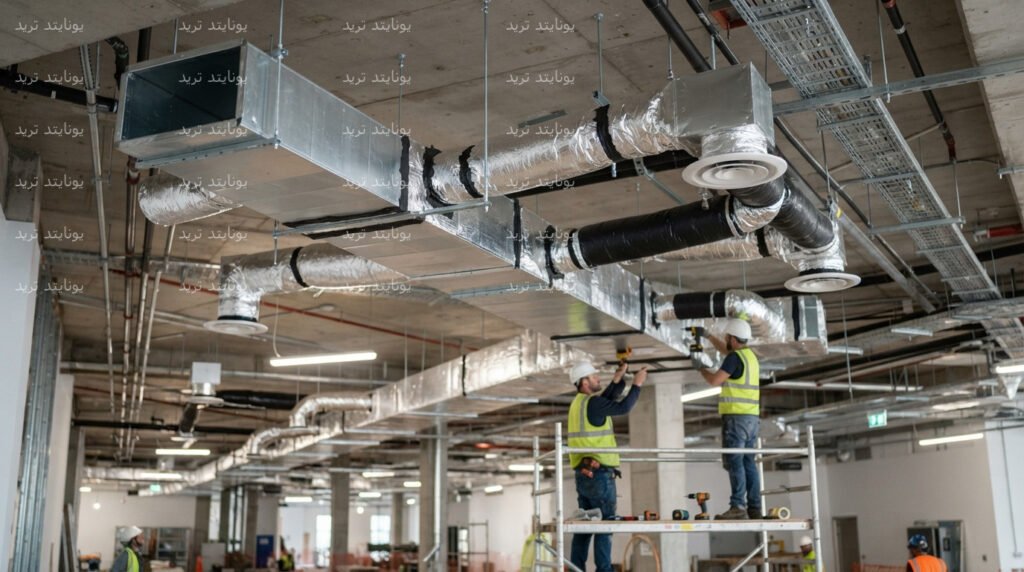
is a process Air conditioning duct extension A precise engineering step that cannot be compromised, as the life of the device and the cooling efficiency depend on the quality of the foundation from the first moment. These works require selecting precise copper diameters that match the capacity of the air conditioner, in addition to tight thermal insulation to prevent energy loss and ensure sustainable cooling. This article aims to explain the technical standards followed by professional technicians to ensure future fault-free installations.
Basics of choosing cooling pipe diameters
The safety of the refrigeration cycle depends directly on compatibility Air conditioning duct extension With the device's operating capacity (in horsepower or BTU). Choosing an inappropriate diameter for the pipes may lead to a decrease in Freon pressure or an overload on the compressor, which will significantly reduce the operational life of the air conditioner.
❓ Table of pipe measurements according to air conditioner capacity
The following table shows the standard copper sizes used in the market to ensure the smooth flow of refrigerant.
| Air conditioner capacity | Liquid pipe size (inch) | Gas pipe size (inches) | Technical evaluation 🏆 Editor's choice |
|---|---|---|---|
| 1.5 hp | 1/4 | 3/8 | 9.5/10 ✓ |
| 2.25 hp | 1/4 | 1/2 | 9.2/10 ✓ |
| 3 hp | 3/8 | 5/8 | 9.0/10 ✓ |
| 5 hp | 1/2 | 3/4 | 8.8/10 ✗ |
It should be noted that these standards are international standards to ensure efficient heat exchange. We always recommend using copper with sufficient wall thickness to withstand high operating pressures without dents.
Principles of professional pipe extension
It requires an operation Air conditioning duct extension Use specialized tools to ensure that the copper pipe section does not become narrow. Relying on random manual bending causes a bottleneck in the flow of Freon, which significantly reduces the actual cooling efficiency.
❓ Effective thermal insulation techniques
Each pipe must be insulated individually using rubber insulation (Armaflex) with a thickness of no less than 9 mm to ensure complete insulation. This procedure prevents the formation of water condensation on the surface of the pipes, which protects the walls and ceilings from moisture and long-term damage.
The nitrogen pressure testing stage is a crucial step that cannot be skipped, as it detects any minute leaks before the walls are permanently sealed.
Challenges of protecting pipes in coastal areas
External copper pipes are exposed to harsh oxidation agents that lead to rapid corrosion in areas with high humidity. This sulfur corrosion turns the copper surface into brittle copper sulfide, causing leaks that are difficult to repair.
- Use UV-resistant acrylic paints.
- Cover the external pipes with silicone insulating materials to prevent moisture from entering.
- Avoid installing connections in areas most exposed to salt air currents.
These preventive measures ensure longevity Air conditioning duct extension For additional years and avoid the need to change tracks due to premature wear.
Frequently asked questions
❓ How do I ensure the quality of extending air conditioning ducts before finishing?
A nitrogen pressure test must be requested from the technician, where the indicator rises and is left for several hours to ensure that there is no drop in pressure, which means that the pipes are free of leaks.
requires Professional air conditioning installation Careful planning of indoor and outdoor unit locations to ensure optimal air distribution and facilitate regular maintenance. It should also be ensured that the metal stands are fixed with extreme durability and that the electrical cables are connected in accordance with international safety standards, which prevents annoying vibrations and ensures quiet and stable performance of the device in the long term.
Success is based Installing air conditioning ducts To choose the ideal paths that ensure the flow of refrigerant gas and avoid sharp bends that may impede the flow. Professional standards in installation also ensure that the pipes are protected from damage and external pressure, which maintains the integrity of the air conditioner’s hydraulic system for many years without leaks.
The process is transmitted Air conditioning installation From the foundation stage to the actual installation of the internal and external units, where it is necessary to precisely adjust the inclination levels to ensure smooth water drainage and prevent any future leaks. This procedure requires high technical skill to ensure that the load-bearing structure is installed and the electrical circuits are connected in accordance with international safety standards, ensuring quiet operation free of annoying vibrations.
Proper establishment provides an ideal operating environment, but maintaining this exceptional performance requires periodic commitment to procedures Regular air conditioning maintenance It includes all mechanical and electrical parts. This process includes checking refrigerant levels, cleaning the filters and evaporator, and early detection of any blockages that may overtax the compressor and reduce air quality.
The tight foundation makes any subsequent steps private Air conditioning maintenance The air is smoother and more precise, as proper ductwork allows technicians to check Freon gas cycles and detect any blockages or early leaks without damaging the wall infrastructure. By regularly checking, securing gas pressure and cleaning filters regularly, the user ensures that the highest levels of airflow are maintained and unplanned breakdowns are minimized in the long term.
The work requires the implementation of a stage Establishing copper pipes According to well-studied paths that ensure smooth flow of the refrigerant and reduce sharp bends as much as possible. This also includes installing the supply, electricity and water drainage lines to the highest standards of structural safety, to avoid any blockage or future leakage that may harm the integrity of the walls or reduce the efficiency of cooling.
A tight foundation paves the way for fault-free operation, but maintaining this performance requires adherence to a regular schedule of maintenance procedures. Air conditioning maintenance Continuous, including cleaning filters and checking refrigerant pressure. This preventive monitoring contributes to avoiding premature damage to the compressor and reducing electricity consumption, ensuring clean and stable air flow throughout the seasons of the year.
Includes Installing air conditioning ducts Carefully thought out paths to avoid sharp bends that may impede the flow of the refrigerant, while the pipes are fixed with strong supports that protect them from vibrations or future damage inside the walls. This procedure also includes nitrogen pressure tests to ensure that the network is completely free of any leaks before completing the final finishing work.
❓ Can aluminum pipes be used instead of copper?
We do not recommend this at all; Copper has high flexibility and an excellent ability to withstand pressure and heat, while aluminum is easily brittle and susceptible to rapid damage when bent.
Bypass process Air conditioning installation Homes simply install the units on the walls, as it requires technical skill in adjusting the levels of the internal unit to ensure smooth water drainage and avoid future leaks. Accuracy in the electrical connection and verification of the integrity of the connections also ensure the stability of the device’s operational performance and its protection from sudden malfunctions.
❓ What is the best depth to install air conditioning ducts inside the walls?
It is preferable to bury the pipes to a sufficient depth that allows them to be covered with a protective cement layer of no less than 3 cm, taking care not to compress them or expose them to breakage during the plastering process.
❓ Why does water drip from the air conditioning pipe appear inside the room?
This is often due to poor quality or damage to the thermal insulation on the pipe, which leads to atmospheric moisture condensing on the cold copper surface.
❓ When should old air conditioning pipes be replaced?
They must be replaced when installing a new air conditioner with a higher capacity, or if there are accumulated internal blockages that cannot be cleaned, or when signs of severe corrosion appear in the external areas.
Advantages and disadvantages
- ✓Saving energy consumption by reducing heat loss.
- ✓Extending the life of the air conditioner and compressor.
- ✓Protecting the building's structural structure from moisture.
- ✕High initial cost of materials and professional installation.
- ✕The need for accurate plans before construction begins.
- ✕Difficulty accessing pipes in the event of leakage after finishing.
❓ Editor's judgment and final rating
Our overall evaluation of the process Air conditioning duct extension Professionalism is 9.2/10. This option is most suitable for property owners who want to make a long-term investment and avoid frequent air conditioning breakdowns, as good foundation saves you from expensive future maintenance costs.
Adherence to the mentioned technical standards guarantees you a comfortable and cool home environment without unpleasant surprises. Always remember that advance planning is the key to success in all your air conditioning ducting work.
















Community dialogue
0 comments