
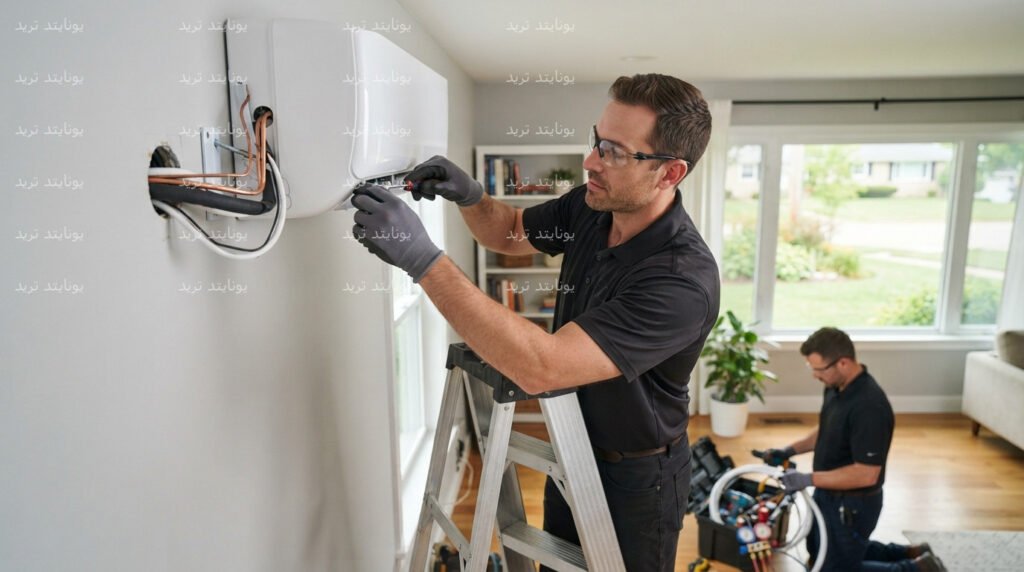
It counts Air conditioning installation Precisely engineered air is the basic foundation for ensuring efficient cooling and longevity of the device. The performance of the air conditioner depends more than 80% on the professionalism of the field installation, as adherence to the correct technical steps contributes to reducing energy consumption by tangible percentages. In this article, we will review the steps and standards that turn the installation process into a long-term investment for your home.
Engineering foundation secrets to ensure cooling
It starts Air conditioning installation Successful by choosing a strategic location for the indoor unit that ensures uniform air distribution. The level of the indoor unit should be adjusted using a water level with a slight inclination of 3 to 5 degrees outward; This is to ensure that condensation water drains smoothly away from the walls. Moreover, it is required to leave sufficient ventilation spaces of at least 15 cm from the top and 10 cm from the sides for air to flow freely.
❓ The importance of vacuum and leakage testing
The vacuum procedure (emptying air and humidity) is a technical condition that cannot be skipped to ensure the efficiency of the cooling circuit. Neglecting this step results in moisture remaining inside the system, causing decomposition of the cooling oil and the formation of acids that destroy the compressor. A vacuum pump must be used to achieve a minimum pressure of 500 microns, with copper leakage testing using nitrogen pressure for a full hour before final commissioning.
Summary table of installation and operating standards
| Technical item | Professional standard | Direct impact |
|---|---|---|
| Milan unit | 3-5 degrees outside | Prevent water leakage inside |
| Vacuum – Editor's Choice | Pressure less than 500 microns ✓ | Compressor protection (9.8/10) |
| Ventilation distances | 15cm top / 10cm side | Improve heat exchange efficiency |
| Nitrogen test | A full hour ✓ | Ensuring safety of connections (9.5/10) |
Implementation steps for an integrated air conditioning installation process
- Determine the appropriate location for the indoor unit away from direct heat sources.
- Installing the iron mounting plate (Bracket) and ensuring that it is level with utmost precision.
- Laying thermally insulated copper pipes according to an engineering path that reduces sharp bends.
- Connect electrical cables according to the factory plans and secure the connections well.
- Perform the vacuum operation and ensure that the system pressure is safe before opening the gas valves.
These steps outline the logical sequence that professional technicians follow to ensure that no refrigerant leaks or disrupts the future performance of the equipment.
Advantages and disadvantages when choosing professional installation
- ✓Increasing the device's cooling efficiency by up to 40% compared to random installation.
- ✓Maintain the operational life of the compressor and prevent premature damage to internal components.
- ✓Tangible savings on the electricity bill as a result of the compressor operating at the pressure it was designed for.
- ✕High initial cost when using professional technicians who adhere to all standards.
- ✕Taking longer to complete a transaction Air conditioning installation In accordance with engineering standards.
❓ Editor's judgment and final rating
Our final rating is 9.6/10. It is highly recommended that you do not compromise on the standards of vacuum and copper foundation, as this is the most suitable option for those looking for long-lasting comfort and real savings in energy and maintenance costs.
A stage comes Establishing copper pipes As a fundamental step, it requires extreme precision in selecting paths and ensuring thermal insulation to protect the refrigerant gas path from external factors. Adherence to technical standards at this stage ensures a smooth flow of the refrigerant and prevents moisture leakage or loss of performance efficiency in the long term.
Frequently asked questions
❓ Why must a vacuum be performed when installing air conditioning?
Vacuum prevents the formation of moisture and acids inside the compressor. The presence of air and humidity reduces the cooling capacity by up to 40% and destroys the internal parts of the air conditioner.
The quality of the initial installation is not complete without establishing a periodic schedule that ensures that the mechanical and electrical parts are inspected and protected from corrosion over time. Includes commitment to a program Air conditioning maintenance Regular cleaning of filters and measurement of refrigerant pressure, preventing sudden malfunctions and maintaining the highest levels of fresh air flow.
The professional secrets of air conditioning installation lie in careful adherence toTechnical establishment standardsStarting from choosing the strategic location of the indoor unit to completing the vacuum process with extreme precision to expel moisture and ensure optimal cooling efficiency. Applying these engineering practices not only ensures that optimal temperatures are reached quickly, but also prevents Freon leaks and significantly extends the life of the appliance.
Achieving this ideal performance requires consideration Principles of installing copper pipes To increase cooling efficiency and ensure that the refrigerant flows smoothly without the slightest leakage. Applying precise standards in the insulation and extension of these pipes reduces the operating voltage on the compressor, which in turn reduces electricity consumption and prevents sudden malfunctions.
The success of a well-established establishment is not complete unless there is a periodic schedule that includes procedures Regular air conditioning maintenance To maintain air flow and filter purity. Continuous preventive inspection of mechanical parts and Freon shipments contributes to avoiding sudden malfunctions and ensuring the sustainability of cooling efficiency at its highest levels.
These standards start from a stage Establishing copper pipes The water drainage paths are meticulous, as extending them requires choosing diameters that match the manufacturer’s specifications and avoiding sharp bends that impede the flow of the refrigerant. It is also necessary to insulate the intake and exhaust lines with the best thermal insulation materials to protect the cooling network from energy loss and moisture condensation inside the walls.
The success of the initial establishment is not complete without setting a periodic schedule for action Regular air conditioning maintenance It included checking the level of the refrigerant and the cleanliness of the internal filters and condensers. Early detection of malfunctions and dust accumulation helps protect the compressor from thermal stress and maintain cooling efficiency at its highest operating levels.
These standards start from a stage Establishing copper pipes With extreme precision, choosing the appropriate diameters and thickness of thermal insulation to prevent moisture condensation and loss of cold. This procedure ensures that the refrigerant flows smoothly and completely safely, which protects the compressor from premature fatigue and maintains the stability of the efficiency of the system as a whole.
❓ How does adjusting the thermostat affect electricity consumption?
Intelligently adjusting the thermostat increases energy efficiency by up to 30%, reducing stress on the motor and extending the life of the device.
❓ Does the cooling efficiency differ for older devices?
Yes, appliances that are more than 10 years old consume 40% more energy, so replacing them with a modern appliance is a smart economic choice in the long run.
❓ What is the best ventilation distance around the indoor unit?
A distance of at least 15 cm must be left from the top and 10 cm from the sides to ensure correct air flow and ideal heat exchange.
❓ How long should a nitrogen pressure test be performed?
A nitrogen pressure test must be performed for a full hour to ensure that there are no leaks in the copper pipes before operating the air conditioner permanently.
Investing in Air conditioning installation It is made according to clear engineering principles that guarantee you ideal cooling and continuous savings in maintenance expenses. Feel free to choose quality to ensure sustainable performance for your home.
















Community dialogue
0 comments