
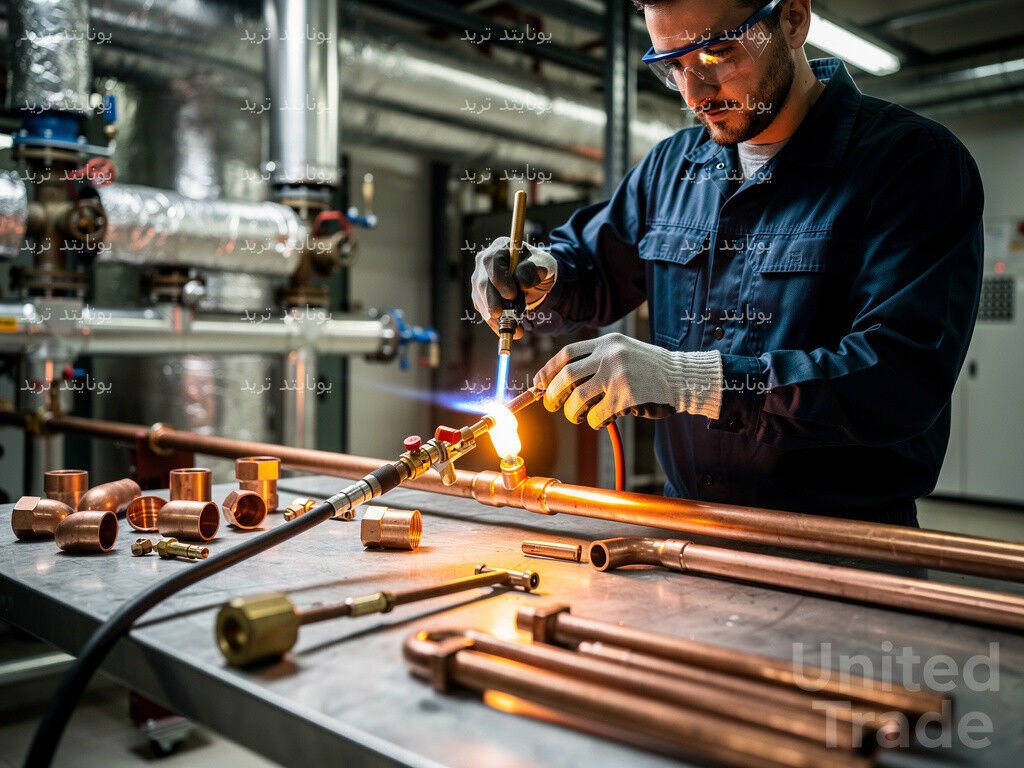
Installing copper pipes represents an essential foundational step to ensure the efficiency of gas, refrigerant, and drinking water transportation networks in modern facilities. This is thanks to its high durability and superior ability to withstand different temperatures and operational pressures. This article provides a comprehensive field guide that explains extension techniques, welding methods, and safety tests to avoid dangerous leaks and extend the life of the mechanical system in a precise, straightforward, field-tested engineering manner.
Quick Answer: How are copper networks installed and connected?
Copper pipe installation is a mechanical process that involves cutting the pipe at a right angle, removing sharp edges, then connecting via heat welding or mechanical joining. The success of this process depends on choosing the right type of copper for the project and using a soldering alloy that matches specifications to prevent corrosion and field escape. Following a nitrogen pressure test immediately verifies the tightness and operational efficiency of the connections.
Selection of copper diameters and thicknesses according to the application
Choosing the inner wall thickness of copper pipe requires studying the pressure, temperature and fluid flow speed in the mechanical system. Internationally approved pipes are divided into basic classifications including Type K, Type L and Type M, and differ in internal wall thickness and mechanical endurance capacity.
Type K has a thick wall that makes it the first choice for underground networks and lines subject to high pressures. In contrast, Type L represents the most common standard option forCooling networks Air conditioning and internal water distribution due to its balance between cost and durability. As for Type M, it is characterized by a thin wall that is suitable for low-pressure domestic water networks. It should be noted that it is prohibited for use in applications of industrial gases or high pressures.
Basic tools and equipment for processing copper connections
The preparation stage requires specialized tools to ensure the accuracy of measurements and the integrity of the metal edges before welding or assembly. Neglecting to use the correct tool results in damage to the pipe and deformation of its circular diameter.
- Rotary tube cutter to ensure even cutting at a 90 degree angle without side crushing.
- Internal and external edge reaming to clean metal debris resulting from shearing and protect the flow path.
- Hydraulic or mechanical pipe expander for processing overlap ends between two ends of equal diameter.
- Spring or manual brass crimping tool to guide tracks at precise angles without throttling the inside diameter.
- Metal cleaning brush and steel wool to remove surface oxides before applying flex.
Steps to install copper pipes in a precise geometric manner
Field work begins with precise identification of paths to avoid mechanical vibrations and avoid contact with hard, uninsulated surfaces. The sequential organization of steps helps save time and reduce waste of expensive metal ores.
First, distances are measured and the tube is cut leaving enough space for the metal's natural thermal expansion. Second, the metal debris is removed using an edge reamer, where the internal debris creates water vortices and flow turbulence that accelerate necrotic corrosion. Furthermore, the depth of interference within the joint must be measured to ensure that the joint is stable under constant stress.
Third, the contact terminals are completely cleaned of dirt and oils until the shiny copper luster appears. Next, the acid-free fusing aid is applied in a balanced amount to facilitate capillary flow of the soldering alloy, taking care not to contaminate the inside of the tube with excess flex material.
Comparison of copper pipe joining techniques
Delivery method varies according to system requirements, ease of access to the job site, and approved fire safety regulations. The following table shows the operational differences between common technologies:
| Delivery method | Required temperature | The nature of the alloy or tool | Main areas of use | Level of cost and effort |
|---|---|---|---|---|
| High temperature silver welding | Above six hundred degrees Celsius | An alloy of copper with silver and phosphorus | Refrigeration, air conditioning and gas networks | Moderate cost and superior durability |
| Low temperature tin soldering | Less than four hundred degrees Celsius | Lead-free tin wire | Drinking water and nutrition networks | Low cost and fast implementation |
| Mechanical pressing connection | Without heat or flame | Snap-on device with rubber sealing rings | Hospitals and rapid restoration | High tooling cost and super fast speed |
| Mechanical bonding to the flap | Without heat or flame | Cone shaping tool and brass nuts | Split air conditioner connections and appliances | Moderate effort and easy maintenance later |
Insulation and installation standards to protect copper lines from damage
Effective thermal insulation requires the use of polyether foam or closed-cell elastomer to prevent moisture condensation and external rust formation. Tight insulation prevents energy loss in hot fluid lines and heat absorption in cold gas lines.
As a culmination of the work of extending the cooling networks, it requires a stage Air conditioning installation Excellent skill in installing the internal and external units and adjusting the water drainage paths with extreme precision. It is also necessary to tighten the gas lines and insulate them thermally to ensure the highest levels of cooling efficiency and avoid any leakage that may threaten the safety of the system.
The success of this system requires careful standards governing the process Establishing extension pipes Inside the walls and under the floors before moving on to the insulation and finishing stages. This includes determining the correct engineering paths, and installing supports at thoughtful distances that prevent any vibrations or subsidence that may threaten the integrity of the lines in the long term.
requires Implementation of air conditioning installation With high efficiency, great care is taken of the copper network extension paths, as the tight fit of the internal and external units ensures a smooth flow of the refrigerant without loss of pressure. The perfect thermal insulation of the pipes also contributes to protecting the system from Freon leakage and increasing the efficiency of energy consumption in the long term.
These networks require action Regular air conditioning maintenance For early detection of any leakage in the cooling media, and cleaning of heat exchangers to ensure maximum efficient air flow. This regular technical follow-up contributes to protecting the compressor from stress and extending the life of the cooling system as a whole.
It requires completion Air conditioning installation With high engineering precision, all steps of installation and connection of external and internal cooling units are taken into account to avoid sudden malfunctions in the future. These sound practices ensure that the efficiency of the refrigerant flow is maintained and that electrical energy consumption is reduced in the long term.
These networks require action Regular air conditioning maintenance To early detect any leakage in the cooling medium and treat filter and condensate blockages as soon as they appear. This continuous technical follow-up contributes to protecting the compressor from thermal stress, ensuring stable cooling efficiency and extending the lifespan of the entire air conditioning system.
The first construction stages require extreme precision when implementing Establishing extension pipesTo ensure straight paths and avoid any conflict with nearby concrete structures or electrical networks. This prior procedure contributes to ensuring appropriate diameters and inclinations that limit the possibility of blockage or decline in flow efficiency in the future, thus establishing a solid and sustainable foundation for the entire feeding system.
The efficiency of these extensions does not depend only on the quality of the initial installation, but is directly related to the extent of adherence to procedures Regular air conditioning maintenance It detects any early refrigerant leakage and ensures the safety of copper connections from corrosion or blockage. This continuous inspection of mechanical components and piping helps maintain ideal operating pressures and extend the life of the cooling system as a whole.
These systems require extreme precision in each phase Establishing extension pipes Through carefully studied paths to avoid mechanical stress points and sharp bends. Proper planning of line diameters and locations for installing supports ensures operational flexibility that prevents vibrations and facilitates subsequent maintenance work without affecting the building’s structural structure.
In addition, insulated, rubber-lined suspension supports should be installed every one and a half to two meters on the horizontal tracks to avoid arcing in the lines. It should be noted that iron clamps must be insulated to prevent direct contact between copper and steel, as heterogeneous metal contact in humid environments leads to rapid galvanic corrosion that destroys the copper pipe wall.
These copper extensions are directly integrated into the stages Air conditioning installation Air, as the system’s stability and effective cooling depend on the accuracy of connecting the intake and exhaust lines between the indoor and outdoor units. This process requires taking into account tight thermal insulation and adjusting pressure levels, to avoid any leakage of Freon gas and ensure the highest operational efficiency of the system.
Pressure tests and leak detection before actual operation
Pressure testing is a mandatory step to ensure that the system is free of holes and mechanical defects before pumping the final operating media. Dry oxygen-free nitrogen cylinders are used to carry out this test safely.
- Close all terminal valves and isolate sensitive devices to avoid damaging them with high pressure.
- Inject nitrogen gradually until the designed operating pressure is reached, plus a safety margin of twenty-five percent.
- Inspect visible connections using specialized soap foam to detect bubbles resulting from any microscopic leakage.
- Monitor the pressure gauge for twenty-four continuous hours, taking into account the effect of changing ambient temperatures.
- Discharge the nitrogen safely after the indicator stabilizes, in preparation for starting air intake or hydraulic washing operations.
Frequently asked questions about copper networks and tubes
What is the difference between installing copper pipes by welding and pressing?
Welding relies on melting a metal alloy to thermally connect the pipes and provide a permanent connection that can withstand severe pressures and vibrations, while mechanical pressing relies on a hydraulic tool that compresses a copper connection with a rubber seal inside it without the use of flame, which makes it safer and faster in inhabited facilities.
Why is nitrogen pumped during high temperature welding?
Dry nitrogen gas prevents oxygen from reacting with the inner surface of copper pipes at high temperatures, preventing the formation of black copper oxide scales inside the pipe. The absence of nitrogen leads to the subsequent clogging of mesh filters and micro-valves.
Are air conditioning pipes different from drinking water pipes?
Yes, air conditioning ducts differ in that they are internally dried and sealed with seals from the factory to prevent moisture and impurities from entering, and they can withstand operating pressures exceeding two hundred pounds per square inch. In contrast, drinking water pipes focus on the purity of the alloy and its complete absence of lead and toxins.
How to protect buried copper pipes from ground corrosion?
Buried pipes are protected by wrapping them with protective plastic sleeves or flexible PVC pipes to prevent direct contact with sulfurous soil or wet cement. Placing a layer of clean, fine sand around the burial path contributes to alleviating ground subsidence stresses and protecting the external wall.
When should the copper tube be replaced instead of treating the leak?
The entire pipe must be replaced if there is general corrosion along the track or if there are severe dents that reduce its internal diameter by more than twenty percent. In contrast, spot treatment is limited to replacing a damaged weld joint or cutting out a small damaged part in a mechanically sound path.
Installing copper pipes according to technical and professional standards provides the highest levels of efficiency and safety for your operational networks for many years without sudden malfunctions. Always be sure to use materials that conform to standard specifications, and do not hesitate to seek advice from certified technicians to ensure that welding and insulation work is carried out with extreme precision to protect your real estate and industrial investment.
















Community dialogue
0 comments