
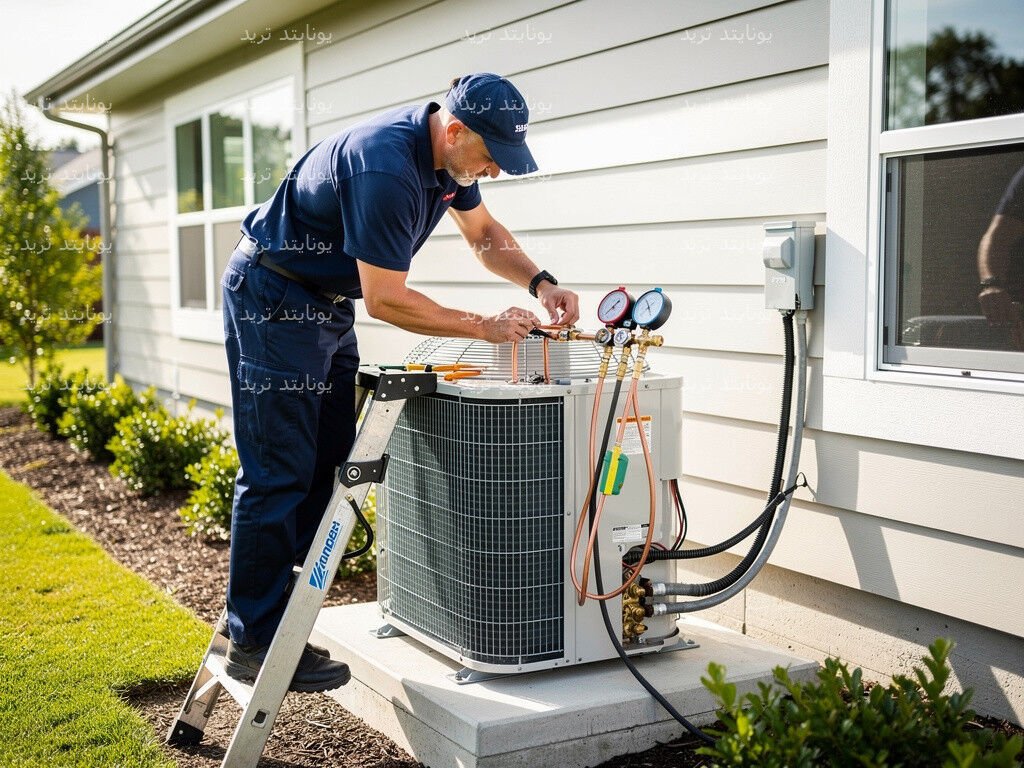
represents implementation Air conditioning installation Correctly used equipment is the basic foundation for ensuring efficient cooling and reducing the monthly electricity bill within any residence or commercial facility. This article aims to provide you with a comprehensive and detailed application guide that explains the steps for proper installation, determining ideal locations, and protecting the system from sudden malfunctions.
Quick answer: What are the basic conditions for a successful installation?
Air conditioning installation It is the process of installing and connecting the internal and external units of the cooling system through a network of copper pipes and electrical wires, with the air completely evacuated. Proper engineering installation is characterized by precisely adjusting the water drainage tendencies and emptying the Freon circuit of the vacuum pump to prevent moisture and avoid compressor burnout.
Field criteria for choosing the location of the indoor and outdoor units
The position of the indoor unit efficiently determines the airflow path and speed at which the room reaches the desired temperature. As a result, the indoor unit must be installed on a sturdy wall that can withstand vibrations, leaving a distance of at least fifteen centimeters directly below the ceiling to ensure easy air intake.
Requirements for installing the indoor unit
The indoor unit requires complete isolation from direct heat sources such as cooking ovens or windows exposed to sunlight throughout the day. In addition, you should avoid placing high furniture in front of the ventilation openings to ensure uniform distribution of cool air throughout the space and avoid incorrect readings of the temperature sensor.
Outdoor unit location specifications
The outdoor unit needs an open space that allows the high heat generated by the condensing cycle to be dissipated without any air obstructions. Furthermore, the unit must be placed on iron stands insulated with vibration-absorbing rubber, keeping at least thirty centimeters away from the walls to facilitate future maintenance and provide a suitable cooling path for the compressor.
Steps for preparing the cooling network and connecting pipes
Extending the cooling network requires careful attention to the copper pipe paths to prevent any bottleneck in the flow of the cooling medium between the parts of the system. Therefore, specialized mechanical bending tools must be used to prevent duct bending, which maintains the gas pressure designed by the air conditioner manufacturer.
- Cut copper tubing using a dedicated round cutter and hollow out the inner metal edges to prevent damage to the expansion valves.
- Expand pipe ends with an engineering encoder to create a smooth flange that exactly matches the valve sizes.
- Each copper line is individually insulated with heat-resistant foam to avoid thermal condensation and loss of gas coolness.
- Tighten the connection nuts with a dedicated torque wrench to reach the exact manufacturer recommended tightening force to avoid leaking.
The importance of drawing air through a vacuum pump
Completely emptying the mechanical circuit using a vacuum pump is an obligatory and indispensable step in any process Air conditioning installation Professionalism. The air trapped inside the piping contains moisture and oxygen, which react disastrously with the lubricating oil inside the compressor and lead to the formation of harmful acids that corrode mechanical parts and destroy the engine.
It should be noted that the emptying process must continue for a period of twenty to thirty minutes until the pressure gauge indicator reaches a level of five hundred microns or less. After reaching this level, the pump is stopped and the indicator is monitored for several minutes, as the stability of the pressure indicates the integrity of the welds and the absence of any micro-leaks in the circuit.
Electrical connections and water drainage testing
Precise electrical connections help protect the sensitive electronic board from voltage fluctuations and short circuit risks. As a result, it is necessary to use electrical cables corresponding to the specified loads, with an independent automatic circuit breaker assigned to each refrigeration unit within the main switchboard in the building.
- Ensure proper connection to the ground line to protect consumers and air conditioning components from any emergency electrical leakage.
- Matching the numbers and colors of wires between the terminal panel of the indoor unit and its counterpart in the outdoor unit with extreme precision.
- Extend the drain hose at a continuous downward slope of at least two degrees Celsius to prevent water stagnation and the accumulation of bacteria and unpleasant odors.
- Conduct a water pouring test by pouring two liters of water into the evaporation basin to verify that the water flows completely freely to the outside.
Comparison between self-installation and hiring a certified technician
The following table shows the fundamental differences between uncertified manual installation and entrusting the task to professional technicians equipped with internationally approved standard tools.
High operational efficiency requires careful attention to the construction preparation stage, as it begins with calculating the paths, choosing the diameters of the copper extensions, and insulating them accurately to avoid refrigerant gas leakage or water condensation inside the walls. So it's a step Installing air conditioning ducts With disciplined engineering specifications, the real guarantee for protecting the building and extending the life of the device for many years.
The effectiveness of the installation is not complete without implementing procedures Regular air conditioning maintenance Maintains compressor efficiency and internal filters cleanliness regularly. This preventive technical commitment helps prevent dust accumulation and avoids refrigerant leakage, ensuring fresh air flow and extending the life of the cooling units.
The success of the installation process requires careful attention to each stage Air conditioning duct extension Because it is the vital artery that connects the internal and external units. Adherence to engineering standards in this path ensures the flow of the coolant without loss of pressure, which maintains the operational energy efficiency of the entire system.
Cooling efficiency does not depend only on the quality of the initial installation, but extends to the adoption of procedures Field inspection of air conditioners Regularly to detect causes of early performance decline and avoid mechanical stress on the compressor. This technical audit contributes to improving energy efficiency and protecting the system from damage during periods of heavy operation, ensuring the most effective airflow and the lowest possible electrical cost.
It is a stage Installing air conditioning ducts Precisely using copper in accordance with approved engineering measurements is an essential step to avoid problems of Freon gas leakage in the future. Choosing a shorter, less curved path also helps maintain efficient compressor pressure and cool airflow at peak operating efficiency.
System protection does not stop at mastering the initial installation only, but requires following a periodic schedule for procedures Regular air conditioning maintenance Carefully check refrigerant levels and filter cleanliness. This continuous check ensures that fresh air flow is maintained and thermal stress on the compressor is avoided in the long run.
Protecting the system does not stop only when the installation is completed, but maintaining efficient operation requires action Regular air conditioning maintenance And comprehensive for various internal and external parts. This regular check helps clean filters and monitor refrigerant levels, preventing unplanned breakdowns and extending the life of the equipment.
| Comparison | Non-professional self-installation | Installation by a professional and certified technician |
|---|---|---|
| Vacuum tools | They are often neglected or replaced by manual exhaust | Mandatory use of a vacuum pump and an accurate digital gauge |
| Controlling the tightening torque of nuts | My guess is it could cause the copper to break or leak | Use a dedicated torque wrench with specific Newtons |
| Manufacturer's warranty is valid | The warranty expires immediately in most international companies | Full approval and validity to guarantee the device for many years |
| Electricity efficiency | It decreases by up to thirty-five percent | The system operates at the highest certified energy efficiency |
| Level of security and readiness | Risks of refrigerant leakage or contact occurrence | Complete safety and documented mechanical and electrical integrity |
Common technical errors that lead to reduced cooling efficiency
Some novice technicians make the mistake of removing air using a quick manual Freon blower instead of using a modern vacuum pump. This incorrect method causes the loss of an amount of the original refrigerant gas charged at the factory, which reduces the cooling efficiency and increases the working hours of the compressor to compensate for the resulting thermal deficiency.
The operational efficiency of the system requires careful attention during the initial construction phase, where one step contributes Installing air conditioning ducts Copper pipes with diameters matching the capacity of the device ensure the flow of coolant without stress on the compressor. The perfect thermal insulation of these buried extensions ensures that water condensation is prevented and that the walls are protected from moisture and damage in the long term.
On the other hand, neglecting to check the length of the pipe path represents another common mistake that may harm the air conditioner directly and quickly. If the length of the copper leads exceeds the maximum permitted by the company without adding a compensating charge of oil and gas, the compressor will suffer from lack of lubrication and high internal friction temperatures, which will shorten its life.
Frequently asked questions
What is the standard distance between indoor and outdoor unit?
The standard recommended distance is usually between three to five meters to ensure optimal cooling performance. Avoid shortening the distance beyond three meters to prevent the transmission of compressor vibrations into the room. If it exceeds ten metres, an additional charge of Freon must be added according to the operating manual.
How do I know that the air conditioning installation process was completed successfully?
The success of the installation can be verified by measuring the temperature difference between the drawn room air and the cold air flowing from the cooling vents. The normal difference should be between eight and twelve degrees Celsius half an hour after turning on the system, with no crackling sounds or water leakage.
Is it possible to install an old air conditioner in a new place without changing the pipes?
Yes, existing extensions can be used provided that they are chemically cleaned with compressed nitrogen and ensure that they are completely free of any kinks or old leaks. Moreover, the type of Freon used in the new device must be matched with the nature of the oils suspended in the old pipes to prevent harmful chemical reactions.
Why does water drip from the indoor unit after operation?
Water dripping is often due to the drain hose becoming clogged with dust or being installed without a sufficient slope to allow gravity to pull out fluids. In addition, a leak may occur due to a low charge of Freon, which causes the cooling coil to freeze and then melt ice in quantities exceeding the capacity of the designated collection basin.
When should additional refrigerant be added during installation?
The system must be supplied with additional gas when the length of the copper pipeline exceeds the standard distance previously specified by the device manufacturer. Most modern devices have a factory charge of only five meters, and the additional grams are calculated precisely according to each additional meter via a precise electronic scale.
The next step to protecting your home investment
Relying on scientific steps during air conditioning installation represents the real guarantee for obtaining the maximum levels of comfort and refreshment during the hot summer months while reducing sudden malfunctions. Always make sure to entrust certified technicians who are equipped with modern pressure measuring tools to ensure the integrity of the connections and maintain the legal warranty for as long as possible.
















Community dialogue
0 comments