
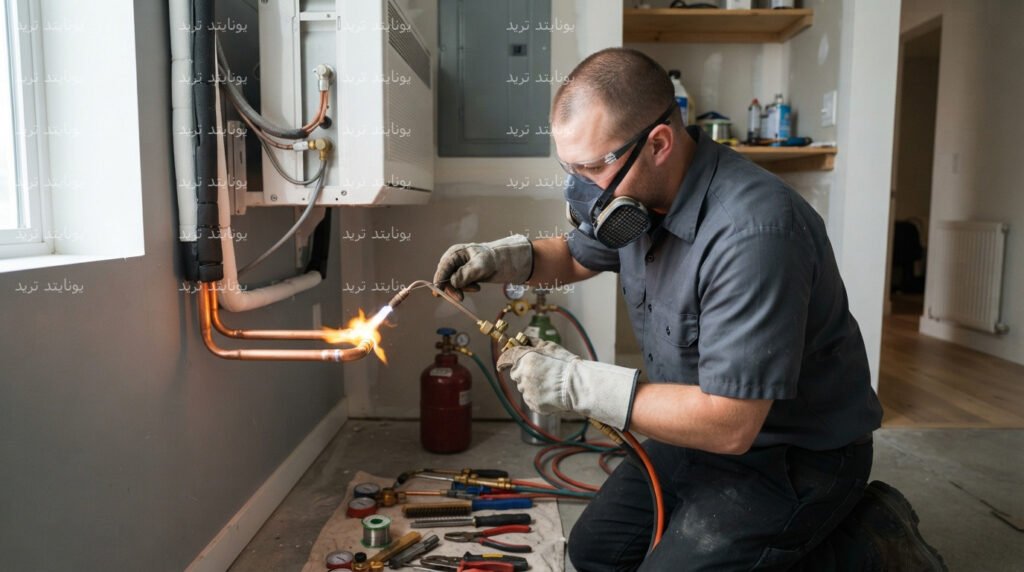
practical Installation of copper pipes They are the basic foundation for ensuring the efficiency of cooling and air conditioning systems, as these pipes ensure smooth transfer of the refrigerant between the internal and external units. This article aims to clarify the precise engineering standards that must be followed during extension, which will help you maintain the integrity of your device and ensure that it continues to perform at the highest possible efficiency for many years. We will review the internationally approved technical steps, starting with selecting the appropriate materials and ending with the final pressure tests.
Approved technical standards for cooling paths
Process based Installation of copper pipes To strict international standard specifications to ensure the quality of the pipes and their tolerance to high operating pressures. Relying on standards such as ASTM B280 or JIS-H3300 It represents a real guarantee to avoid premature corrosion or cracks in metal walls.
❓ The importance of matching pipe diameters to operational capacity
Determining pipe diameters accurately based on the air conditioner's capacity (BTU) and manufacturer's recommendations is an error-free procedure. اختيار مقاس غير مناسب يؤدي مباشرة إلى إجهاد الضاغط أو ما يعرف بـ CompressorWhich increases energy consumption abnormally and reduces the lifespan of the system.
❓ Avoid manual reaming of limbs
It is technically prohibited to expand the ends of pipes manually using regular expansion tools (Swaging) because they weaken the wall thickness and increase the risk of leakage in the future. البديل الاحترافي يتمثل في استخدام Copper fetch High quality to connect the tracks together, maintaining the solidity of the metal at the connection points.
Protective welding techniques within the system
The welding process is... Installation of copper pipes نقطة حرجة تتطلب خبرة فنية خاصة لمنع تكون الأكاسيد داخل الأنابيب. The accumulation of oxides results from the reaction of copper with oxygen at high temperatures, which subsequently leads to a precise blockage in the Freon cycle and failure of the valves.
❓ Use of nitrogen during welding
Must pass Nitrogen gas At low pressure inside the pipes during the welding process, this gas acts as an inert environment that prevents the formation of internal oxide layers. This precise technical procedure ensures that the refrigeration cycle is completely clean of any solid impurities that may affect the movement of the oil or the cooling medium.
❓ Tight thermal insulation standards
Use high-density type insulation Armaflex Over the entire piping route, it is imperative to prevent energy loss. Any exposed copper leads to water condensation, causing structural damage to the walls and damage to the overall cooling efficiency of the device.
| Technical standard | Professional application | 🏆 Editor's choice |
|---|---|---|
| Standard specifications | ASTM B280 / JIS-H3300 | ✓ Available 10/10 |
| Nitrogen use | Mandatory during welding | ✓ Available 10/10 |
| Type of thermal insulation | Armaflex high density | ✓ Available 9.5/10 |
| Linking method | Professional brass bushings | ✓ Available 9/10 |
| Pressure test | Nitrogen before operation | ✓ Available 10/10 |
The table above shows the basic technical standards that must be available to ensure installation quality. represents use Nitrogen gas Pressure tests compatible with international standards (Editor's Choice) are the most important pillar for achieving a sustainable system.
Engineering implementation steps
توضح الخطوات أعلاه التسلسل المنطقي لضمان دقة العمل. Beginning with path planning reduces sharp bends that may impede refrigerant movement, while pressure testing ensures the system is free of leaks before final refrigerant supply begins.
❓ Pressure test before final commissioning
The leak test is performed using... Nitrogen gas Before actual operation is a mandatory step to ensure the tightness of the system. The applied pressure must be proportional to the piping tolerance to ensure that no subsequent leakage of Freon gas occurs, which protects the compressor from damage due to lack of charge.
❓ Advantages and disadvantages
Features:
It requires an operation Air conditioning installation Your home is meticulous in choosing the extension paths to reduce heat loss and ensure the flow of refrigerant at ideal pressure. Adherence to correct thermal insulation standards and tight connection of joints prevents any future leaks, which enhances the operational life of the device and reduces energy consumption.
The initial stage requires extreme precision Installing air conditioning ducts Buried inside the walls, to ensure the selection of shorter paths and avoid sharp bends that may impede the flow of Freon gas. Tight installation and good thermal insulation during this step also ensure that the extension network is protected from future damage and that energy loss is reduced to a minimum.
These extensions are integrated with steps Air conditioning installation According to precise technical principles, it begins with choosing the ideal location for the indoor and outdoor units to ensure efficient air distribution. The tight fit avoids annoying vibrations and prevents Freon leakage, which increases cooling efficiency and extends the life of the entire system.
Quality engineering installation is not complete without adherence to procedures Regular air conditioning maintenance Protects refrigerant lines from leaks and buildup of impurities over time. This continuous check helps detect any drop in gas pressure early and avoid compressor fatigue, ensuring airflow remains at peak efficiency and coolness.
requires Professional installation of copper pipes To increase the efficiency of your home's air conditioning, follow precise welding and insulation techniques that prevent Freon gas leakage and limit heat waste. Adhering to these engineering standards not only preserves the life of the device, but also ensures a significant reduction in energy consumption, enhancing sustainable cooling performance.
The accuracy of the operational performance of air conditioning systems depends entirely on following... Principles of installing copper pipesStrict engineering standards in this aspect ensure the safety of the refrigeration cycle and prevent the leakage of Freon gas. Adherence to these technical controls not only protects the system from premature failure, but also ensures sustainable cooling efficiency that will last for many years.
The importance of these extensions goes beyond the initial installation stage to include their vital role in the plans Air conditioning maintenance To ensure optimal performance, periodic inspection of these connections contributes to the early detection of any potential leaks. Maintaining the integrity of the system does not depend on the quality of installation, but rather depends fundamentally on continuous technical follow-up that protects the internal parts from corrosion and extends the operational life of the device.
The first construction stages require extreme precision when implementing Installing air conditioning ducts To ensure that the shortest and least curved paths are chosen for walls and ceilings. This early planning contributes to protecting the copper network from future mechanical damage and facilitating the flow of Freon gas with the highest possible operational efficiency.
Once the installation is complete, it pops out Air conditioning maintenance As a crucial element to maintaining optimal performance of these copper tracks, regular inspection helps detect any minute leaks or corrosion that may hinder the cooling cycle. Adhering to a regular maintenance schedule ensures that system efficiency remains at its peak and protects internal parts from long-term damage.
The first construction phase requires extreme care when implementing Installing air conditioning ducts Buried, to ensure its protection from mechanical damage and sharp bends that may impede the flow of refrigerant gas. This prior extension also requires choosing thoughtful engineering paths and ensuring tight thermal insulation that prevents moisture condensation and maintains the system’s efficiency for many years.
- Ensuring maximum cooling efficiency for the device.
- Extend the life of the compressor and internal components.
- Saving electrical energy consumption in the long term.
- Protect the building from moisture damage and condensation.
Disadvantages:
These extensions are integrated with steps Air conditioning installation Correctly, installing the indoor and outdoor units requires precise alignment and consideration of the recommended distances to ensure efficient airflow. The tight fit also ensures that mechanical vibrations are avoided and stress on the refrigerant lines is reduced, keeping the system stable in the long term.
- The cost of raw materials is higher compared to inferior alternatives.
- It requires high technical skill and specialized tools.
- It takes longer to implement to ensure accuracy.
❓ Editor's judgment and final rating
Overall rating: 9.6/10. The commitment to Installation of copper pipes According to these criteria, it is the best decision for those looking for sustainable performance and avoiding frequent air conditioning malfunctions. This option is very suitable for residential and commercial projects that place engineering quality as a top priority.
Frequently asked questions
❓ What are the best types of copper used in air conditioning?
Certified copper pipes are according to specifications ASTM B280 It is the best, as it is characterized by high purity and the ability to withstand high pressure and temperature without cracks.
❓ Why should nitrogen gas be used during welding?
The use of nitrogen prevents the formation of a layer of copper oxides inside the pipes, which protects the system from internal blockages and maintains the efficient movement of oil and Freon.
❓ How do I know that the piping size is correct for the air conditioner?
You should always refer to the technical specifications table attached to the air conditioning device from the manufacturer, which specifies the appropriate internal diameter for each capacity (BTU).
❓ Can copper pipes be installed without thermal insulation?
No, the pipes must be completely covered with high-quality thermal insulation e. g Armaflex To prevent condensation that causes damage to walls and loss of cooling efficiency.
❓ How long does a proper pressure test take?
The system must be left under nitrogen pressure for a minimum of 24 hours to monitor any decrease in the indicator, which confirms that the system is free of any minute leaks.
❓ When should copper pipes be changed?
It is recommended to change the pipes when there is corrosion in the walls, or when you want to install an air conditioner with a completely different capacity that requires diameters different from the existing ones.
By following these precise technical guidelines, you will ensure that your air conditioning system operates at optimal efficiency without surprises. If you are about to begin installing or maintaining your system, be sure to choose technicians who adhere to these standards to ensure the best value for your investment.
















Community dialogue
0 comments