
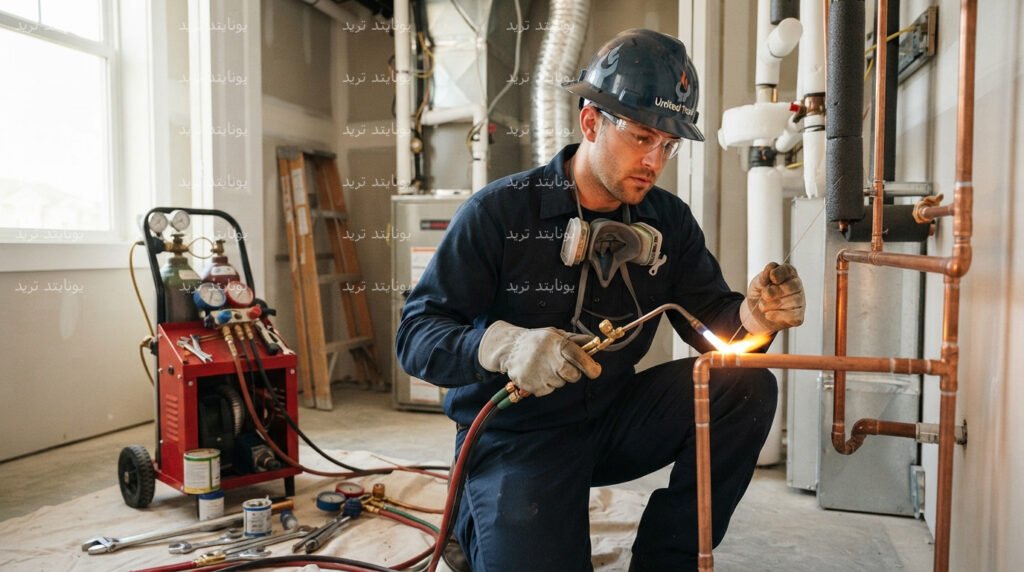
It counts Installation of copper pipes The most important engineering step to ensure robust and sustainable cooling performance in modern HVAC systems. Careful implementation of this process reduces energy consumption by 25% to 40%, as the integrated thermal insulation ensures the prevention of cold loss and reduces the operational load on the compressor. In this article, we will explain the technical standards that must be followed to ensure the longevity of your device and avoid common malfunctions associated with poor foundation.
Why is the accuracy of selecting and installing copper pipes a technical necessity?
The efficiency of the cooling system depends directly on the quality Installation of copper pipes And its suitability to the actual capacity of the device. Proper engineering requires selecting precise piping diameters, such as using 1/4" and 1/2" for a 1.5-ton air conditioner, to ensure smooth refrigerant flow. Failure to adhere to these measurements leads to abnormal pressures within the system, causing compressor fatigue and significantly reducing its lifespan.
❓ Approved standard specifications for copper pipes
Copper pipes used in air conditioning systems are classified according to a standard ASTM B280 Universal to ensure purity and durability. Type L is the most common and common choice for medium residential and commercial applications, while the thicker Type K is used in installations that require long extensions or harsh operating conditions. Relying on materials that do not meet these specifications may make you vulnerable to rapid corrosion of the pipes or the occurrence of tiny holes that are difficult to detect.
Steps for professional implementation of welding and extension operations
Depends on quality Installation of copper pipes The technician is skilled in preparing connections and using advanced welding techniques to prevent any future leaks. The first step begins with precise cutting using a rotary tube cutter, followed by meticulous removal of the burr using a specialized lathe to ensure perfectly smooth edges. Any small protrusions inside the piping may cause disturbances in the flow of refrigerant or the accumulation of impurities over time.
❓ The importance of using nitrogen in the refrigeration cycle
Nitrogen gas must be used during welding to disinfect the circuit and ensure that it is completely free of any oxides or impurities that may result from heat. This procedure protects the expansion valves and compressor from clogging or damage, and is a standard that professionals in the field do not compromise on. After welding, it is always recommended to pressure test using nitrogen gas to ensure that all connections are tight and that there are no leaks before completing the insulation process.
The previous diagram shows the correct path to ensure the integrity of the installations, as each stage is complementary to the previous one to achieve the best possible performance.
Thermal insulation standards to ensure cooling efficiency
Thermal insulation of copper pipes is an absolute necessity to prevent moisture from condensing and turning into water droplets that may damage walls or decorations. The thickness of the insulation used must be no less than 3/8 inch to ensure effective thermal insulation that prevents heat exchange with the surrounding environment. This insulation is not just a layer of protection, it is an essential element to ensure the stability of the refrigeration cycle and maintain ideal gas pressure.
| Technical standard | The professional option | The traditional option |
|---|---|---|
| Insulation thickness (3/8 inch) | ✓ | ✕ |
| Nitrogen use | ✓ 9.8/10 | ✗ 4.0/10 |
| Conforms to ASTM B280 standard | ✓ | ✕ |
| Overall Rating (Editor's Choice) | 9.5/10 (best) | ★ 5.5/10 |
❓ Advantages and disadvantages
Features:
- Significantly reduce energy consumption through professional thermal insulation.
- Longevity of the device's lifespan when using pipes that meet specifications.
- Preventing refrigerant gas (Freon) leaks thanks to the quality of welding.
- Protect surfaces and walls from condensation and moisture damage.
Disadvantages:
It requires an operation Professional air conditioning installation Careful coordination between choosing the strategic location of the indoor unit and securing the secure fit of the outdoor unit to ensure optimal air distribution. This advance planning eliminates annoying noise and unwanted vibrations, extending the life of the device and ensuring stable cooling flow throughout the space.
The success of this system requires advance planning, starting from one stage Installing air conditioning ducts Inside the walls and ceilings with high engineering precision, taking into account the appropriate inclinations and diameters of the extensions. This early action protects the refrigerant lines from future mechanical damage and ensures the refrigerant flows smoothly between the indoor and outdoor units.
Basic standards that govern the quality of work Air conditioning installation Various types, where copper connections are integrated with the installation of internal and external units in carefully studied locations. This arrangement contributes to ensuring balanced air flow and avoiding refrigerant leakage problems in the long term.
Maintaining the efficiency of these connections is not complete without adhering to a periodic schedule that includes: Air conditioning maintenanceTo ensure the safety of Freon gas pressures and the cleanliness of the internal circuits from any deposits. This preventive measure helps avoid sudden mechanical failures and extend the life of the operating units as long as possible.
The efficiency of air conditioning systems depends radically on strict technical standards when dealing with copper pipes, as quality installation prevents refrigerant gas leaks and limits thermal energy loss. Adherence to these engineering controls not only ensures extended compressor life, but also establishes the concept of... Professional installation of copper pipes As a basic pillar for sustainable cooling and reducing electrical consumption.
The laying and splicing process requires strict adherence toPrinciples of installing copper pipesThe precision of welding and the integrity of the paths act as an impenetrable barrier that prevents refrigerant gas leakage and ensures continuity of ideal pressure. Implementing these technical standards enhances the lifespan of the system and prevents technical malfunctions that may affect the final cooling efficiency.
The air conditioning life cycle completes its efficiency through a periodic program forAir conditioning maintenance It is intended to clean heat exchangers and check refrigerant levels regularly. These preventive measures contribute to detecting malfunctions before they escalate, which extends the life of the device and maintains fresh and healthy air flow inside the space.
This competency requires starting with a phase Installing air conditioning ducts According to precise engineering standards, including determining the shortest paths to avoid sharp extension bends. Tightly installing the copper lines and preparing the drain and electrical supply points in advance contribute to protecting the system from leaks and ensuring the coolant flows completely smoothly.
In this article, we will explain the vital role it plays Air conditioning maintenance Periodically to extend the life of the device. Adhering to a careful inspection and cleaning schedule for filters and evaporators effectively contributes to maintaining cooling efficiency and avoiding sudden malfunctions that may cost a lot.
This stage requires adherence to precise technical standards during Installing air conditioning ducts To ensure smooth flow of refrigerant and protect lines from leaks in the future. Operational success depends on choosing the shortest, least curvature paths inside the walls before final finishing work, which increases heat exchange efficiency and extends the life of the device.
- High establishment cost compared to inferior materials.
- It requires high technical skill and specialized tools for correct implementation.
- It requires longer preparation time to ensure precision in welding.
❓ Editor's judgment and final rating
Our final rating is 9.5/10. It counts Installation of copper pipes According to these standards, it is a smart investment for homeowners looking for sustainable cooling and long-term savings on electricity bills. We always recommend hiring a professional technician who adheres to nitrogen welding and pressure testing standards for the best results.
It requires an operation Air conditioning installation Following strict technical standards that begin with determining the ideal location for the indoor and outdoor units to ensure efficient air flow. Proper installation and tight connection of cooling lines contribute to avoiding Freon leaks and maintaining the life of the device with maximum productivity.
Frequently asked questions
❓ What are the best types of copper for air conditioning pipes?
Type L or K copper conforming to ASTM B280 standard is the ideal choice to ensure durability and prevent corrosion under high operating pressures.
❓ Does thermal insulation affect the quality of cooling?
Yes, professional thermal insulation prevents cold loss and reduces the load on the compressor, which increases the efficiency of the device and protects the pipes from moisture and condensation.
❓ How do I make sure that the pipes are free of any leaks?
A pressure test using nitrogen gas should be performed after all welding joints are completed, as this test is the most accurate standard for detecting even the smallest holes.
❓ Why is nitrogen used during welding?
Nitrogen is used to purge the inside of the piping of oxides and impurities generated by heat, protecting the compressor and valves from clogging and damage over time.
❓ What is the difference between Type L and Type K copper pipes?
❝The fundamental difference lies in the wall thickness; Type (K) is characterized by a higher thickness, which makes it suitable for heavy-duty applications and conditions that require additional durability.
Always remember that the quality of the foundation is the foundation of the future performance of any cooling system. Make sure to choose approved materials and apply the technical steps accurately, and do not hesitate to seek advice from specialists to ensure implementation Installation of copper pipes With the best international quality standards.
















Community dialogue
0 comments