
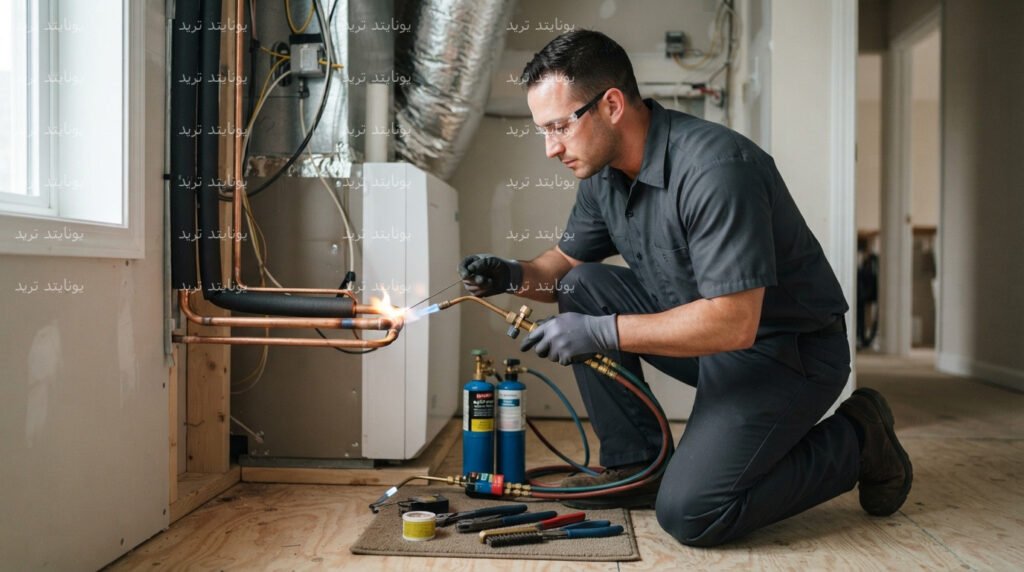
It is a process Installation of copper pipes The basic foundation for ensuring the efficiency of domestic and industrial refrigeration and air conditioning systems and preventing premature operating malfunctions. Following precise engineering standards when laying these pipes ensures the safety of the refrigeration cycle, prevents the leakage of Freon gas, and protects the compressor from damage resulting from moisture or impurities. This article provides a summary of practical experience in selecting, extending and connecting copper pipes according to the latest international specifications approved for the year 2024.
Why is the quality of copper piping crucial to a cooling system?
The efficiency of the cooling system directly depends on its quality and safety Installation of copper pipes Which transports the refrigerant between the indoor and outdoor unit. The copper used must be of the type designated for air conditioning, as it has a high ability to withstand the pressures of modern gases such as R-410A and R-32. Any negligence in the thickness of the pipes or the quality of the metal leads to micro-cracks that cause gas leakage, which reduces the device’s ability to cool and leads to a significantly higher electricity consumption.
❓ Engineering standards for pipe wall thickness
Modern engineering codes recommend the use of copper conduits with a minimum thickness of 0.8 mm for common diameters to ensure the structural integrity of the system. This standard is necessary because modern refrigerant media operate at much higher operating pressures than older conventional media. Relying on thin-walled pipes exposes the system to the risk of explosion or collapse under high pressure, so you must ensure that the pipes meet the specifications before starting any installation work.
Technical work steps when extending copper pipes
Process begins Installation of copper pipes By planning the path well and determining the connection points accurately to reduce the number of welds. Sharp bending of pipes that may lead to kinking should be avoided, and professional bending tools (Pipe Bender) should be used to maintain the inner diameter of the pipe. After laying, the pipes are thermally insulated using Armaflex insulation with a thickness of no less than 1/2 inch to prevent condensation that causes damage to the walls or water dripping inside the house.
❓ Welding techniques under inert nitrogen flow
Professional welding operations require the use of brazing technology and the need to provide a continuous flow of inert nitrogen gas into the pipes. This procedure prevents the formation of internal copper oxides during the heating process, which may subsequently lead to clogging of the expansion valves and damage to the compressor. The use of nitrogen ensures that the inner path of the pipes remains completely clean and free of any solid impurities that may impede the movement of the coolant.
This diagram shows the logical and safe path of the installation process. Pressure testing is a crucial link to ensure the safety of the work before commissioning.
Comparison table: criteria for selecting foundation materials
| Standard | Certified copper pipes 🏆 Editor's choice | Light commercial copper pipes |
|---|---|---|
| Wall thickness (0.8mm+) | ✓ | ✕ |
| Withstand R-410A pressure | ★ 9.8/10 | ★ 4.5/10 |
| Internal corrosion resistance | ✓ | ✕ |
| Technical guarantee | ★ 9.5/10 | ★ 3.0/10 |
Strict pressure tests before system shipping
Modern technical specifications require a careful pressure test of the system using dry nitrogen at a pressure of at least 500 to 600 pounds per square inch (PSI). This pressure must be left inside the pipes for a period of not less than 24 hours to ensure that there are no minute leaks in the welding joints. This procedure is the gold standard for quality verification Installation of copper pipes It prevents the need for costly maintenance operations in the future after finishing work is completed.
❓ The importance of double thermal insulation
The entire path of copper pipes must be covered with thermal insulation (Armaflex) with a thickness of at least 1/2 inch, and the push and pull lines must be insulated separately. Insulation prevents unwanted heat exchange with the surrounding environment, and is primarily responsible for preventing moisture condensation on the surface of the pipes. If insulation is neglected, the system will lose a large portion of its cooling energy, which increases electrical loads and shortens the life of the compressor.
Advantages and disadvantages
Features:
requires Air conditioning installation Effectively choose the ideal location for the indoor and outdoor units to ensure ideal air distribution and facilitate regular maintenance. It should also be ensured that the racks are installed with high precision to avoid annoying vibrations, with the necessity of insulating the electrical and mechanical connections to protect the system from surrounding weather factors.
- Achieving the highest possible cooling efficiency of the system.
- Avoid the risk of costly refrigerant leaks.
- Extending the life of the compressor unit.
- Reducing electrical energy consumption due to good insulation.
Disadvantages:
The success of this system requires advance and careful planning of all paths and walls before the final finishing work. Installing air conditioning ducts According to studied diameters and tight thermal insulation to avoid blockages and problems of water falling inside the building. This procedure allows the lines to be protected from mechanical shock and facilitates regular maintenance operations without the need for subsequent break-in or adjustment.
Maintaining the efficiency of these equipment is not limited to the quality of the foundation only, but is also closely linked to the necessity of conducting Regular air conditioning maintenance For early detection of any decline in pressures or emergency blockages. This regular follow-up helps protect mechanical parts and avoid expensive repair costs in the long run.
Professionalism in Installation of copper pipes The most vital engineering step to ensuring robust and sustainable cooling performance in modern HVAC systems. The precise implementation of this process contributes to reducing energy consumption by between 25% and 40%, thanks to the integrated thermal insulation that prevents loss of cold and maintains the efficiency of the cooling cycle.
The success of this system depends entirely on the accuracy of the welds and the safety of the extension paths, as any laxity in installation standards inevitably leads to Freon gas leakage and deterioration of the cooling capacity over time. So strict adherence to Principles of installing copper pipes Ensures sustained performance and protects vital system components from corrosion or clogging.
The success of this system requires advance and careful planning of the extension network from the first construction stages of the building. Where it includes a stage Installing air conditioning ducts Choose the appropriate diameters and protect them with tight thermal insulators inside the walls or false ceilings. This proper preparation prevents condensation of water droplets and maintains stable gas pressure, paving the way for safe and long-term operation of indoor and outdoor units.
A stage comes Air conditioning maintenance Periodically as an indispensable preventive measure to maintain optimal performance of devices and extend their lifespan for many years. Regular inspection of internal components and cleaning of filters effectively contributes to reducing energy consumption and avoiding sudden technical problems before they escalate.
Besides the precise composition, it comes Air conditioning maintenance Periodically as a first line of defense to maintain optimal performance of devices and extend their lifespan. Regular preventive checks help detect hidden malfunctions before they worsen, ensuring efficient flow of fresh air and reducing excessive energy consumption.
The study discusses the steps for implementing a process Air conditioning installation With high efficiency, starting from installing the indoor and outdoor units professionally, all the way to connecting the cooling and air discharge lines accurately. These elaborate procedures help achieve maximum cooling levels with the lowest possible energy consumption while extending the life of the device.
The success of this system requires careful attention to each stage Establishing cooling pipes Inside walls and ceilings before final finishing work, to ensure that the shortest and least curved paths are chosen. This includes using high-quality thermal insulation and installing copper lines with diameters that precisely match the capacity of the air conditioning units to avoid pressure drops.
Comprehensive guide to implementation steps Air conditioning installation With high efficiency, starting from tightly installing the internal and external units and adjusting the appropriate water drainage tendencies, all the way to checking the gas pressure and ensuring the stability of the air flow. Adhering to these precise steps prevents annoying vibrations, saves energy consumption, and extends the life of the device.
- It requires high technical skill and specialized tools for welding.
- It takes a relatively long time due to the pressure tests.
- The material cost of copper pipes is high compared to alternatives.
❓ Editor's judgment and final rating
Overall rating: 9.6/10. Compliance with technical standards Installation of copper pipes Not just a luxury, it is a necessary investment for any professional air conditioning system. This option suits property owners and engineers looking for sustainable performance and reduced long-term maintenance costs. The end result of the decision is powerful, stable cooling that is compatible with modern air conditioning systems.
Frequently asked questions
❓ What are the risks resulting from not using nitrogen gas during welding?
Failure to use nitrogen leads to the formation of copper oxides inside the pipes, which travel with the refrigerant gas to clog the expansion valves and lead to permanent damage to the compressor.
❓ Can old copper pipes be installed in a modern air conditioning system?
This is not recommended, because modern devices operate at higher pressures that require special pipe thicknesses, and older pipes may have lost their properties or have undergone internal corrosion.
❓ How can I be sure that there is no leakage after extension?
This is confirmed by performing a dry nitrogen pressure test at 500-600 PSI for 24 hours and monitoring the pressure gauge to ensure it is completely stable.
❓ What is the best thickness for copper air conditioning pipe insulation?
The optimal technical standard is insulation (Armaflex) with a thickness of no less than 1/2 inch to ensure effective thermal insulation and completely prevent condensation.
❓ Why should the two copper lines be insulated separately?
Insulating the two lines separately prevents heat exchange between the cold intake line and the warm drive line, ensuring higher system efficiency and preventing energy loss.
Investing in quality copper plumbing is the first step toward long-lasting comfort within your home. Do not hesitate to request a specialized technician who adheres to these engineering standards to ensure that the air conditioner works as efficiently as possible.
















Community dialogue
0 comments