
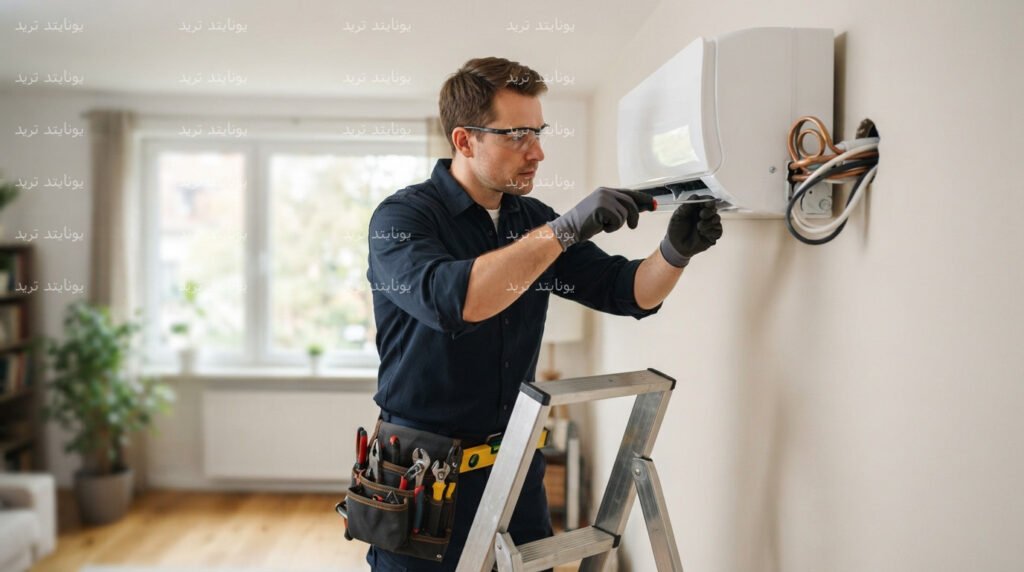
The quality of cooling in your home depends mainly on the accuracy of... Air conditioning installation It fits into the space, as the technical installation process contributes to maximizing the efficiency of the device. Adherence to engineering standards during installation and installation ensures a longer compressor life, while significantly reducing energy consumption. In this article, you will learn about the basic pillars that guarantee you perfect performance without technical errors.
Criteria for selecting air conditioning capacity and installation location
It requires an operation Air conditioning installation Successfully matches the thermal capacity of the device with the actual area of the room with high accuracy. In hot climates, rooms need an approximate cooling capacity of 600 thermal units (BTU) per square meter to ensure efficient cooling. In contrast, regions with moderate climates are satisfied with 333 units per square meter.
❓ Locate the indoor and outdoor unit
The indoor unit must be installed at a height of at least 15 cm from the ceiling to ensure free air circulation. At the same time, choose a shaded location for the outdoor unit away from direct sunlight to ensure the compressor operates at 100% efficiency. Installation in poorly ventilated areas unjustifiably increases amperage consumption and leads to damage to the compressor.
The importance of pre-priming before finishing
Proper priming before the finishing stage is key to avoiding future breakdowns and expensive maintenance costs. Includes process Air conditioning installation Good installation of insulated copper pipes, taking into account the inclination of water drainage lines to avoid any internal leaks. Ignoring these details may later cost you double the price of the device in breaking and repair operations.
❓ Steps to check the quality of pipes and connections
Always make sure to use copper tubes of appropriate thickness and heat insulated separately for each line. You must ensure that there are no sharp bends in the pipes that prevent the Freon gas from flowing smoothly. Moreover, checking the electrical connections prevents “sparks” or damage to the electronic board due to current fluctuations.
Comparison of modern air conditioning systems
The efficiency of air conditioners varies based on the technologies used in the compressor and electrical energy consumption rates. The following table shows a quick comparison of the most popular options on the market currently to help you make the right purchasing decision.
| Standard | Inverter air conditioning 🏆 Editor's choice | Normal air conditioning |
|---|---|---|
| Save electricity | ✓ (37% saving) | ✕ |
| Cooling stability | ✓ 9.8/10 | ✓ 7.5/10 |
| Quiet during operation | ✓ 9.5/10 | ✓ 6.0/10 |
| Initial cost | ✗ High | ✓ Low |
| Easy maintenance | ✓ 8.5/10 | ✓ 9.0/10 |
The above data shows the superiority of inverter technology in terms of electricity consumption, despite its higher initial cost compared to regular appliances.
Practical steps to ensure installation quality
These steps are performed sequentially to ensure there are no leaks in the closed circuit and to maintain refrigerant pressure at its ideal operating levels.
❓ Advantages and disadvantages
Features:
It counts Installing air conditioning ducts Copper is the essential step that precedes the final finishing, as this hidden network ensures the smooth flow of refrigerant between the indoor and outdoor units. The careful engineering planning of these pipe paths not only protects the installations from damage, but also prevents future cooling leaks and maintains the aesthetics of the interior design of the place.
- Lower energy consumption in inverter models.
- Longer lifespan when professionally installed.
- Fast and balanced cooling throughout the room.
Disadvantages:
This competence is not complete without commitment to programs Regular air conditioning maintenance It protects the system from declining performance over time. Regular inspection includes cleaning filters and reviewing refrigerant pressures to ensure continuous fresh air flow and avoid unplanned malfunctions.
It requires an operation Professional installation Careful consideration of the technical standards that ensure the smoothness of the cooling cycle inside the unit. Adhering to the correct engineering steps during installation maximizes the efficiency of the device, reducing energy consumption and protecting the compressor from premature damage.
Requires application The basics of installing your home air conditioning Careful study of the installation locations of the internal and external units to ensure free air flow and the highest possible cooling efficiency. Following proper technical standards during connection and insulation of pipes also contributes to avoiding Freon leakage and protecting the compressor from premature operational stress.
This efficiency is not complete without commitment to periodic, specialized programs that ensure the safety of internal parts, as works contribute Regular air conditioning maintenance Early detection of refrigerant gas leaks and careful cleaning of filters. This step also protects the engine from sudden damage and ensures continuous fresh and healthy air flow.
These pillars start with one step Installing air conditioning ducts Copper was carefully selected, choosing the appropriate diameters and thermally insulating them to ensure a smooth flow of Freon gas between the internal and external units. Burying and extending these paths professionally before the final finishing also contributes to avoiding any future leaks and protecting the place’s decor from damage.
The efficiency of the device does not stop at the installation stage only, but also extends to the necessity of conducting a procedure Regular air conditioning maintenance It maintains fresh air flow and prevents dust from accumulating inside the filters and evaporator. Regular technical inspection of refrigerant gas levels and mechanical parts prevents sudden breakdowns during the peak of summer, ensuring continued cooling with the highest efficiency and lowest electricity consumption.
These steps start from the first construction stage, where extreme care is required Installing air conditioning ducts Copper and choose their diameters carefully to avoid any suffocation in the flow of the cooling medium. These paths must also be insulated with heat-resistant materials to ensure that there are no water leaks or loss of cooling energy through the walls.
- ✓High installation costs if not pre-established.
- ✓The need for periodic maintenance to ensure the efficiency of the filters.
- ✓Difficulty repairing complex systems without a specialized technician.
❓ Editor's judgment and final rating
Compliance with technical installation standards deserves a rating of 9.4/10, as investing in a professional technician and proper foundation is more important than the type of device itself. This option is well suited for new homes that seek to save electricity in the long term.
Frequently asked questions
❓ What is the required distance between the indoor unit and the ceiling?
The distance must not be less than 15 cm to ensure efficient air intake and circulation within the room.
❓ Does the location of the outdoor unit affect electricity consumption?
Yes, installing the outdoor unit in a shaded, well-ventilated location reduces amperage consumption and maintains 100% compressor efficiency.
❓ Why should you use insulated copper pipes?
Insulation is necessary to prevent loss of cold during gas transmission and to avoid water condensation on the pipes, causing moisture in the walls.
❓ How do inverters save electricity?
Inverter technology adjusts the compressor speed based on the required temperature, saving up to 37% of annual electricity consumption.
❓ Is pre-establishment necessary for all types of conditioning?
Yes, pre-priming ensures that pipes and wires are hidden inside the walls, maintains the aesthetic appearance, and prevents water leaks later.
Always be sure to check with the device manufacturer for instructions Air conditioning installation Exactly compatible with your device model. Using certified technical expertise ensures sustainable operation and saves you a lot of future troubles.
















Community dialogue
0 comments