
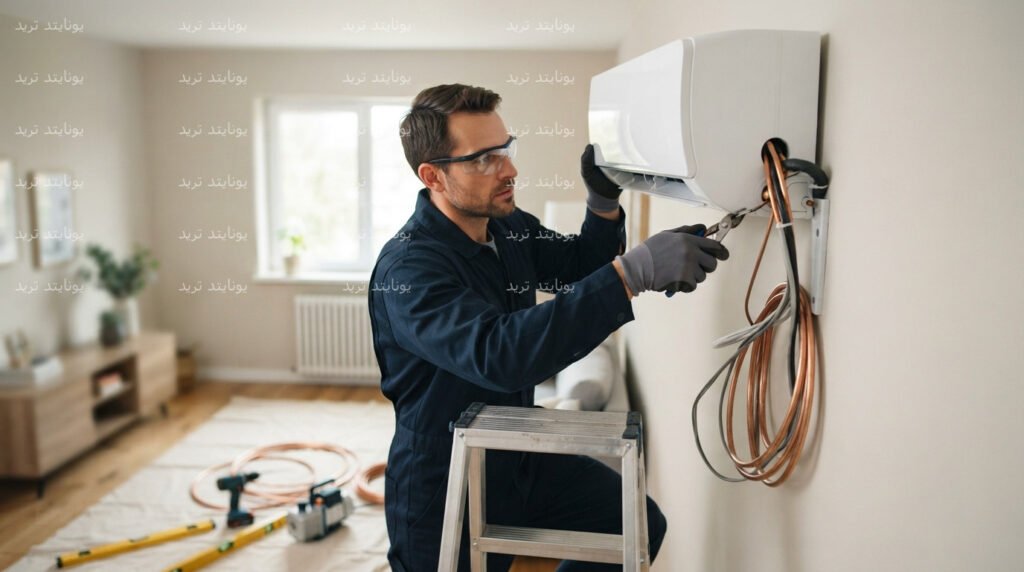
The quality of cooling in your home directly depends on the accuracy Air conditioning installation Air according to approved technical specifications. Choosing the appropriate location for the indoor and outdoor unit improves air flow and ensures efficient cooling distribution throughout the space. The technician's adherence to professional standards, such as performing a vacuum procedure and ensuring the integrity of the copper connections, protects your device from future malfunctions and significantly extends its lifespan.
The effect of the location of the indoor unit on cooling efficiency
The indoor unit must be placed in a location that allows air to circulate freely without obstruction to get the most out of the process Air conditioning installation Air. Avoid installing the device above heat sources such as stoves or in places exposed to direct sunlight for long periods. This orientation ensures that the temperature sensor is not affected, preventing premature stopping of the compressor and keeping the room temperature constant.
❓ Safe distances for professional installation
Experts recommend leaving a distance of at least 15 cm above the indoor unit to ensure proper air intake. You must also take into account the inclination of the unit towards the water drain to avoid moisture leaking into the room as a result of condensation accumulation. Good planning of these distances facilitates regular maintenance and prevents noise resulting from air pressure in tight spaces.
Quality standards for copper pipes and connections
The quality of copper pipes used in the process is considered Air conditioning installation A crucial factor in preventing refrigerant leakage. Thermal insulated pipes of sufficient thickness must be used to prevent energy loss and to protect connections from external weather factors. Skillful handling of copper during shaping prevents unintended twists that may obstruct the gas path and lead to poor cooling.
❓ The importance of the vacuum process in the system
Discharging the air from the pipes using a vacuum pump is a mandatory step before opening the gas valves to ensure the purity of the refrigeration cycle. The presence of any level of moisture or air inside the system leads to oxidation of the oil and damage to the compressor in the long term. Implementing this step technically increases performance efficiency and prevents noise from the compressor during operation.
Comparison of operating techniques and cooling performance
| Standard | Standard air conditioner | Inverter air conditioner 🏆 Editor's choice |
|---|---|---|
| Electricity efficiency | ★ 7/10 | 9.5/10 (✓) |
| Temperature stability | ★ 6/10 | 9.0/10 (✓) |
| Quiet during operation | ★ 7/10 | 9.5/10 (✓) |
| Operational cost | ✗ High | ✓ Very low |
| Shelf life | ★ 8/10 | 9.0/10 (✓) |
The above data shows that inverter technology provides superior performance despite the high initial cost Air conditioning installation new. The inverter contributes to reducing energy consumption by up to 40% by regulating the compressor speed based on the actual cooling needs [1.2.6]. This type of system reduces stress on electrical components, which enhances sustainability and significantly reduces the electricity bill.
Advantages and disadvantages of modern cooling systems
❓ Advantages and disadvantages
Features:
- Reducing energy consumption thanks to advanced inverter technology.
- Improve air quality and distribute cooling regularly.
- Increase the lifespan of the device when you commit to professional installation.
- Low noise level generated by outdoor and indoor operation.
Disadvantages:
- High initial cost of advanced devices.
- The need for professional technicians to ensure accurate calibration.
- Regular maintenance of filters is required to ensure continued efficiency.
❓ Editor's judgment and final rating
Our overall evaluation of the process Air conditioning installation SASO 2874 compliant is 9.4/10. We advise users to invest in energy-efficient inverters, especially in areas with heavy usage. Obtaining ideal performance necessarily requires reliance on trained workers, as installation errors reduce energy efficiency by a rate that may exceed 30% [1.2.2].
A stage comes Establishing copper pipes As an essential step prior to the final finishing, careful laying inside the walls ensures that connections are protected from damage and avoids any future refrigerant gas leaks. This procedure requires engineering precision in choosing the appropriate diameters and completely thermally insulating the pipes, which ensures efficient operational performance of the device throughout the years of service.
Maintaining the efficiency of devices is not limited only to the quality of installation, but also requires continuous procedures Regular air conditioning maintenance To detect malfunctions early and avoid dust accumulation on internal filters and coils. This regular technical inspection contributes to reducing energy consumption and extending the lifespan of the cooling system at full operational capacity.
Reaching the highest levels of efficiency requires consideration Professional air conditioning installation The air is controlled according to precise engineering steps that govern the field establishment of the units. This commitment ensures that refrigerant leakage problems are avoided, and also significantly reduces the operating load on the compressor, reducing electricity consumption and giving you optimal cooling performance that lasts for many years.
A stage comes Installation of copper pipes As a basic foundation for ensuring the efficiency of cooling systems, relying on precise technical standards in connection and insulation significantly enhances compressor performance. This perfection in connections effectively contributes to reducing power consumption by up to 40%, which extends the life of the device and prevents frequent malfunctions.
The true success of the cooling system begins from the construction and finishing stage, as it requires... Establishing copper pipes Extreme care in choosing the appropriate diameters and insulating them tightly to avoid any leakage of Freon gas or moisture condensation inside the walls. The correct geometric laying of these paths also ensures that the stress on the compressor is reduced, which extends the life of the device and maintains energy efficiency in the long term.
This operational efficiency is not complete without careful implementation Regular air conditioning maintenance It maintains the integrity of mechanical parts and prevents dust from accumulating inside filters and cooling paths. Regularly checking refrigerant levels and evaporator coil cleanliness helps prevent unplanned breakdowns and extends the life of the appliance. This preventive measure also contributes to reducing electrical energy consumption and ensuring that the air flow remains pure and fresh throughout the year.
Maintaining this ideal performance over time is not complete without action Regular air conditioning maintenance It included checking the refrigerant level and the cleanliness of the filters and internal evaporator. Continuous technical follow-up prevents the accumulation of unexpected malfunctions and reduces electrical energy consumption, which in turn prolongs the life of the device and maintains the purity of the air inside the room.
The flow chart above shows the practical path of a professional air conditioning installation, which begins with site selection and ends with operating adjustments to ensure the efficiency of the device.
The true success of the cooling system begins from the construction and finishing stage, as it requires... Installing air conditioning ducts Choose diameters that match the capacity of the device and insulate them with great care to avoid leakage of Freon gas or moisture condensation inside the walls. Extending this network with thoughtful paths and smooth bends also ensures that the compressor is protected from stress and its life is extended to the maximum possible extent.
Frequently asked questions
❓ What is the ideal distance between the indoor unit and the ceiling?
It is recommended to leave a distance of at least 15 centimeters to allow air to circulate smoothly, which prevents noise and ensures effective distribution of coolness.
❓ Does the vacuum not working affect the electricity bill?
Yes, the presence of air and moisture inside the ducts causes stress on the compressor, which increases electricity consumption and reduces the overall cooling efficiency of the device.
❓ Why is it preferable to use insulated copper pipes?
Copper thermal insulation prevents cooling loss before it reaches the room, and protects pipes from condensation that may cause water leakage or corrosion of the metal.
❓ When should air conditioning filters be cleaned?
Filters should be cleaned every 2 weeks, and changed every 6 months to ensure air flow and reduce the load on the compressor by up to 15% [1.4.1].
❓ What is the difference between regular air conditioning and inverter?
The inverter intelligently controls the compressor speed, saving up to 40% of energy consumption compared to a regular air conditioner that operates on and off frequently.
By following these technical standards when Air conditioning installation Your home, you will ensure a comfortable environment and economical operating cost. Always make sure to seek the help of specialized professionals to ensure that every step is carried out in accordance with approved engineering principles.
















Community dialogue
0 comments