
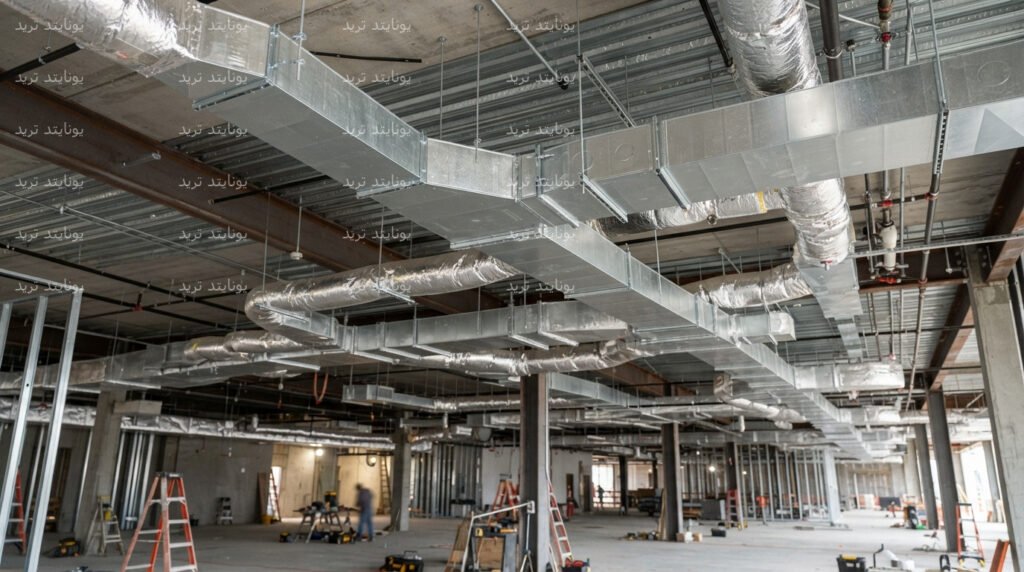
It is a process Air conditioning duct extension The basic foundation for ensuring optimal performance of cooling units, as the quality of the foundation directly affects the energy efficiency and lifespan of the device. Professionals rely on the accuracy of technical standards in choosing diameters and thermal insulation to prevent leakage of the refrigerant and ensure its flow at stable pressure. In this article, you will learn about the practical steps and technical precautions that expert technicians follow to ensure that air conditioners operate with high efficiency and avoid costly future malfunctions.
Approved technical standards for copper founding
requires Air conditioning duct extension Use copper pipes of approved thickness that can withstand high operating pressures without dents or leaks. It is necessary to rely on specialized bending tools to ensure the integrity of the path and prevent any bottleneck in the flow of Freon within the circuits.
❓ The importance of double thermal insulation
Professional thermal insulation of copper pipes contributes to saving electrical energy consumption by 20% to 30%, according to the latest studies. Each pipe must be coated with rubber insulation, such as... Arm Flex At least 9mm thick to prevent condensation and keep the medium cool.
❓ Rules for Selecting Pipe Diameters
Pipe diameters vary based on the cooling capacity of the air conditioner (BTU) to ensure perfect balance in the system. A 1.5 HP air conditioner typically requires 1/4 inch for liquid and 3/8 inch for gas, while a 5 HP air conditioner typically requires 1/2 inch for liquid and 3/4 inch for gas.
Steps to test and verify the integrity of welds
Perform a pressure test using... Nitrogen gas A mandatory step that cannot be skipped to ensure the integrity of all weld connections. The network is fully pressurized to ensure that there are no clogs or hidden leaks that could lead to compressor damage or lack of cooling after final installation.
The diagram above shows the practical path followed by technicians, where emphasis is placed on the quality of the welds before moving on to installing the indoor and outdoor units to ensure a flawless system.
Coordinating extensions in hidden systems
Early coordination must be made to plant pipes inside walls and ceilings before concrete pouring work to ensure smooth paths. This includes providing maintenance openings of a minimum size of 40 x 40 cm for easy access to electrical and mechanical connections without the need to break down the trim.
| Technical standard | Traditional incorporation | Professional establishment 🏆 Editor's choice |
|---|---|---|
| Copper type | normal | Certified thickness ✓ |
| Insulation thickness | 6 mm | 9 mm and above ✓ |
| Leak test | ✕ | Nitrogen gas ✓ |
| Overall evaluation | ★ 6/10 | ★ 9.8/10 |
Advantages and disadvantages
❓ Advantages and disadvantages
Features:
- Significantly increasing the device's cooling efficiency.
- Saving electrical energy consumption by up to 30%.
- Increasing the life span of the compressor.
- Reducing the need for extensive periodic maintenance.
Disadvantages:
Implementation steps Air conditioning installation According to engineering principles, starting from the precise balancing of the internal unit and installing the vibration-absorbing brackets, all the way to connecting the electrical circuits and testing the water drainage. This careful application ensures that operational noise is suppressed and moisture build-up is avoided, giving you a complete and highly efficient cooling experience.
It requires a stage Establishing copper pipes Inside the walls there is a precise engineering layout that ensures smooth paths away from heat sources or sharp bends that may hinder the movement of the refrigerant gas. Commitment to installing these extensions according to well-studied architectural plans protects the connections from future damage and prevents any leaks that may affect the integrity of the structural structure or the efficiency of cooling.
steps Air conditioning installation Accurately and professionally to ensure that the cold is distributed efficiently and balanced within the required space. This includes professionally installing the indoor and outdoor units, connecting the electrical circuits, and testing the refrigerant pressure to avoid any future malfunctions.
require Air conditioning maintenance High efficiency through periodic and continuous inspection of cooling units to avoid sudden malfunctions before they worsen. These preventive measures ensure that the operational performance of the device is restored to its optimal state, contributing to reduced power consumption and effectively extending the life of internal components.
The success of proper establishment is not complete without adherence to a periodic schedule that ensures... Air conditioning maintenance Air flow with high efficiency, to avoid sediment accumulation inside the cooling lines and protect the compressor from premature damage. This regular follow-up contributes to proactively detecting any drop in Freon gas pressure and treating blockages as soon as they occur, which maintains stable cooling temperatures and reduces electricity consumption.
requires Installing air conditioning ducts Careful planning of the paths inside the walls to ensure that there are no sharp bends that may hinder the movement of the refrigerant gas, while ensuring that they are fixed using sturdy supports that protect them from vibrations or future damage. These foundational steps ensure complete integration between the piping network and the internal and external units, preventing any leaks or loss of operational energy.
are considered procedures Air conditioning maintenance Circulating air is an indispensable complement to quality foundation; It includes checking refrigerant gas levels and cleaning filters and heat exchangers to prevent dust accumulation that stresses the compressor and reduces cooling efficiency over time.
It is a stage Installing air conditioning ducts In placing the basic copper network inside the walls or ceilings before the final finishing stage, which requires extreme precision in determining the paths to avoid sharp bends that may impede the movement of the refrigerant gas. Commitment to installing air conditioning pipes according to engineering specifications ensures that the installations are protected from external damage and provides an ideal environment for the device to operate with high efficiency in the long term.
- High initial cost of high quality materials.
- It requires trained workers and high technical skill.
- The necessity of prior engineering coordination with construction work.
❓ Editor's judgment and final rating
Final rating is 9.5/10. It is considered an investment in quality Air conditioning duct extension A strategic decision for any property owner, as it provides protection against frequent breakdowns and ensures sustainable performance of devices, making it the ideal choice for long-term residential and commercial projects.
Implementation steps Air conditioning installation According to engineering principles, which begins with tightly installing the internal and external units and connecting the electrical circuits with extreme precision. These measures ensure that mechanical vibrations are avoided and electrical current consumption is reduced, giving you pure airflow and balanced cooling throughout the space.
Frequently asked questions
❓ How do I avoid leaking Freon in the pipes?
Avoiding leakage is done by ensuring the quality of the brazing welds and using durable thermal insulation, in addition to conducting a pressure test with nitrogen before closing the walls.
❓ Does the length of the pipes affect the cooling of the air conditioner?
Yes, increasing the length of the piping beyond the limit permitted by the manufacturer leads to decreased cooling efficiency and increased stress on the compressor, so the recommended extension length must be adhered to.
❓ What are the best types of insulation for pipes?
Rubber insulation called “Arm Flex” is currently the best because it provides high protection against moisture and thermal condensation, which is very necessary in areas with high temperatures.
❓ Why is nitrogen used in the test?
Nitrogen is used because it is an inert, dry gas that helps detect the smallest holes in welds without leaving any moisture inside the pipes that may harm the cooling system.
❓ When should you start laying pipes?
It is preferable to start in the construction foundation stage and before starting the finishing and decoration works to ensure that the pipes are hidden in an aesthetic and professional manner.
Commitment to standards Air conditioning duct extension The aforementioned guarantees you complete comfort and stable cooling for many years. Do not hesitate to consult a specialized technician to apply these steps at your work site to ensure the highest quality.
















Community dialogue
0 comments