
Engineering standards for choosing copper diameters and thicknesses
The efficiency of air conditioning ducting is related to the compressor capacity and the refrigerant flow volume per unit time. Random selection of diameters leads to complex mechanical problems, such as accumulation of lubricating oil inside the evaporator if the diameter exceeds the permissible limit, or high back pressure and burnout of the compressor electrical coil if the diameter is narrower than required.
| Air conditioning capacity in tons | Tow line diameter in inches | Liquid line diameter in inches | Minimum pipe wall thickness in mm |
|---|---|---|---|
| 1.5 tons of cooling | 1/2 | 1/4 | 0.81 |
| 2.0 tons of cooling | 5/8 | 3/8 | 0.81 |
| 2.5 tons of cooling | 5/8 | 3/8 | 0.89 |
| 3.0 tons of cooling | 3/4 | 3/8 | 0.89 |
| 5.0 tons of cooling | 7/8 | 1/2 | 1.00 |
Stages of mechanical installation inside modern facilities
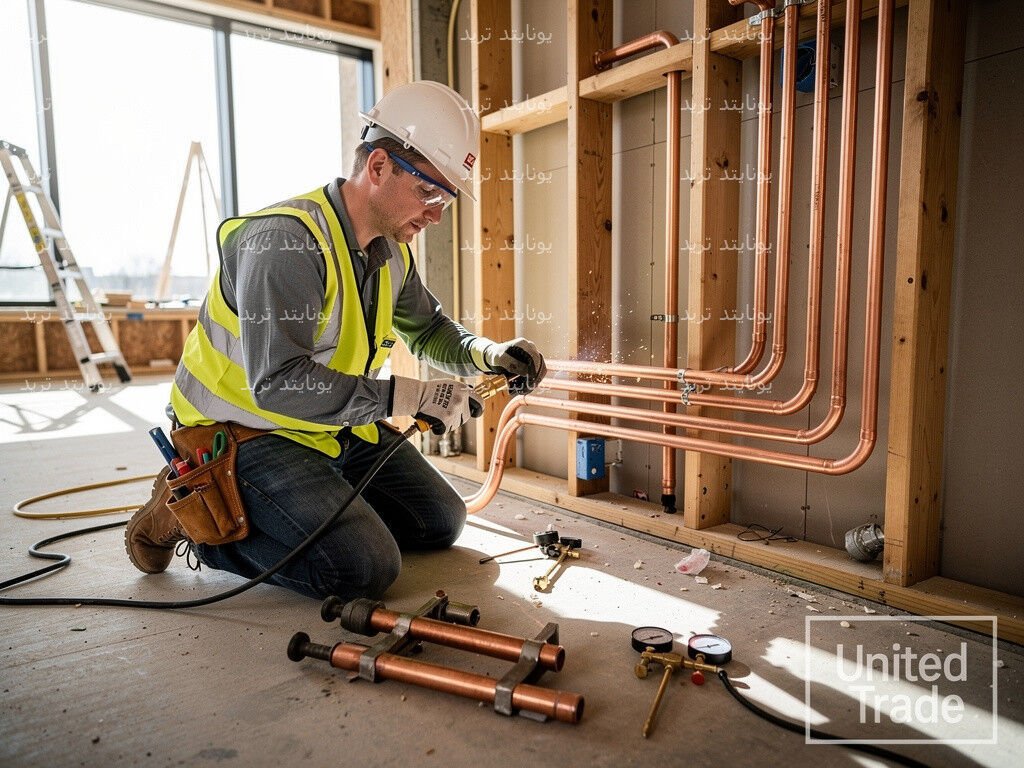
The process of extending air conditioning ducts is subject to a strict implementation process that requires the use of precise engineering tools to avoid structural damage or hidden copper distortions.
Install tracks and secure bends
- Use hydraulic or manual pipe benders with a degree of curvature that does not exceed the design limits, to prevent narrowing of the internal section for Freon flow.
- Distribute the load-bearing jumpers at regular distances of no more than one and a half meters in the horizontal paths, while placing rubber linings to prevent the pipes from vibrating and their contact with the concrete structure.
- Provide oil traps every five meters in the vertical stalagmites to ensure the smooth return of engine oil to the lubrication sump in the outdoor unit.
Inert gas welding and leakage testing
- Pumping dry nitrogen gas at low pressure into the circuit while welding silver alloys, in order to prevent the formation of a black oxidation layer inside the pipes, which may later clog the expansion valve.
- Cleaning pipe ends using an internal deburring lathe to avoid air turbulence vortices that increase energy consumption.
- The entire network is pressurized with nitrogen gas to levels of up to 450 psi and left under observation for a minimum of 24 hours to detect even the smallest defects.
- The air vacuum process is carried out using a specialized suction pump down to less than 500 microns to ensure that the circuit is completely free of moisture and non-condensable gases.
Mastering the extension of air conditioning ducts is the basic foundation for ensuring that the cooling system operates with stable operational efficiency and balanced energy consumption throughout the seasons of the year. This article aims to provide you with a technical guide explaining foundation principles, copper selection criteria, and thermal insulation techniques to protect the compressor and avoid costly leaks.
Quick answer
Air conditioning ducting is the path of insulated copper lines that transport liquid and refrigerant gas between the indoor and outdoor units of the air conditioner. This procedure requires the use of precisely specified diameters, bending of pipes with hydraulic equipment to avoid blockages, application of tight thermal insulation and pressure checking with nitrogen gas to prevent Freon leakage and ensure maximum cooling efficiency.
Engineering criteria for choosing the cooling network path
Determining the path of the cooling lines represents the first step in avoiding the Freon liquid losing its thermal properties during transportation. Furthermore, the ergonomically shorter path should be chosen to reduce the number of elbows and sudden bends.
Avoid laying near main electrical connections to prevent any influence of electromagnetic fields or potential fire hazards. In addition, the route should consider future accessibility for preventive maintenance work.
Determine the appropriate inclinations of drain and copper lines
Applying a slight slope in the direction of the oil flow ensures that the lubricating oil is regularly returned to the air conditioner compressor to protect it from mechanical burnout. As a result, the mechanical cycle stabilizes and the heat exchange efficiency inside the evaporator improves.
In contrast, the absence of this tendency causes oil to accumulate in the lower bends of the pipes. It should be noted that the continuation of this defect subsequently leads to poor cooling and damage to the expansion valves.
Types of copper used in extending air conditioning pipes
Copper materials used in cooling networks vary according to the level of pressure tolerance and the thickness of the inner wall of each tube. Therefore, engineers resort to using globally approved Korean or American copper to ensure resistance to the high pressures of Freon R410A.
The following table shows the fundamental differences between the common categories of copper pipes to facilitate comparison and selection of the appropriate type for the project:
| Copper class | Wall thickness | Pressure tolerance level | Best practical use |
|---|---|---|---|
| Type K | Very thick | Too high | Underground burial and heavy-duty applications |
| Type L | Average thickness | High and perfect | Standard residential and commercial air conditioning installations |
| Type M | Thin wall | Low to medium | Light domestic water systems only |
For example, Type L has remarkable flexibility that allows it to be shaped and bent without microscopic surface cracks. In addition, Type K provides exceptional protection in areas subject to high humidity or direct contact with concrete.
Steps for field implementation of cooling networks
The implementation work begins with examining the paths specified in the construction plans to ensure that they are free of solid structural obstacles. In other words, extending air conditioning ducts requires careful adherence to the following technical arrangement:
- Cut copper pipe using a circular pipe cutter to ensure straight edges free of metal burrs.
- Remove internal excess with a hand grinding stone to prevent unwanted eddies in the Freon stream.
- Insert foam rubber insulation over the pipe before performing any welding or assembling of the ends.
- Form bends using a hydraulic bending tool with templates suitable for the pipe radius.
- Weld the connections using silver alloys under inert nitrogen gas flow to avoid internal oxidation.
As a result, a homogeneous copper network is formed that can withstand various operational pressures without any risk of Freon leakage. It should be noted that avoiding excess welds in enclosed spaces facilitates later safety checks.
Thermal insulation and pipe protection techniques
Integrated thermal insulation prevents moisture condensation on the outer surfaces of the pipes and stops heat loss during Freon circulation. Furthermore, foamed elastomer insulation represents the most reliable option for resisting absorption of ambient water vapor.
Requires implementation of Air conditioning installation With high efficiency, precise adherence to the connection paths and matching the selected diameters with the manufacturer’s instructions for the internal and external units. This mechanical compatibility ensures that line vibration is avoided and that Freon flows smoothly, which extends the life of the cooling system and reduces energy consumption.
Proper construction path requires careful consideration Establishing cooling pipes Inside the false walls and ceilings from the initial stages of construction, to avoid sharp bends that hinder the movement of gas and negatively affect the flow efficiency. Proper calibration of inclines and installation of support points also ensure that copper lines are protected from mechanical vibrations and thermal stresses during long-term operation.
These precise calculations are integrated with field steps when embarking on... Air conditioning installationInstalling the internal and external units requires a hydraulic balance that ensures the smooth flow of the Freon cycle without any loss of pressure. Proper practice of insulating pipes and completely vacuuming ensures that the system is protected from moisture, which increases operational efficiency and extends the life of the device.
Protecting this delicate system requires commitment to periodic programs implemented by specialized teams Air conditioning maintenance Air, to ensure stable pressure rates and address any premature blockages that may threaten the integrity of the compressor. This includes checking the quality of cooling lines and cleaning heat exchangers regularly to maintain the desired operational efficiency and avoid sudden malfunctions.
Requires implementation of Installing air conditioning ducts According to sound engineering rules, a careful study of the extension paths is carried out before starting the finishing work, to ensure the stability of the Freon cycle and prevent mechanical stresses on the cooling lines. Adherence to tight installation and isolation methods also contributes to avoiding leakage and ensuring the efficient performance of the system throughout its operational life without the need for breakage or costly modification later.
The efficiency of the cooling system does not depend only on the quality of the installation, but also extends to... Air conditioning maintenance The facility thoroughly inspects the refrigerant pressure and the cleanliness of the heat exchangers. Periodic prevention schedules ensure stable network engineering performance and reduced energy consumption, protecting the compressor from premature operational fatigue.
The sustainability of these mechanical systems requires careful adherence to programs Regular air conditioning maintenance Monitors gas pressure rates and detects early any leaks that may threaten the safety of the compressor. Regular technical inspection also helps in cleaning the heat exchange coils and calibrating the flow paths, ensuring energy efficiency and extending the operational life of the cooling units.
Implementing these calculations requires translation of a precise process starting from one stage Establishing cooling pipes Inside walls and ceilings according to well-studied paths that reduce bends and prevent mechanical bottlenecks. This includes ensuring tight thermal insulation and installing supports at standard spacing to avoid vibrations and ensure stable long-term operational stresses.
Protecting the system from these critical faults requires the application of professional protocols Air conditioning maintenance Air to ensure the safety of the entire cooling cycle. This includes periodically checking internal pressure levels and regularly addressing any blockages that may prevent oil from returning to the compressor. This preventive measure helps avoid premature mechanical damage and extends the service life of system components.
The construction phase requires adherence to foundations Establishing cooling pipes Inside the walls and ceilings, according to well-studied paths that avoid sharp bends that impede the movement of Freon. The tight fit and high-density thermal insulation also ensure that the copper network is protected from condensation and mechanical damage, which increases the operational efficiency of the system as a whole.
Covering the insulation with specialized packing tape protects it from corrosion resulting from exposure to ultraviolet rays in exposed spaces. Therefore, the insulation properties remain stable for many years without hardening or cracking.
Requires technical procedures followed during Air conditioning installation Accurate agreement between the diameters of the approved intake and exhaust lines and the unit specifications to ensure the stability of the refrigeration cycle. Tight mounting and proper thermal insulation ensure reduced energy losses and protect the compressor from premature operational fatigue.
Common mistakes while installing insulation
Pulling the packing tape excessively will cause the air cells of the insulator to compress and lose its ability to trap heat. Accordingly, moisture spots appear on the gypsum ceilings, causing severe decorative damage to the building.
Leaving seamless joints between pieces of insulation allows moist air to seep into the cold copper surface. For example, this negligence causes water to constantly drip behind cement walls without immediate notice.
Pressure and vacuum testing methods
Compression testing is a crucial and indispensable step before hiding the mesh inside the walls or pouring concrete over it. In addition, the approved inspection protocols include the following application standards:
- Injection of the piping network with dry nitrogen gas up to a pressure of 350-400 pounds per square inch (PSI).
- Monitor the pressure gauge indicator for 24 continuous hours to monitor any gradual decline in the reading.
- Use specialized soap suds to detect fine bubbles around solder points and threaded connections.
- Vacuum the air and moisture using a vacuum pump to reach a negative pressure level of approximately 500 microns.
Stabilizing the pressure after the specified period has elapsed provides conclusive confirmation of the safety of the cooling lines and their resistance to mechanical stress. Moreover, deep vacuum prevents moisture particles from freezing inside the expansion valve during actual operation.
Frequently asked questions
What is the maximum distance allowed when extending air conditioning ducts?
The safe distance is usually between 15 and 25 meters in conventional split air conditioners, depending on the manufacturer's instructions. Exceeding these lengths without adding additional lubricating oil and Freon will result in poor cooling efficiency and compressor fatigue.
Does manually bending copper affect the flow of Freon?
Yes, manual bending causes suffocation and narrowing of the inner diameter of the pipe, which hinders the smooth flow of refrigerant. Specialized mechanical benders should always be used to maintain roundness of the duct geometry and prevent microcracks.
How do I know the correct size of cooling pipes for my device?
The actual size is determined by referring to the technical specifications booklet included with the indoor and outdoor unit of each particular device. 1.5 HP air conditioners require a 1/2-inch gas line and a 1/4-inch liquid line on most newer models.
Why is it required to use nitrogen gas during welding?
Inert nitrogen prevents the formation of a black oxide layer on the inner surface of copper tubes while they are exposed to high welding temperatures. This protects the closed cycle valves and passages from becoming clogged with carbonic impurities during Freon circulation.
When should the old copper cooling network be completely replaced?
It should be replaced when multiple microscopic holes are present, or the copper is severely damaged beyond mechanical repair. In addition, the transition to modern high-pressure environmental Freon cooling systems requires the replacement of old, weak-walled pipes.
Is the insulation of a liquid pipe different from that of a gas pipe?
Yes, it is preferable to insulate each pipe completely separately to avoid negative heat exchange between the liquid line and the gas line. Combining the two tubes into one insulator reduces the efficiency of the cooling cycle by between five and ten percent.
Completing the extension of air conditioning ducts requires extreme precision in adhering to insulation principles and adjusting flow paths to ensure that your devices operate for the longest possible operational life without sudden malfunctions. Always make sure to assign these tasks to specialized teams that apply engineering stress testing standards to ensure your peace of mind and the quality of your indoor environment.
















Community dialogue
0 comments