
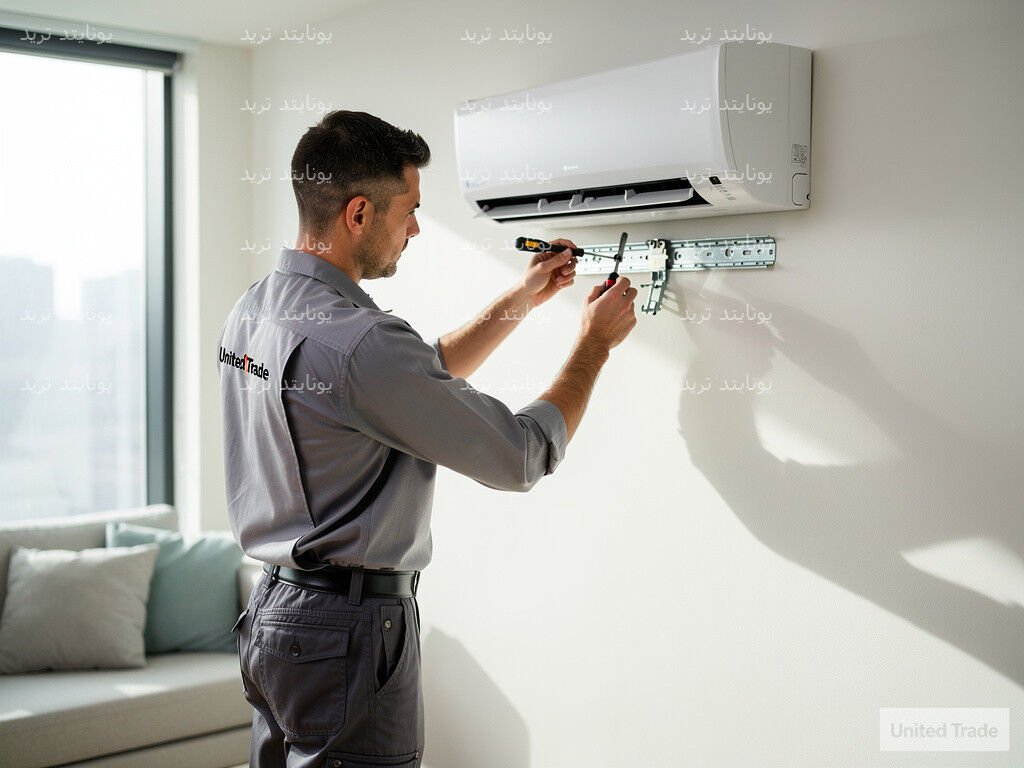
represents Air conditioning installation Air in a properly engineered manner is the basic foundation for ensuring that the device operates with the highest cooling efficiency and reduces energy consumption for many years. Haphazard installation leads to frequent problems such as Freon leakage and premature damage to the compressor, as well as a high monthly electricity bill. In this article, you will learn, step by step, the field standards for adjusting the indoor and outdoor units with complete professionalism to ensure a comfortable home environment.
Quick answer
Air conditioning installation Airing is an engineering process that requires the indoor unit to be installed on a flat wall with sufficient ventilation distances, and connected to the outdoor unit via tightly insulated copper pipes. The process requires vacuuming air and moisture from the circuit using a vacuum pump and nitrogen pressure testing to completely prevent Freon leakage. This procedure ensures increased cooling efficiency, extends the life of the device, and reduces electrical current consumption.
Criteria for choosing the location of air conditioning installation inside the room
Efficient airflow distribution is the primary factor in choosing the location of the indoor unit in any residential room. The device must be installed in a central place that allows the cooling movement to cover all corners of the space without wall obstacles or bulky furniture that obstructs the path of the rushing air. As a result, it is best to avoid placing the unit directly above heat sources such as electrical appliances or near constantly open doors to prevent power loss.
The technical distances surrounding the device ensure that hot air can be easily drawn in to cool it and exited smoothly through the cooling fins. Therefore, a vertical distance of at least 15 cm should be left between the ceiling of the room and the top of the device to provide an ideal suction path. Moreover, a lateral distance of at least 10 cm must be left from each end, allowing technicians to perform maintenance operations and change filters freely in the future.
The rigidity of the load-bearing wall is a crucial element to prevent the appearance of annoying vibrations or noises during continuous operation of the device. For example, installing a metal load-bearing plate on weak gypsum partitions without backing may cause the screws to loosen and the device to fall out over time. In contrast, fixing screws into a solid concrete or brick wall ensures permanent structural stability that reduces any annoying vibration sounds inside the room.
Technical controls for installing and protecting the outdoor unit
Proper ventilation of the outdoor unit directly affects the condenser’s ability to remove heat expelled from the room. An open place must be chosen that allows air to flow freely around the condenser without any obstruction in front that may hinder the strong exit of hot air. Accordingly, it is recommended to stay away from completely closed corners or narrow corridors that recirculate hot air back to the condensing fan.
The flatness of the iron base or floor prevents imbalance of the compressor and movement of mechanical oil within its closed system. Technicians use a water level to level the wall mounts with complete accuracy and ensure that there is no tilt that may cause mechanical squeak. In addition, placing shock-absorbing rubber pads under the mounting legs helps isolate vibrations and prevent rotational sounds from being transmitted through the walls into bedrooms.
The influence of external weather factors requires careful care to protect the condenser body and aluminum fins from rapid corrosion. It should be noted that constantly exposing the outdoor unit to hot sunlight increases the gas pressure inside the system and exhausts the compressor. Therefore, it is always preferable to direct the unit towards relatively shaded areas or to build a protective ventilation canopy that does not obstruct the natural path of rising air.
Steps to carry out home air conditioning installation safely
It requires completion Air conditioning installation It is successful to follow a precise procedural sequence that protects mechanical and electrical parts from damage. The field stages are summarized as follows:
- Determine the mounting point and install the load-bearing metal plate on the interior wall accurately using a water level and a suitable drill.
- Drilling the hole for the copper pipes to pass through at a slight outward angle of 5 degrees to facilitate the flow of condensation water.
- Extension and bundle of insulated copper conduits, connecting cables and drain hose fully wrapped with protective insulating tape.
- Connect the copper ends between the two units by flange technique and tighten with a torque wrench to prevent corrosion of the valves.
- Connect the electrical wires according to the attached technical diagram, taking into account grounding the device to protect the internal electronic devices.
Vacuum and copper insulation testing procedures
Vacuum vacuum pump: A mechanical device intended to extract air and moisture from a copper mesh before opening the gas. Air emptying is a stage that cannot be skipped at all when starting the operation of any modern refrigeration and air conditioning system. Moreover, leaving air particles inside the refrigeration circuit leads to the decomposition of the refrigerant oil and the formation of harmful acids that damage the compressor coils and cause premature burnout.
These standards start from the first construction or finishing stage, where extreme precision is required Establishing copper pipes To ensure the flow of the refrigerant without any bends or bottlenecks that negatively affect the cooling cycle. This also requires insulating the extensions with high-quality materials and specifying water drainage paths precisely, to avoid future leaks inside the walls.
Nitrogen pressure testing is the ideal way to ensure that all connection points and welds are free of invisible leaks. The technician pumps dry nitrogen gas into the pipes at a pressure of up to 300 pounds per square inch and leaves it for at least 20 minutes. As a result, any slight drop in the pressure gauge indicator is easy to spot and treat the leak before a costly refrigerant charge is lost.
Maintaining this ideal performance is not complete once the installation is completed, but rather requires adherence to a periodic schedule that includes Air conditioning maintenance Check refrigerant levels and clean filters regularly. This continuous monitoring contributes to avoiding sudden compressor malfunctions and extending the life of the refrigeration units to the maximum possible extent.
Maintaining the efficiency of the device does not depend only on proper installation, but also requires adherence to a program Regular air conditioning maintenance Ensures comprehensive technical inspection of all mechanical and electrical parts. This regular check helps avoid unplanned breakdowns and maintains strong cooling while keeping power consumption as low as possible.
It requires an operation Air conditioning duct extension Extreme care in choosing the appropriate copper diameters and thicknesses according to the cooling capacity and the approved network path. Precise mechanical installation of the lines ensures the avoidance of gas congestion and vibrations that may over time lead to leaks, thus maintaining the pressure of the refrigeration cycle and the stability of the performance of the entire system.
Quality installation is not complete without adherence to procedures Regular air conditioning maintenance It maintains the efficiency of the cooling cycle and the cleanliness of the filters from dust accumulation. This regular inspection helps detect minor mechanical faults and treat them immediately before they escalate, causing the device to stop suddenly and damage its internal components.
These standards start from the initial construction or finishing stage through Establishing copper pipes With diameters and thicknesses appropriate to the type and capacity of the device, taking into account careful thermal insulation to avoid water condensation inside the walls. Extending these paths with the shortest distance and minimum number of bends also ensures smooth flow of the refrigerant compound and continuous protection of the compressor from stress.
The quality of the installation is not complete without establishing a periodic schedule that deals with the work Air conditioning maintenance Air, as regular checks of filters and Freon levels contribute to avoiding sudden malfunctions and maintaining cooling efficiency for as long as possible. Continuous monitoring of mechanical and electrical parts also ensures that the compressor is protected from stress and significantly reduces energy consumption.
The first of these stages begins with completing a process Installing air conditioning ducts Copper copper with great accuracy according to the paths and sizes recommended technically. This early action helps protect the cooling network from blockages or sharp bends that may impede the smooth flow of Freon between the indoor and outdoor units.
Integrated thermal insulation of the pipes prevents unwanted heat exchange between the refrigerant medium and the surrounding outside atmosphere. In other words, using low-quality insulating foam leads to water droplets condensing along the path and falling into the walls or gypsum decorations. Therefore, each copper tube must be covered with a completely separate rubber insulator before combining them together within the final protective tape.
Summary table of technical differences between types of air conditioners when installing
| Air conditioner type | Difficulty installing | Wall foundation requirements | Maximum distance for copper tubes |
|---|---|---|---|
| Wall split air conditioner | Medium | Drill a circular path with a diameter of 65 mm | 15 to 25 meters depending on capacity |
| Ceiling cassette air conditioner | High | Drop ceiling with sufficient space and water trap | 30 to 50 meters with lift pump |
| Concealed conditioner | Very high | Sheet air ducts and dedicated maintenance openings | 40 to 60 meters for duct network |
| Built-in window air conditioner | Simple | Rectangular wall opening with wooden mounting structure | There are no separate external pipes |
Common errors that impair the device's performance and ways to avoid them
Repeating rudimentary errors during field operations reduces the efficiency of the device and deprives the user of the required temperatures. Identifying these defects early helps you oblige the technician to correct the course of work and avoid paying additional repair costs later, the most prominent of which are:
- Neglecting the operation of the oil trap when the outdoor unit is at a level much higher than the indoor unit to ensure the return of lubrication.
- Folding copper pipes at sharp angles causes gas flow to be choked and the compressor operating voltage to no avail.
- Use of copper tubes with diameters that do not conform to manufacturing manual instructions on the grounds of reducing costs.
- Failure to adjust the slope of the water drainage pipe, which leads to water stagnation, mold growth, and liquid spillage inside the room.
- Turn on the air conditioning immediately before the oil settles in the bottom of the engine after transporting it or moving it horizontally during the supply stages.
Frequently asked questions
What is the standard distance allowed between the indoor and outdoor units?
The typical distance ranges from 3 to 5 meters for ordinary household appliances, as this distance ensures quiet gas flow without creating an additional load on the compressor. On the other hand, a distance of less than two meters leads to the transmission of engine vibrations, while very long distances require the addition of supplementary Freon charges.
Is it possible to install a new air conditioner on old copper pipes?
Old pipes can be reused provided that they are chemically cleaned with special materials to remove the remaining oils and sediments stuck inside them and ensure their thickness is intact. It should be noted that the difference in the type of refrigerant gas between the two air conditioners may cause chemical reactions that harm the new compressor, so it is always preferable to replace it to ensure efficiency.
How do I ensure that the water drainage test is successful after installing the device?
Drainage efficiency is tested by slowly pouring a liter of water into the evaporating basin of the indoor unit before closing the plastic cover and observing its complete flow. The liquid should flow smoothly and quickly through the external opening without any slowdowns, retention, or drops leaking from the inside corners of the air conditioner.
Why is it prohibited to operate the air conditioner without emptying the air using the vacuum pump?
Neglecting to vacuum traps moisture and atmospheric air within the circuit, raising the working pressure and oxidizing the cooling oil to form a burning chemical acid. As a result, the microvalves become damaged and the capillary diffusion tubes become clogged, causing the compressor coils to burn out within a short period of time.
Where is it preferable to direct the external drain hole to avoid problems with neighbors?
Route drainage hose directly into approved rain gutters or connect to the interior gray drainage network via an odor-blocking siphon. It is prohibited to let condensation water fall freely outdoors to avoid distorting the facade of the building, damaging the external walls, and avoiding disturbing passers-by and surrounding neighbors.
Installing home air conditioning with controlled technical standards provides a moderate indoor climate and gives you complete comfort and balanced energy consumption without annoying maintenance surprises. Always make sure to hire certified technicians who are committed to applying pressure and vacuum tests accurately. Take your first step now by carefully inspecting the installation location to ensure the best cooling return for your home.
















Community dialogue
0 comments