
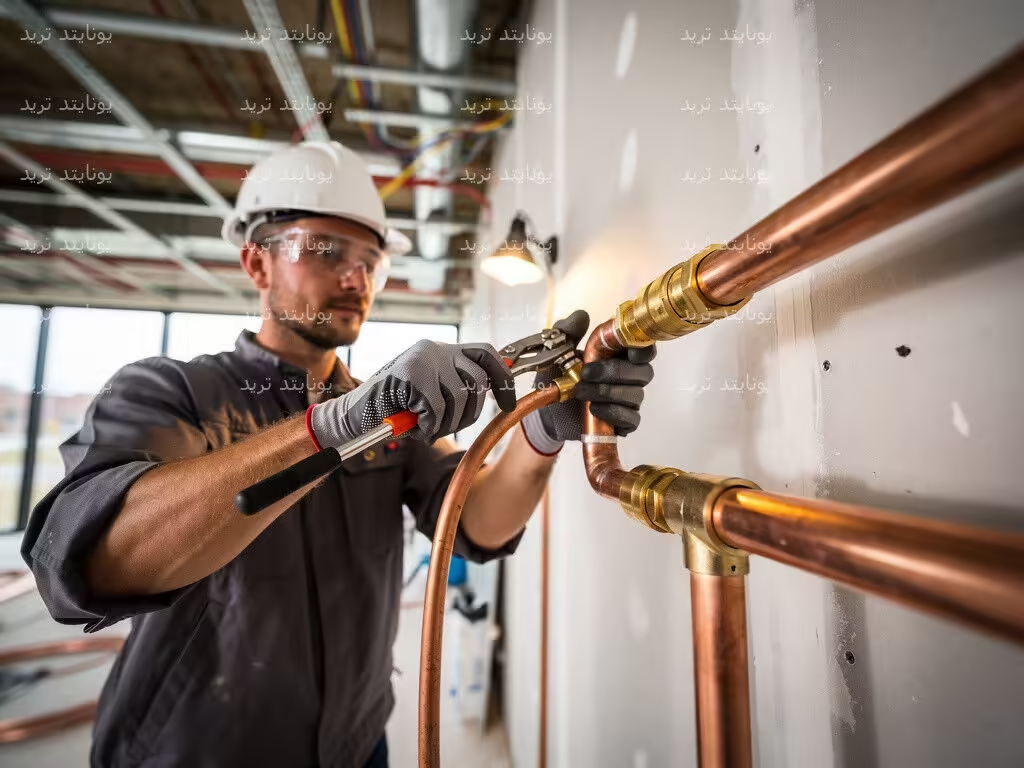
Air conditioning duct extension represents the backbone of any modern refrigeration system that seeks to achieve stable operational efficiency and long compressor life. Proper engineering procedures help you reduce energy consumption by up to 20%, as well as avoid difficult and costly refrigerant leaks. This article provides an integrated practical guide that reviews the field dimensions for selecting materials and paths and implementing tests to ensure the highest degree of reliability.
Quick Answer: What are the basic rules for installation?
Extending air conditioning ducts is the process of connecting the indoor unit to the outdoor unit via fully thermally insulated copper tubes to transport the refrigerant. A successful process is based on selecting diameters that match factory specifications, using regular hydraulic bending to prevent choking, and performing nitrogen welding to ensure clean, tight lines.
Field criteria for selecting appropriate copper lines
Piping selection requires careful examination of copper's chemical and physical properties resistant to the high pressures of modern refrigerants such as R410A and R32. Professional technicians always prefer to use Seamless Copper to ensure there are no structural weak points that may collapse under constant pressure. In addition, internal piping cleanliness plays a crucial role in preventing clogging of the delicate expansion valves within the mechanical circuit.
Quality levels vary depending on inner wall thickness and alloy grade; Therefore, the chosen type must be matched with the project environment, whether residential or commercial. For example, compliance with ASTM B280 specifications ensures high durability against mechanical shocks and severe temperature changes. It should be noted that poor quality metal leads to premature corrosion and costs huge sums of money later in maintenance and repair operations.
Steps for preparing paths and determining line lengths
The stage of preparing the tracks begins with studying the structural plan of the building to avoid load-bearing concrete bridges and main reinforcement beams as much as possible. The straight path reduces pressure drop within the circuit, giving the refrigerant extremely smooth movement between the evaporator and condenser. Therefore, the locations of the units must be carefully determined in advance to ensure that the maximum heights and lengths recommended by the manufacturer are not exceeded.
Vertical paths require special attention to the distribution of oil traps to ensure that the lubricating oil returns to the compressor regularly and to protect it from mechanical damage. As a result, HVAC engineers are keen to reduce the number of elbows and bends by implementing a smart extension plan:
- Determine the point where the line exits the indoor unit at a slight inclination angle that allows condensation water to drain without backflow.
- Use mechanical bending tools to avoid denting the inner walls of pipes and maintain continuity of flow.
- Install rubber-lined metal supports every meter and a half to absorb operational vibrations and prevent friction with walls.
- Leave sufficient expansion and contraction spaces at turns to resist repeated thermal stress between summer and winter.
Thermal insulation techniques to protect cooling efficiency
Excellent thermal insulation represents the first line of defense to prevent moisture condensation on external surfaces and avoid damage to ceilings and interior decorations. The closed-cell elastomer insulation bone provides superior resistance to water vapor penetration compared to weak plastic alternatives. On the other hand, thin insulation causes significant heat loss, increases the load on the compressor and increases the monthly electricity bill at unjustified rates.
The gas intake line and the liquid line must be completely insulated separately before being combined into one final package within the overall extension. Furthermore, the joints between insulation joints should be sealed using specialized, heat-resistant adhesive tapes to prevent ambient air leakage. For example, exposure of insulation to direct sunlight on roofs will cause it to dry out and crumble unless protected with a specialized coating or aluminum protective tubes.
Comparison table of common copper pipe types
The choice between different types of copper depends on the nature of the building, the length of the distance, and the level of internal pressure adopted in the air conditioning system. The following table shows the basic differences between the most popular engineering classifications used in projects:
| Tube type | Wall thickness | Common field use | Pressure tolerance level |
|---|---|---|---|
| Type K | Very thick | Underground installations and heavy industrial environments | Too high |
| Type L | Medium thickness | Standard residential and commercial building equipment | High and ideal for R410A |
| Type M | slim | Domestic water networks and low pressures | Not suitable for modern cooling media |
Correct practices for welding and mechanical joining operations
The cryogenic pipe welding process requires a continuous flow of inert nitrogen gas into the pipe to prevent the formation of black oxidation scales resulting from heat. These carbon scales, if they form, lead to clogging of the fine filters, damage to the expansion valves, or burnout of the compressor in the long run. In other words, welding of silver alloys with nitrogen passes is a milestone that distinguishes professional engineering work from haphazard practices.
The quality of the extensions is integrated with the accuracy of the implementation of the stages Air conditioning installation To ensure optimal distribution of cooling flow within the targeted areas. Installing indoor and outdoor units requires careful balancing and fine-tuning of mechanical and electrical connections to avoid vibration and operational noise. This commitment to technical standards contributes to increasing the efficiency of heat exchange and reducing sudden malfunctions in the long term.
If relying on mechanical flange connection (flaring), precise measurements must be used to form the flange at a completely regular angle and without cracks. Therefore, it is recommended to apply a drop of cooling oil to the back of the flange before tightening to reduce friction and allow tightening with a torque wrench. Basic procedures for securing connections include:
Phase begins Establishing copper pipes Focusing on choosing the appropriate diameters and wall thicknesses that precisely match the refrigerant pressures, ensuring a smooth flow away from any bottlenecks. This precise construction also requires high-quality thermal insulation of the pipes to prevent condensation, while taking great care of the extension paths to avoid sharp bends that may weaken the internal structure of the pipes.
To ensure the sustainability of this operational efficiency and protect the internal components of the device, the important role it plays is highlighted Air conditioning maintenance air regularly and systematically. Regular cleaning of filters and checking Freon levels prevents compressor fatigue and ensures the highest possible quality of fresh air flow.
Protecting this system requires following regular procedures based on: Accurate air conditioning maintenance To determine the causes of low cooling and prevent common malfunctions early. Regular technical inspection of refrigerant pressure and cleanliness of filters and evaporator helps maintain stable performance and prevent thermal stress of the compressor.
Requires implementation of Latent conditioning foundations Great care was taken in adjusting the inclinations of the drainage lines and securing the copper pipe routes inside the walls before the final finishing work. This advance structural planning helps avoid blockages and leakage problems in the future, ensuring sustainable and safe cooling performance of the building.
It starts Installing air conditioning ducts The stage of burial inside the walls is carried out according to precise geometric paths that ensure the smooth movement of the refrigerant gas without sharp obstacles or ill-considered bends. The success of this step depends entirely on the quality of the copper materials used and their tight thermal insulation. To prevent condensation and maintain the integrity of the extensions for many years.
The efficiency of the system does not stop at the installation stage only, but sustainability of performance requires action Regular air conditioning maintenance For early detection of any blockage or decline in gas pressure. These preventive steps help maintain compressor integrity and ensure the most efficient flow of fresh air possible year-round.
Cooling efficiency does not depend only on the quality of the initial installation, but continued performance also depends on the procedure Regular air conditioning maintenance Ensures the safety of cooling lines from blockages and micro leaks. Regularly checking the Freon level and cleaning the filters and evaporator helps protect the compressor from thermal stress and reduce unplanned breakdowns.
It requires an operation Air conditioning installation Careful study of the locations of the indoor and outdoor units to ensure air flow with the highest possible efficiency. A tight and balanced installation reduces mechanical vibrations and reduces stress on the cooling cycle, which directly affects the device's long-term performance and stability.
It requires an operation Installing air conditioning ducts Careful engineering planning precedes architectural finishing work, to ensure the selection of the shortest and safest paths for copper lines and drainage paths. Proper foundation contributes to protecting the extensions from external damage and facilitating future maintenance operations without the need for any cracking in the walls.
The efficiency of the entire system depends on the implementation of a process Professional air conditioning installation Ensures secure fit of indoor and outdoor units and precise adjustment of airflow paths. This procedure requires careful balancing of gas pressures and insulation testing to avoid any loss of cooling capacity over time.
- Cut the copper with a sharp, clean cutting tool, taking care not to apply excessive pressure to avoid distorting the roundness of the tube.
- Clean the inner cutting edges with a grinding tool to prevent burrs that obstruct the flow of the coolant.
- Avoid over-tightening the nuts beyond the tightening torque specified for each diameter by the manufacturer.
- Protect the ends of the lines with tight seals throughout the construction period to prevent the entry of dust and finishing residues.
Pressure and vacuum tests before final operation
Testing the pressure of the system with dry nitrogen gas is an imperative stage to ensure that the air conditioning piping extension network is free of any microscopic holes. The pressure is gradually raised until it reaches levels between 500 and 600 pounds per square inch (PSI) depending on the type of gas used, with the pressure gauge monitored for 24 hours. As a result, this test ensures that all connections are stable before they are hidden under plastering and final wall decoration.
The compression stage is followed by evacuating the system of air and moisture using a highly efficient two-stage deep vacuum pump. This process aims to achieve a vacuum level of less than 500 microns to ensure that any internal moisture is completely boiled off and evaporated from the lines. It should be noted that the remaining water atoms interact with the cooling oil to form acids that lead to the corrosion of the coils and the internal combustion of the engine.
Frequently asked questions
What is the appropriate diameter for home air conditioning pipes?
The diameter depends entirely on the cooling capacity of the device and the type of refrigerant recommended in the manufacturer's catalog. Medium power air conditioners (1.5 to 2.5 horsepower) typically use a quarter-inch liquid line with a half-inch or five-eighths-inch gas line to ensure the best flow.
How to ensure that there is no leakage after extension?
This is confirmed by pressurizing the network with dry nitrogen gas under high operating pressure to monitor the stability of the indicator, while using specialized leak detection foam on all welding and connection points. This method ensures a precise inspection that simulates extreme working conditions without exposing the mesh to moisture.
Can a drain pipe be installed inside the same copper insulator?
It is absolutely not recommended to place the drain line inside the thermal insulation of the cooling pipes to avoid unwanted heat exchange and the accumulation of dew drops. The drainage path must be separated by an independent path with a sufficient slope to prevent blockage of the line and stagnation of water inside the air conditioning ducts.
What is the difference between American and Korean copper pipes?
American pipes and Korean coils have very high purity levels and consistent wall thicknesses that give them superior flexibility and resistance to extreme pressures. The difference is in the brand and compatibility of weights and measures adopted across engineering projects, with both being superior to commercial lightweight types.
Why should a vacuum pump be used before opening the Freon?
A vacuum pump is used to pull air laden with moisture and oxygen from inside the pipes and prevent their mixing with refrigerant oil and Freon gas. Neglecting this step results in the formation of dangerous acid compounds and raised operating temperatures, causing premature compressor failure.
Conclusion
Investing in extending air conditioning ducts in accordance with sound engineering controls represents a real safety valve that guarantees the comfort of your home and the efficiency of its cooling for many years. Do not hesitate to scrutinize the materials and require technicians to undergo stringent testing stages to obtain superior performance and economical energy consumption. Start today by examining your routes and ensuring that the best professional standards are in place for your home network.
















TQTAG76 Community dialogue
0 comments