
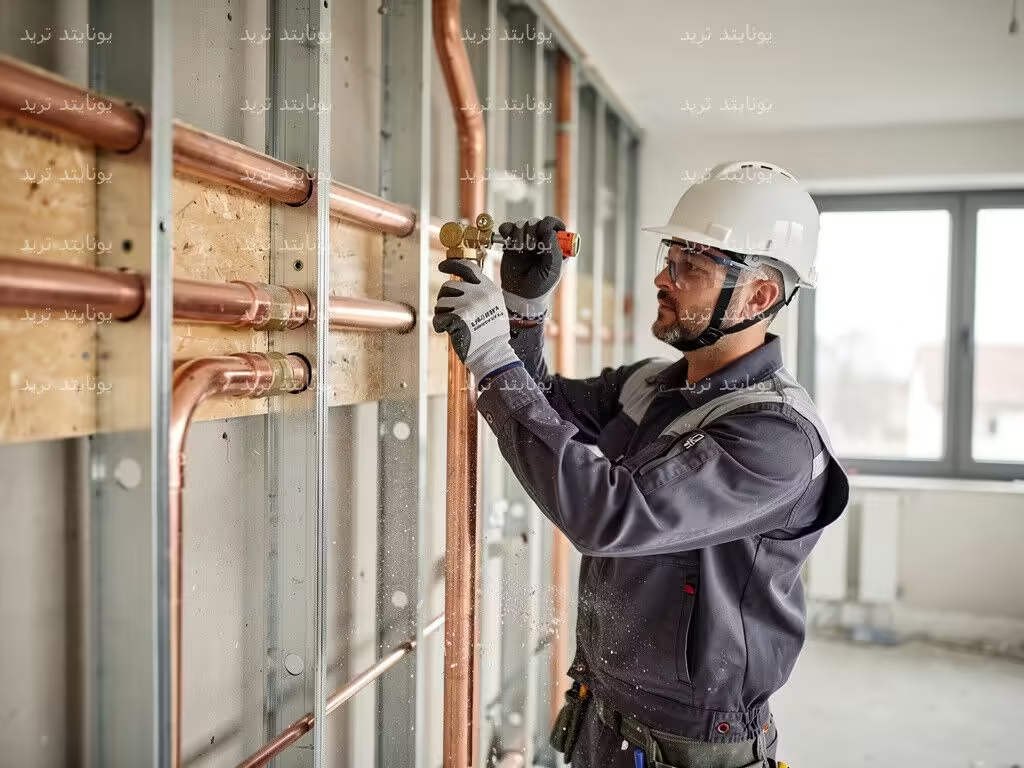
represents Establishing pipes Air conditioning is the basic foundation for ensuring that cooling devices operate with high operational efficiency without sudden leakage malfunctions. Moreover, early planning of copper paths and drainage networks during the architectural construction phase saves significant costs that may be imposed by subsequent crushing and restoration works. This article reviews the engineering criteria for choosing diameters, correct installation methods, and pressure testing mechanisms before closing walls.
Quick answer
Establishing pipes Air conditioning is the process of extending insulated copper lines, water drainage network and control cables inside walls or false ceilings before the final finishing stage. Proper installation is characterized by precisely determining the copper diameters according to the capacity of the cooling device and testing the pressure of the system with nitrogen gas to ensure that there are no leaks completely.
The importance of advance engineering planning for cooling paths
Advance planning ensures a smooth path for the refrigerant between the indoor and outdoor unit, maintaining compressor pressure for long periods. For example, avoiding sharp ninety-degree bends reduces resistance to Freon flow within the mechanical system. Therefore, engineers determine the locations of the units based on air movement and the planned furniture distribution within the rooms.
In addition, reducing the path length significantly increases the seasonal performance coefficient of the cooling unit. In contrast, random expansion causes increased fluid coolant loss and oil buildup inside the evaporator. As a result, an implementation plan must be drawn that specifies the entry and exit points with great precision before opening the wall paths.
Field criteria for selecting approved copper types
Refrigerant pipes require strict metal specifications to withstand high gas pressures, especially with modern refrigerants such as R410A. It should be noted that pure oxygen-free refrigerant copper is the standard choice for buried air conditioning grilles for its flexibility and resistance to chemical corrosion. The following table shows the most prominent characteristics of copper thicknesses used in field installations:
| Certified copper type | Typical structural thickness | Recommended field use | Ability to withstand pressure |
|---|---|---|---|
| Type K copper | From 0.049 to 0.065 inch | Direct burial in concrete and underground | Ultra high and load resistant |
| Type L copper | From 0.035 to 0.050 inch | Vertical extensions inside residential walls | High and can withstand common Freon pressures |
| Type M copper | Less than 0.030 inch | Light water lines only | Low and does not reach air conditioning gas lines |
Technicians always recommend relying on ironing or heating pipes to avoid internal explosion incidents during heavy operation. Accordingly, the use of poor quality or lightweight materials in order to reduce expenses greatly increases the risk of gas leakage after completing the painting and decoration works.
Steps for preparing walls and insulating cooling lines
Preparation work begins by opening horizontal and vertical ducts in the building to a depth of no less than twice the diameter of the insulated pipe bundle. Furthermore, each copper line must be coated with an independent thermal insulator made of closed-pore foam rubber to prevent surface condensation phenomena. Here are the basic steps to install building path:
- Determine the drop level of the false ceiling to ensure that the pipes exit at least twenty centimeters below it.
- Breaking the path with a mechanical cutting machine to avoid creating random structural cracks in the bricks.
- Insulate the suction line and the liquid line completely individually with insulators no less than nine millimeters thick.
- Assemble the copper lines with signal cable and leakage tape inside a flexible backing roll that protects the insulators from tearing.
- Fixing the assembly with galvanized metal locks that prevent movement of the package during subsequent cement plastering works.
Rules for establishing an air conditioner water drainage network
Proper establishment of drainage lines is a safety valve to prevent damage to walls and gypsum ceilings due to dripping stagnant water. For example, non-flexible PVC pipe three-quarters of an inch in diameter should be used while maintaining a constant slope. Therefore, any deviation in the slope of the drain line immediately leads to moisture backflow into the indoor unit.
In addition, it is necessary to connect the air conditioner drainage network to the public drainage lines via a water barrier or siphon to prevent the emergence of unpleasant odors. It should be noted that burying drainage pipes without secure fixation may expose them to bending due to the weight of the cement mortar, which will disrupt the drainage of water later.
Pressure checking and cooling network efficiency testing procedures
Pressure testing is of critical importance before permission is given to seal wall ducts by construction and finishing teams. In other words, testing the system with dry nitrogen gas pressure immediately reveals any tiny holes or defects in the field welds. The technical requirements for the test are summarized in the following points:
It requires an operation Air conditioning installation Following precise engineering steps starting with choosing the optimal location for the indoor and outdoor units to ensure balanced air distribution. The ideal performance of the device also depends on tightly connecting the copper pipes and accurately adjusting the Freon charge, which preserves the lifespan of the system and reduces energy consumption.
- Solder copper pipe ends using tight sealing caps fitted with a standard charging valve.
- Injection of the installation network with dry nitrogen gas under an operating pressure of no less than two hundred and fifty pounds per square inch.
- Leave the blood pressure watch connected to the network for forty-eight hours continuously to monitor any decrease in the indicator.
- Use non-corrosive soap foam around the welding points to ensure they are free of gas bubbles.
- Discharging a small portion of the gas upon receiving the site to ensure the integrity of the indicators and that the paths are not blocked.
As a result, this test gives complete reassurance to the property owner that the buried installations are structurally sound and ready to receive Freon. On the other hand, neglecting this inspection leads to extreme difficulty in discovering the location of the hidden leak after the finishes are completed.
After its installation is complete, the system requires periodic follow-up to ensure sustained performance and protect mechanical circuits from premature damage. Air conditioning maintenance Micro air is used to maintain proper refrigerant pressure and clean filters and evaporators regularly. This technical commitment helps reduce electrical energy consumption and avoid sudden malfunctions that may stop cooling during peak periods.
The process of installing air conditioning requires high engineering precision, which begins with choosing the optimal location for the units to ensure ideal air distribution, and goes through adjusting the electrical and copper connections in accordance with approved safety standards. The commitment toProper installation steps It not only enhances cooling efficiency in hot climates, but also effectively contributes to reducing energy consumption by significant proportions that ensure the sustainability of the device and reduce operating costs.
Implementing these extensions requires following thoughtful steps, starting from choosing the appropriate materials, all the way to applying safety standards and avoiding common extension errors. Determining the installation style, whether visible or buried within the walls, also plays a decisive role in completing the installation Installation of copper pipes Efficiently, it ensures stable refrigerant pressure and protects the system from leakage.
Operational sustainability of refrigeration systems requires a regular schedule that includes procedures Regular air conditioning maintenance For filters, coils and electrical components. These preventive practices ensure that compressors are protected from thermal stress and energy consumption is reduced to its lowest levels. Continuous technical inspection also contributes to detecting any defect early and treating it before it worsens.
The subsequent implementation phase requires adherence to the highest technical standards when starting Air conditioning installationTo ensure the stability of the indoor and outdoor units and avoid annoying mechanical vibrations. This includes tightening the Freon connections and insulating them well to prevent loss of cooling energy and achieve optimal device performance.
The efficiency of the system does not depend only on the quality of the installations, but the sustainability of cooling requires action Regular air conditioning maintenance To maintain Freon gas pressure and clean internal filters. This continuous technical inspection contributes to detecting early blockages and avoiding compressor fatigue, which extends the life of the device and reduces energy consumption.
The next implementation phase requires careful engineering protocols to be followed Air conditioning installation To ensure that the indoor and outdoor units are installed in proper alignment to prevent vibrations. This also includes tightening the copper connections and evacuating the air from the air circuit before pumping the refrigerant to ensure the highest levels of operational performance.
Establishing air conditioning pipes and coordinating with electrical works
associated with success Establishing pipes Air conditioning is closely linked to engineering coordination with the building’s electrical supply network. Therefore, the supply and signal cables must be run in completely separate hoses parallel to the copper lines without any direct contact. Furthermore, split air conditioners require an isolated electrical disconnect switch with an amperage that matches the capacity of the installed compressor.
It should be noted that choosing the cross-sectional area of the wires depends on the total distance between the main panel and the air conditioner to avoid voltage drops. Accordingly, relying on certified wires that conform to the manufacturer’s specifications prevents the burning of sensitive electronic circuits inside modern air conditioner cards.
Frequently asked questions
What is the appropriate diameter for 2.25 HP air conditioner ducts?
This conditioner often requires a five-eighths-inch pipe for the intake line and a quarter-inch for the liquid line. You should always consult the technical catalog for the specific device because the connection diameters may vary depending on the type of refrigerant and the manufacturer.
How are air conditioning ducts protected during plastering and finishing work?
The lines are protected by wrapping them with strong insulating layers and sealing the copper terminals with tight seals to prevent the entry of dust and construction debris. It is also preferable to cover the pipes with a layer of metal mesh before plastering to stabilize them and prevent cracking in the walls above them.
Can air conditioning ducts be buried in floors instead of walls?
Yes, pipes can be extended under floors provided that they are placed inside solid protective pipes that can withstand mechanical loads and movement of workers. However, wall extension or through dropped ceilings is still safer for easy access and maintenance in the future.
Why must the liquid and suction line be insulated separately?
Separate insulation prevents unwanted heat exchange between the cold returning gas and the liquid coming from the condenser. This separation ensures the stability of the mechanical cycle of the gas and achieves the highest possible cooling efficiency of the air conditioner while reducing electricity consumption.
What is the difference between Korean and American copper pipes?
American copper features high purity and thicknesses that meet stringent specifications, making it ideal for complex, high-stress projects. While certified Korean copper provides excellent quality and uniform thickness, it is considered a popular economical option that meets the requirements of residential buildings with complete efficiency.
Installing air conditioning ducts according to sound engineering rules allows you to enjoy a comfortable indoor environment and avoid wasting money on complex repairs. Consult a certified technician to ensure that the copper diameters match your property and start establishing your network professionally now.
















TQTAG76 Community dialogue
0 comments