
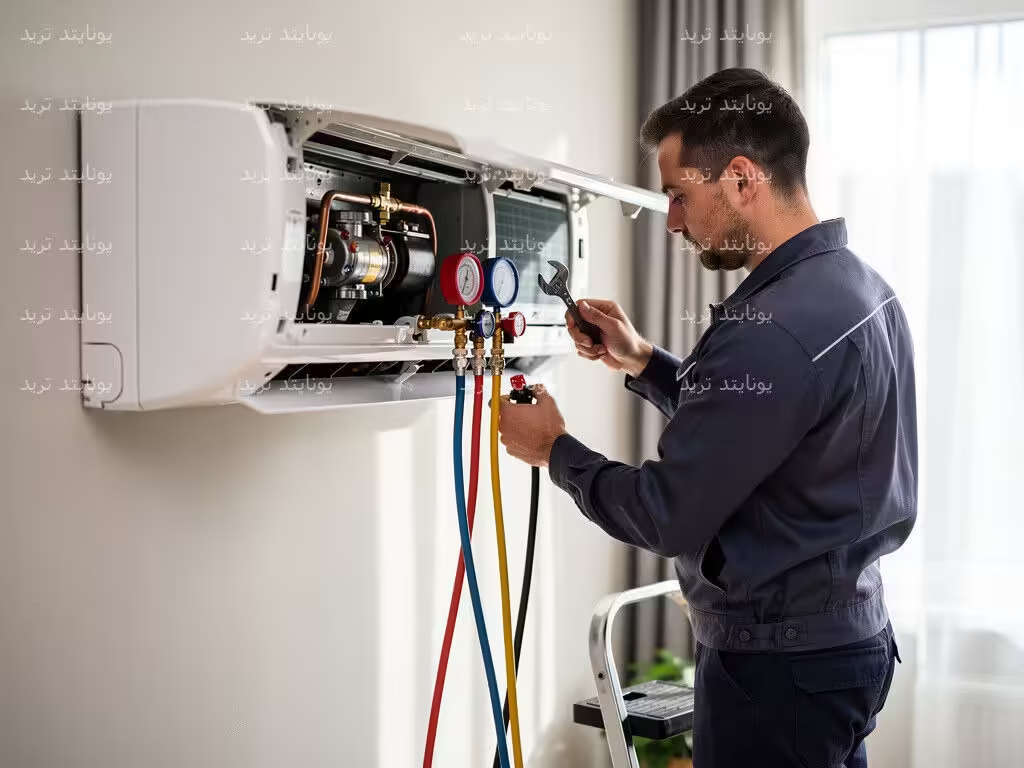
Guide to dealing with low cooling efficiency
Homeowners often notice a noticeable decline in the device's ability to lower room temperature even when it is set to lower temperatures. This symptom does not necessarily indicate a serious malfunction in the compressor, but rather may be related to simple external factors that can be controlled. The most important of these factors is the accumulation of dust on the fins of the external condenser, which hinders the heat exchange process and makes the device work twice as hard without achieving the desired result.
Steps for a quick performance check
- Check the cleanliness of the internal filters, as a clogged filter prevents sufficient airflow through the evaporator.
- Monitoring the condition of refrigerant gas (Freon); Its decrease may indicate a subtle leak in the copper connections.
- Check the outdoor unit fan to ensure it is rotating at the correct speed and that there are no physical obstacles impeding its movement.
Table of common malfunctions and available solutions
| Virtual display | Possible cause | Suggested action |
|---|---|---|
| Loud noise and vibration | The mounting base is not level or the fan bearing is corroded | Install the units with a water level and lubricate the moving parts |
| Ice formation on copper pipes | Lack of refrigerant gas or clogged air filters | Check gas pressure and change damaged filters immediately |
| The device suddenly stopped working | Compressor overheating or damage to the electronic control board | Disconnect the power supply and call a specialized technician for diagnosis |
These preventive measures help detect any defect early within the system Air conditioning maintenanceThis prevents the problem from getting worse and turning into exorbitant repair costs later, especially at the height of the summer.
Managing home and office refrigeration requires advanced knowledge of cooling procedures Air conditioning maintenance Air to maintain fresh and stable air flow throughout the hot seasons of the year. This hands-on guide aims to provide you with the technical skills needed to identify common mechanical and electrical problems before they become worse. Here you will learn how to deal with refrigerant leaks, clean internal components, and ensure that the compressor operates at the highest possible energy efficiency without unjustified electricity consumption.
Quick Answer: What are the basic pillars of the air conditioning maintenance process?
Air conditioning maintenance Air is an integrated set of preventive and remedial technical measures, including washing filters and evaporators, measuring Freon gas pressures, cleaning water drains, and checking electrical circuits. This process ensures that the design cooling capacity is restored and energy consumption is reduced by up to 25% while protecting the compressor from premature wear.
Why does the cooling efficiency of air conditioners suddenly decrease?
A sudden drop in coolness occurs as a result of blockage of heat exchange due to the accumulation of dense dust on the evaporator fins or external condenser. When air paths are blocked, the device is unable to extract heat from the room effectively. Therefore, the engine is forced to work for longer periods to compensate for the deficiency, which raises the temperatures of sensitive mechanical parts.
In addition, refrigerant leakage from copper connections is a major cause of decreased ability to pump cold air. A decrease in the coolant charge causes light snow to appear on the intake line, which is a serious technical indicator that requires immediate intervention to prevent burning of the engine coils.
Home air conditioning maintenance steps, step by step
The correct practice for inspecting units begins with completely disconnecting the electrical current from the main breaker to ensure occupational safety. This step prevents electrical shocks or damage to sensitive electronic boards while disassembling the outer covers.
- Remove the plastic filters and wash them with lukewarm water to remove dried particles, then leave them to dry in the shade away from direct sunlight.
- Spray a specialized cleaning solution onto the evaporator's aluminum fins to dissolve deposited oils and impurities, then rinse gently without bending the delicate strips.
- Clear the sink drain and overflow hose using light air pressure or a flexible brush to prevent algae buildup and stagnant bacteria.
- Clean and unbalance the cylindrical air distribution fan to reduce mechanical vibration and noise while rotating at high speeds.
Prepare the outdoor unit for heavy duty work
The outdoor unit is exposed to harsh weather factors that directly affect the efficiency of heat exchange. Therefore, leaves and dust accumulated behind the condenser must be removed using a low-pressure water pump to avoid denting the delicate fins. In addition, you must ensure that there are no obstacles in front of the exhaust fan for a distance of at least a full meter to ensure that hot air is discharged freely.
Electrical and mechanical malfunctions and ways to deal with them
Electrical circuits include sensitive elements that deteriorate over time, such as the start-up capacitor responsible for providing initial torque to the compressor. Damage to this capacitor leads to a repetitive buzzing sound without the actual engine starting, which requires replacing the part with another that matches the same specified microfarad capacity.
On the other hand, the looseness of the electrical wire connections in the feeding rosette leads to a rise in local temperatures and the melting of the plastic insulators. As a result, the screws must be tightened regularly and a potentiometer used to ensure a stable current of at least the approved operating limits of the device is delivered.
As he plays Air conditioning installation Properly installed, it plays a crucial role in ensuring ideal airflow and efficient cooling distribution within the required space. Choosing the appropriate location for the internal and external units and avoiding connection errors protects the device from thermal stress and prolongs its lifespan.
Poor refrigerant flow may also be due to early structural faults that occurred during the cooling process Installing air conditioning ducts inside the walls. Choosing inappropriate diameters or the presence of sharp bends hinders the movement of Freon and raises the voltage on the compressor without achieving the required cold.
Long-term cooling efficiency depends fundamentally on implementation Latent conditioning foundations In a precise engineering manner during the first stages of construction. Proper planning of drainage network paths and insulated copper extensions ensures that the system is protected from the risks of Freon gas leakage or water accumulating inside the walls in the future.
The quality of cooling is closely related to the integrity of the refrigerant path, as it requires... Installation of copper pipes High accuracy in choosing the appropriate diameters and thermally insulating them to avoid Freon leakage or energy loss. Avoiding sharp bends and following the correct welding standards ensure that the gas pressure within the circuit is stable for as long as possible without sudden mechanical failures.
As he plays Air conditioning installation Correctly installing it plays a crucial role in ensuring that the cooling device performs with high efficiency and preventing Freon leakage in the future. Proper installation requires choosing the appropriate location for the indoor and outdoor unit to ensure balanced air flow without strain on the engine.
The cooling capacity is also affected by the quality of the copper wiring connecting the internal and external units, as it ensures efficient operation Installing air conditioning ducts In a sound engineering manner, maintaining Freon gas pressure and avoiding any bottlenecks in the cooling path. Choosing the appropriate diameters and insulating them tightly prevents loss of coolness and moisture leakage into the walls.
Poor cold air flow may also be due to problems with the copper wiring that was buried inside the walls from the beginning. The implementation Installing air conditioning ducts Correct and carefully considered diameters ensure that the refrigerant gas flows smoothly without bottlenecks, which maintains the system’s pressure and efficiency in the long term.
Comparison of technical inspection levels for cooling systems
Procedures vary depending on the required patrol, with simple interventions meeting weekly needs while advanced levels require qualified technicians and specialized tools. The following table shows the basic differences between work styles:
The accuracy of the initial procedures directly affects the continuity of cooling and the strength of airflow within the required space. Therefore, it is important to follow the correct standards when... Air conditioning installation A pivotal step that ensures balanced heat distribution and prevents premature leakage of refrigerant, which increases operational efficiency and extends the life of the compressor.
| Service level | Operations covered | Required tools | Recommended periodicity |
|---|---|---|---|
| Simple home examination | Cleaning the air filters, wiping the chassis, clearing the virtual water duct | Lukewarm water, soft brush, dry cloth | Every two weeks to a month |
| Comprehensive preventive service | Chemical washing of fins, measuring amperage consumption, checking insulators | Spray pump, digital scale, special cleaning agents | Twice a year |
| Precision specialized maintenance | Freon leak detection, nitrogen pressure testing, compressor maintenance | Manifold pressure gauge, electronic detector, gas cylinder | When serious malfunctions appear |
Practical tips for maintaining stable cooling temperatures
Setting the thermostat to between 24 and 25 degrees Celsius contributes to achieving the ideal balance between thermal comfort and electricity consumption. Always running the air conditioner at maximum cold puts pressure on the mechanical parts and does not actually reduce the room temperature quickly.
- Insulate rooms tightly by closing the windows and drawing the curtains to block direct sunlight during the peak of the afternoon.
- Clean the air filters periodically to avoid water vapor condensing and turning into ice spots on the surface of the evaporator.
- Rely on certified specialists when performing maintenance on split or central air conditioners to ensure the use of original spare parts.
- Inspect external copper pipe insulators and replace damaged ones to prevent loss of thermal energy along the path.
Frequently asked questions
What is the ideal period for air conditioning maintenance?
It is preferable to clean the internal filters once every two weeks to a month, while the unit needs a comprehensive technical inspection covering gas pressures and electrical components twice a year, specifically at the beginning of the summer and at the end of the cooling season, to protect it from sudden malfunctions.
How do I know that the air conditioner needs to charge Freon?
Obvious signs are lukewarm air coming out of the ventilation openings, a layer of white ice on the external copper pipes or inside the internal evaporator, in addition to the compressor continuing to operate without stopping and a noticeable increase in the monthly electricity bill.
Can the indoor unit be washed directly with water?
The indoor unit must not be immersed in random water to avoid burning the electronic board and side fan motor. Electrical circuits must be covered with protective insulators, special drainage bags must be used, and water must be pumped very gently onto the cooling fins only by a specialized technician.
Why do water droplets fall from the front of the air conditioner inside the room?
This leak often results from the condensate tank drain being clogged with dirt or organic deposits, or because the drain hose is not angled outward at the correct angle, which forces water to pool and overflow over the edges of the tank toward the walls of the room.
What are the reasons for an unpleasant odor coming out of the air conditioner when it starts up?
Unpleasant odors are due to the growth of mold and fungi in the humid environment surrounding the evaporator and drain pan due to the accumulation of dust. This can be addressed by carefully cleaning the unit with designated antibacterial disinfectants and drying it thoroughly before regular reoperation.
Adhering to a regular schedule for checking cooling equipment represents a smart economic investment that extends the life of the system and radically reduces the costs of emergency repairs. Start today by implementing the basic inspection steps, and do not hesitate to seek professional technical advice whenever necessary to ensure a comfortable and refreshing summer environment.
















TQTAG76 Community dialogue
0 comments