
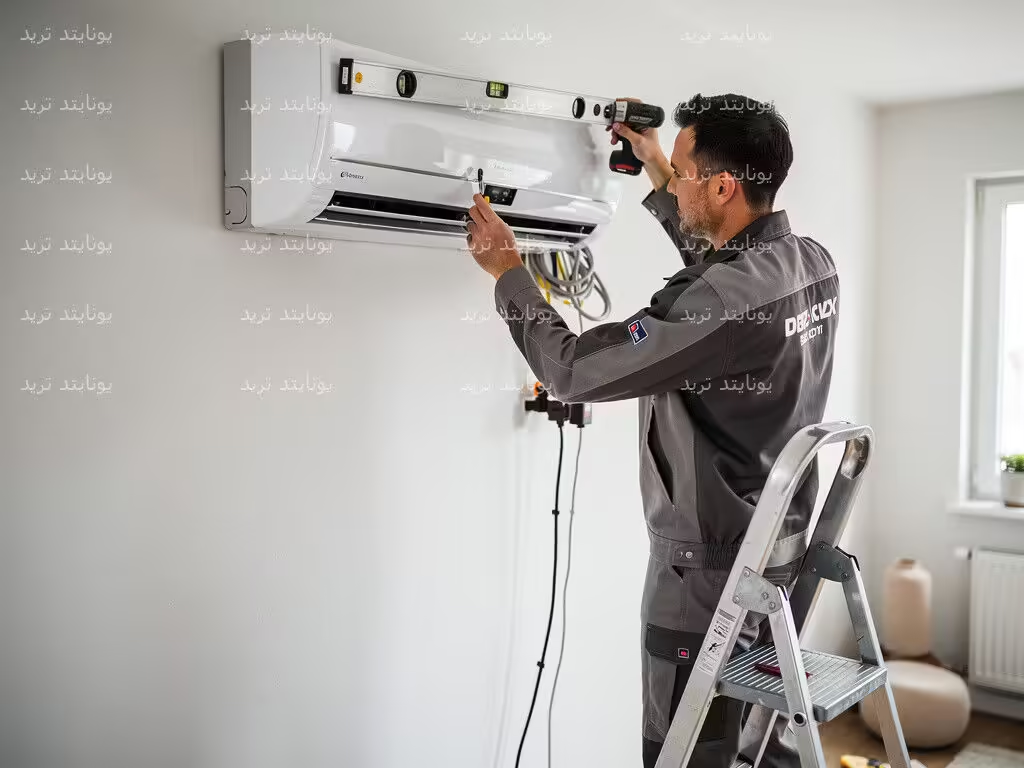
Represents an action Air conditioning installation A pivotal step that determines the overall cooling efficiency and controls the operating life of the air compressor and sensitive electronic parts inside the room. Completing this task requires extreme precision in selecting the site, installing the stands, and observing the correct mechanical inclinations of the water drainage lines. This article provides an applied reference supported by field experience to help you with direct technical supervision and avoid common installation errors that increase electricity consumption.
Quick answer: What are the most important pillars of successful air conditioner installation?
Air conditioning installation Success is an engineering process that depends on installing the indoor unit at a precise horizontal level, and completely emptying the cooling circuit of air and moisture using a vacuum pump. These steps ensure that the gas does not mix with impurities, prevents the leakage of waste water into the walls, and provides the highest possible cooling efficiency with the lowest energy consumption.
Criteria for choosing an appropriate location before installing air conditioning
Determining the installation location is the cornerstone of the success of the cooling cycle and ensuring regular air flow throughout the place. Improper placement practices create thermal choke points that prevent temperature sensors from accurately reading the actual temperature, confusing the operation of the electronic board and stressing the motor.
Requirements for determining the location of the indoor unit
The indoor installation location must be at least fifteen centimeters away from the ceiling to ensure a sufficient amount of return air is drawn. Furthermore, you should avoid placing the device directly above heat sources such as electrical appliances or ovens, to avoid sending false data to the control unit. Also make sure that the air path is not obstructed by any decorative obstruction or high furniture to ensure balanced distribution in the room.
Environmental requirements for installing the outdoor unit
The location of the outdoor unit requires providing sufficient ventilation space of no less than thirty centimeters behind the condenser and sixty centimeters from the sides. As a result, outside air flows freely through the aluminum fins, making it easier to expel heat absorbed from the interior. It is always preferable to choose a relatively shaded wall or use special protective awnings that prevent direct burning sunlight from falling on the compressor at peak times.
Stages of mechanical installation and preparation of connection paths
Mechanical work begins with preparing passage holes in the walls using specialized circular drilling equipment that ensures the integrity of the concrete structure. For example, the opening should be tilted outward by approximately half a centimeter to facilitate the escape of condensation water by natural gravity without the need for additional complex pumps.
Install the load-bearing plate and check the balance
The metal plate of the indoor unit needs to be securely fixed using solid screws and durable rubber wall anchors. Technical rules require the use of an accurate water level to completely adjust the horizontality of the plate, as any slight tilt may cause the condensate basin to overflow and water to leak into the building. It should be noted that good mechanical stability absorbs operational vibrations and prevents annoying buzzing sounds during quiet periods of sleep.
Processing and passing of copper lines and insulators
Stretching copper pipe requires the use of a dedicated hand crimping tool to avoid internal dents that reduce refrigerant flow. In addition, each copper line must be wrapped with an independent thermal insulator of high-quality flexible elastomer material. This independent insulation prevents unwanted heat exchange between the intake line and the exhaust line, and limits atmospheric moisture condensation on the interior walls of the house.
| Action stage | Technical procedure required | Direct impact on performance |
|---|---|---|
| Determine the drainage path | Creating a downward outward slope of 1-2%. | Prevent water backflow and leakage into the room |
| Bending copper pipes | Use standard bending radius rollers | Avoid stifling the flow of Freon gas and blocking it |
| Install the outdoor unit | Installation of vibration-absorbing rubber isolators (dampers) | Reduce noise and prevent loosening of screws |
| Vacuum | Suction air for at least 20 minutes with a pump | Protect the compressor oil from decomposition and avoid rust |
| Insulation of connections | Cover the fastening nuts completely with insulating tape | Prevent dew drops from condensing on floors |
Electrical and hydraulic procedures to ensure operational safety
Implementing electrical connections requires full compliance with the illustrations approved by the manufacturer without any random diligence. On the other hand, choosing electrical circuit breakers or wires with cross-sections that are not compatible with the device load leads to excessive heat that may cause damage to the insulators or serious fires inside the main boards.
The stage of preparing the copper extensions and carefully insulating them is an essential basis for preventing the leakage of the refrigerant and ensuring its smooth flow between the internal and external units. Requires implementation Establishing copper pipes With diameters that conform to technical specifications, protecting the path of the lines from sharp bends that may hinder the efficiency of heat exchange. This tight procedure ensures stable operating pressures and avoids moisture condensation inside the walls in the long term.
The task of maintaining the efficiency of the device does not end once the installation is successfully completed, but rather the importance of implementing procedures Regular air conditioning maintenance It includes checking the refrigerant level, reviewing the electrical connections, and constantly cleaning the filters. This preventive commitment helps avoid sudden malfunctions and significantly saves energy consumption.
The mechanical success of the cooling system depends directly on the proper establishment of the connection lines, as it represents Air conditioning duct extension The mainstay to protect the compressor from premature fatigue and avoid Freon leaks. Taking into account the appropriate engineering drawings and diameters during installation contributes to raising the efficiency of heat exchange and reducing electrical energy consumption by up to 20%.
To ensure continued operational efficiency after installation is completed, Air conditioning maintenance We rely on the technical methods adopted to diagnose faults accurately and quickly. This procedure is based on following a systematic table that links common faults with available solutions to address the causes of sudden cooling weakness and maintain the integrity of the system parts.
The efficiency of the refrigeration cycle depends entirely on the accuracy of the work carried out Establishing copper pipes Extended between the internal and external units to ensure proper flow of Freon gas without any bottlenecks. This procedure requires choosing appropriate pipe diameters and thermally insulating them to the highest quality standards to avoid thermal loss and condensation leaking into the walls.
Besides the precise composition, it stands out Air conditioning maintenance Periodicity is an indispensable necessity to ensure continuity of high performance and protect internal components from premature damage due to dust accumulation. Adhering to a schedule for cleaning filters and checking refrigerant levels enhances the efficiency of the device and significantly reduces electrical energy consumption in the long term.
Air conditioning care does not just stop at the installation stage, but it also stands out Air conditioning maintenance Periodicity is a technical necessity to ensure sustainable performance and avoid sudden malfunctions resulting from dust accumulation. Conducting regular checks contributes directly to maintaining the quality of the air emitted and increasing the efficiency of electrical energy consumption in the long term.
- Choose the appropriate wire section for the air conditioner’s capacity, making sure there is an effective grounding line to protect individuals and devices.
- Tighten the copper flange nuts using a standard torque wrench, to prevent the pipe ends from breaking due to excessive tightening or leaving them loose and causing gas leakage.
- Insulate all wire ends inside the junction box to prevent moisture or insects from entering, which may cause sudden electrical shutdowns.
- Checking the continuity of connection and matching the electrical signal numbers between the internal and external units to avoid control errors.
The importance of drawing air and testing gas pressures before operation
The process of emptying the circuit using a vacuum suction pump is the gold standard for successful operation Air conditioning installation The house is of the highest standards of craftsmanship and quality. It is never permissible to expel air by relying on the flow of air conditioner gas itself, as this common behavior leads to the retention of destructive moisture that accelerates the acidity of the oil and damage to the internal engine.
It is a stage Establishing pipes Copper cooling and thermal insulation are the cornerstone to ensure the flow of Freon gas efficiently and without any future leaks. This process requires choosing pipe diameters appropriate to the capacity of the device and avoiding sharp bends that may impede the movement of the refrigerant or increase the load on the engine.
- Drawing air using a vacuum device up to a reading of 500 microns to ensure the disappearance of moisture particles stuck inside the cooling network.
- Monitor the stability of the measuring clock indicator for fifteen minutes to test that the circuit is completely free of any microscopic leakage path.
- Gradually open the gas valves to fill the charged tubes, and monitor the static pressure balance before supplying electrical power to the device.
- Run the device in cooling mode and measure the suction line pressure and suction amps to ensure they match the metal specification plate data.
Frequently asked questions
How long does it take to properly install the air conditioner?
Under normal circumstances, installing a split air conditioner takes two to three continuous hours of work per unit. This time includes preparing holes, installing holders, adjusting insulators, and performing vacuum degassing and safe operating tests.
Is it possible to install a new air conditioner on an old copper network?
Old pipes can only be used if they have been internally washed with a designated chemical solvent and pressed with nitrogen to remove burned-on oils. In other words, the difference between the new type of Freon and the old one makes cleaning or replacing the tubes an urgent necessity to prevent damage to the new compressor.
Why does water drip from the front panel of the air conditioner immediately after installation?
This loss is usually due to failure to adjust the horizontality of the device with the water level during installation, or the presence of a blockage and a sharp twist in the drain hose. Correcting this defect requires adjusting the angle of the metal plate or correcting the path of the drainage pipe to make it slanted smoothly.
How do I ensure that the Freon gas charge is sufficient after the installation is completed?
The technician attaches a pressure gauge to the service valve and compares the reading with the engine's actual electrical consumption. Constant operating pressures corresponding to the values indicated in the manufacturer's manual indicate that the circuit is filled with the correct volume of refrigerant.
What is the maximum distance allowed between the indoor and outdoor unit?
The standard permissible distance often ranges between five and fifteen metres, depending on the capacity of the air conditioner and the instructions of the producing company. It should be noted that exceeding these distances requires adding a precisely calculated amount of refrigerant oil and Freon gas to compensate for the loss.
Your next steps after completing the installation process
Completing the installation of residential air conditioning represents a real investment in your daily comfort that requires regular maintenance and continuous follow-up to ensure that it remains at the highest levels of cooling efficiency. After running the device for an hour and monitoring its cooling and draining water, be sure to schedule appointments to clean the filters monthly to maintain fresh and healthy air flow. Always use certified technicians and precision engineering equipment to deal with any operational emergency, in order to maintain the safety of your home and the sustainability of your electrical appliances.
















TQTAG76 Community dialogue
0 comments