
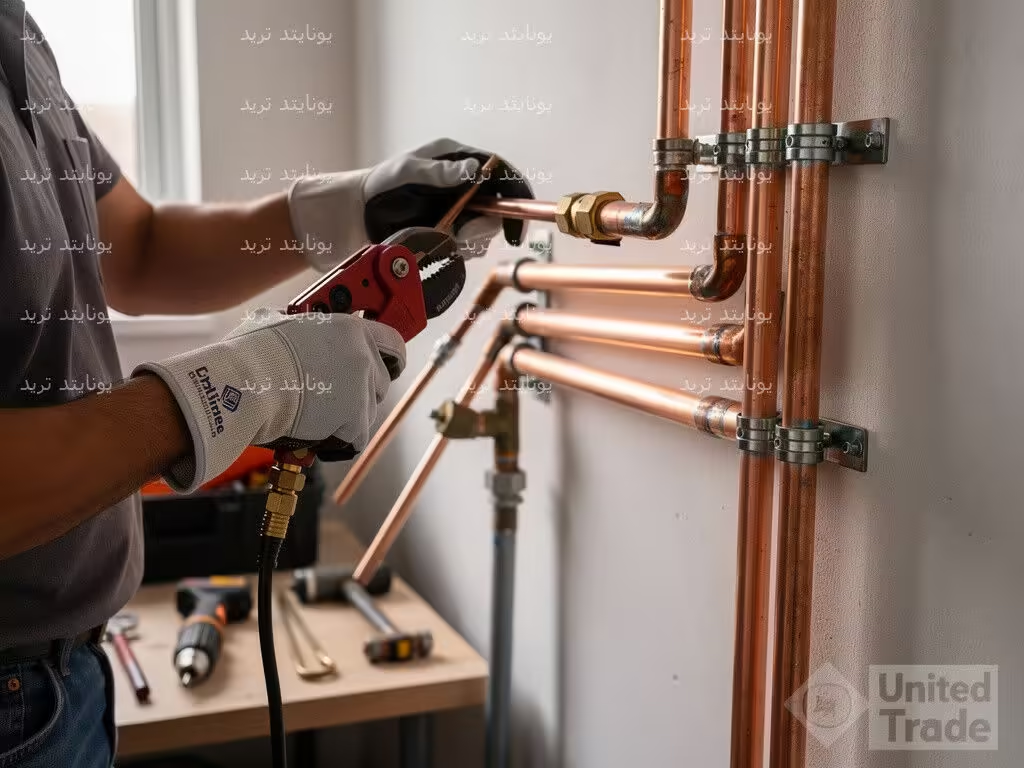
Plumbing projects and cooling networks require extreme precision, and the installation of copper pipes is the basic foundation for ensuring efficient transfer of liquids and gases under various pressures and temperatures. This article helps you learn about sound engineering rules, choose the appropriate diameters, and avoid operational errors that may cause early damage to networks.
Quick answer
Copper pipe installation is an engineering process designed to precisely install metal transmission lines using cutting, forming, and thermal or mechanical bonding tools. The success of this task depends on cleaning the surfaces well, applying consistent bending angles that prevent internal throttling, and ensuring that the connections are tight through approved pressure tests before actual operation.
What are the basic tools adopted to carry out the work?
The specialized technician needs to be equipped with precise equipment that ensures that the metal pipe body is not deformed during conditioning. Professional tools prevent microscopic cracks that may later expand due to vibration or high pressure.
- Circular pipe cutter to provide even cuts at a ninety degree angle without crushing the edges.
- Internal and external sludge removal tool for smooth fluid flow.
- Mechanical pipe bender designed to bend different diameters without snapping the pipe wall.
- Flame torch and lead-free soldering materials secure permanent connections.
- Wire cleaning brush and steel wool to cleanse the interference areas from oxidation.
As a result, the use of these fittings ensures strong connections that are resistant to mechanical loads for many years.
Types of pipes and choosing the appropriate diameter for the project
Metal pipes are divided into several classifications that vary in wall thickness and ability to withstand different operating pressures. The geometric choice depends on the nature of the fluid passing within the line and the environmental location of the pipe path.
| Commercial type | Wall thickness | Common usage | Pressure tolerance level |
|---|---|---|---|
| Type K | Very thick | Buried extensions and main feeding lines | Too high |
| L type | Average thickness | Interior plumbing and usual cooling installations | High and suitable for homes |
| Type M | Relatively thin | Home heating networks and specific drain lines | Medium to low |
Moreover, experts always recommend adopting the second type for interior works to ensure an ideal balance between cost and durability.
Stages of implementing the installation of copper pipes, step by step
Completing the extensions requires following a clear technical sequence that begins with precise measurement and ends with tight installation to avoid any waste of materials. Negligence at any stage may lead to complete failure of the connection under operational stress.
- Measuring the geometric path accurately and determining the lengths of the pipes while calculating the depth of entry of the pipes into the connections.
- Cut the tube using the circular cutter, rotating it slowly to ensure the edge is even and clean.
- Stripping the inner edges of the metal feathers to avoid the occurrence of vortexes that impede the movement of the flow later.
- Sand the outside of the pipe end and the inside of the insert until it shows a pure metallic shine.
- Apply a balanced amount of fusing aid and assemble the pieces together before applying the flame to finish the weld.
Therefore, this movement arrangement must be adhered to to ensure optimal uniformity of the welding material and optimal capillary penetration.
Standards for supporting and installing extensions to prevent vibration
Metal lines need wall mounting media that distributes weight evenly and accommodates the natural thermal expansion of the metal. It should be noted that neglecting the fixing points leads to bending of the pipes and leakage of the connections over time.
Distances between wall cleats
The distance between one mounting bracket and another depends on the outer diameter of the pipe and its horizontal or vertical position. For example, horizontal tracks of small diameters need a support every one hundred and twenty centimeters at most to prevent bending due to the weight of the liquid, while this distance increases relatively in vertical tracks provided that cleats lined with rubber insulators are used to dampen noise and prevent direct friction.
Isolating pipes from structural structures
Rubber or foam insulation surrounding the pipe helps prevent the transfer of cold or heat to adjacent concrete walls. In addition, this insulation prevents the electrochemical reaction that may occur as a result of copper coming into contact with alkaline building materials or heterogeneous metals such as rebar.
Common mistakes that lead to damaged connections and how to avoid them
Some technicians make fundamental errors while configuring the lines, which causes financial losses and disruption to the system’s operation. The following are the most important practices that should be carefully avoided:
The success of these extensions is closely related to the stage Air conditioning installation Air is in accordance with approved technical standards, as the tight installation of the units and the connection of the copper circuits ensures avoiding any refrigerant gas leakage. Adjusting the angles and paths of the pipes during this process also contributes to increasing the cooling efficiency and extending the lifespan of the entire system.
First, overheating the metal with a welding torch, which will cause the melting aid to burn out and the copper to oxidize rapidly, thus failing to adhere to the silver or tin metal. In contrast, the constant stirring of the flame ensures that the heat is evenly distributed without damaging the metal structure.
The efficiency of these systems starts from one step Establishing cooling pipes Water flows according to well-studied paths that reduce curves and prevent pressure drops. The tight fit and good thermal insulation also ensure that the lines are protected from mechanical stress and moisture condensation, which increases the life of the network and prevents future leaks.
The sustainability of these systems is not limited to the quality of the initial installation only, but also extends to regular, periodic procedures that ensure the continuity of the cooling media’s flow without obstacles. So it represents operations Air conditioning maintenance Efficiently is an essential preventive step to detect any early gas leaks and protect the compressors from thermal stress, which increases the efficiency of energy consumption and extends the life of the entire system.
When moving to the stage of installing air conditioning systems, adherence to precise technical standards for the locations of the internal and external units becomes the real guarantee of ideal cooling performance, with the need to be careful of common mistakes while laying the copper piping network that may negatively affect the flow of refrigerant gas. Balancing the requirements of appropriate power cables and load distribution ensures current stability, which increases... Operating efficiency It extends the life of the entire system.
In this context, it represents Air conditioning duct extension A pivotal foundational stage directly linked to the safety of the cooling system as a whole. Tight connections and precise diameter consistency ensure smooth refrigerant flow without loss of pressure. This engineering commitment reflects positively on reducing electricity consumption and extending the life of the compressor for many years.
The critical phase in any engineering system begins with... Correct installation of pipesThis requires careful planning of the extension paths to ensure pressure distribution and avoid sharp bends that may impede fluid flow. The success of this process depends entirely on choosing high-quality materials and installing them with professional supports that prevent future vibrations and protect the network from cracks.
The efficiency of the system is not limited only to the accuracy of the mechanical connection, but also extends to periodic monitoring of the units and coils to ensure the quality of the refrigerant flow without obstacles. Contribute services Regular air conditioning maintenance In avoiding Freon leaks resulting from vibrations and protecting compressors from thermal stress, which in turn extends the operational life of the piping network and maintains the stability of the pressure of the entire system.
The efficiency of the cooling system does not depend only on the quality of the installations, but is directly related to the implementation of procedures Regular air conditioning maintenance And comprehensive to ensure stability of pressures within the circuit. Regular inspection of evaporators and gas compressors contributes to the early detection of any leaks that may harm the integrity of the copper lines and reduce the lifespan of the entire system.
Isolation and extension of Freon lines are integrated directly into stages Air conditioning installation Air to ensure the highest levels of cooling efficiency within the facility. Tightly adjusting the piping paths and precise air discharge protects the compressor from thermal stress and avoids any leakage that may harm the system’s performance in the long term.
The efficiency of these systems starts from one step Establishing pipes Extensions are made in a thoughtful manner that takes into account flow paths and the precise distribution of hydraulic and thermal loads. This advance planning ensures that the lines are protected from vibration and corrosion, which increases the reliability of the network and extends its life without the need for costly modifications later.
The success of extending these networks is closely linked to the stage Air conditioning installation Air is in accordance with technical standards, as the tight installation of the internal and external units ensures a balanced flow of refrigerant gas. Precisely adjusting the insulation and water drainage paths also contributes to protecting the system from leaks and raising the cooling efficiency to its highest operational levels.
Secondly, the pipes are bent manually without using springs or mechanical benders, which causes compression of the inner diameter and blockage of the flow duct. Therefore, the use of specialized tools ensures that the internal section is kept round throughout its entire length.
Inspection and testing procedures after the extension is completed
No mesh can be considered ready for use without undergoing rigorous testing that reveals any structural defects not visible to the naked eye. This procedure gives the building owner complete confidence in the safety and stability of the installations under extreme operating conditions.
The network is pressurized with an inert gas such as dry nitrogen or water according to the standards of the approved code for a period of time not less than twenty-four hours. In a related context, the technician uses an accurate pressure gauge to monitor any slight drop in the indicator, while using leak detection foam on all welding and connection points to ensure that there is no metal porosity that allows gas or fluid to escape.
Frequently asked questions
What is the best type of welding for cooling pipes?
Silver alloy welding is the ideal choice for cooling lines due to its high ability to withstand high pressures and resist constant vibration. This type ensures superior mechanical strength that prevents leakage of fine cooling media even under extreme temperature fluctuations.
How do I avoid blackening of copper pipes from the inside during welding?
You can avoid oxidation and black scale formation by injecting nitrogen gas at very low pressure into the tube path during the heating process. This technology completely expels atmospheric oxygen from the inner cavity, keeping the inner surface clean and protecting the mesh valves from clogging.
Can copper pipes be installed directly inside concrete?
Copper pipes may not be buried directly inside the concrete formwork without covering them with plastic protection pipes or thick, flexible insulators. Concrete chemically reacts with copper over time, causing corrosion of the walls, and natural expansion and contraction movements require free space to prevent pipe breakage.
What is the difference between welding and pressing?
Welding uses heat to permanently and reliably fuse the joint metal to the pipe, while the crimping system uses rubber rings and automatic flameless compression equipment. Pressing is extremely fast and safe in flammable environments, while welding provides longer life in extreme pressure applications.
When should you completely replace the extension track instead of repairing it?
The entire line must be replaced if it has experienced extensive internal chemical corrosion or shows signs of punctate necrosis in more than one place along the path. A local repair in this case will not prevent recurring leaks in other vulnerable parts, making a complete refurbishment a safer and more economical option in the long run.
Why do copper pipes make crackling sounds after installation?
Cracking sounds are usually caused by rapid thermal expansion of the pipe and its contact with uninsulated metal wall cleats or narrow openings in the walls. This problem can be completely avoided by installing rubber pads between the sleeve and the pipe and leaving a suitable clearance for the longitudinal expansion movement of the metal.
Installing copper pipes according to the technical principles provides a durable network that can last for decades without breakdowns or costly leaks. Always ensure that safety standards are applied and the appropriate tools are used to ensure that plumbing and cooling work is carried out efficiently and reliably.
















TQTAG76 Community dialogue
0 comments