
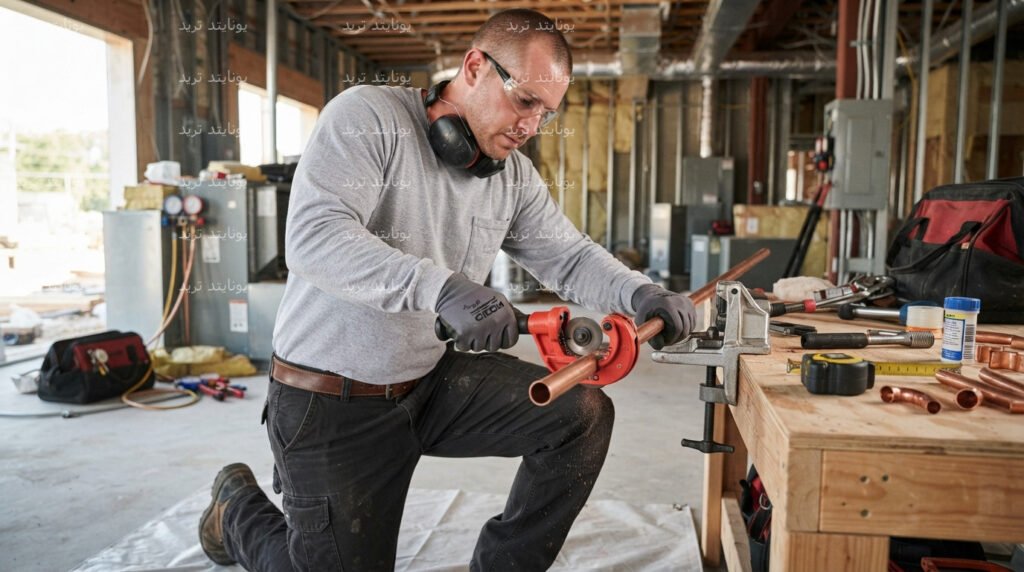
He promises Installation of copper pipes Accuracy and professionalism are the basic foundation in building a long-lasting, high-performance cooling and air conditioning system. The success of the entire system depends on the quality of the connections and the integrity of the paths, as any error in welding or insulation leads to the leakage of Freon gas and the gradual deterioration of the cooling capacity. This article reviews the technical standards adopted for the year 2025 to ensure a safe and sustainable installation, starting from the selection of materials all the way to the final pressure tests.
Basics of copper selection and track processing
It requires an operation Installation of copper pipes Use copper tubes designated for cooling systems (Refrigeration Grade), which are completely free of impurities and with closed ends to ensure internal cleanliness. Piping must be of adequate wall thickness to withstand high operating pressures that may exceed 600 psi for some modern refrigerants.
❓ Determine the path of copper extensions
The piping route should be planned such that it is the shortest possible distance between the indoor unit and the outdoor unit to minimize pressure loss. It is preferable to avoid sharp bends that may cause suffocation in gas flow, and it is preferable to use bends with a wide radius to maintain smooth movement within the pipes.
Modern welding and joining techniques
Brazing using inert nitrogen gas represents the gold standard for avoiding internal oxidation of copper. When copper is heated to high temperatures, the oxygen inside the tube reacts with the copper, forming black scales (oxides) that may lead to blockage of the expansion valve or subsequent damage to the compressor.
❓ Nitrogen welding application
A continuous, low-pressure flow of nitrogen gas is pumped through the tube during the welding process to completely expel oxygen from the joint area. This precise technical procedure ensures that the inner surface of the ducts remains smooth and clean, which extends the life of the system and protects the sensitive mechanical components inside the air conditioning unit.
These steps show the logical sequence to ensure safe connections Installation of copper pipes A process that requires extreme precision at every stage to ensure that there are no tiny pores that may lead to gas leakage.
Advanced thermal insulation standards
Thermal insulation using Elastomeric Foam is an indispensable step to prevent condensation on the surface of cold pipes. The 2025 updated standards recommend a minimum insulation thickness of 1/2 inch, as this insulation contributes to reducing thermal energy loss by up to 30% during peak operating periods.
| Evaluation standard | Traditional insulation | Elastomeric insulation (🏆 Editor's choice) |
|---|---|---|
| Thermal insulation efficiency | Medium | ✓ 9.8/10 |
| Condensation resistance | Acceptable | ✓ 9.9/10 |
| Shelf life | 3 years | ✓ 10/10 |
| Ease of installation | easy | ✓ 9.5/10 |
Pressure tests and quality assurance
It cannot be considered a process Installation of copper pipes Completed without stringent nitrogen pressure testing at 500 to 600 psi. The system should be left at this pressure for a minimum of 24 hours to monitor for any drop in the indicator, which indicates a subtle leak that requires immediate treatment.
❓ The importance of checking the exact leakage. Use a special bubble detector solution on all soldering points and mechanical connections. Carefully monitor the digital pressure gauge to ensure that the reading is stable in light of changing ambient temperatures. Completely empty the nitrogen after ensuring the integrity of the system before starting the air and moisture extraction (Vacuum) process. Frequently asked questions What is the ideal tool for cutting copper pipes?
A rotary tube cutter designed for copper should be used to ensure clean, straight edges without excessive filing of the ends.
❓ Can mechanical pressure be used instead of welding?
Yes, Press Fittings provide a fast and safe solution that reduces installation time by 40% and is ideal for locations that prohibit the use of open flames.
It requires an operation Air conditioning installation Following precise engineering steps begins with determining the optimal location of the indoor and outdoor units to ensure ideal airflow. Adhering to correct installation standards ensures that annoying vibrations are avoided and cooling is distributed efficiently and evenly throughout the space, which significantly extends the life of the device.
These standards start from the first stage: Installing air conditioning ducts Buried within fallen walls or ceilings, this requires selecting shorter paths to avoid sharp bends and ensure smooth refrigerant flow. This procedure also takes into account the protection of lines from the dangers of corrosion or shock during finishing work, which prevents the occurrence of any future blockages or leaks that are difficult to treat.
requires Implementation of air conditioning installation With high efficiency, careful consideration is given to installing the internal and external units and adjusting the air flow paths to achieve balanced cooling of the place. The quality of operation is also closely related to the safety of connecting the cooling lines and completely emptying the air from the circuit before releasing the refrigerant to ensure stable operating pressures.
The efficiency of extensions is not complete without commitment to a periodic program Air conditioning maintenance Air, as continuous inspection ensures cleaning of filters and early detection of any Freon smuggling before it worsens. This preventive monitoring contributes to maintaining ideal refrigerant pressure and extending the life of the compressor and mechanical components.
The process of installing copper pipes requires adherence to precise technical standards to ensure smooth movement of the refrigerant gas, as relying on professional bonding techniques and advanced thermal insulation directly enhances the performance of the compressor. The mastery Principles of installing copper pipes It effectively contributes to reducing energy consumption by up to 40%, ensuring economical operation and a longer lifespan of the air conditioner.
Professionalism in installing copper pipes requires adherence to precise technical standards that ensure efficient flow of the refrigerant without any heat loss, which directly contributes to reducing energy consumption in significant proportions. Applying these engineering practices not only protects the system from leaks, but also represents the cornerstone of...Ensure sustainable cooling It extends the life of the device and reduces its operational burden.
Once installation is complete, pop out Air conditioning maintenance As an imperative necessity to maintain the system’s efficiency and continuity of operation without sudden malfunctions. Regular inspection of components and cleaning of units ensures sustained high performance, and protects devices from premature wear resulting from dust accumulation or lack of refrigerant gas.
These standards begin with diligence in implementation Installing air conditioning ducts According to well-thought-out paths that avoid sharp bends, and ensure protection within walls or floors with highly efficient insulating materials. This preventive measure helps avoid blockage of the gas flow or mechanical damage to the cooling lines, ensuring sustainable operational efficiency of the device.
Besides the elaborate composition, it stands out Air conditioning maintenance As an imperative necessity to maintain the efficiency of the mechanical system and extend its lifespan. Periodic inspection and detection of early malfunctions ensures that the high costs of major repairs are avoided, and maintains stable performance in various climatic conditions.
These standards start from the first construction phase through Installing air conditioning ducts Buried according to engineering plans that ensure reducing bends and avoiding high pressure points. This procedure requires selecting precise diameters to match the cooling capacity, while protecting the lines from damage from subsequent finishing works to ensure a healthy and continuous flow of the refrigerant.
❓ Why is nitrogen gas necessary when welding?
Nitrogen prevents copper oxides from forming inside the piping, protecting the expansion valves and compressor from clogging and premature damage.
Requires work to be carried out Air conditioning installation Air follows precise engineering standards starting with the balanced installation of the indoor and outdoor units to ensure the drainage of condensation water and prevent vibrations. This also includes tightening the cooling lines and completely emptying the air from the circuit to ensure that the compressor operates at the highest efficiency and lowest energy consumption.
❓ How do I guarantee the quality of thermal insulation of pipes?
All joints between insulation pieces must be sealed using strong thermal tape to prevent moist air leakage and condensation on the copper.
❓ What is the pressure required to test air conditioning pipes?
Technical codes require pressure testing at 500 to 600 psi for 24 hours to be completely sure the system is free of leaks.
❓ Does the length of the pipes affect the cooling efficiency?
Yes, the longer the path, the greater the pressure loss and operating costs, so paths must be designed Installation of copper pipes To be as short as possible.
❓ Advantages and disadvantages
Features:
- Long system life when correct welding procedures are followed.
- High cooling efficiency thanks to reduced heat loss when using elastomer insulation.
- High safety when performing approved pressure tests.
Disadvantages:
- The cost of raw materials is high compared to aluminum alternatives.
- It requires high technical skill to ensure the quality of welding and connections.
❓ Editor's judgment and final rating
that Installation of copper pipes According to modern technical standards, it is a necessary investment for any professional air conditioning system. With a rating of 9.6/10, we confirm that adherence to the nitrogen protocol and thick insulation is the ideal solution to avoid common cooling failures, and is the most suitable option for facilities looking for long-term sustainability.
By following these specific technical steps, you will ensure optimal cooling performance for many years. Don't hesitate to hire professional technicians who apply digital stress tests to ensure your home and equipment are safe from any potential installation errors.
















Community dialogue
0 comments