
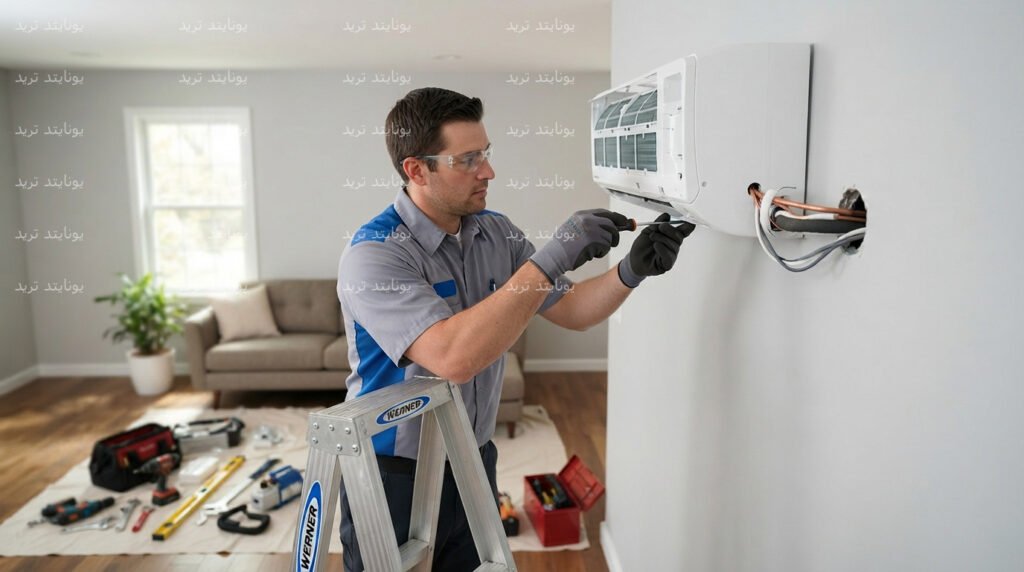
practical Air conditioning installation Successfully installing the device on the wall goes beyond simply installing the device on the wall, as it requires high engineering precision to ensure continuous performance. Correct installation practices contribute to significantly increasing cooling efficiency, while neglecting essential steps such as vacuum leads to losing a large portion of the device’s cooling capacity and increasing energy consumption. This article aims to clarify the practical steps and technical standards followed by professional technicians to ensure longer device life and continuous thermal comfort.
Engineering standards for installing indoor and outdoor units
requires Air conditioning installation In a sound engineering manner, taking into account the balance of the internal unit with the water drainage paths. The indoor unit must be adjusted with a water level to ensure a slight inclination of 2 to 5 millimeters towards the drain pan, which prevents water leakage into the room.
❓ Air flow and distribution requirements
Providing sufficient spaces around the indoor unit is a prerequisite to ensuring efficient heat exchange. It is necessary to leave a distance of at least 15 cm above the unit and 10 cm from the sides to ensure the return air flows smoothly without obstructions, which enhances the device’s ability to reduce heat more effectively.
The importance of the vacuum process in cooling efficiency
The vacuum process (evacuating air and moisture from pipes) is the backbone of any... Air conditioning installation professional. Neglecting this step leads to moisture remaining inside the refrigeration cycle, causing a decrease in cooling capacity by up to 40% [1], and subsequently leading to corrosion of compressor parts due to harmful chemical reactions.
| Evaluation standard | Unprofessional installation | Professional installation 🏆 Editor's choice |
|---|---|---|
| Use a vacuum pump | ✕ | ✓ |
| Adjust the correct inclination | ✕ | ✓ |
| Cooling efficiency | ★ 6.0/10 | ★ 9.8/10 |
| Compressor lifespan | 5 years | 12 years |
The materials used and their impact on the quality of the foundation
The quality of the foundation materials directly affects the sustainability of the process Air conditioning installation In your home. Copper pipes with a thickness suitable for high pressure must be relied upon, and each pipe must be insulated separately with a high-quality thermal insulating material to prevent condensation and energy loss.
❓ Check for leaks and system pressure
After connections are complete, the nitrogen pressure within the system should be tested to ensure there are no microscopic leaks in the welds. This preventative measure ensures that the customer does not need to charge the refrigerant again in the near future, which is considered standard practice by certified technicians.
The flow chart above shows the correct path to ensuring high performance, as the vacuum step remains the difference between a perfect installation and an installation prone to recurring problems.
Advantages and disadvantages of installation procedures
The process of technical establishment has long-term benefits but is offset by minor logistical challenges in implementation.
Features:
It is a stage Establishing copper pipes The basic foundation to ensure the flow of the refrigerant without obstructions or future leaks. This procedure requires extreme precision in selecting paths and ensuring appropriate thermal insulation, which protects the extensions from external factors and ensures stable pressure inside the circuit for long periods.
- Increasing cooling efficiency and reducing electricity consumption by up to 45% upon regular maintenance [2].
- Extending the lifespan of the mechanical and electrical components of the device.
- Prevent common problems such as water leakage inside the room or poor air flow.
Disadvantages:
The quality of the first installation is closely integrated with the plans Regular air conditioning maintenance Maintains mechanical components and prevents dust from accumulating on the evaporator and condenser fins. Regular checking of refrigerant levels and filter cleanliness ensures stable air flow and avoids sudden malfunctions during peak summer periods.
The success of your home's cooling system depends on strict adherence to precise engineering standards that govern every stage of installation, from choosing the strategic location of the units to ensure optimal air distribution, all the way to testing the connections and copper. The application Professional air conditioning installation Technically, it is not just a cosmetic option, but rather the real guarantee for achieving the highest possible cooling efficiency and extending the device’s lifespan.
Reaching the highest levels of efficiency requires taking into account the smallest engineering details in the path of copper pipes and adjusting the Freon charge with complete professionalism. The application Technical standards for cooling performance Ideal for ensuring the longevity of the compressor and preventing future gas leaks that drain energy in vain.
Protecting this investment does not stop at completing the installation accurately, but extends to... Air conditioning maintenance Air it periodically and regularly to avoid dust accumulation and a decline in refrigerant gas pressure over time. Continuous inspection of internal components, such as the compressor and evaporator coils, helps detect early failure and reduce costly repair costs in the long term.
The real success of the cooling system begins from the infrastructure stage, as it requires Establishing copper pipes Extreme care in choosing the appropriate diameters and thickness of thermal insulation to avoid leakage of Freon gas or moisture condensation inside the walls. Proper geometric stretching also ensures that sharp bends are minimized, maintaining refrigerant flow pressure and protecting the compressor from premature fatigue in the long run.
Maintaining the efficiency of the device does not depend only on proper installation, but also requires adherence to a periodic program that includes: Air conditioning maintenance Check refrigerant levels regularly. This preventive measure helps avoid sudden malfunctions and extends the life of the entire cooling system.
The real success of the cooling system begins from the structural construction stage, as it requires a step Establishing copper pipes Extreme care in choosing the appropriate diameters and avoiding sharp bends that may impede the flow of the refrigerant. This procedure also requires insulating the intake and exhaust lines with materials that prevent moisture condensation, in order to protect the walls and ensure stability of air conditioning cycle pressures in the long term.
- Slightly higher initial cost due to the use of high quality insulating materials and copper.
- Taking longer to install than traditional incomplete methods.
❓ Editor's judgment and final rating
Our overall evaluation of the process Air conditioning installation By full technical standards it is 9.7/10. This approach is recommended for any user seeking a long-term investment in their home, as the additional cost of foundation saves significant amounts in electricity bills and repair costs during the first five years of operation.
Frequently asked questions
❓ Why should a vacuum be performed when installing a new air conditioner?
Vacuum is used to extract moisture and air from within the refrigeration cycle, which prevents its mixing with Freon gas and ensures high cooling efficiency.
❓ Does the length of the pipes affect the performance of the device?
Yes, increasing the length of the piping beyond the range allowed by the manufacturer leads to compressor fatigue and reduces the actual cooling capacity.
❓ How do I maintain the efficiency of the air conditioner after installation?
Cleaning air filters regularly contributes to saving between 5% and 15% of electricity consumption and maintains the quality of the air entering the home [2].
❓ What is the best height to install the indoor unit?
It is preferable to install the indoor unit at a height of no less than 2.3 meters from the floor to ensure a balanced distribution of cold air in the room.
❓ Is it possible to install air conditioning without insulating the pipes?
No, thermal insulation of pipes is very necessary to prevent water condensation on the pipes and to protect the building’s structural structure from moisture.
Adhering to these technical standards ensures that you get the most out of your air conditioner. Start now by coordinating a professional installation to ensure your home is comfortable during the summer.
















Community dialogue
0 comments