
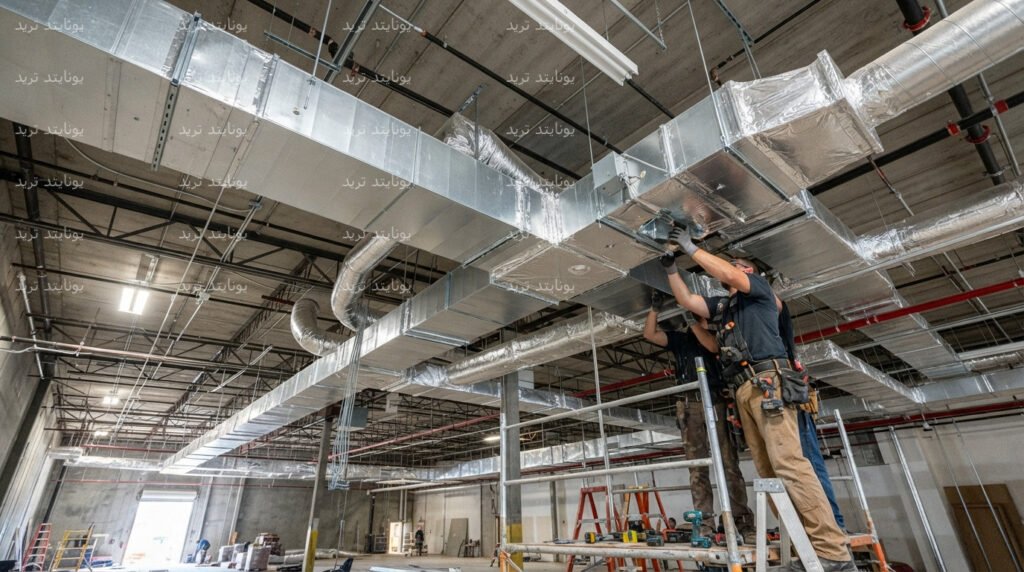
is a process Air conditioning duct extension The crucial step that determines the efficiency of your home's cooling system for many years. Adherence to technical standards in the distribution and establishment of copper paths ensures optimal refrigerant flow, which prevents sudden malfunctions and significantly reduces energy consumption. In this article, you will learn about the finest engineering details necessary to achieve sustainable cooling and a flawless aesthetic appearance.
Technical standards for copper pipe lengths
The ideal length of copper pipes between the indoor and outdoor unit should be between 3 to 15 metres To ensure stable performance. Reducing the distance beyond 3 meters will cause annoying vibrations and noise that may directly damage the compressor.
❓ The effect of long distances on the efficiency of the device
On the other hand, the length of the pipes exceeding 20 meters causes the cooling efficiency to decrease significantly, as the electrical load on the motor increases. Therefore, it is always advisable to plan routes Air conditioning duct extension With the shortest and straightest path to avoid loss of power or low pressure of the refrigerant.
The importance of thermal insulation for copper pipes
Rubber insulation forms the protective wall that prevents condensation, and its thickness must not be less than 9 mm To ensure the protection of the structural structure. This insulation contributes to keeping the gas passing through the pipes cool, which prevents moisture leakage that may later lead to the appearance of water spots on the walls or ceilings.
❓ Insulation errors that lead to damage to pipes
Leaving pipes exposed or using thin insulation exposes the pipes to atmospheric temperature fluctuations, causing copper to corrode over time. In addition, good insulation ensures that pipes are protected from oxidation resulting from direct moisture contact with the ambient air in uninsulated spaces.
Establishing pipes before the finishing stage
The pre-finishing stage is the golden time for Air conditioning duct extensionThey are buried inside the walls to protect them and ensure an elegant decorative appearance. This procedure significantly reduces future crushing costs and keeps electrical wiring and drainage safe from damage or tampering.
- Pipe protection: Burying within the walls insulates the copper from external mechanical shock.
- Aesthetic appearance: The disappearance of pipes gives the rooms a tidy appearance without the need for visible plastic coverings.
- Systems Integration: Pre-establishing allows drainage and electrical pipes to be connected in uniform and organized paths.
Matching the diameters to the capacity of the air conditioner
The choice of pipe diameter depends radically on the capacity of the device measured in BTUNon-compliance causes throttling of the device (Restricted Flow). Using a smaller diameter than required increases operating stress, causing poor performance and excessive electricity consumption.
❓ Summary table of technical specifications for air conditioning extension Technical standard Ideal specification Recommended length 3 - 15 meters Rubber insulation thickness 9 mm and more Leak test Compressed nitrogen Pipe diameter according to the capacity (BTU) of the device Pressure tests to ensure safety It is necessary to conduct a pressure test using nitrogen gas after completing the extension of air conditioning ducts and before closing the walls permanently. This test reveals any hidden leaks in the welds that may appear later, saving you the trouble of cracking the walls after completing the paints and finishes. 📊 Illustration diagram 1 Pipe route planning 2 Determining copper diameters 3 Installing thermal insulation 4 Nitrogen pressure testing 5 Sealing walls 6 Leaking Weld repair The above diagram shows the engineering sequence to ensure installation quality. Nitrogen testing prevents the loss of Freon gas and extends the overall life of the system. Frequently Asked Questions Why should air conditioning ducts be insulated?
The insulation prevents moisture condensation on the pipes and maintains efficient cooling within the copper, protecting the walls from water stains and corrosion.
It requires an operation Air conditioning installation Your Home High precision in choosing the strategic location of the indoor unit away from direct heat sources, while ensuring that the distances between the two units are balanced to enhance the performance of the compressor. Good thermal insulation of copper pipes is also an essential basis for preventing condensation, keeping the air conditioner cool, and maintaining its operational efficiency.
Phase dependent Installing air conditioning ducts Choosing the appropriate diameters of copper and securing the paths inside the walls away from heat sources or sharp bends that may impede the movement of gas. Paying attention to the quality of thermal insulation of each individual line prevents condensation and protects the building’s structural structure from moisture, ensuring the sustainability of cooling efficiency for as long as possible.
It requires an operation Professional air conditioning installation دقة متناهية في اختيار مواقع الوحدات الداخلية والخارجية لضمان توزيع مثالي للهواء وتجنب الضوضاء. The success of the installation also depends on careful thermal insulation of the copper pipes and tightly tightening the connections to prevent any leakage that may affect the system’s performance in the long term.
The efficiency of the system does not depend only on proper establishment, but sustainability of performance requires action Regular air conditioning maintenance For early detection of any leakage in Freon lines or accumulation of sediments inside the units. This regular monitoring contributes to extending the life of the compressor and protecting the mechanical circuits from constant thermal stress.
The quality of sound establishment is not complete without continuing Air conditioning maintenance Air supply periodically to ensure that the system remains at its highest performance levels. This regular inspection includes cleaning the filters and ensuring the Freon pressure and the integrity of the connections, which extends the life of the device and saves you the high costs of emergency repairs.
This vital stage begins with adjusting the burial paths and determining the appropriate pipe diameters for the capacity of each cooling unit with high accuracy. requires Installing air conditioning ducts Choose thermally insulated copper materials to protect them from moisture and damage inside the walls, taking into account avoiding sharp bends that may impede the movement of the cooling medium.
After completing the establishment phase, it is important to adhere to a regular schedule of operations Air conditioning maintenance To ensure continuity of high performance and prevent dust accumulation that may hinder cooling efficiency. Continuous preventive inspection of mechanical and electrical parts extends the life of the device and protects against deterioration of indoor air quality.
This vital stage begins with adjusting the wall paths and determining the diameters of the cooling lines with complete accuracy to avoid any sharp bends that may hinder the Freon cycle. It requires an operation Installing air conditioning ducts Using high-quality, thermally insulated copper materials to protect the system from leaks and ensure the longest lifespan of the devices.
❓ What is the appropriate length of pipes for the air conditioner?
It is always recommended that the piping length be between 3 to 15 meters to avoid compressor noise or low cooling efficiency.
Process dependent Air conditioning installation Air installs the internal and external units with extreme precision to ensure balanced pressure and smooth air flow inside the rooms. This procedure requires ensuring that the base is level and that the electrical and mechanical connections are secured according to the highest safety standards, which extends the life of the device and prevents cooling leaks.
❓ Does the diameter of pipes affect electricity consumption?
Yes, using a diameter that does not match the capacity of the air conditioner causes pressure on the compressor, which increases energy consumption and reduces the lifespan of the device.
❓ How do I make sure there are no leaks in the pipes?
A pressure test using nitrogen gas must be performed by a specialized technician before completing the wall sealing or finishing phase.
❓ When should air conditioning ducts be installed?
Foundation must be done before the finishing stage to ensure that the pipes are hidden inside the walls and protected from any future damage.
❓ Advantages and disadvantages
Features:
- Saving electrical energy consumption in the long term.
- Maintaining the aesthetic appearance of interior spaces.
- Extend the life of the air conditioner compressor.
Disadvantages:
- It requires high precision in implementation and initial cost when setting up.
- Difficulty accessing pipes after they are buried in the event of a subsequent implementation error.
❓ Editor's judgment and final rating
The overall assessment of the engineering practices mentioned is 9.5/10Adherence to standards Air conditioning duct extension A smart investment for homeowners looking for optimal performance, as proper foundation saves a lot of future maintenance costs and ensures continuous thermal comfort.
By following these technical standards, you guarantee the stability of the cooling system and avoid all malfunctions resulting from poor installation. Always make sure to choose original copper materials and high-quality thermal insulation to ensure the best results for your home air conditioners.
















Community dialogue
0 comments