
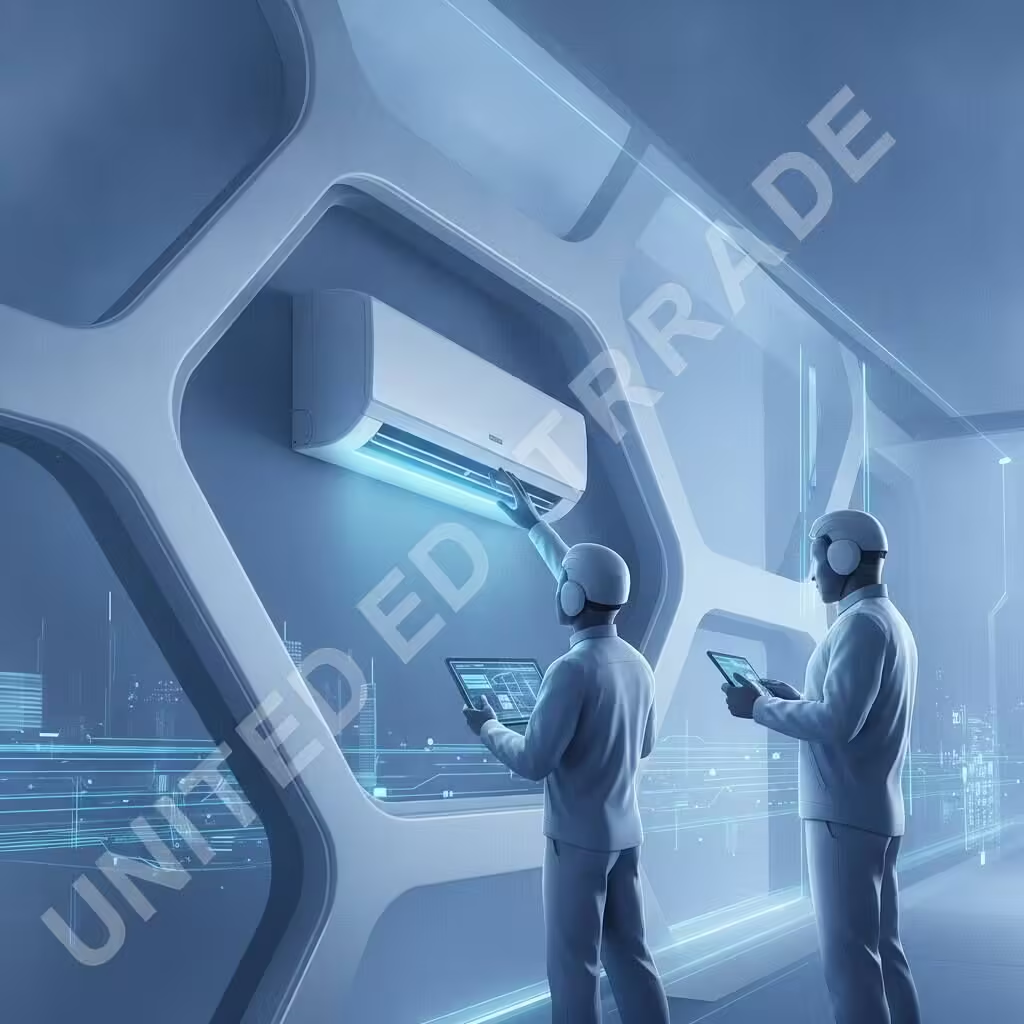
Have you ever thought that moving an air conditioner is not just moving a piece of furniture from one place to another? In fact, this process, which may seem simple at first glance, carries with it many complications and requires extreme precision and deep technical expertise to ensure the safety of your precious device and its optimal performance after the move. The air conditioner is not just a box that cools the air; Rather, it is a complex engineering system that includes a group of sensitive and interconnected components, starting from the refrigerant gas (Freon), which is the lifeblood of the device, through the fine copper tubes that transport this gas, all the way to the complex electrical circuits that control everything, and all of these parts are vulnerable to damage with the slightest error or mishandling.
Failure to handle these components in the correct manner may cause huge financial losses, starting from simple problems such as Freon leakage, which reduces cooling efficiency and harms the environment, and escalates to include damage to basic internal parts such as the motor or compressor, and may reach real electrical risks that threaten the safety of the home or office, or even the urgent need to replace the entire unit, which represents a major financial burden. For this reason, understanding professional procedures becomes a process Air conditioning transportation A must-have, not only to preserve your financial investment, but to ensure the continuity of an effective and comfortable cooling environment in your new space.
Extreme attention to every practical detail Air conditioning transmission Not only does it ensure the safety of your valuable device, it directly contributes to its long-term operational efficiency. Negligence in any step, whether it is disassembling or reconnecting delicate parts, can lead to costly and unexpected problems. Therefore, it becomes necessary to seek specialized expertise in... Dismantling and installing air conditioners A must-have for preserving your investment and the comfort of your home. Choosing the right team ensures a safe journey for your chiller, from its old location to its new space, ensuring its optimal performance once restarted.
Why is professional air conditioner transportation necessary to avoid potential risks?
Unfortunately, many people make the common mistake of trying to move the air conditioner themselves or with the help of people who lack specialized experience, thinking that it only requires manual tools and a little effort. But the truth is that these attempts may lead to very serious and costly consequences. Let us review the most prominent risks that can be completely avoided when hiring experts in this field:
- Freon gas leak: This is the beating heart of any air conditioner. If this gas leaks, your device will gradually or completely lose its ability to cool, leaving it as just a huge fan that consumes electricity uselessly. The matter does not stop there, as Freon harms the environment and has a negative impact on the ozone layer. Only a specialized technician knows how to safely collect the gas inside the outdoor unit before dismantling, to ensure that it does not leak and can be used again efficiently.
- Damage to pipes and heat exchangers: Imagine that you are dealing with a network of tiny blood vessels, such are the copper tubes and heat exchanger fins inside your air conditioner. It is very thin and susceptible to bending, breaking or damage during improper disassembly and transportation. Any scratch or careless bend can obstruct the flow of Freon, affecting the device's performance and reducing its lifespan.
- Serious electrical problems: Disconnecting and connecting electrical wires requires a thorough knowledge of electrical circuits and voltages. The error here is not only limited to the device not working, but it can lead to a short circuit, damage to the entire unit, or even a fire, God forbid. Specialists follow strict safety guidelines and use appropriate inspection tools.
- Structural and mechanical damage: Air conditioning units, especially outdoor ones, are heavy and bulky. Dropping the unit or subjecting it to strong shocks during transportation due to mishandling or poor installation, may result in fractures in the external structure, or what is more serious, damage to sensitive internal components such as the compressor or motors, which may mean the premature end of the device’s life.
- Lack of efficiency after installation: Even if the air conditioner does not suffer immediate and noticeable damage, incorrect installation after transportation is a sure recipe for decreased performance. You may notice poor cooling, a sudden increase in electrical power consumption, or even annoying noises during operation. These problems are often the result of a minor Freon leak, air and moisture in the circuit, or loose fitting of the indoor and outdoor units.
Smart preparation before moving the air conditioner: indispensable steps
A successful move is like an organized trip, and it starts with good, thoughtful preparation. These basic steps are necessary to avoid any surprises and ensure that work runs smoothly before starting to disassemble the air conditioner:
- Completely disconnect the power supply: This is the first and most vital step to ensuring your safety and the safety of the technicians working on the device. Do not just turn off the device from the remote control, but make sure to cut off the electricity to the unit completely from the main distribution panel (dial). This step prevents any potential electrical shocks and protects the delicate electronic components in the device from damage.
- Cleaning the unit before starting: It is always preferable to clean the filters and the internal and external units from accumulated dust and dirt. Not only does this reduce chaos during the moving process, but it also helps assess the overall condition of the device before beginning disassembly, and makes it easier for the technician to notice any existing issues that may need to be addressed.
- Preparing the necessary tools and equipment: The moving process requires specific and specialized tools. Basic tools include screwdrivers of various sizes, wrenches of various sizes, pliers, and perhaps a wire cutter. Don't forget to prepare small, sealed bags to store screws and small parts so they don't get lost, and strong adhesive tape to secure moving parts and to number wires. A professional technician will also bring equipment such as a Freon pump and pressure gauges, which are essential to the integrity of the refrigeration circuit.
- Safe collection of Freon gas (for split air conditioners): This is a precise and crucial step that he must take Specialized air conditioning technician Only, it is necessary to prevent the leakage of precious gas. The process is done by turning the air conditioner on at maximum power for several minutes. Next, the exhaust line valve (thin tube) is closed first, then after about 30 seconds (to give the compressor time to pull the Freon into the outdoor unit), the intake line valve (thick tube) is quickly closed, and before anything else, the unit is completely turned off. This ensures that the Freon remains safely inside the outdoor unit, and is ready for reuse after a new installation.
The journey of dismantling various air conditioning units: precise details
Once the initial preparations are completed, the dismantling phase begins, which varies slightly depending on the type of air conditioner. Each type has its own challenges that require professional handling:
Dismantling split air conditioners: An indoor and outdoor unit that requires careful care
Split air conditioners, with two separate units, require double precision during dismantling. These are the steps professionals follow:
- Disassembling the indoor unit: After ensuring that the Freon is collected and that the power is completely disconnected, the technician begins to unscrew the nuts that connect the copper tubes to the indoor unit. These tubes are delicate and must be handled with extreme care to avoid bending or breaking them. The electrical wires are then separated, and here lies the importance of documenting their locations (with photography or clear numbering) to facilitate the reassembly process later. The indoor unit is then carefully lifted from its wall bracket. You must ensure that there is no sudden movement that may lead to breakage of the plastic or internal parts.
- Dismantle the outdoor unit: Disconnect the copper pipe nuts from the outdoor unit (after making sure again that the freon is completely collected inside). Then the power and control wires are disconnected, paying close attention to the connection marks. Finally, the unit's mounting bolts are removed, and it is lowered very carefully due to its heavy weight, which often requires more than one person or the use of special lifting tools. The unit must be kept balanced to avoid any shocks that may affect the compressor or sensitive internal components.
To ensure operation Dismantling and installing air conditioners Professionally, it is advisable to use specialized services that have the experience and equipment necessary to handle these complex devices.
Dismantling window air conditioners: a compact unit that requires strength and caution
Although they are a single compact unit, transporting window air conditioners still requires careful care, especially due to their heavy weight and the need for careful handling to avoid damaging the window frame or surrounding wall:
- Power off: As always, the first priority is to unplug the unit from the mains.
- Removing nails and insulation materials: Unscrew all the screws that securely secure the air conditioner to the window frame or to the designated hole in the wall. Also, any insulation or sealants (such as foam or silicone) that may be installed around the unit are removed to ensure thermal insulation.
- Remove the unit with caution: Due to its heavy weight and large size, the window air conditioning unit must be removed with extreme caution, and it is always preferable to do this step with the help of another person to distribute the load and avoid injuries. The horizontal position of the unit should be maintained as much as possible during output to avoid oil leakage from the compressor or damage to internal components.
The art of transporting and packing air conditioners safely: protecting your investment
After the precise disassembly stage, comes the role of safe packaging and transportation, which is a crucial step no less important than disassembly or assembly. Good packaging is your device's shield against bumps, scratches, and dust during the transit journey. Use strong, high-quality packaging materials such as bubble wrap that provides an excellent cushion of protection, thick waterproof and dustproof covers, as well as multi-layered cardboard that can withstand light shocks. You must ensure that all moving or removable parts such as filter doors are secured, and that pipes and electrical cables are securely secured using strong adhesive tapes to prevent them from being shaken or damaged. When loading the units into a transport vehicle, whether a truck or a car, they must be placed in an upright position as much as possible to avoid any leakage of internal oils or fluids, and secured very tightly using belts and straps to ensure that they do not move or shake while driving, as sudden movement may cause serious and irreparable damage.
Reinstalling the air conditioner after transportation: precision and quality to ensure performance
The process of reinstalling the air conditioner is no less important than removing it, but it may be more complex and requires the same amount of precision and professionalism, if not more, to ensure that the air conditioner regains its full efficiency and operates with the best possible performance. Here, the value of using... Specialists in transporting air conditioners To ensure correct installation and avoid any future problems. Key steps in this vital stage include:
- Tight installation of units: Install the indoor and outdoor unit in their new locations completely flat and secure. Make sure to use level measuring tools to ensure perfect leveling, which is vital for proper water drainage and preventing any leaks. The recommended distances around the outdoor unit must also be taken into account to ensure good ventilation and sufficient airflow, which directly affects the cooling efficiency and extends the life of the compressor.
- Connect pipes and wires accurately: The copper pipes carrying Freon are reconnected with great care, making sure all nuts and connections are tight to prevent any possible leaks. Also, the electrical wires are connected in accordance with the documentation that was made during the disassembly stage, making sure that they are well insulated and protected from weather factors. Any error in the electrical connections may result in damage to the device or electrical hazards.
- Vacuuming: This is one of the most important and decisive steps performed by a specialist technician using a special vacuum pump. The goal is to pull all the air and moisture out of the refrigeration circuit before releasing the Freon. The presence of air or moisture inside the system significantly reduces the cooling efficiency, as water reacts with Freon to form acids that damage the compressor and shorten its life, and may also lead to freezing of pipes. The technician ensures complete emptying of the cooling circuit to ensure the highest performance of the device.
- Accurate leakage check: After completing the connections and before releasing the Freon completely, the technician checks all connection points for any possible leakage of Freon gas. This is done using leak detection materials or electronic detection devices that give an alert when there is any leak, even if it is minute. This step is necessary to maintain the amount of Freon inside the system and to ensure that the environment is not polluted.
- Recharge Freon (if necessary): If the Freon is collected correctly during disassembly, there is no need to recharge. However, if a leak occurs or the quantity is insufficient, the technician must recharge the system with the correct quantity and type of Freon recommended by the manufacturer, using a special scale to measure the quantity accurately.
- Trial operation and final inspection: After all these steps, the air conditioner is turned on and tested for several minutes to ensure that it is working efficiently. The technician monitors the temperature of the air leaving the indoor unit, compares it to what is expected, listens for any abnormal sounds that may indicate a problem, and checks that all other functions such as air distribution and drainage are working.
When should we resort to experts? Air conditioner transportation Is it the smartest option?
In most cases, especially with split air conditioners and complex central air conditioners, the use of... Split air conditioning transportation company Specialized is the smartest, safest and most cost-effective option in the long term. Why? Professionals have many advantages that make them indispensable:
- Specialized tools and equipment: They have all the necessary tools, from precision wrenches, to vacuum pumps, pressure gauges, and leak detectors that ordinary people don't usually have. This equipment is necessary to safely handle Freon gas and sensitive pipes.
- In-depth experience and knowledge: They have years of experience in dealing with various types of air conditioners and their sensitive components, and know the details of each system, which enables them to carry out the dismantling and installation process smoothly and efficiently. They are also familiar with the latest technologies and best practices in this field.
- Ability to diagnose and solve problems: During disassembly or installation, unexpected problems may arise. Professional technicians have the ability to diagnose and solve these problems immediately, whether it is a Freon leak or an electrical problem, saving you time, effort, and the costs of future repairs.
- Warranty and peace of mind: Most specialized companies offer a guarantee on the service provided, giving you peace of mind and protecting you from any defects that may appear after installation. This guarantee reflects the company's confidence in the quality of its work and protects you as a customer.
- Save time and effort: Trying to move the air conditioner yourself can take a lot of time and effort, and may result in injury or damage. Hiring experts saves you this burden and ensures that the work is completed quickly and efficiently.
- Maintaining the device’s efficiency and lifespan: Proper installation ensures that your device operates at maximum efficiency, reducing energy consumption and extending its lifespan, thus saving you maintenance costs and early replacement.
Golden tips for maintaining air conditioner efficiency after moving
After you have successfully completed the process of transporting and installing the air conditioner, the care journey does not stop here. Here are some important tips to maintain the efficiency of your device and ensure that it continues to provide the best performance for many years:
- Periodic cleaning of filters: Keep the air filters clean on a regular basis, preferably every two weeks to a month depending on the intensity of use and the surrounding environment. Clean filters ensure good airflow, increase cooling efficiency, reduce energy consumption, and most importantly, improve the air quality in your space.
- Regular preventive maintenance: Conduct a periodic and comprehensive air conditioning inspection by a specialized technician at least once a year, preferably before the start of the hot summer season. The technician will check the Freon levels, clean the outdoor unit, check the electrical connections, and make any necessary adjustments to ensure the device operates at maximum efficiency and avoid sudden malfunctions.
- Monitor device performance: Be alert to any changes in your device's performance. Pay attention to any strange or unusual noises coming from the unit, a sudden decrease in cooling capacity, a water leak, or an unexplained increase in your electricity bill. When you notice any of these signs, do not hesitate to call a professional maintenance technician immediately to avoid worsening the problem.
Bottom line: An investment in comfort and efficiency
In conclusion, it becomes clear to us that the process... Air conditioning transportation It is not just a simple logistical task that anyone can undertake, but rather a precise and complex technical procedure that requires keen attention to detail, and in-depth knowledge of cooling systems and electrical components. From careful preparation before disassembly, safely assembling the Freon, through careful disassembly of the units, and secure packaging for protection during transportation, all the way to professional reassembly and proper emptying of the cooling circuit, each of these steps plays a pivotal role in the performance and lifespan of your device. Neglecting any of these stages may lead to negative and unfortunate consequences, ranging from decreased efficiency and increased costs, up to complete damage to the device.
Therefore, to ensure that the air conditioner continues to provide the utmost comfort and ideal cooling in your new home or work site, and to preserve your valuable investment, it is important to seek the help of experts and specialists in... Transportation and installation of air conditioners It is not just an option, but rather an imperative necessity that guarantees you peace of mind and lasting comfort. It's a smart move to invest in your quality of life and the comfort of your home.
















TQTAG76 Community dialogue
0 comments