
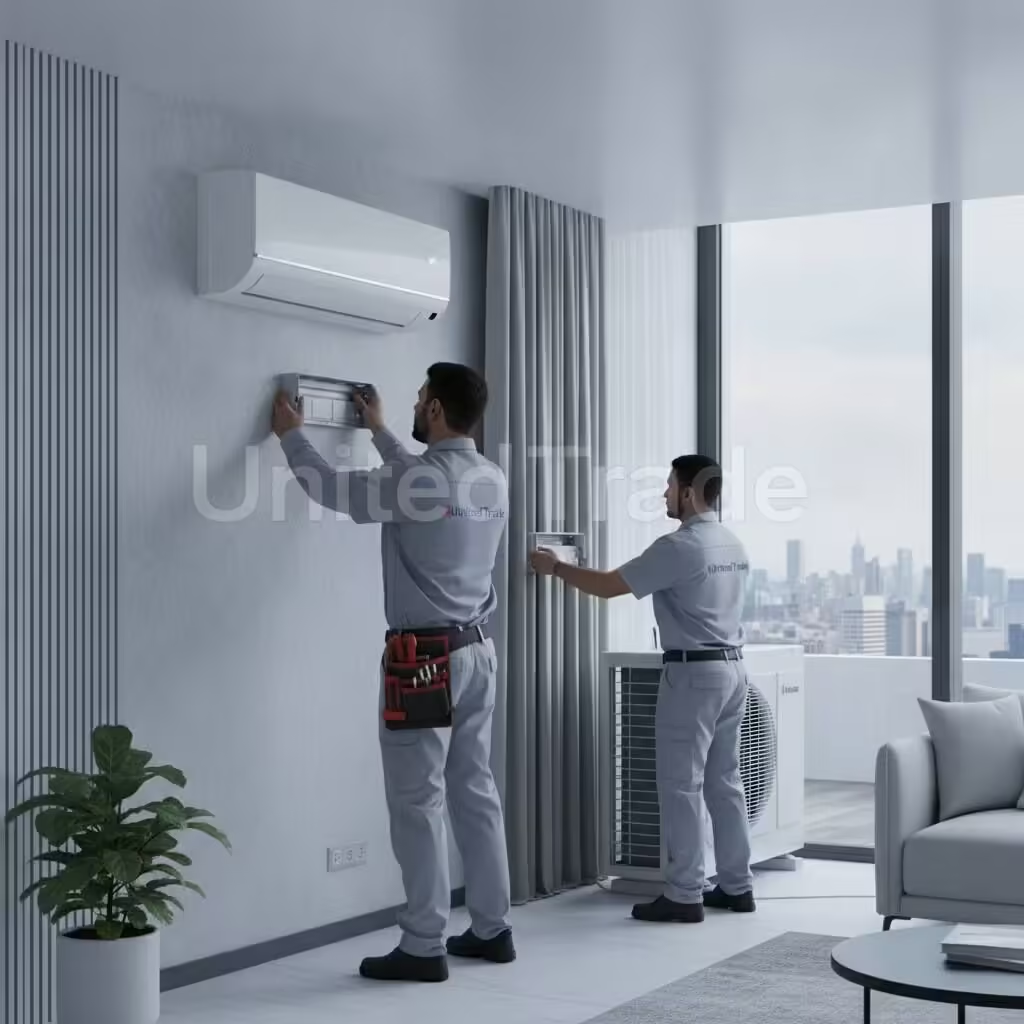
Have you ever thought about how important the air conditioner is in our daily life, especially in our hot climates? It's not just a device that emits cool air; Rather, it is a comfort companion that turns our spaces into oases of refreshment, and gives us the ability to focus and be productive. When you decide to move to a new home or rearrange your work spaces, a question may come to mind: How can I move this valuable device without damaging it? Here lies the truth that many may not realize: a process Air conditioning transportation It is not as simple as it seems at first glance. It's a journey that requires extreme precision, a deep understanding of how these complex systems work, and technical skill to ensure that your device remains fully functional and efficient after all the trouble. Imagine your air conditioner as a beating heart. Like any heart, it includes tiny vessels (copper tubes), vital matter (Freon gas), and a complex neural network (electrical circuits). Any mistake in handling these sensitive components could lead to serious consequences, ranging from a simple refrigerant leak, to permanent damage to the compressor, or even real electrical hazards. It's never an exaggeration; The potential cost of repairing or replacing a damaged air conditioner can be prohibitive, not to mention the inconvenience of losing the coolness of your home on the hottest days. For this reason, understanding professional procedures for moving air conditioners has become vital and indispensable, not only to preserve your valuable investment, but also to ensure the continuity of a comfortable and refreshing environment in your new spaces.
Now you're probably wondering: What exactly are the risks we're talking about? Why can't I simply disassemble the device and move it myself? Let's dive into the details to find out why professional moving is always the best choice.
The importance of professional air conditioning transportation and avoiding risks: protecting your investment and peace of mind
Unfortunately, many fall into the trap of believing that Dismantling and installing air conditioning A simple task, so they resort to trying to do it themselves or with the help of people who lack specialized experience. This decision, which seems to save time and money at first, often turns into a nightmare filled with problems and additional costs that could have been easily avoided. Let's take a closer look at the most prominent risks that threaten your air conditioner if it is not handled properly:
- Freon gas leak: The hidden specter that threatens cooling efficiency and the environment: Freon is the soul of the air conditioner; Without it, your device is just a huge, useless fan. Not only does this gas leak result in a complete loss of cooling capacity, turning your summer into a living hell, but it also carries serious environmental damage. Most types of Freon used are considered greenhouse gases that contribute to climate change, and some of them harm the ozone layer. Only a specialized technician has the knowledge and tools necessary to perform the “Pump Down” Freon collection process safely and effectively, to ensure that it remains inside the external unit without any leakage, and to protect your device and our planet.
- Damage to pipes and heat exchangers: precision components that do not tolerate tampering: Did you know that the thin copper tubes and heat exchanger fins (which look like tiny honeycombs) are the system's arteries and lungs? These ingredients are very delicate and delicate as flower leaves. The slightest unintended bend or wrong pressure during disassembly or transportation can result in them breaking or blocking their tracks. Imagine that an artery in the human body becomes clogged; This is what happens in air conditioning! If these parts are damaged, your cooling efficiency will decrease dramatically, your electricity bill will increase, and you may end up having to replace expensive parts or even the entire unit.
- Electrical problems: an invisible but devastating danger: Electricity is the lifeblood of all appliances, but handling it requires extreme caution and in-depth knowledge. Disconnecting and connecting the electrical wires of the air conditioner is not just a connecting game; It requires an understanding of electrical circuit diagrams and a precise knowledge of proper voltage and current. Any incorrect connection may result in a short circuit, damage to the compressor or control board, or in the worst case, a fire. Only experts ensure that wires are safely disconnected and connected to the correct standards, documenting every step to avoid any reassembly errors.
- Structural damage: sudden falls and unexpected shocks: Air conditioning units, especially outdoor ones, are heavy and bulky. Falling the unit, or subjecting it to strong shocks during transportation due to lack of proper installation, not only distorts its external appearance with fractures or dents, but more importantly, it may lead to damage to sensitive internal components such as the compressor, fans, or even the container that contains Freon. Such damage could be catastrophic and render the device useless.
- Lack of efficiency after installation: the price of neglecting details: Even if your device survives disassembly and transportation without visible damage, incorrect installation is a sure recipe for poor performance. You may notice that the cooling is no longer as strong, or that the device is drawing a lot more power than usual, or even that it is making annoying noises that were not there before. These problems are often the result of things such as air and moisture not being completely evacuated from the circuit (vacuuming), piping not being properly connected, or even the unit not being installed at the correct horizontal level. These small details are what make the difference between an air conditioner that works at maximum efficiency and another that struggles to provide the lowest levels of comfort.
- Void of Warranty: Loss of Manufacturer Protection: Most air conditioner manufacturers require that installation and maintenance be performed by certified technicians. Attempting to disassemble or install the device yourself or by unqualified persons may directly void the device's warranty. This means that you will bear the costs of any future repairs, even if they are manufacturing defects, making you lose the protection that was available to you.
- Long-term hidden costs: Saving a few riyals on the cost of professional moving may seem tempting, but think about the hidden costs. A low-efficiency appliance means much higher electricity bills each month. Frequent breakdowns require technicians to be called in and expensive repairs. Ultimately, you may have to replace the entire appliance before its time, turning the initial savings into a major financial loss in the long run. Investing in a professional service from the beginning is an investment in both the life of your equipment and your budget.
So, now that we realize the importance of professional handling of these vital devices, how do we start this transportation journey the right way? It all starts with good preparation, as it is the foundation of success for any complex operation.
Optimal preparation before moving air conditioning: the rule of success for any move
As in any successful project, a process begins Air conditioning transportation Smoothly and efficiently from the elaborate preparation stage. These initial steps are not just formalities, but rather the foundation that ensures the safety of everyone and the efficiency of the entire process. Here's what to do before you get your hands on any nail:
- Completely unplug: Your safety is the absolute priority: This is not just a recommendation, but rather a golden rule that cannot be compromised at all. Before touching any part of the air conditioner, make sure that the power supply to the unit is cut off from the main distribution panel (dial). Don't just turn off the device with the remote control; This does not cut off the power completely. Ignoring this step may expose you to the risk of electrocution, which may be fatal. Always remember: Safety first, the safety of your device comes next.
- Cleaning the unit: In preparation for a clean trip and early detection: Cleaning may seem like a minor step, but it has multiple benefits. Before starting disassembly, it is preferable to clean the air filters of the indoor unit, as well as wash the outdoor unit of accumulated dust and dirt. Not only does this reduce potential mess during transport and makes for a cleaner parts handling process, it also gives you a final opportunity to inspect the equipment and ensure there are no visible damages or pre-existing issues that may need to be addressed before transport.
- Preparing the necessary tools: Because each task has its own tools: You will not be able to build a house without the proper equipment, and the same applies to dismantling the air conditioner. Make sure you have a full set of essential tools on hand. These tools usually include: screwdrivers of different sizes and types (regular and solid), adjustable wrenches or specific sizes (Spanners), pliers, wire cutters, electrical insulating tape, and small sealed bags to store small screws and nuts. Don't forget a pen or markers to label wires and parts; These small details save you a lot of time and effort when reassembling.
- Freon gas collection (for split air conditioners): a job for professionals only! This is the most sensitive and complex step, and must be performed by a specialized and trained air conditioning technician. The Freon collection process, also known as “Pump Down,” is to pull all the refrigerant from the piping and indoor unit and store it safely inside the outdoor unit. How is this process done? The technician turns the air conditioner on to cooling mode, then closes the exhaust line valve (thin line), allowing the compressor to pull Freon from the rest of the circuit. After a short while, before the unit turns off completely, the suction line valve (thick line) quickly closes. This way, the Freon remains safely trapped inside the outdoor unit, ready to be reused upon a new installation. Attempting to do this without experience or proper equipment will inevitably result in a gas leak, costing you new charge, harming the environment, and possibly causing damage to the compressor.
Now that we're all set, it's time to move on to the actual unpacking stage. This process varies slightly between types of conditioning, but precision and focus are key.
Steps to dismantle various air conditioning units: the art of safe and accurate disassembly
Air conditioners of all types, whether split or window, are complex systems that require special treatment when dismantling. Understanding the differences between them and how to deal with each type ensures a smooth, damage-free moving process.
Dismantling split air conditioners: the precision of dealing with two separate units
Split air conditioners are characterized by the presence of two separate units, internal and external, which requires double precision when disassembling and dealing with the connections between them. After ensuring that the electricity is turned off and completing the Freon collection process by the specialized technician, the following steps begin:
- Disassembling the indoor unit: an artistic touch and a careful hand: After the Freon is collected and the electricity is disconnected, the technician begins to unscrew the nuts that connect the copper tubes to the indoor unit. These nuts are delicate, and must be handled with extreme care to avoid breaking them or bending the delicate copper tubes inside them. After that, the electrical wires connected to the indoor unit are disconnected. Here comes the role of documentation and naming. A professional technician will photograph or mark the wiring locations to ensure they are reconnected correctly in the new location. Finally, the indoor unit is lifted very carefully from its wall mount, making sure not to cause any scratches or damage to the walls or the unit itself. This step must be done by at least two people due to the size and weight of the unit.
- Dismantling the external unit: strength and caution at the same time: The outdoor unit is the heaviest part and the most exposed to the elements. After ensuring that the Freon collection is complete and the electricity is disconnected, the copper pipe nuts are disconnected from the outdoor unit with the same precision and care. Immediately after disconnecting the pipes, it is necessary to use special caps to close the openings in both the indoor and outdoor unit to prevent dust, dirt, and moisture from entering the system, which may cause major problems later. Then the power and control wires are disconnected, and their locations are documented as usual. Finally, the outdoor unit's mounting screws are removed from the base or stand it is on, and lowered very carefully. Due to its heavy weight and often high location, this step requires the use of appropriate lifting equipment and trained personnel to ensure safety and avoid the unit falling or being hit. Remember, handling the outdoor unit requires great strength and concentration to ensure the safety of everyone and equipment.
To ensure that the process Dismantling and installing air conditioners It is done with the utmost professionalism and safety. Using the services of a specialized company with long experience in this field is the golden advice that we offer you. These experts know exactly how to handle every little and big detail.
Dismantling window air conditioners: simplifying the transportation process
Although window air conditioners are a compact unit, moving them still requires extreme care and caution to ensure the safety of their sensitive internal components. Its heavy weight and cubic shape may make moving it more difficult than you expect:
- Disconnecting the power: there is no room for error here: As usual, the first and most important step is to completely disconnect the power to the unit from the mains, just as we did with split air conditioners. This is the rule that never changes.
- Removing screws and seals: Release the unit safely: After ensuring that the electricity is turned off, remove all the screws that secure the air conditioner to the window or wall frame. These screws may be hidden or rusted, requiring patience and proper tools to remove them. Any insulating or sealing materials (such as foam or silicone) around the unit are also removed to completely free it from its location. You may need to use a knife or sharp tool to carefully loosen these materials.
- Unit Output: Team work for everyone’s safety: Due to its heavy weight and shape that may be difficult to grip, the window air conditioning unit must be removed with extreme caution. It is highly recommended that this step be done with the help of at least one other person, to avoid stress and injury. When retracting the unit, keep it as horizontal as possible; This helps protect the compressor and the oil in it from moving incorrectly, which can affect the performance of the device later. There must be one person inside and one person outside to guide the unit and lower it safely to the ground or to transport.
After the air conditioning units are ready to move, there comes an equally important stage: packaging and transportation. Without good protection, all previous efforts may be in vain.
Safe transportation and packaging of air conditioning units: protecting your investment on the road
After the air conditioning units are carefully dismantled, the job moves on to protecting these precious devices during their journey to the new location. Safe packaging and careful transportation are the safety valve that protects your device from bumps, scratches and possible damage on the road. Never underestimate this stage, as it is an integral part of the success of the entire moving process.
- Proper packaging materials: Protection shield for your device: To ensure maximum protection, always use strong, high-quality packaging materials. Bubble Wrap is an excellent choice for absorbing light shocks, while thick, padded covers (such as furniture blankets) provide an extra layer of protection against scratches and scuffs. It is indispensable to use multi-layered cardboard, which can be cut and shaped to cover sharp corners and protruding parts of the units. Strong plastic wrapping tape (Shrink Wrap) can also be used to secure packaging materials and prevent them from disintegrating.
- Securing moving parts: preventing unpleasant surprises: Before packaging, make sure all moving parts are installed in the units. For example, close the filter doors and front shutters on the indoor unit tightly with strong non-scratch tape. For the outdoor unit, make sure any protective covers or moving panels are installed. Carefully wrap the disconnected copper tubes and electrical cables and secure them to the body of the unit with adhesive tape so that they do not oscillate or become damaged or torn during transportation. Use small, transparent bags to store screws and nuts and attach them with adhesive to the unit to which they belong to ensure that they are not lost.
- Lifting and Carrying Techniques: Your Back Health and Your System Safety: Always remember that air conditioning units are heavy. When lifting it, use the correct lifting techniques, which are bending the knees, keeping the back straight, and lifting the load using the leg muscles. Do not hesitate to ask for help from another person or even from a specialized team, especially when moving the outdoor unit or adjusting the window. Furniture lifting straps can be used to distribute weight and reduce stress.
- Loading into a transport vehicle: Installation is the secret of safety: When loading units into a transport vehicle, they must be handled with extreme caution. It is best to place the units as upright as possible to avoid any potential oil leakage inside the compressor or any uneven pressure on the internal components. Secure the units securely to the vehicle using mounting straps or strong ropes. Make sure there is not any large space that will allow the units to move or shake while driving, as sudden movement or shocks can cause serious damage. Place cushioning materials such as old blankets or foam between the units and any other hard surfaces in the truck to absorb additional shock.
- During transportation: drive responsibly: Even the best packaging will not protect your device from reckless driving. Make sure the driver drives slowly and carefully, avoids sharp turns and sudden braking, and takes less rough roads if possible. Remember, every vibration or shock can negatively affect the sensitive internal components of your air conditioner.
We have successfully unpacked, packed and transported the air conditioner safely. Now comes the biggest challenge: reassembling it so that it works no less efficiently than before. This stage requires no less experience than the jaw stage.
Reinstalling the air conditioner after transportation: Precision is the key to perfect cooling
The stage of reinstalling the air conditioner is like a delicate surgery; If it is not done correctly, all previous efforts in dismantling and safe transportation will be in vain. Here the real difference between regular installation and professional installation appears, which ensures that your device returns to its maximum efficiency. As mentioned previously, we always recommend using... Specialists in transporting air conditioners for this vital mission. Let's review the basic steps that professionals follow:
- Installing modules: correct location and ideal level: The reassembly process begins with determining the new locations for the indoor and outdoor units. The indoor unit must be installed in a location that ensures good air circulation and away from direct heat sources. As for the external unit, it must be installed on a level and safe base, taking into account providing sufficient spaces around it to ensure good ventilation and not blocking the air openings, which is vital for the efficiency of the device. It is important to ensure that both units are installed at an accurate horizontal level; Any tilt, even a slight one, can affect water drainage or the long-term efficiency of the compressor. Using a water level (Level) is indispensable here.
- Connecting pipes and wires: tightness and integrity of connections: Here the technician returns to the documentation he did during the disassembly stage. The copper pipes are reconnected between the indoor and outdoor units. This step often involves reflaring the pipe ends to ensure a perfect, leak-free fit. Tighten the nuts using a Torque Wrench to ensure the correct tightening force without over-tightening which could break the pipes. After that, the electrical wires are reconnected according to the marks made, making sure that each connection is secure and covered with insulating tape to ensure electrical safety.
-
Vacuuming: The most vital step for an ideal cooler: This is the step that distinguishes professional installation from amateur installation, and is very crucial to ensuring optimal performance and long life of your air conditioner. After connecting the pipes, a special vacuum pump (Vacuum Pump) is used to extract all the air and moisture from inside the cooling circuit. Why is this so important? Because the presence of any air or moisture, even in a small amount, inside the Freon circuit can lead to:
- Sharp decrease in cooling efficiency: Air and humidity do not cool like Freon.
- Increased energy consumption: The compressor will work harder to achieve the same cooling.
- Premature compressor damage: Moisture turns into acids that react with the oil, corroding internal components.
- Ice formation inside the system: It leads to clogging and reduced performance.
The technician runs the vacuum pump for a sufficient period (ranging from 15 minutes to an hour or more depending on the length of the pipes and the size of the device) to ensure that all impurities are removed, and uses a special pressure gauge (Manifold Gauge) to monitor the vacuum level and ensure that the required level is reached before moving on to the next step.
- Leakage check: Confirm that the system is free of any vulnerabilities: After the emptying process is complete and the pipes are connected, and before releasing Freon into the circuit, the technician checks all connection points very carefully for any possible leakage of Freon gas. This is usually done using a special spray that detects bubbles in the event of a leak, or using a precise electronic leak detector. Any leak, even a small one, means a gradual loss of Freon and thus a decrease in cooling efficiency, an increase in the electricity bill and, of course, environmental damage. This step is necessary to ensure the circuit is completely tight.
- Recharging Freon (if necessary): Correct quantity and type: If the Freon was properly collected in the outdoor unit during disassembly, there is no need to recharge. Rather, the technician will open the valves to allow the Freon to enter the circuit. However, if a leak occurs or there is a shortage of the original quantity for some reason, the system must be recharged with exactly the correct amount and type of Freon, according to the manufacturer’s specifications. A digital scale is used to accurately weigh the Freon to ensure that there is no overcharging or undercharging, both of which negatively affect the performance and efficiency of the compressor.
-
Trial Run: Moment of Truth and Performance Testing: Finally, after all the previous steps have been carefully completed, the air conditioner is turned on and tested for several minutes. During this period, the technician monitors the overall performance of the device:
- air flow: Is it strong and even?
- Outlet air temperature: Is it cold enough (measured as the temperature difference between the incoming and outgoing air, known as “Delta T”)?
- Noise level: Are there any abnormal sounds or vibrations?
- Water drainage: Is water leaking properly from the drain pipe?
- Freon pressure: The technician monitors the pressure readings to ensure they are within normal ranges.
This comprehensive testing ensures that the device is operating at peak efficiency and that you will enjoy optimal cooling in your new home.
Now you might be wondering, why all the fuss? When should I make the decision to hire experts? The answer is simple: when you don't want to compromise your comfort or the safety of your investment.
When are professional air conditioning moving services the best option? An investment in your peace of mind
After all these details, the process became clear Air conditioning transportation It is not just a simple process that anyone can do. In most cases, especially with complex systems such as split air conditioners and advanced central air conditioners, the use of... Split air conditioning transportation company Specialized and reputable is the wisest and most effective choice of all. Why? Because the professionals offer you what no one else can:
- Specialized tools and equipment: indispensable equipment: Professional technicians have a full range of specialized tools and equipment that are not usually available to ordinary individuals. These tools include, but are not limited to: Recovery Machines that safely trap the gas instead of releasing it into the atmosphere, powerful Vacuum Pumps that ensure complete removal of air and moisture, Manifold Gauges for accurate reading of Freon pressure, Electronic Leak Detectors to identify any invisible leaks, and Torque Wrenches for tightening Connections accurately without excessive. These tools are not just luxuries, they are essential to getting the job done efficiently and safely.
- In-depth experience and knowledge: Years of training and practice: Experts have years of practical and theoretical training in dealing with various types of air conditioners, regardless of their brand or model. They understand complex electrical diagrams, are aware of the sensitivity of cooling system components, and know how to diagnose and resolve potential problems that may arise during disassembly or installation. This experience enables them to carry out work to the highest industry standards, ensuring that your equipment operates at maximum efficiency after the move.
- The ability to diagnose and solve problems: prepared for every emergency: What if the technician discovers there is an old leak that you didn't know about? Or is one of the tubes already damaged? The role of a professional technician is not limited to disassembly and installation only, but he also has the ability to diagnose current and potential problems and provide immediate solutions to them. This saves you time, effort and the costs of unexpected future repairs.
- Warranty and peace of mind: Invest in confidence: When you use the services of a specialized, licensed company, you often get a guarantee on the service provided. This means that if there is any malfunction or problem related to the transportation or installation process during the warranty period, the company will be responsible for repairing it at no additional cost to you. This guarantee provides you with invaluable peace of mind, reassuring you that you have made a sound choice to protect your investment. Think of it as an insurance policy for your air conditioner.
- Safety first: avoiding accidents and risks: Our dedicated technicians work to strict safety standards, using appropriate personal protective equipment and following the correct procedures for handling hazardous components such as Freon and electricity. This greatly reduces the risk of accidents and injuries for both technicians and homeowners.
Now that we know all these details, what additional tips can help us maintain our conditioning performance after such a long trip?
Additional tips to ensure your air conditioning performs after you move: Ongoing care for lasting coolness
The process of successfully transferring the air conditioner does not end with just its trial run. Rather, it is the beginning of a new phase that requires some attention to ensure that it continues to work efficiently for many years. Here are some additional tips that will help you take care of your air conditioning after your trip:
- Regular preventive maintenance: the secret to long life: Don't wait until a malfunction occurs to take care of your device. Plan for regular preventive maintenance, at least once a year, preferably before the start of the hot summer season. The specialist technician will clean the unit, check the Freon levels, ensure the integrity of the electrical connections, and clean the air filters and heat exchangers. This routine maintenance detects small problems before they become worse, maintains the efficiency of the device, and extends its life.
- Clean filters regularly: cleaner air and better cooling: Air filters are the first line of defense against dust and dirt. Clean it regularly, once every month or two depending on the extent of use of the device and the surrounding environment. Clean filters allow for better airflow, improving cooling efficiency and reducing energy consumption, as well as providing cleaner air for you and your family. This is a simple task that you can easily do yourself.
- Performance Monitoring: Be aware of any change: Be alert for any unusual changes in your air conditioner's performance. Do you hear strange noises? Are you noticing poor cooling? Is there an unusual smell? Did your electricity bill suddenly increase? Any of these signs may indicate a problem that requires the attention of a technician. Don't ignore these indicators; Early intervention often saves you larger, more expensive repairs later.
- Keeping the outdoor unit clean: Unobstructed air flow: Dust, leaves and debris easily accumulate around the outdoor unit. Make sure this area is clean and free of any obstructions that could block the ventilation holes. Clean the heat exchanger fins with a soft brush or with water under light pressure (very carefully and after disconnecting the power) to ensure good airflow around them. A clean outdoor unit operates more efficiently and consumes less energy.
- Avoid direct sunlight: Free help for your device: If possible, try to provide some shade for the outdoor unit, whether by building a simple canopy or planting plants around it (keeping enough distance for airflow). Reducing the unit's exposure to direct sunlight will lower its surface temperature and help it operate more efficiently, reducing effort and thus reducing energy consumption.
Conclusion
Ultimately, it is Air conditioning transportation It is not just a logistical task of moving a piece of furniture, but a precise technical procedure that requires keen attention to detail and a deep knowledge of how complex refrigeration systems work. From careful planning and safe assembly of Freon, through professional disassembly and safe packaging of the units for their journey, all the way to professional reassembly that includes deep draining of the cooling circuit and careful inspection for leaks, each of these steps plays a critical role in maintaining the performance and life of your valuable appliance. Never underestimate the comfort that a well-functioning air conditioner can provide you in your home or workplace. To ensure that your air conditioning device continues to provide the maximum levels of freshness and comfort in your new spaces for years to come, seeking the help of experts and specialists in this field is not just an option, but rather an absolute necessity. Invest in your peace of mind, give your device the care it deserves, and enjoy always-on, trouble-free coolness.
















TQTAG76 Community dialogue
0 comments