
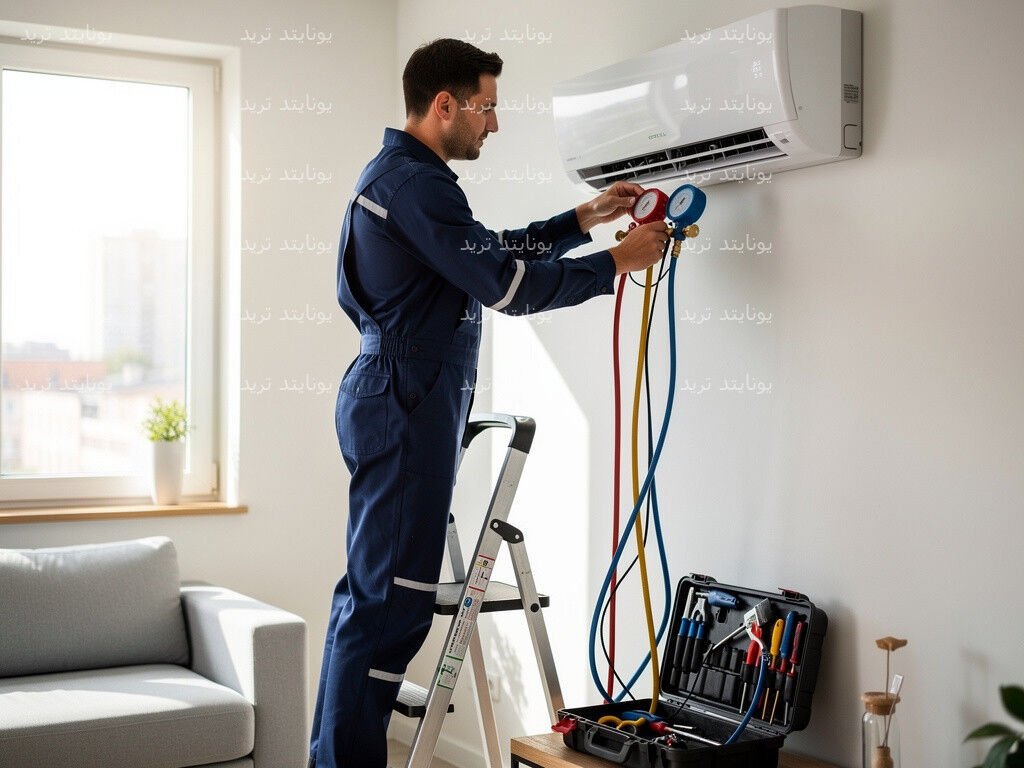
require Air conditioning maintenance Homes and businesses pay careful technical attention to ensure sustainable cooling and reduce electrical energy consumption throughout the seasons of the year. This practical guide aims to provide you with reliable technical steps to inspect the internal and external components of the cooling system accurately and professionally. Through practical notes, you will learn how to avoid sudden malfunctions and maintain the efficiency of the air conditioning unit with the lowest possible operational costs.
Quick answer: What are the basic steps for air conditioning maintenance?
Air conditioning maintenance Air is a series of technical procedures that include cleaning the air filters, checking the refrigerant pressure, washing the evaporator and condenser coils, and disinfecting the water discharge line. This regular maintenance reduces electricity consumption by up to 15%, prevents compressor burnout, and extends the life of the device for many years. Applying this technical inspection twice a year ensures safe operation and healthy, pure airflow in closed spaces.
The importance of committing to regular air conditioning maintenance
Regular technical follow-up maintains thermodynamic refrigeration cycle stability and prevents mechanical stress on the compressor motor. Neglecting the cleanliness of components leads to the accumulation of layers of dust, forcing the system to work twice as long to reach the temperature set on the thermostat. As a result, electrical current consumption increases and the internal parts of the system wear out significantly quickly.
Mechanical motor and compressor protection
The compressor acts as the beating heart of the refrigeration cycle and is severely affected by pressure surges caused by blocked air flow paths. Furthermore, poor airflow reduces heat exchange in the evaporator coil, causing refrigerant in its liquid form to leak into the compression chamber. This technical defect leads to damage to the mechanical valves and a complete collapse of the electrical insulation of the motor windings.
Improving the purity and quality of indoor air
Wet and dirty air filters inside the indoor unit turn into a fertile environment for the growth of black mold, fungi and aerobic bacteria. It should be noted that the air passing through these sediments transports pollutants directly into the respiratory tract, causing chest allergies and respiratory crises for the occupants of the place. Therefore, periodic sterilization ensures complete health protection for all family members in air-conditioned rooms.
Warning indicators that require direct technical intervention
The cooling system detects an internal malfunction through a set of operational signs that are clearly visible during peak periods. For example, poor cold airflow or warm air coming out of the vents is a definitive sign of premature fan failure or gas shortage. These physical alerts should be dealt with immediately to avoid worsening problems and causing the entire system to crash.
- Poor cold air flow even though the thermostat is set to low.
- Unusual sounds such as whistling or sharp clicking from the outdoor unit.
- Emission of musty odors or electrical burning odors when the air conditioning fan is running.
- Water droplets leak around the indoor unit or form a frost layer on the copper pipes.
- An unjustified increase in the monthly electricity bill in conjunction with fluctuations in cooling performance.
Steps for safe home cleaning of the indoor unit
Proper home procedure begins with completely disconnecting the electrical current from the main breaker of the distribution panel to ensure personal safety while working. The plastic cover of the unit is then gently opened and the mesh filters are removed to be washed with lukewarm water and soap that does not contain hot chemicals. On the other hand, these filters should be left to dry completely in the shade before returning them to their place to avoid unpleasant odors.
Disinfect the evaporator coils with a special solution
Evaporator coil: It is a network of copper tubes and aluminum fins responsible for absorbing heat from the indoor air and transferring it to the refrigerant. A cleaning foam designed for conditioners is sprayed on the fins to break up dirt and grease stuck in the microscopic spaces without damaging the metal. In addition, using a soft, flexible brush helps remove surface calcifications very gently towards the aluminum fins to avoid them bending.
Clean the sink and drain hose
The condensed water collects in a designated basin below the cooling coil and exits through a plastic tube slanted outward. Accumulation of algae and fine debris leads to blockage of this channel and water backs up and drips into the room, causing damage to the walls. Therefore, a cup of diluted vinegar solution or pipe disinfectant can be poured into the drain to dissolve the blockages and completely disinfect the drain.
Comprehensive technical inspection of the external unit and condenser
The outdoor unit is exposed to harsh weather factors such as direct sun heat, dust, and constant winds all year round. As a result, heat dissipation is reduced if dirt covers the rear condenser grille, resulting in coolant overheating and loss of efficiency. Cleaning this unit requires removing leaves and dust using low-pressure water jets to avoid bending of the delicate chips.
A professional technician measures the ampere readings and compares them to the nominal data applied to the external device nameplate to ensure safe operation. In other words, a power draw higher than the rated value indicates mechanical resistance, a malfunction of the run capacitor, or deterioration of the motor condition. These careful engineering tests help avoid wires catching fire or unit stopping at peak times.
Perform actions Air conditioning installation According to sound engineering standards, from choosing the ideal location for the indoor unit to carefully adjusting the refrigerant gas extensions. Proper installation helps avoid premature Freon leaks and reduces voltage on the compressor from the first start.
Comparison table between preventive maintenance and curative maintenance
The following technical table shows the fundamental differences between scheduled preventive intervention procedures and emergency repair work when devices malfunction:
Execution of works Installing air conditioning ducts According to sound engineering standards, the tight insulation of the copper pipes and the selection of their appropriate diameters ensure a smooth flow of refrigerant gas and prevent the leakage of Freon in the future. The thoughtful extension of the paths and avoiding sharp bends also contributes to protecting the compressor from excessive stress and increasing the efficiency of the entire system.
Improve operational performance and reduce electrical waste by implementing five home guidelines that ensure stable fresh air flow and cool rooms during the hot summer months. This includes cleaning filters periodically and adjusting thermostat settings, which directly contributes to Increase the efficiency of the air conditioner Prolonging its lifespan with minimal effort and cost.
Maintaining the efficiency of the cooling system begins from the construction and finishing stage, as it ensures adherence to the rules Installing air conditioning ducts Proper protection of Freon lines from blockage and damage to thermal insulation. Correct engineering extension also contributes to avoiding the risk of leakage of waste water or cooling media in the future, which saves expensive crushing costs after the decoration is completed.
Execution of works Installation of copper air conditioning pipes According to sound engineering standards, ensuring the safety of the cooling path and avoiding any premature gas leaks. This includes selecting the appropriate diameters and carefully insulating the refrigerant lines to protect the system from loss of efficiency and high temperatures.
Execute steps Air conditioning installation According to sound engineering standards, starting from choosing the ideal location and installing the units, all the way to adjusting the Freon paths and electricity connections with extreme precision. This correct establishment ensures high operational efficiency of the system and avoids premature device malfunctions and refrigerant leakage in the future.
Execution of works Establishing copper pipes Precision engineering ensures efficient refrigerant flow and prevents any future leaks. This procedure requires carefully selecting appropriate pipe diameters and thermally insulating them to avoid moisture condensation and ensuring that the compressor’s efficiency is maintained for as long as possible.
Perform actions Air conditioning installation According to sound engineering standards in terms of choosing the appropriate location and installing the cooling units securely. The correct establishment of water drainage paths and Freon gas connections ensures the highest operational efficiency and avoids recurrent malfunctions in the long term.
| Comparison standard | Scheduled preventive maintenance | Emergency remedial maintenance |
|---|---|---|
| Material cost | Low and fixed cost annually | High cost due to replacing damaged parts |
| The expected lifespan of the device | It lasts up to 15 years with high efficiency | It decreases to less than 7 years as a result of stress |
| Energy consumption | Saves between 10% and 15% of electricity | Consumption increases by up to 30% |
| Cooling quality level | Continuous and stable cooling throughout the season | Frequent fluctuations and sudden interruption of cooling |
| Implementation dates | It is conducted before the beginning of the summer and winter seasons | It is conducted immediately after the technical breakdown and malfunction occurs |
Standards for controlling refrigerant gas and detecting leaks
Refrigerant gas is a closed chemical compound that does not run out spontaneously unless there is a hole in the copper pipes or at mechanical connection points. Therefore, resupplying the device with gas without discovering the location of the leak and repairing it represents a financial waste that does not solve the root of the technical problem. It should be noted that gas deficiency leads to icing on the intake pipes, poor cooling and compressor burnout in the medium term.
Technicians use dual pressure gauges to accurately determine the amount of refrigerant according to the manufacturer's recommended standards for each category. Moreover, inspection foam or sensitive electronic detectors are used to professionally locate the vents in the copper connections and solder them. In contrast, emptying the cooling circuit of air and moisture with a vacuum pump ensures that the new gas operates at full operating purity.
- Disconnect the power supply and connect the pressure measuring devices to the external unit service valves.
- Determine the appropriate type of refrigerant gas, such as R410A or R22, according to the device’s technical label.
- Detect potential leaks at fastening nuts and welding areas using advanced monitoring devices.
- Treating the leak site and re-welding the damaged copper pipes under nitrogen gas pressure.
- Discharging the moisture from the system and charging the amount of gas by exact weight via the designated electronic scale.
Frequently asked questions about air conditioning maintenance
How often does the air conditioner need regular maintenance?
The air conditioner needs to have its household filters cleaned every two weeks to a month during the period of heavy use in the summer. On the other hand, a comprehensive technical inspection of the internal and external units and gas pressure must be conducted twice a year before the start of the summer and winter seasons to ensure excellent operational efficiency.
What are the reasons for warm air coming out of the air conditioner?
The escape of warm air is usually due to severe clogged filters or dust accumulation on the external condenser fins, which prevents heat dissipation. This could also occur due to a sharp drop in the refrigerant charge as a result of a leak, or as a result of the compressor start capacitor malfunctioning and stopping working.
Can I clean the air conditioner myself at home?
Yes, you can easily clean the removable mesh filters, wipe the outer cover, and disinfect the drain pan with water and safe cleaning solutions. While it requires Air conditioning maintenance Advanced refrigeration, such as checking the gas, electrical circuits, and compressor. Use a qualified technician who owns precise equipment to avoid accidents.
Why is water dripping from the indoor unit of the air conditioner?
Water dripping from the indoor unit is often due to the drain being clogged with accumulated dust and algae, causing the sink to overflow with water. In addition, low refrigerant may cause the evaporator coil to freeze, and when condensed refrigerator thaws, the tub quickly overflows and water leaks onto the walls.
How do I know that the air conditioner needs to be charged with gas?
You can notice the lack of gas by tepid air flow and the device taking a very long time to cool the room to no avail. For example, the appearance of a layer of white ice on the thin copper pipe of the outdoor unit is a definitive technical sign of low refrigerant pressure in the system.
What is the difference between a regular air conditioner and an inverter air conditioner in maintenance?
The inverter air conditioner contains complex electronic boards that control the rotation speed of the compressor, which requires extreme accuracy in checking the voltage and avoiding humidity. In contrast, the traditional air conditioner contains a compressor that operates in a fixed on-off mode, and the cost of replacing its electrical parts is relatively lower compared to the inverter.
Maintaining air conditioners is a real investment that guarantees you comfort and tranquility, saving money on electricity consumption, and maintaining major faults. We advise you to start today by checking your device's filters and making an appointment with a specialized technician to review the cooling cycle before severe heat waves arrive.
















Community dialogue
0 comments