
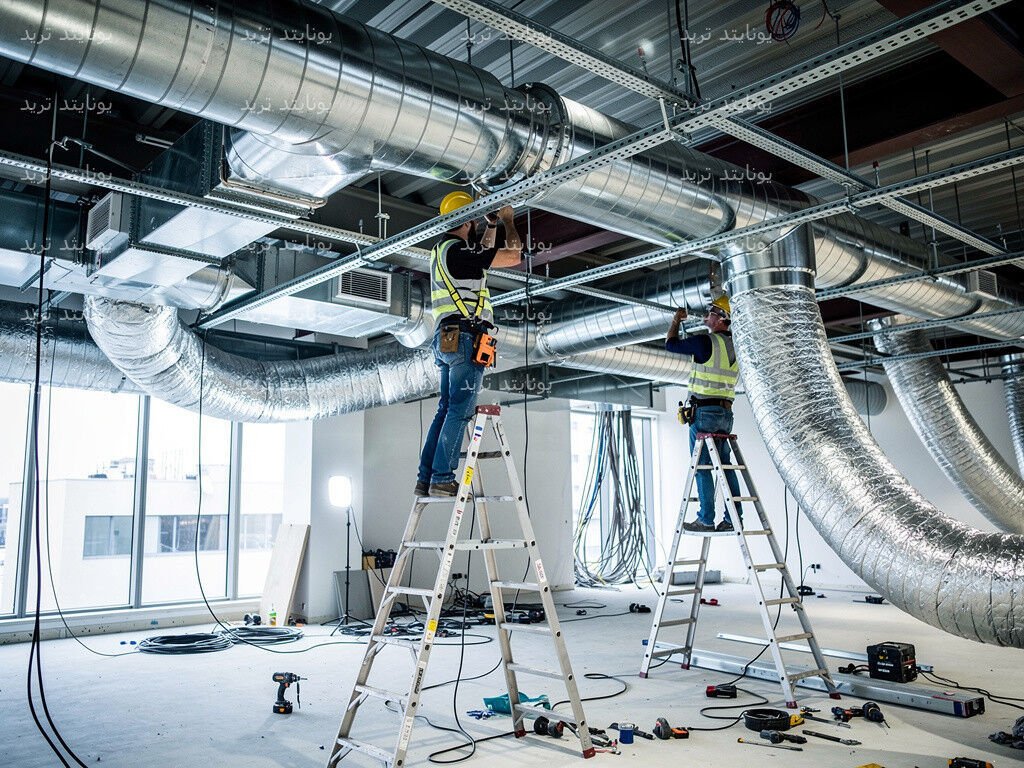
Establishing pipes Air conditioning in buildings represents the basic foundation for ensuring efficient cooling and protecting walls from future damage. This step gives you long-term peace of mind that cooling paths are accurately implemented during the initial finishing phase of the residential unit. In this article, you will learn about the engineering standards for choosing copper diameters, line insulation, and pressure testing to completely avoid problems of water leakage or poor cooling.
Quick answer: What is the correct establishment of the air conditioning network?
Establishing pipes Air conditioning is the process of installing insulated copper lines and pre-draining water inside walls or suspended ceilings before the painting and final finishing stages. This procedure requires the use of thick pure copper and flexible Armoflex thermal insulation to prevent condensation while maintaining natural water drainage tendencies of at least one centimeter per linear meter to ensure smooth water flow.
Why is advance planning of cooling routes essential?
Advance engineering planning prevents damage to modern decorations after finishing work is completed. In addition, the precise distribution of paths contributes to reducing extension lengths, which reflects positively on the life of the air compressor and its operational efficiency.
On the other hand, improvisation in opening random paths in the walls leads to poor structural insulation of the walls and the appearance of unwanted architectural cracks. Therefore, shop drawings ensure that the locations of indoor and outdoor units are precisely located to avoid sharp bends in the pipes.
Technical criteria for selecting air conditioning copper and insulation materials
Choosing original copper ore with an appropriate thickness protects the entire system from the problems of refrigerant leakage over the years. High purity Korean or South African copper should always be certified to ensure it can withstand high gas pressures.
Pipe diameters suitable for different device capacities
The diameters of the intake and exhaust lines depend directly on the cooling capacity of the air conditioner installed in the room. For example, 1.5 horsepower appliances typically need quarter-inch and half-inch pipe diameters for stable Freon flow.
It should be noted that larger machines, such as capacities of 3 HP and above, require five-eighths and three-eighths diameters to reduce hydraulic stress within the mechanical circuit. Failure to match the diameters to the manufacturer's catalog results in a direct decline in cooling performance.
Specifications of Armoflex insulation and protection from corrosion
Completely insulating each copper tube separately prevents unwanted heat exchange between the suction line and the liquid line. Moreover, the thickness of the elastomer foam must not be less than nine millimeters to efficiently isolate moisture and prevent water dripping into the walls.
The professional technician is obligated to wrap a durable plastic protection tape around the entire insulation to protect it from direct sunlight or mechanical damage during plastering and concrete pouring. Therefore, the insulator maintains its elastic properties for many years without cracking or corrosion.
flowchart TD A["تحديد أماكن الوحدات الداخلية والخارجية"] --> B["حفر وتجهيز المسارات بالجدران"] B --> C["تمديد وعزل مواسير النحاس"] C --> D["تركيب وتوجيه شبكة صرف المياه"] D --> E{"اختبار ضغط النيتروجين"} E -->|"ناجح"| F["إغلاق المسارات ومتابعة التشطيب"] E -->|"راسب"| CExtension steps The drainage network and protecting it from blockage
Extension of drainage lines accompanying the operation Establishing pipes Air conditioning requires adhering to a continuous slope path towards the main drainage points in the building. Any backflow of condensation water causes immediate damage to the paintwork and wallpaper inside the rooms.
- Install PVC drain pipes with a diameter of no less than one inch to ensure rapid flow of condensation water.
- Avoid making sharp angles of ninety degrees and replace them with an open elbow of forty-five degrees to facilitate the movement of water and prevent dust accumulation.
- Create a small water siphon at the end of the line to prevent the reflux of unpleasant odors from the sewage network towards the indoor unit.
- Test the track immediately by pouring enough water to ensure it is completely drained before sealing the walls permanently.
The importance of testing nitrogen pressure before sealing walls
Mesh pressure testing with dry nitrogen gas is the only engineering guarantee for the integrity of all welds and metal connections before pouring concrete or plastering. The danger of neglecting this inspection is that it will be difficult to locate any hidden leak after the residential finishes are complete.
When reaching the stage of installing the units, the importance of following the technical principles is highlighted Air conditioning installation Air with extreme precision to avoid leakage of Freon gas or the occurrence of annoying vibrations in the walls. This requires installing the brackets with an accurate water level and tightening the copper connections on the indoor and outdoor units to ensure airflow at the highest operating efficiency.
Maintaining the efficiency of these extensions is not complete except by scheduling periodic procedures that include: Air conditioning maintenance The building is regularly inspected to ensure that the refrigerant gas pressure is safe and that there are no blockages in the drainage paths. This preventive follow-up contributes to the early detection of any leakage that may harm the infrastructure, which extends the lifespan of the cooling units and reduces energy consumption.
Implementing these extensions requires complete mastery of the steps Professional installation of copper pipesThe tight welding and proper formation of the pipes ensures that pressure drops within the circuit are avoided. Adherence to correct connection techniques also helps prevent refrigerant gas leakage and maintain the efficiency of air conditioning devices for many years without sudden malfunctions.
When reaching the stage of installing the units, it is important to use certified technicians to complete the installation Air conditioning installation Extremely precise and compatible with pre-extensions. This engineering compatibility ensures that the refrigerant flows smoothly without any leakage, which increases the efficiency of the device and extends its life in the home operating environment.
The success of this establishment is not complete without attention to procedures Regular air conditioning maintenance It maintains the efficiency of the system and prevents the accumulation of sediments inside drain lines and copper networks. Continuous preventive inspection helps detect any refrigerant leaks early before they cause compressor stress or damage to electrical circuits.
The efficiency of the cooling system does not depend only on the quality of the initial installations, but also extends to the procedure Regular air conditioning maintenance Maintains Freon gas pressure and cleanliness of internal filters. This regular inspection contributes to the early detection of any blockage in the drainage paths or a possible leak in the copper network, ensuring clean air flow and extending the life of the device with minimal energy consumption.
Therefore, the lines are pressurized to a value of 250 to 350 psi and the meter pointer is left under observation for a minimum of twenty-four hours. If the indicator stabilizes, the technical team ensures that the paths are free of any microscopic holes that may waste Freon gas in the future.
The next stage requires executing an operation Air conditioning installation Professionalism depends on precisely balancing the internal and external units to avoid any annoying vibrations. The tight connection of the copper network also ensures that the air is vacuumed and the Freon gas pressure is tested to the highest safety standards.
Comparison between buried foundation and virtual pipe foundation
The extension method varies depending on the architectural nature of the building and the timing of the foundation decision during the course of construction work. The following table shows the fundamental differences between the foundation buried inside the walls and the virtual foundation to facilitate making the appropriate decision for each residential project.
| Comparison | The foundation buried within the walls | Virtual establishment inside plastic ducts |
|---|---|---|
| Aesthetic appearance | Completely hidden and preserves the beauty of the interior decoration | It is visible on the wall surface and requires decorative covering ducts |
| Implementation cost | Relatively higher due to advanced crushing and isolation works | Low and does not require cracking or structural modification |
| Easy maintenance | Requires high precision and prior pressure tests to prevent opening | Easy to inspect and replace without damaging the wall structure |
| Physical protection | Fully protected from shocks and weather factors | More susceptible to external shocks and heat damage |
| Perfect timing | During the brick and construction stage before plastering and painting work | After the completion of finishes in old or existing buildings |
Common mistakes to avoid when installing air conditioning pipes
Ignoring simple engineering principles may cost you huge sums in repairing the cooling system later. It is necessary to pay attention to the smallest technical details during the field work period to avoid unpleasant surprises after living in the house.
- Manually bending copper tubes without using a dedicated bending spring, causing the refrigerant flow path to be choked and motor fatigued.
- Integrating the intake and exhaust lines into one common Armoflex insulator, resulting in wasted cooling energy and increased electricity consumption.
- Use lightweight, thin-walled commercial copper that cannot withstand the pressures of environmentally friendly gases such as modern Freon 410.
- Leaving the ends of the pipes open without tight covers during the foundation stages, which allows dust and moisture to enter the circuit.
Frequently asked questions
What is the best time to implement the installation of air conditioning ducts in the building?
The ideal time is after the walls are finished and before plastering and plastering work begins. This timing allows you to drill tracks completely freely and install copper and drain lines precisely without damaging any completed decorations.
What is the approximate cost per meter for copper pipe extension?
The cost varies depending on the diameter and thickness of the copper used, the quality of the thermal insulation, as well as the type of refrigerant targeted. It is always recommended not to give up on the original materials because the small price difference saves you expensive crushing costs to repair leaks in the future.
Can air conditioning ducts be extended to the floors instead of the walls?
Yes, flooring is possible provided that the insulated pipes are passed inside rigid plastic bushings to protect them from concrete and tile loads. However, the majority of engineers prefer extensions into walls or suspended ceilings to facilitate inspection and reduce the risk of accidental breakage.
How do I ensure the quality of insulation of copper air conditioning pipes?
Ensure that each copper line is coated with independent high-density Armoflex insulation with a thickness of at least nine millimetres. In addition, check that the joints are sealed with custom adhesive tape and that there is no metal part exposed to the air to avoid water condensation inside the walls.
What is the maximum length of the air conditioning duct route allowed?
The maximum depends on the capacity of the device and the manufacturer's catalog, and often ranges from 10 to 15 meters for small household appliances. If this distance is exceeded, a refrigeration engineer should be consulted to add a precise make-up amount of Freon to protect the compressor.
conclusion
Adherence to precise standards in installing air conditioning ducts represents a smart investment that preserves the value of the property and provides a comfortable environment free of summer malfunctions. Always make sure to assign certified technicians to conduct pressure and careful insulation tests before closing the walls to enjoy optimal, long-lasting cooling.
















Community dialogue
0 comments