
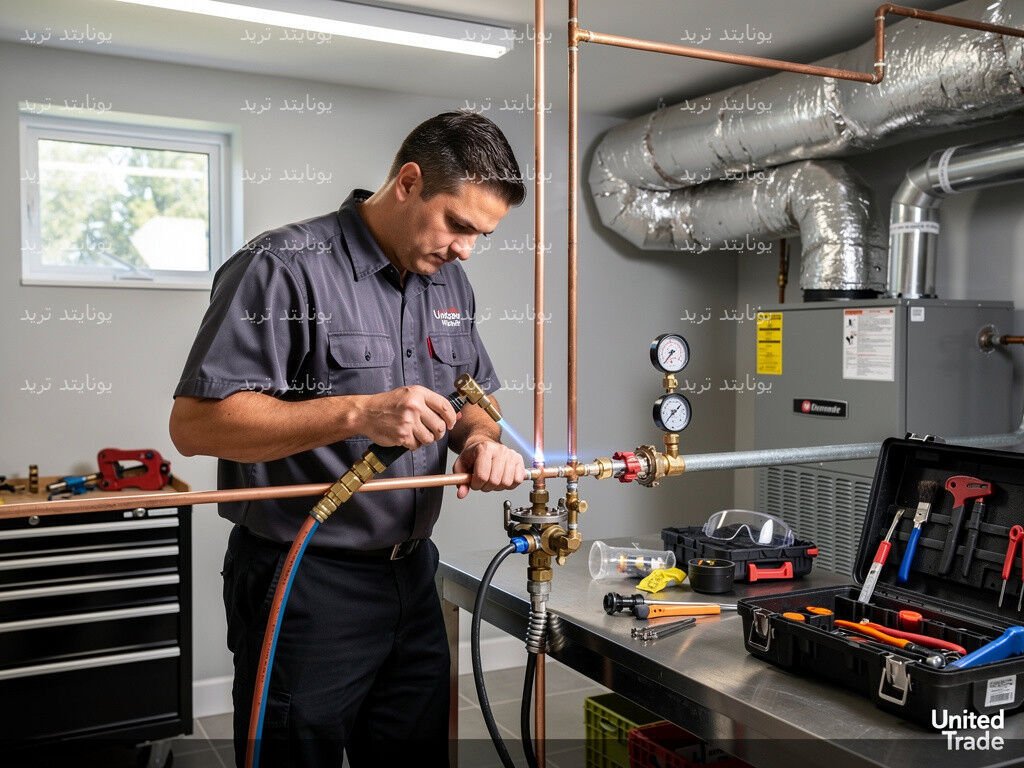
Completing plumbing and air conditioning work requires extreme precision to ensure the sustainability of networks, and installing copper pipes is a top technical priority to ensure the efficient flow of liquids and gases under high pressures without leaking. In this specialized guide, you will learn about the correct field methodologies for cutting, welding, and insulation, and choosing the appropriate diameters for each operational system, giving you an integrated technical vision to evaluate the quality of work and avoid material losses resulting from connection errors.
Quick answer: How to install copper pipes correctly?
Installing copper pipes is a mechanical and thermal process for installing gas and water transportation networks. It begins with precisely defining the paths, cutting the pipes with circular tools to avoid distortion, then cleaning the edges and connecting them using copper and silver welding techniques (brazing) or mechanical pressure connection (Flare Fittings), and ends with a pressure test with dry nitrogen to completely ensure that the connections are free of leaks before operation.
Essential tools and equipment for successful copper pipe installation tasks
Field bonding operations require precision fittings to prevent damage to the metal or random bends that weaken the inner tube structure. In addition, using the correct equipment saves time and prevents waste of materials during work.
- Circular pipe cutter (Pipe Cutter): Ensures a straight cut at a ninety-degree angle without causing feathers or distorting the internal diameter of the pipe.
- Reamer: It smoothes the inner edge of the pipe to prevent disturbance of the flow of Freon or water within the network.
- Manual pipe bender (Tube Bender): It allows making smooth bends at well-thought-out angles, which prevents bottlenecks in the path.
- Oxy-acetylene fire welding device: Provides the appropriate temperatures for melting silver and copper alloys to make a tight connection.
- Flaring Tool: Used for mechanical connections that do not require a flame, especially near sensitive devices.
As a result, the choice of authentic tools is the crucial difference between a network that will last for many years and one that will suffer cracks at the first increase in operational stress.
Steps for field preparation and processing of copper pipes
The practical phase begins with carefully measuring the paths to avoid unnecessary connections that constitute future weak points in the system. Therefore, the executive plan must be studied and the locations of the supports and mounting bushings must be determined before starting the cutting operations.
How to properly cut and remove rough edges
Tighten the pipe cutter around the marked mark, then rotate it gently while gradually narrowing the handle to ensure a smooth, even cut. Accordingly, an abrasive cleaning tool is used to vacuum the metal burrs from the inside out, ensuring that the cavity remains completely clean of any solid impurities that may later harm the refrigeration compressors.
Criteria for forming curves without breaking the wall
It is strictly prohibited to bend pipes manually without using mechanical benders designated for the required bending radius. For example, a sudden sharp bend causes the copper wall to crack and thin, making it vulnerable to explosion under high gas pressures, while engineered bends provide smooth fluid flow.
Comparison of types of copper pipes and their uses
The properties of copper pipes vary according to the wall thickness and their ability to withstand various mechanical stresses and environmental conditions. The following table shows the fundamental differences between the common categories to facilitate the purchasing and implementation process:
| Pipe type | Wall thickness | Pressure tolerance level | Main areas of use |
|---|---|---|---|
| Type K (green) | Very thick | Too high | Underground burial, main feed lines and heavy-duty cooling networks |
| Type L(Blue) | Medium thickness | High to medium | Internal water connections, air conditioning and residential ventilation systems |
| Type M (red) | Thin wall | Low to medium | Internal extensions for water distribution and home central heating |
| Type ACR (yellow) | Dried and sealed | Very high and intended for gas | Lines for withdrawing and expelling refrigerant media in air conditioners of various capacities |
It should be noted that the ACR series always comes sterilized and sealed with seals from the factory to ensure that it is free of moisture and dust, and it is always the ideal choice when preparing to operate various types of Freon gas circuits.
Secrets of welding and connecting copper networks professionally
Soldering copper with copper or silver is one of the most important stages that determines the lifespan of the entire system, as the process requires precise temperature control. Furthermore, the use of an inappropriate flame may lead to oxidation of the metal and poor bonding of the joint filler.
Inert Nitrogen: A protective gas pumped at low pressure into pipes during welding to prevent carbon scale and black copper oxide from forming on the inner walls. This procedure therefore protects the network filters and expansion valves from immediate blockage when the cycle is running and the coolant is flowing.
These brass fittings integrate directly with requirements Air conditioning installation With record operating efficiency, proper engineering installation of indoor and outdoor units determines the course of the entire refrigeration cycle. The tight insulation and precise air discharge also protect the system from the risks of Freon freezing or moisture accumulation, ensuring maximum performance and the longest lifespan of the device.
The efficiency of the entire system depends on the phase Establishing pipes Extensions with high engineering precision take into account appropriate inclinations and secure installation locations within walls or floors. This initial preparation ensures that the network is protected from mechanical stress, facilitates future maintenance operations, and connects with central devices efficiently.
The efficiency of the entire refrigeration cycle depends on the precise execution of the steps Air conditioning installation Air supply according to approved engineering standards, where pressures must be balanced and appropriate extension paths must be chosen to reduce heat loss. The tight installation of the internal and external units also contributes to reducing vibrations and noise, ensuring stable operational performance and a longer lifespan of the system.
The efficiency of these extensions does not depend only on the quality of the initial installation, but extends to the application of procedures Regular air conditioning maintenance For early detection of any refrigerant vent or blockage in filters and evaporators. This continuous technical inspection contributes to maintaining ideal system pressure and extending the life of the compressor and pipes.
Pipe routes are subject to strict technical requirements Air conditioner cooling networks Its operational efficiency is determined, as precise control of copper diameters and insulation contribute to protecting the compressor from premature fatigue. Correct balancing of gas pressures also ensures ideal heat flow, reduces energy consumption and prevents sudden leaks under high loads.
To translate the quality of extending these networks into actual cooling performance, a stage is required Implementation of air conditioning installation Full compliance with engineering standards to ensure stability of the cooling cycle and achieve the required thermal comfort. These steps begin with tightly installing the indoor and outdoor units and adjusting the condensate drainage paths, all the way to vacuuming the air and carefully testing Freon gas pressures before final operation.
The efficiency of the cooling system does not depend only on the quality of the initial installation, but also extends to the implementation of procedures Regular air conditioning maintenance It maintains the stability of Freon gas pressures and the integrity of heat exchange lines. This continuous inspection helps detect any microscopic cracks or premature blockages that may obstruct the flow of refrigerant and increase the load on the compressor.
The efficiency of the entire system depends on the integrity of the procedures followed Establishing extension pipes And install them accurately according to the approved engineering drawings. Controlling inclinations and choosing paths protected from shocks also contribute to preventing the occurrence of any blockages or cracks in the future that would harm the structural structure.
The efficiency of the cooling system does not depend only on the quality of the initial installation, but also extends to the implementation of procedures Regular air conditioning maintenance It maintains stable Freon gas pressures and prevents blockage of heat exchange lines. This regular inspection of mechanical components and copper connections helps avoid sudden leaks and keeps power consumption to a minimum.
It is considered a stage Establishing extension pipes The vital artery of any building, as it requires careful engineering planning of the paths inside the walls and under the floors before pouring concrete. Adherence to sound technical standards during installation ensures avoidance of future subsidence and cracks resulting from expansion of materials by heat.
- Clean the interference area with fine sandpaper until the bright orange color of the copper appears.
- Apply the appropriate fusing material (Flux) if the connection is made between copper and other metals such as brass.
- Direct the flame evenly around the intersection area to heat the larger pipe and then the smaller pipe until the metal turns a light dark red color.
- Filling the capillary void with the welding rod without directing the flame towards the addition alloy, relying on capillary heat withdrawal.
- Allow the connection to cool naturally without sudden water spilling on it to avoid thermal stress and mechanical cracking.
Compression and thermal insulation testing procedures after installation
No proper copper piping installation is complete without subjecting the entire network to leakage tests under pressures greater than the actual operating pressure. As a result, dry nitrogen gas is injected at a pressure of up to 400 pounds per square inch (PSI) and left for 24 hours to monitor the stability of the metering hour indicator.
These foundational equipments are integrated directly into the stage Air conditioning installation According to engineering standards to ensure that the cooling system operates at the highest operational efficiency. This includes carefully installing the indoor and outdoor units, taking into account ventilation paths and electrical connections to avoid any future vibrations or malfunctions.
In contrast, thermal insulation is the mainstay to prevent water condensation on pipe surfaces in cold intake lines. Closed-cell rubber insulation pipes (Armaflex) must be used with the recommended thickness, taking great care to cover all joints and welds with specialized insulation tape to prevent moisture-laden air from leaking in and corroding the pipes from the outside.
Frequently asked questions
What gas is used to test copper mesh leakage?
Dry nitrogen gas is used exclusively for pressure tests because it is chemically inert and completely devoid of moisture and oxygen. This gas prevents oxidation of the inner surface of the pipes and allows any leakage to be detected very accurately under high pressures before charging the system with liquids or gases.
How to prevent internal charring of copper during the welding process?
This is done by passing a light, continuous stream of dry nitrogen gas into the tubes while applying a thermal flame. This flow expels oxygen from inside the pipe, preventing the formation of black carbon deposits that contaminate the oils and clog the network valves.
Can solid copper pipes be bent without using heat?
Hard drawn copper pipes cannot be bent manually without subjecting them to a thermal annealing process to soften the metal, or using a ready-made factory connection elbow. Attempting to cold bend this type directly leads to the pipe wall becoming dented, cracked, and losing its mechanical rigidity.
Why is it preferable to use copper instead of plastic in cooling networks?
Copper is characterized by its superior ability to withstand extremely high operating pressures and varying temperatures without losing its structural integrity. In addition, copper does not react with refrigerant oils and Freon compounds, making it the safest and most reliable metal in air conditioning circuits.
What is the difference between soft copper pipes and solid copper pipes?
Soft pipes come in flexible circular coils that are easy to shape and bend into long runs without multiple welding joints. While solid pipes come in the form of straight bars, which have high durability and excellent wall rigidity and require elbows for conversion and welding.
When should old copper pipes in the building be changed?
Old pipes should be replaced as soon as their walls are thinned due to corrosion, or when there are structural collapses resulting from previous stresses. It is also recommended to change it when modifying the type of refrigerant in the air conditioners to ensure that it can withstand new pressures and avoid continuous leaks.
Practical summary of implementing copper extensions
Investing in installing copper pipes according to standard standards represents a real guarantee of the system’s efficiency and operational stability for many years without interruption. Always make sure to carefully apply the insulation and pressure testing steps to avoid costly future maintenance burdens, and start applying these guidelines in your next project to achieve the highest levels of safety and quality.
















Community dialogue
0 comments