
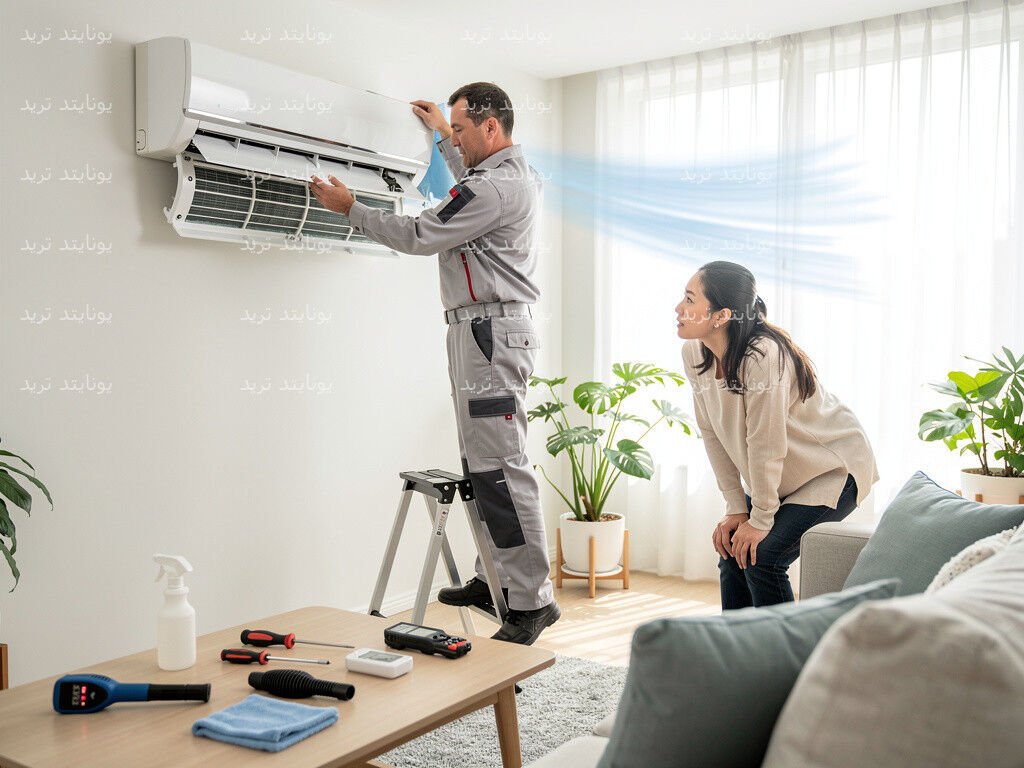
The home air conditioning maintenance plan includes: 5 basic pillars to maintain cooling efficiency and reduce energy consumption during the hot summer months. This article provides an integrated practical guide that explains step-by-step field procedures for caring for the internal and external parts of the air conditioning system. You'll learn how to avoid unplanned breakdowns and get fresh, clean air flow throughout your residence.
Quick answer
Home air conditioning maintenance consists of: 5 basic steps, starting with cleaning the air filters regularly, then disinfecting the evaporator coils and cooling fins, clearing the water drain, carefully washing the outdoor unit, and setting the thermostat settings at 24 degrees Celsius. These regular preventive measures restore cooling efficiency to maximum levels and reduce your electricity bill by up to 15 percent without the need for complex tools.
Why is home air conditioning maintenance a necessity and not just a luxury option?
Neglecting air conditioning equipment represents a major reason for the collapse of its operational efficiency and the rise in repair costs over time. In addition, the accumulation of dust inside the air ducts imposes increased voltage on the mechanical compressor, leading to unjustified energy consumption and premature failure of vital parts.
The effect of regular maintenance on the efficiency of electricity consumption
Regular maintenance contributes to reducing electricity consumption by between 5 and 15 percent, according to estimates by energy experts. Moreover, blocked air paths force the device to work longer hours to reach the desired temperature. As a result, this extra effort is reflected directly on your monthly bill in a very expensive way.
Protect indoor air quality and prevent allergies
Technical care prevents the air conditioner from turning into a fertile environment for the growth of mold and fungi that are harmful to public health. For example, high humidity inside unclean cooling ducts leads to the spread of allergens and asthma among family members. Therefore, cleaning the interior is an essential line of defense to protect respiratory health.
Extending the lifespan of air conditioning units
Continuous monitoring of cooling components gives an additional operational life that often exceeds ten years of stable service. On the other hand, the accumulation of sediments and dust leads to metal corrosion and weakens the ability of the evaporator and condenser to exchange heat. It should be noted that proactive maintenance saves significant amounts of money that would otherwise be paid to purchase new replacement units.
Common signs that tell you that your air conditioner needs immediate maintenance
The cooling device shows clear indicators that alert the homeowner to the need for quick intervention before the malfunction worsens. In other words, monitoring changes in the sound of the device or the nature of the air coming out of it prevents sudden stops during peak hot times.
Poor air flow and decreased cooling efficiency
Reduced air flow from the air conditioner outlets is a classic sign of clogged filters or dirt accumulation on the internal fan. In addition, when the air comes out lukewarm or warm even though the thermostat is set to a low setting, the refrigeration cycle is in dire need of a thorough technical inspection to remove thermal obstructions.
Water leakage or the emission of unusual smells and sounds
Dripping water inside the room indicates a complete clog in the drain hose or a frozen evaporator coil due to lack of air flow. Moreover, the emission of damp or musty odors indicates stagnant water inside the lower basin. It should be noted that strange sounds, such as buzzing or metal friction, reveal a mechanical defect that requires immediate intervention.
flowchart TD
    A[\"بدء دورة الصيانة الدورية\"] --> B[\"فحص وتنظيف فلاتر الهواء\"]
    B --> C[\"تنظيف لفائف المبخر والزعانف\"]
    C --> D[\"تسليك مجرى وحوض تصريف المياه\"]
    D --> E[\"إزالة عوالق الوحدة الخارجية وغسيلها\"]
    E --> F[\"معايرة الثرموستات واختبار التبريد\"]
    F --> G{\"هل الأداء ممتاز؟\"}
    G -- نعم --> H[\"اكتمال الصيانة بنجاح\"]
    G -- لا --> I[\"طلب فني متخصص لفحص الفريون\"]
Step 1: Check and clean air filters regularly for fresh air flow
Cleaning air conditioning filters is the easiest and most effective procedure for restoring indoor air circulation. The importance of maintaining home air conditioners: 5 in improving air quality becomes apparent when you start taking care of these mesh barriers that capture room impurities daily and prevent them from reaching the depths of the device.
How to remove, wash and dry filters in a safe way
Dismantling the filters first requires completely disconnecting the power supply from the air conditioner to ensure personal safety while working. Next, carefully open the plastic cover of the indoor unit and gently pull the grille out, then follow the following practical steps:
- Wash the filters under a stream of lukewarm running water to quickly remove surface layers of dust.
- Use a soft brush with mild soap to gently dissolve stuck-on grease and grime without tearing the fabric.
- Rinse the filter well with clean water to completely remove any remaining cleaning materials.
- Leave the mesh in a well-ventilated, shaded area until it dries completely before putting it back in place.
When should you replace the filter instead of just cleaning it?
Replacement of the filter becomes imperative if it develops holes or cracks in its outer frame or wear in its fine pores. In addition, damaged filters lose their ability to trap fine particles, which leads to dust getting into the sensitive internal cooling coils. As a result, it is preferable to purchase new original filters every year or two depending on the intensity of use.
Step Two: Taking care of the internal evaporator coils and cooling fins
The evaporator coil is directly responsible for absorbing heat and moisture from the room air with the refrigerant. Therefore, its complete cleanliness represents an essential condition to ensure that the compressor does not become fatigued and that the air conditioner continues to operate at its highest capacity.
Remove dust and impurities accumulated on the internal coil
A sticky layer of sediment collects on the inner coil over time as a result of moisture mixing with dust passing through the filters. A special foam spray can be used to clean aluminum coils. The foam is left for a few minutes until it dissolves the particles and flows automatically into the drain. This procedure helps to restore full thermal contact between the metal and the air.
The importance of modifying curved fins to improve the air path
Cooling Fins: Ultra-fine aluminum strips surround the cooling tubes to efficiently increase heat exchange area. These fins easily bend when touched forcefully, obstructing the normal passage of air through the evaporator. It should be noted that using a special fin comb tool helps to straighten the fins with a gentle stroke, which improves the flow immediately.
Step Three: Clean the water drain to prevent blockage and leakage
The air cooling process results in continuous amounts of water condensing that requires smooth drainage outside the building. On the other hand, the accumulation of algae and dust leads to blockage of the exit holes, threatening water to flood over the walls and household furniture.
Ways to clean a home drain hose using safe materials
The drain line can be easily cleared using a solution of equal amounts of white vinegar and warm water. Carefully pour the mixture down the condensate pan duct to clear the path and break up gunk. Furthermore, a wet vacuum can be used at the outlet of the external hose to pull out any stuck plugs with suction power.
The efficiency and field safety of the refrigeration cycle depend on the integrity of the refrigerant lines; So apply the steps Perfectly connect copper pipes It is safe to prevent any possible leakage of Freon gas and maintains stable pressure within the system. This starts with cutting pipes at right angles and carefully cleaning their edges, before welding or mechanical connection is performed to ensure a tight seal under the highest operating tolerances.
Dealing with water stagnation and mold formation inside the aquarium
Water stagnation in the lower collection basin causes the emission of unpleasant odors and rapid bacterial growth that harms the health of the residents. To overcome this dilemma, clean the sink with a soft cloth dampened with a mild disinfectant, and make sure that the sink is tilted at the right angle towards the exit hole. This process ensures that no stagnant water pools remain after the air conditioner is turned off.
Step Four: Clean and secure the external unit (compressor and condenser)
The outdoor unit is directly exposed to weather fluctuations, including sand storms and intense sun heat throughout the year. The effectiveness of home air conditioning maintenance is complete: 5 when taking care of this vital unit that expels the absorbed heat from inside the rooms to the outside.
Get rid of leaves and dust surrounding the unit
A clear distance of at least half a meter must be maintained around the outdoor unit to facilitate free intake of atmospheric air. For example, remove dry leaves, cobwebs, and plastic bags that may get stuck to the netting. Therefore, keeping the surroundings clean prevents excessive heat from being trapped inside the condenser.
Gently wash the condenser and protect the electrical parts
Washing the condenser requires spraying its outer fins with a light spray of water from a garden hose in a slanted direction from the inside out. Avoid using high pressure pumps, which may bend the aluminum foil and permanently damage it. In addition, make sure to cover the electrical connection panel with a waterproof cover before spilling any water near it.
Step Five: Adjust thermostat settings and test overall cooling performance
Intelligent thermostat control represents the most important operational phase for achieving a balance between cooling comfort and consumption rate. Home Air Conditioning Maintenance: 5 Realistic Solutions highlights by correcting incorrect adjustment habits that drain energy for no additional benefit.
The best temperatures for maximum comfort and economy
24 degrees Celsius is the ideal standard temperature recommended globally for home air conditioners in hot climates. Furthermore, each reduction of one degree increases energy consumption by approximately 6 percent. The following table shows a quick summary of the most important control standards and their direct impact:
| Operational standard | Details and recommended value |
|---|---|
| Recommended temperature | 24 degrees Celsius during the day and 25 at night |
| Cooling fan speed | Auto mode to adjust the flow as needed |
| Periodic filter inspection | Once every two weeks to a month maximum |
| Saving electricity consumption | Reduce your bill by up to 15 percent |
| Outdoor unit perimeter | An empty space of at least 60 cm around the condenser |
Monitoring the device's response and the speed of reaching the required degree of cooling
Test the efficiency of the device after turning it on by monitoring the temperature difference between the air entering the top of the air conditioner and the air leaving the distributor. Technicians explain that a difference ranging between 8 to 12 degrees Celsius indicates high and excellent cooling efficiency. As a result, if the air conditioner takes a long time to cool a closed room, there is a need to check the integrity of the insulation or gas charge.
When do you hire a professional technician to perform advanced air conditioning maintenance?
There are clear limits to what a homeowner can do themselves without risking the integrity of delicate mechanical components. Advanced air conditioning maintenance requires certified expertise and accurate measuring equipment that is usually only available to trained professionals.
Checking coolant (Freon) levels and detecting leaks
Freon gas: The cooling fluid that moves within a closed and tight network to transfer heat through the stages of compression and condensation. This gas does not run out with normal consumption, but its decrease always indicates the presence of a hole or leak in the copper pipes. Therefore, shipping gas without treating the leak site with engineering welding is a waste of money and damage to the environment.
Electrical circuit problems and poor compressor operation
Complex electrical problems need to be checked immediately using digital meters to avoid the dangers of electrocution or motor burnouts. It is preferable to seek help from a specialized technician in the following cases:
- Damage to the starting capacitor (capacitor), which is responsible for providing the compressor with the first starting spark.
- Disconnect the electrical breaker of the main panel immediately after pressing the air conditioner start button.
- Excessive heat in the compressor structure leads to its automatic stop via the thermal protection sensor.
- Hearing repeated clicking sounds without the fan or cooling motor starting.
Frequently asked questions
What are the 5 basic steps for home air conditioning maintenance?
The process includes regularly cleaning the air filters, washing the evaporator coils, clearing the water drain, cleaning the outdoor unit fins, and setting the thermostat at 24°C. Together, these measures restore the air conditioner's full capacity and ensure excellent airflow.
How often should air conditioning filters be cleaned in the summer?
It is recommended to wash air conditioning filters once every two to four weeks during periods of intense daily use. This regularity helps prevent air duct blockage and protects the evaporator from the accumulation of dust and solid dirt.
Does Freon gas deficiency occur naturally over time?
The refrigerant gas does not decrease at all under normal conditions because the refrigeration cycle is completely closed and sealed. If the gas level decreases, it means there is a leak in the copper pipes that requires specialized welding before recharging.
Why does the air conditioner drip water inside the room?
Internal water dripping is often caused by a clogged drain pipe with dirt or algae accumulated in the lower sink. It can also occur because the coils freeze as a result of very dirty filters, which leads to ice blocks melting outside the drain.
How do I know that the air conditioner's cooling efficiency has become weak?
You discover this when the air coming in feels lukewarm and does not lower the room temperature even though the compressor has been running for extended periods. In addition, the temperature difference between morning and evening clearly indicates that the air conditioner needs comprehensive technical maintenance.
Home Air Conditioning Maintenance Plan: 5 gives you a clear path to maintaining a fresh and comfortable atmosphere inside your home throughout the summer with the lowest possible electricity cost. Start today by applying simple preventative steps and cleaning your filters to enjoy superior cooling that protects the health of your family and extends the life of your device.
















Community dialogue
0 comments