
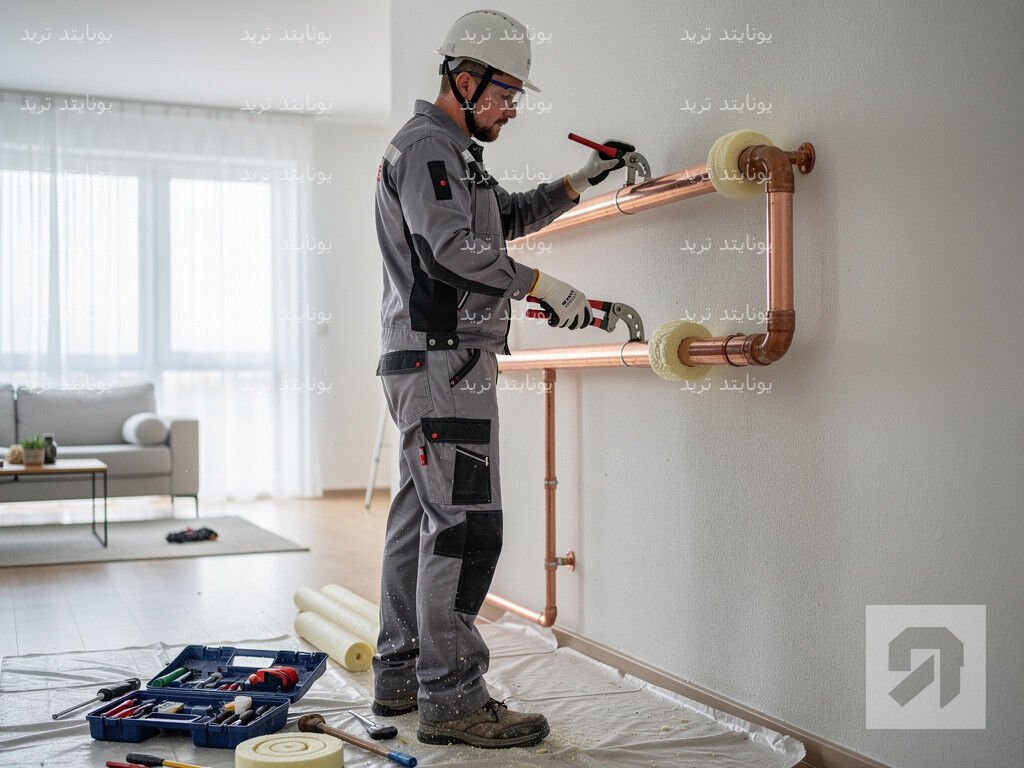
Extending the air conditioning ducts represents the vital step to connect the indoor unit to the outdoor unit and transfer the refrigerant efficiently and without wasting energy. Proper installation of these tubes ensures that the compressor is protected from premature wear and avoids complex gas leakage problems within the walls. Therefore, in this article, you will learn about the engineering criteria for choosing diameters, thermal insulation methods, and safe intake paths to ensure strong and sustainable cooling performance.
Quick answer
The air conditioning duct extension is the path of insulated copper pipes that transport liquid and Freon gas between the two air conditioning units to exchange heat. The success of this procedure requires the use of copper diameters matching the manufacturer's catalog, the installation of EPDM foam insulation to prevent condensation, and the avoidance of sharp bends that choke the flow of refrigerant.
What is the importance of accuracy when extending air conditioning pipes inside buildings?
Precision routing keeps mechanical stresses within the closed refrigeration cycle stable without undue stress on the compressor. In addition, controlled operation prevents any bottlenecks in the gas intake line or high-pressure liquid line. As a result, the device operates at maximum cooling capacity and consumes less electrical energy per month.
Circuits with faulty inclinations and spacing cause oil to build up inside the evaporator instead of back into the engine. It should be noted that lack of lubrication of the compressor due to poor expansion is the primary cause of compressor burnout before the end of its life. Therefore, we always recommend calculating the path very accurately before cutting or permanently installing the copper.
Engineering standards for determining the path of the cooling pipe network
The shortest possible path between the two units must be chosen to avoid excessive pressure drops and loss of cooling capacity. Furthermore, passing near direct heat sources or high frequency mains power cables should be avoided to avoid thermal interference and mechanical damage. On the other hand, appropriate inspection points should be provided that allow copper lines to be detected in the future without damaging the gypsum decorations.
Calculate the permitted lengths and height differences
Manufacturers specify a maximum horizontal and vertical distance that may not be exceeded without the addition of designated cooling oil. For example, the permissible length of regular split air conditioners ranges between ten to fifteen meters as a safe performance limit. Therefore, a vertical height exceeding five meters requires the installation of an oil trap on the gas line to ensure the automatic return of oil.
Choose copper diameters appropriate for cooling capacity
The diameter of the tube is directly related to the heat load of the device and the type of refrigerant used, such as Freon 410 or R22. This means that using a smaller diameter than recommended will lead to gas throttling and a dangerous increase in engine temperature. In contrast, the larger diameter reduces the speed of the Freon flow, which disrupts the recovery of lubricating oil into the internal combustion chamber.
Step-by-step preparation of the cooling network
The process begins with field planning and the use of custom copper forming tools to prevent buckling of the inner walls of the pipes. It should be noted that using the bare hand to bend copper causes partial blockages that reduce the efficiency of coolant flow. Therefore, the work requires following the following stages in the correct geometric order to ensure mechanical safety:
- Clean the ends of copper pipes and carefully remove excess metal using a specialized grinding tool.
- Insert high-density rubber pipe insulation along the entire length of the pipe before performing connection operations.
- Bend the pipes using a mechanical bender with a radius proportional to the wall thickness to avoid breakage.
- Pass the signal and control cables into a separate conduit next to the copper to prevent electrical interference.
- Wrap the protective plastic tape around the copper and insulating lines moderately tightly to prevent disintegration of the system.
Comparison of the types of copper pipes used in air conditioning
Copper pipes vary in country of origin, thickness, and ability to withstand high gas pressures for long periods. The following table shows the most important fundamental differences between the types traded in the market to facilitate technical comparison and choose the most appropriate for your project:
| Copper type | Endurance and pressure resistance level | Thickness and flexibility of formation | Ideal area of use |
|---|---|---|---|
| American Brass (Certified) | Withstands very high pressures and is resistant to oxidation | Uniform standard thickness and easy to bend | Major projects, central and hidden air conditioning |
| Korean copper (flexible) | High operational quality and excellent reliability | Very good thickness and high flexibility in installation | Split air conditioners for residential and administrative offices |
| Thin commercial copper | Low stress tolerance and higher leakage risk | Thin walls and quick to warp and break | Temporary uses not technically recommended |
Thermal insulation requirements to protect pipes from condensation
Proficient thermal insulation prevents the transfer of ambient air heat to the cold refrigerant gas coming from the indoor unit. In addition, effective insulation stops the phenomenon of condensation falling on false ceilings, protecting the coatings from moisture. As a result, it is always preferable to use insulation made of closed EPDM foam that resists water vapor penetration very efficiently.
The efficiency of the cooling system as a whole starts from one stage Air conditioning installation The air is in accordance with the correct technical requirements that ensure the Freon cycle is balanced and the air is distributed smoothly. This procedure requires installing the two units in thoughtful locations that prevent vibration and reduce the voltage on the electric motor, which in turn extends the operational life of the device.
Each individual copper line should be fully insulated before connecting them with external tape. Moreover, isolating the liquid line with the gas line within a single case causes harmful heat exchange that reduces the system’s performance. Therefore, avoid pressing the insulation material strongly during bonding, because shrinkage of the foam thickness makes it lose its insulating ability immediately.
The first construction stage requires extreme precision in execution Installing air conditioning ducts Copper pipes have well-thought-out paths to avoid sharp bends that impede the flow of Freon. The tight installation and high-density thermal insulation also contribute to maintaining the efficiency of the cooling cycle and preventing the formation of water condensation inside the walls in the future.
After installation is completed, the system requires periodic follow-up to ensure the sustainability of high performance, which includes procedures Air conditioning maintenance Check Freon gas levels and clean filters thoroughly. This regular preventive intervention contributes to reducing electricity consumption and extending the lifespan of all mechanical components of the unit.
The efficiency of the system does not depend only on the quality of installation. Rather, it requires applying a regular technical schedule that includes checking refrigerant levels and cleaning the internal fins to reduce the effort expended on the compressor. Commitment to dedicated periodic steps represents the best course of action Air conditioning maintenance to reduce consumption Electricity and ensuring air flow with the highest possible cooling capacity.
The efficiency of the cooling system as a whole starts from one stage Installing air conditioning ducts According to sound engineering rules inside the walls before completing the finishing work. This preventive measure contributes to avoiding hidden Freon leaks and water condensation problems that may cause severe damage to the building structure.
The first stage requires carrying out work Installing air conditioning ducts According to carefully studied paths to avoid sharp bends that impede the flow of the cooling medium. This pre-installation also requires protecting the copper lines with sturdy insulation ducts buried at a safe depth to avoid any subsequent structural damage during finishing.
Cooling efficiency does not depend only on the quality of the initial installation, but the sustainability of performance depends on procedures Regular air conditioning maintenance It detects any early defect in the gas system and prevents a decline in cooling pressure. Regular inspection of pipes and connections helps avoid the high cost of unplanned repair and extends the life of the entire equipment.
Prepare procedures Regular air conditioning maintenance An essential pillar for maintaining the efficiency of the wiring network and ensuring the flow of the refrigerant at the required rates without stressing the system. Regularly checking pressure levels and cleaning filters and condensers helps detect any bottlenecks early that may negatively affect the integrity of piping and sensitive mechanical parts.
The efficiency of the entire system depends on mastering the steps Air conditioning installation According to sound technical standards to ensure the stability of the Freon cycle. This includes secure mounting of the two units and proper drainage and ventilation paths to avoid excessive stress on the motor. This consistency in setting gives you optimal cooling and extends the life of the device.
The first construction stages require extreme precision during construction Installing air conditioning ducts Buried, to ensure that it accommodates the Freon paths without any sharp bends that may impede its flow. Pre-planning these extensions also contributes to avoiding random cracking in the walls later and protecting the cooling network for many years.
The precision of copper wiring is integrated with procedures Air conditioning installation Air is supplied in accordance with the approved technical requirements to ensure the stability of the entire cooling cycle. This includes balancing the units and installing them securely to avoid mechanical vibrations that may negatively affect the connection points and the integrity of the pipes over time.
Common technical mistakes to avoid during implementation
Some technicians make catastrophic mechanical errors that negatively affect the life of the device without realizing the causes of the original problem. For example, leaving pipe ends open while pulling them through walls allows dust and moisture to enter the course. Therefore, we summarize the most important warnings that must be carefully monitored to ensure that air conditioning duct extension work is carried out with superior quality:
- Neglecting the operation of the oil trap in vertical paths that exceed the specified safe heights.
- Using poor insulators that quickly corrode under the sun’s ultraviolet rays in the outdoor unit.
- Over-tightening the clamping straps can cause suffocation and flattening of the soft copper tubing.
- Performing repeated copper welds without injecting inert nitrogen gas into the pipe to prevent surface charring.
- Leaving long installation spaces will cause the pipes to vibrate and crack due to the movement of Freon.
Frequently asked questions
What is the ideal length for split air conditioning pipes?
The ideal length is between four and seven meters to ensure balanced refrigerant flow without loss of efficiency. A distance of less than three meters transmits engine vibrations inward, while longer distances require an increased Freon charge.
Can air conditioning pipes be buried directly under the tiles?
Copper pipes may not be buried directly under tiles or within concrete without passing them through wide, strong plastic protection sleeves. These hoses protect the pipes from soil pressure and cement salts and allow them to be withdrawn or maintained without the need to break the floors later.
How do I know if the air conditioning pipes are choked?
Stifling can be observed by a noticeable decrease in air coolness and the appearance of a layer of dense snow on the outer cloud line. In addition, the compressor makes an unusual sound due to the high intake pressure and obvious fatigue of the internal valves.
When should additional gas be added after laying pipes?
A precise compensating charge of refrigerant must be added when the total length of the piping path exceeds seven and a half metres. The plant catalog specifies the amount of additional fines to be pumped per excess linear meter to ensure proper operating pressures are maintained.
What is the difference between original and commercial air conditioning copper?
Genuine copper has a uniform wall thickness, is completely free of impurities, and has a superior ability to withstand pressures and bend without puncturing. In contrast, commercial copper contains microscopic voids and varying thicknesses that make it susceptible to rapid leakage at high operating pressures.
Where is it preferable to install the outdoor unit relative to the indoor unit?
It is always preferable to place the outdoor unit in a well-ventilated, shaded place and at a level equal to or slightly lower than the indoor unit. This streamlined position facilitates the return of lubricating oil and provides a natural flow that increases the overall efficiency of the cooling cycle in summer.
In conclusion, adhering to sound technical rules while extending air conditioning ducts saves you expensive maintenance costs and frequent loss of refrigerant. Always make sure to check the quality of the copper materials and insulation and ensure that the system is pressurized with nitrogen before completing operation so that you can enjoy a cool and comfortable atmosphere throughout the year.
















Community dialogue
0 comments