
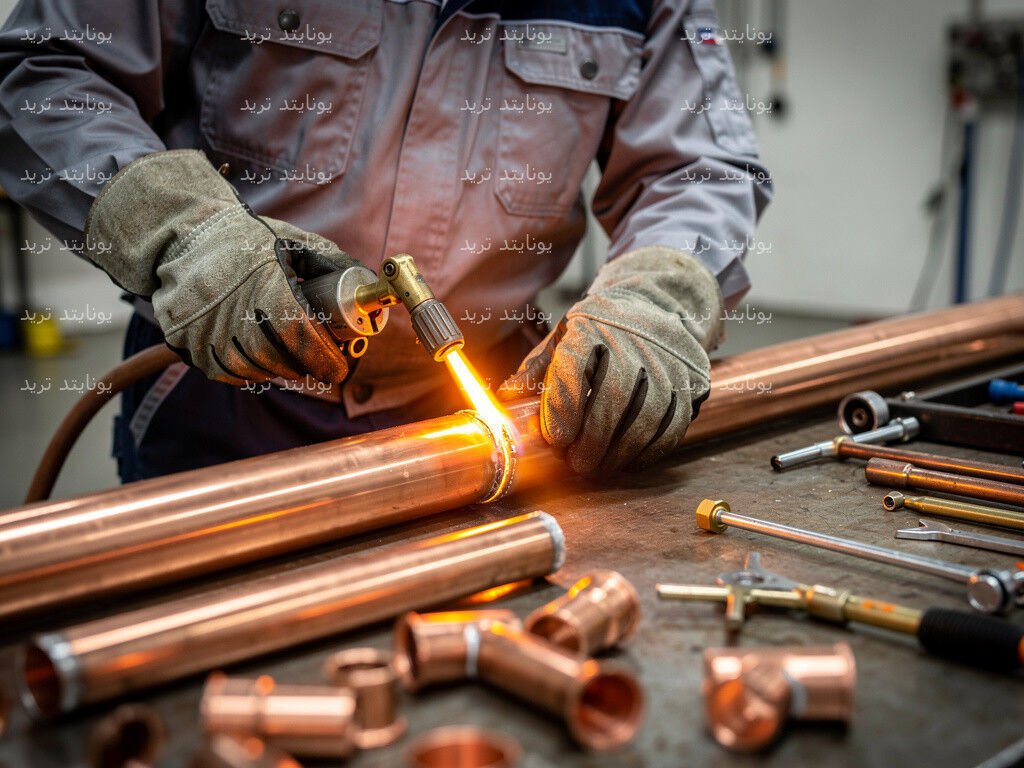
Installing copper pipes requires high engineering precision to ensure stable pressures and prevent long-term leaks in mechanical systems and supply networks. This article provides an integrated practical guide that explains cutting, shaping, and connection techniques in accordance with international standards. You will gain first-hand knowledge of the craftsmanship steps that ensure safe operational performance and a lifespan exceeding fifty years.
Quick answer: How to install copper pipes correctly?
Installing copper pipes is a mechanical process that begins with measuring the tracks, cutting the pipes with a specialized circular cutting tool, and then carefully removing the internal excess. This is followed by the formation of the joints, either through silver soldering at temperatures exceeding six hundred degrees Celsius, or mechanical pressure installation with the application of insulation and the installation of brackets every meter and a half to absorb vibrations.
Specific criteria for choosing diameters and thicknesses of copper lines
The safety of the entire system depends on the precise determination of the thickness of the inner wall of the pipe and its resistance to operating pressure. Miscalculation of diameter leads to a noticeable drop in flow rate or cracking of the metal walls over time. In addition, commercial grades of copper vary in their ability to withstand direct mechanical stress.
Operational differences between Type K, Type L and Type M
Type K is the thicker wall pipe and is used for underground burials and lines with ultra high pressures. In contrast, Type L represents the most common standard choice for internal water and refrigerant installations due to its excellent balance between flexibility and durability. Furthermore, Type M is limited to low-pressure applications due to its lower wall thickness compared to the other two types.
The effect of pressure and temperature on metal selection
Copper is directly affected by the temperature differences of the liquid and gases flowing within it. The maximum bearing capacity of the metal decreases directly as the operating temperature rises above one hundred degrees Celsius. Therefore, the coefficient of thermal expansion must be calculated accurately and free spaces for longitudinal expansion should be left in straight paths exceeding ten meters to avoid bending of the pipes.
| Tube type | Wall thickness | Maximum pressure resistance | I prefer using my app |
|---|---|---|---|
| Type K (green) | Very thick | Exceeds 700 psi | Underground burial and external industrial lines |
| Type L(Blue) | Medium thickness | About 500 psi | Residential and commercial cooling and feeding extensions |
| Type M (red) | Relatively thin | About 300 psi | Low pressure heating and drainage lines |
Cutting tools and edge preparation before delivery
Proper preparation is the critical factor in the quality of the final connection of the feed and cooling lines. Uneven cutting results in disruption of the fluid path and the appearance of microscopic gaps that cause slow leakage. As a result, professional practice dictates the use of specialized tools that do not distort the roundness of the tube during compression.
- Rotary pipe cutter with hardened steel disc to ensure straight cuts at a ninety degree angle.
- Internal deburring tool and hand reamers to clean the bore from splinters resulting from shearing.
- Non-metallic sandpaper or wire brush to polish the pipe ends to a shiny shine.
- Precise tape measure and angle finder to avoid length errors that cause stress on fittings.
High temperature welding steps to ensure a tight seal
Fusion of copper connections requires perfect purity of the opposing surfaces and uniform application of directed heat. Insufficient heating results in the welding material not flowing through the capillary action between the tube and the sleeve. It should be noted that the distribution of the flame on the external composition and not on the welding wire itself is the technical basis for complete penetration.
- Clean the outer surface of the pipe and the inner cavity of the connection with an abrasive to completely remove surface oxidation layers.
- Coat the tips with a thin layer of deoxidizer to help the solder flow and prevent rust from forming during heating.
- Inserting the pipe to the full stop depth inside the connection to ensure strong structural integrity against tensile forces.
- Apply the oxyacetylene or propane torch in a continuous circular motion around the joint to achieve uniform heat distribution.
- The silver alloy welding wire comes into contact with the hot joint and lets the molten metal flow out automatically to fill the gaps.
- Wipe off the excess with a damp cotton cloth immediately after hardening to cool the area and remove chemical residue.
Hydraulic and nitrogen pressure testing procedures
Pressure testing is a mandatory step to verify that the system is free of any invisible structural defects. Visual inspection alone cannot be relied upon to detect micropores at connection points. Accordingly, the network is isolated and injected with dry nitrogen gas or treated water under pressures exceeding the usual operating pressure.
Dry nitrogen: An inert gas used to test high-pressure networks and absorb moisture from inside pipes. The pressure is raised gradually in stages and the manometer indicator is monitored for a period of not less than twenty-four continuous hours. If the indicator drops even slightly, this is definitive evidence of a leaky vent that must be addressed immediately before final operation.
Installing supports and thermal insulation of copper lines
Tight fitting ensures stability of the pipes and prevents the generation of resonant noise resulting from the flow of pressurized fluids. Spacing holders long distances causes lines to bend and oil or sediment to collect at low points. Furthermore, rubber spacers must be placed inside the cleats to prevent galvanic corrosion caused by contact of copper with other metals.
Encapsulation with sealed elastomer insulators represents the first line of defense against water condensation and loss of thermal energy. Joints must be sealed with custom adhesive and vapor barrier tape. On the other hand, leaving any metal part exposed will cause water droplets to condense and damage false ceilings or rust to surrounding structures.
These mechanical skills are mainly integrated when performing operations Air conditioning installation Air efficiently, as the quality of cooling depends on tightly insulating the lines and adjusting the flow paths of the refrigerant between the internal and external units. Adherence to sound technical standards while connecting circuits and discharging air from the system extends the life of the compressor and reduces energy consumption.
The efficiency of the mechanical system starts from the quality of the stage Establishing feeding pipesThe correct geometric paths are identified and isolated to protect them from mechanical stress and corrosion factors. This initial step ensures an even distribution of stresses within the network and prepares the infrastructure for welding and final connection operations with the highest levels of safety.
The importance of this precision is evident when starting procedures Air conditioning installation Air of various types, as good thermal insulation and control of Freon paths are directly linked to the efficiency of the overall cooling cycle. Proper mechanical installation of the internal and external units also contributes to reducing vibrations and avoiding any excessive load on the compressor, ensuring a longer operational life of the device and balanced performance in energy consumption.
The success of these connections is not complete without including them within a periodic plan that includes: Air conditioning maintenance Efficiently and professionally, as continuous inspection of the cooling lines contributes to detecting any drop in pressure early. This preventive measure helps maintain compressor efficiency and extend the life of the entire system, preventing unplanned breakdowns and reducing undue energy consumption.
Maintaining the efficiency of cooling lines does not depend only on the quality of the connection, but also extends to the application of periodic procedures that include: Air conditioning maintenance air to monitor pressure fluctuations early before faults worsen. Regular checking of refrigerant levels and cleanliness of evaporators helps ensure optimal cooling and protects the compressor from thermal stress during peak periods.
Cooling systems require careful care Air conditioning duct extension To ensure the circulation of the refrigerant between the internal and external units with the highest operational efficiency and without loss of pressure. Adherence to proper installation techniques and tight support of these pipes helps protect the connections from mechanical vibrations causing gas leaks in the long term.
The quality of the installations is closely linked to the safety of the refrigeration cycle as a whole, and sustained cooling efficiency requires action Regular air conditioning maintenance To detect any subtle leakage of Freon gas or blockage in the suction and exhaust lines. Regular preventive inspection reduces energy consumption and protects the compressor from premature damage caused by pressure disturbances.
The efficiency of these systems starts from one stage Establishing feeding pipes Correctly within walls and floors, taking into account geometric tendencies and fixing points to avoid mechanical stresses. This proper establishment ensures that the copper lines are protected from corrosion factors and facilitates subsequent maintenance work without damaging the building infrastructure.
The success of these connections is closely linked to the effectiveness of the cycles Air conditioning maintenance Periodic air conditioning, as continuous checks contribute to early detection of any decline in cooling efficiency or leakage of the Freon medium. This preventive measure helps maintain compressor integrity and extend the life of the copper piping network under extreme operating conditions.
The efficiency of the mechanical system starts from one stage Establishing feeding pipes Properly, the precise distribution of diameters and slope paths determine the continuity of safe flow within the network. Adherence to engineering standards in installing the initial lines ensures that the facility is protected from the possibility of ground subsidence or network vibration under high pressures.
Common mistakes during installation of copper pipes and how to avoid them
Some technicians make the mistake of bending pipes manually without using a forming spring or a dedicated hydraulic bender. This behavior results in coagulation in the internal cross-section that impedes flow movement and increases local pressure. In addition, excessive heating of the metal during welding causes the copper to become brittle and has poor mechanical resistance.
These mechanical skills are critically integrated when initiating actions Air conditioning installation Air, as adjusting the copper paths and thermally insulating them affects the efficiency of the entire cooling cycle. Tight fitting of the indoor and outdoor units ensures optimal refrigerant flow, increasing energy efficiency and extending compressor life.
For example, neglecting to clean the inside of cutting filings can lead to subsequent blockage of expansion valves and micropumps. Compressed air should always be blown into freshly cut pipes before final assembly. Avoiding these minor pitfalls saves corrective maintenance costs and ensures long-term stability for the entire engineering project.
Frequently asked questions
What is the best type of copper pipes for feeding extensions?
Type L is the best and most suitable choice for most potable water installations and domestic gas systems. This type provides excellent wall thickness that balances high pressure tolerance with ease of formation and field installation.
How to bend copper pipes without breaking or snapping them?
This is done by using custom mechanical conduit benders or inserting an elastic external or internal bending spring into the bend position. These tools maintain the roundness of the pipe cross-section and prevent the inner walls from being completely compressed during the bending process.
Is it possible to install copper pipes without using heat welding?
Yes, modern mechanical compression couplings or thread couplings and cone flanges can be used. These methods provide a safe and quick alternative in locations where open flames are prohibited for industrial safety requirements.
Why should closed foam insulation be used over copper lines?
Closed foam insulation prevents atmospheric moisture from condensing on cold surfaces, protecting structures from water dripping and damage. It also effectively reduces heat loss in hot water lines to increase energy efficiency.
When should a pressure leak test be performed for copper mesh?
The test must be performed immediately after completing all mechanical connections and before placing insulation materials or closing the walls permanently. This allows the technician to detect any small hole in the fastening areas and adjust it very easily.
What is the difference between soft tin solder and hard silver solder for copper pipes?
Soft tin solder melts at low temperatures of less than two hundred and fifty degrees and is suitable for normal pressure domestic water systems. While hard silver solder requires a temperature exceeding six hundred degrees to provide a bond that is extremely resistant to high pressures and vibrations.
Installing copper pipes according to precise technical principles provides superior operational durability and unparalleled reliability in transporting fluids and gases. Start now by checking your tools and ensuring the quality of pipe materials to implement safe and sustainable installations that meet the highest safety requirements.
















Community dialogue
0 comments