
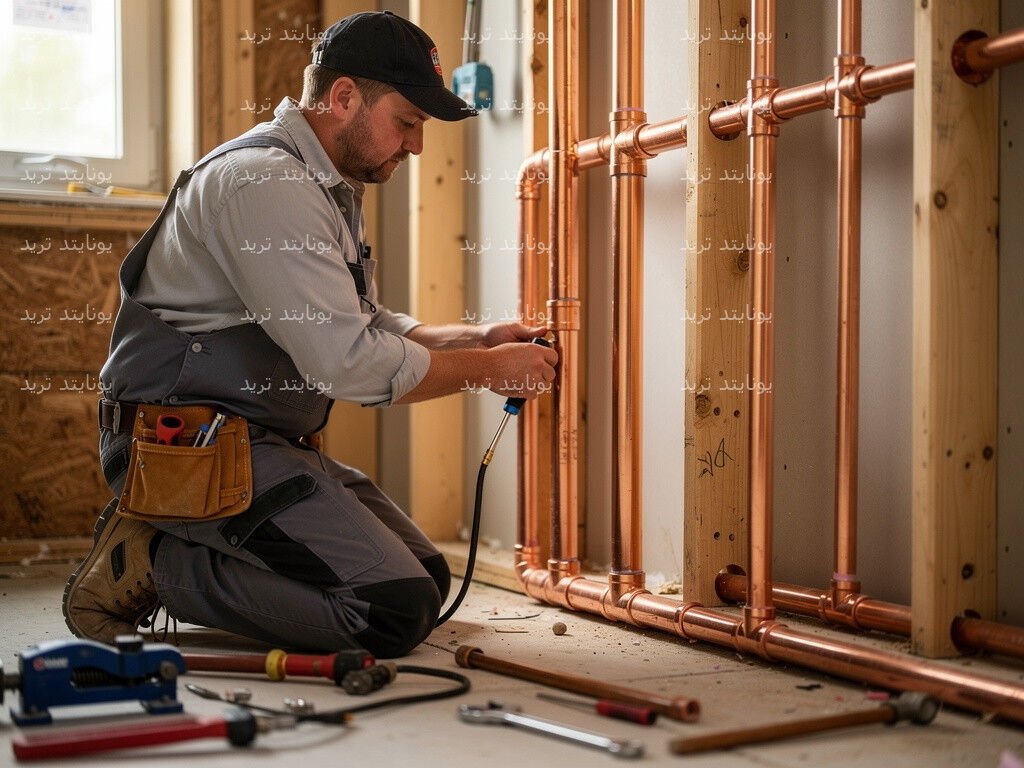
represents Installation of copper pipes The basic foundation for building highly reliable cooling systems and water and gas transportation networks inside modern buildings. Proper implementation ensures that the construction investment is protected and that costly leaks are prevented in the long term. This material provides the reader with a practical technical guide that explains the engineering standards for selecting appropriate diameters and flawless connection techniques, detailing the inspection and thermal insulation steps to ensure maximum operational efficiency that will last for decades.
What are the basic rules for installing copper networks?
Installation of copper pipes It is an engineering process of connecting and extending that depends on choosing the type of copper suitable for pressure, cutting the tubes at right angles and completely cleaning the inner blade. Successful installation requires the application of silver solder with a flow of nitrogen gas to prevent oxidation, followed by high nitrogen pressure testing and complete vacuuming, to ensure an airtight and operationally stable cooling or water system for many years.
Criteria for choosing pipe diameters and thicknesses before starting work
The operational success of any mechanical network depends on matching the physical properties of the pipe to the nature of the fluid and the amount of internal pressure expected. Accordingly, requirements vary Intake and expulsion lines In air conditioning systems for domestic sanitary water networks; Where modern cooling media such as R410A gas وR32 gas For operating pressures exceeding 400 psi, requiring high wall thicknesses to withstand sustained stress.
Moreover, incorrect choice of diameter leads to disturbance of fluid flow velocity and loss of critical pressure within the network. For example, selecting a diameter that is too small causes choked flow and increases energy consumption in compressors, while using excessively wide diameters in refrigerant lines leads to failure of the return of lubricating oil to the compressor, which leads to premature mechanical damage to the system.
Approved tools and equipment to accurately install copper pipes
Professional implementation requires the provision of specialized equipment that ensures accurate measurement and cleanliness of the internal piping path. As a result, professional technicians are eliminating the use of traditional steel saws, replacing them with specialized tools to avoid deforming the pipe roundness or producing internal metal filings:
- Rotary tube cutter: A mechanical tool for cutting copper at right, even angles without causing dents in the edges.
- Reamer: Conical scraper to clean the inner edges and get rid of sharp edges that obstruct the movement of liquids.
- Hydraulic or manual pipe bender: A device for performing regular radial bends that prevent internal flow choking or pipe wall breakage.
- Flaring & Swaging Kit: To create precision conical flange ends for mechanical connection or diameter expansion for cross-connection.
- Oxygen Free Nitrogen (OFN) Gas Cylinder: Used for sweeping and providing inert gas protection during heat welding operations.
Stages of installing copper pipes step by step on site
The first step begins with careful surveying of the tracks and determining the shortest straight line of travel that minimizes the number of elbows and sudden bends. Therefore, it is advisable to equip the suspension track with vibration-absorbing rubber mounting supports that separate the copper from the direct concrete to avoid electrochemical corrosion, while maintaining interspace distances not exceeding 1.5 m to prevent sagging of long lines under the influence of their own weight and working pressure.
The process then moves to the actual connection stage, which requires extreme precision to maintain network stability, and includes the following steps:
- Clean the outer and inner copper edges using a metal wire sponge until the edges acquire a metallic shine completely free of grease and oxidation.
- Insert the pipe into the connection with an interference depth equivalent to the outer diameter of the pipe to ensure sufficient bonding area for the connecting alloy.
- Passing a light stream of nitrogen gas at low pressure into the tubes during heating with an oxy-acetylene flame to prevent the formation of black carbon scales.
- Apply 5% to 15% silver soldering alloy and distribute it via capillary action until it completely fills the circular gap.
- Allow the connection to cool naturally in the air without using sudden water to avoid cracks resulting from thermal shocks.
Technical differences between grades of copper used in extensions
Copper pipes are classified globally according to ASTM standards into three main categories that determine wall thickness and mechanical endurance. Therefore, the supervising engineer determines the type of pipe appropriate to the nature of the application to avoid system collapse as a result of changing pressures:
Pressure and thermal insulation testing procedures to avoid malfunctions
Not complete Installation of copper pipes Without subjecting the network to a rigorous hydrostatic or gas pressure test that reveals the smallest microscopic gaps. Accordingly, the system is gradually injected with dry nitrogen gas until it reaches 1.5 times the design operating pressure, and is left under monitoring with a precise pressure gauge for 24 hours to verify the stability of the indicator while compensating for the temperature differences of the surrounding atmosphere.
Implementing these networks requires careful consideration in stages Air conditioning installationProper installation of the internal and external units directly affects the efficiency of heat exchange and the flow of the refrigerant. Adjusting the discharge tendencies and tight mechanical connection between the connections also contribute to avoiding vibrations and reducing the operational pressure on the compressor to ensure the longest life of the system.
These standards require a precise stage that precedes laying the lines, which is: Establishing extension pipes In a thoughtful manner, taking into account the paths of the walls and floors and the required drainage tendencies. This step ensures that the network is protected from mechanical stresses and facilitates subsequent maintenance work without compromising the building’s structural structure.
These copper extensions are directly integrated into the stages Air conditioning installation Air of various types, as the process requires precisely installing internal and external units and adjusting water drainage paths and electrical connections to ensure the highest operational efficiency. Adherence to technical principles during this step leads to avoiding compressor vibrations, reducing energy consumption and extending the life of the entire system.
The effectiveness of these extensions will not be complete except by implementing periodic programs related to: Air conditioning maintenance Air to ensure efficient heat exchange and stability of cooling media pressures within the network. This preventive technical measure contributes to detecting any early mechanical damage and avoiding a decline in the operational performance of the system in the long term.
Extending air conditioning ducts requires careful engineering planning that determines the lengths of the lines and their paths with the least possible number of bends, in order to ensure the flow of the refrigerant smoothly and steadily. Lead selection Correct paths to avoid poor cooling It plays a crucial role in preventing pressure drops within the circuit, which maintains the efficiency of the compressor and extends the operational life of the entire system.
This geometric path is directly integrated with a phase Installing room air conditioningTechnical standards require that the indoor and outdoor units be installed in a well-thought-out environment that ensures smooth airflow and prevents compressor fatigue. Careful adherence to installation distances and insulation angles protects cooling efficiency and reduces energy consumption, ensuring stable operational performance for many years.
Maintaining the efficiency of these extensions is not complete without applying periodic procedures that include checking the refrigerant levels and cleaning the heat exchangers to ensure stable operating pressures. Commitment to a professional schedule in Air conditioning maintenance Protects the compressor from premature fatigue, and reduces the possibility of Freon leakage caused by constant vibration.
These standards require a careful preparatory phase that includes: Establishing extension pipes According to approved architectural plans to ensure the efficiency of construction paths. This procedure requires identifying penetration points and installing mechanical supports with extreme precision to avoid any thermal stress or future pressure on the network.
The success of network extensions is not complete without applying periodic procedures that include: Air conditioning maintenance building to ensure the integrity of the refrigeration cycles and gas pressure levels within the pipes; Continuous preventive inspection contributes to detecting any blockages early and avoiding damage to the compressors, which increases the efficiency of the system as a whole and prolongs its operational life.
The success of these systems requires extreme precision in each stage Establishing pipes Extensions, where engineering paths are determined and appropriate fixing points are chosen before structural finishes are completed. This proactive step ensures that the lines are protected from mechanical stresses and facilitates future maintenance without damaging the building infrastructure.
In contrast, the air and moisture extraction stage (Evacuation) comes using a deep vacuum pump to reach a negative pressure of less than 500 microns To ensure that the circuit is free of atmospheric moisture. In addition, the copper tracks must be completely sealed with closed-cell type rubber insulators Elastomeric Foam With a studied thickness to prevent condensation of surface dew drops, and protect the building’s structural structure from damage and moisture.
The success of these connections is closely linked to the safety of the steps Air conditioning installation According to sound engineering principles, the correct installation of the internal and external units ensures a balanced flow of refrigerant without stress on the compressor. Adherence to safe extension paths and careful pipe insulation increases cooling efficiency and reduces energy consumption to the maximum possible level.
Frequently asked questions
❓ What is the best type of copper for split air conditioning extensions?
It counts L-type ACR copper The best engineering choice; Because it comes internally sterilized and sealed from the factory, with medium thickness walls that can withstand the high operating pressures of modern refrigerants such as R410A.
❓ Why should nitrogen gas be pumped while welding copper pipes?
Dry nitrogen flow prevents oxygen from reacting with copper heated to high temperatures; This avoids the formation of black copper oxide scales inside the pipe, which cause clogging of expansion valves and clogging of compressor filters during operation.
❓ Is it possible to bend copper pipes manually without using specialized tools?
Random manual bending of pipes is not recommended; Because this causes a sharp collapse in the inner wall and changes the circular flow cross-section to an oval one, which leads to suffocating the movement of the refrigerant medium and weakening the mechanical structure of the pipe at the bending point.
❓ What is the difference between silver soldering and tin soldering of copper pipes?
is used Brazing Temperatures exceeding 450 degrees Celsius and provides extremely durable connections that withstand high pressures and vibrations in cooling systems, while soft soldering is used in drinking water networks at low temperatures and pressures.
❓ How do I ensure the quality of insulation of copper pipes after installation is completed?
This is ensured by covering the entire length of the pipe with continuous sponge insulation without breaks or air cracks, sealing the meeting points with moisture-resistant adhesive tape, and ensuring that there is no direct contact between the copper pipe and the metal supports of the walls.
Adherence to sound technical standards during... Installation of copper pipes It guarantees you a safe system and maximum cooling efficiency that will last for many years without malfunctions. Always start by choosing original materials and professional tools, and do not hesitate to consult a certified technician to ensure the highest levels of safety and quality for your facility.
















Community dialogue
0 comments