
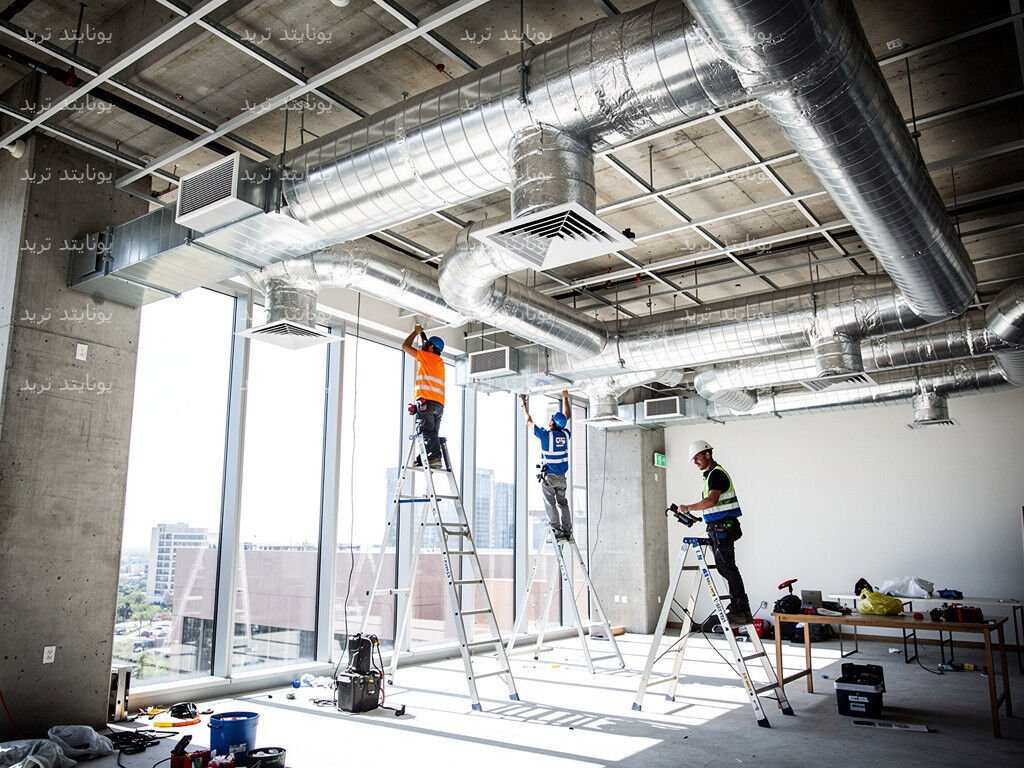
represents Establishing pipes Air conditioning The basic foundation for ensuring that the cooling system operates with full operational efficiency and without wasting energy inside the building. The correct engineering of the hidden wiring network ensures that problems with Freon gas leakage and water accumulation behind the walls after finishing are avoided. This article provides a comprehensive practical review of all the technical standards and steps followed to safely install copper tracks and drain water, saving you cumbersome maintenance costs later.
What is the establishment of air conditioning piping and what is its engineering importance?
Establishing pipes Air conditioning: It is the process of extending and installing copper lines for the cooling compound, control cables, and condensate water drainage pipes inside the walls or false ceilings before the final finishing stage. This procedure has the advantage of protecting mechanical components from physical damage, in addition to maintaining the interior aesthetic appearance of the house without distorting the paint with external impurities.
Furthermore, the precision in implementing this route keeps refrigerant pressure within the plant's design limits. Therefore, any error in bending angles or diameter measurements directly leads to mechanical stress on the compressor and a significant increase in electricity consumption.
❓ Protecting the concrete facility and finishes
It should be noted that ignoring technical standards while burying pipes causes chronic moisture leaks that destroy wall paints and gypsum decorations. For example, water vapor condensation around poorly insulated copper pipes causes black mold and cement plaster to crumble over time.
Engineering rules for choosing the path and laying of pipes
The ideal path requires choosing the shortest straight line connecting the indoor unit and the outdoor unit to minimize the loss of Freon hydraulic pressure. As a result, the effort expended by the air conditioning motor is reduced and the lifespan of the cooling system is significantly increased.
In addition, tracks that require sharp ninety-degree bends without the use of specialized bending tools should be avoided. In contrast, relying on wide, gradual bends protects the copper pipes from internal throttling that prevents the coolant from flowing smoothly.
The above flowchart shows the mandatory sequence of field installation phases. This regulated flow helps engineers and technicians ensure the integrity of the welds and the quality of insulation before pouring the plaster and closing the walls permanently.
Standard specifications for copper tubes and cooling insulators
The quality of copper ores used in... Establishing pipes Air conditioning The decisive factor for resisting the high pressures of modern refrigerants such as Freon R410A and Freon R32. Therefore, cold-drawn copper tubes free of longitudinal welds and approved according to international standards, of the soft type that is easy to form, should be used.
As the diagram shows, choosing the appropriate wall thickness provides the mechanical strength required to resist friction and bending of pipes. It should be noted that the use of insulators made of closed-cell flexible foam (Elastomeric Foam) with a thickness of no less than 13 millimeters completely prevents heat transfer and the phenomenon of surface condensation.
Stages of implementing the installation of air conditioning piping, step by step
The field implementation plan begins after the completion of the skeleton work and the construction of wall partitions and before the start of the final electricity extensions. These applied procedures can be limited to the following sequential steps:
The next stage requires executing an operation Professional air conditioning installation It depends on balancing the internal and external units accurately and tightly connecting the cooling lines and insulating them completely to prevent energy loss. Adherence to standard dimensions and secure installation of wall brackets ensures quiet operation and avoids mechanical vibrations that may shorten the life of the device.
- Determine the levels and locations of devices: Draw precise marks for where to hang the indoor air conditioner, leaving a distance of 15 to 20 centimeters below the ceiling to ensure return air is drawn.
- Wall sewer work: Use the electric cutting missile to open drains at a suitable depth inside the bricks to avoid cracking the structural structure with the hand hammer.
- Line insulation and packaging: Insert each copper line (suction line and liquid line) into a completely independent thermal insulator and avoid placing them in a common insulator to prevent reverse heat exchange.
- Signal cable extension and water drainage: Extending the electrical and control wires inside flexible plastic hoses with a 1-inch diameter water drainage pipe and a clear hydraulic slope.
- Installing the network with plaster and mortar: Fixing the extension package inside the duct using galvanized metal fasteners, then covering it with metal plastering mesh and rich cement mortar.
Table of engineering sizes and pipe thicknesses
The diameters of copper pipes required vary depending on the cooling capacity of the air conditioning unit. The following table summarizes the standard specifications most commonly used in residential and commercial projects to guide the selection of the correct materials:
Maintaining the continuity of this network requires following periodic procedures based on... Air conditioning maintenance Air and check refrigerant pressure regularly. This preventive intervention helps detect any minute blockages inside the copper piping before they turn into serious mechanical failures in the compressor.
The accuracy of extensions is integrated with phase Installing room air conditioning To ensure balanced air distribution within residential spaces, the balanced installation of the indoor and outdoor units contributes to reducing the mechanical stress on the compressor. Adhering to proper ventilation distances and insulating connection points will protect cooling efficiency from degradation and reduce energy consumption in the long term.
Reaching this level of efficiency requires relying on precise solutions including: Installation of copper pipes According to the highest engineering standards for advanced cooling and plumbing networks. These extensions contribute to enhancing the system's structural durability and resistance to corrosion and high gas pressures over the long term, ensuring smooth refrigerant flow without heat loss or leakage risks that threaten the integrity of the facility.
The quality of a well-established foundation is complemented by the necessity of carrying out work Regular air conditioning maintenance To maintain stable cooling pressures and integrity of drainage paths throughout the operation period. Regular inspection of unit components helps in early detection of any decline in heat exchange efficiency before it turns into costly malfunctions that affect the comfort of the occupants.
As a culmination of the construction foundation work, a stage emerges Air conditioning installation As a crucial step, it requires extreme precision in installing the internal and external units and adjusting the water drainage balances. This procedure is associated with airtight vacuuming and testing of refrigerant pressures to ensure balanced flow of fresh air without stressing the system compressor. Strict adherence to manufacturers' instructions during this stage will extend the life of the device and reduce energy consumption.
After completing the establishment phase, the system requires a periodic strategy for procedures Building air conditioning maintenance To ensure sustainable performance and avoid sudden mechanical failures. This regular inspection includes calibrating refrigerant pressures, and cleaning filters and condensing units to maintain airflow quality and electricity efficiency.
The culmination of the delicate foundation stage comes a step Air conditioning installation According to engineering principles, the internal and external units are tightly connected and the condensation drainage paths are adjusted. This procedure requires stable installation and complete emptying of the cooling circuits to ensure smooth refrigerant flow and a longer life of the device.
| Cooling capacity (hp/ton) | Suction line diameter (in.) | Liquid line diameter (in.) | Minimum wall thickness (mm) | Suitable drainage pipe diameter |
|---|---|---|---|---|
| 1.5 HP (1 ton) | 3/8 or 1/2 | 1/4 | 0.70 | 3/4 inch to 1 inch |
| 2.25 hp (1.5 tons) | 1/2 | 1/4 | 0.75 | 1 inch |
| 3 hp (2 tons) | 5/8 | 1/4 or 3/8 | 0.80 | 1 inch |
| 4 to 5 HP (3 tons) | 5/8 or 3/4 | 3/8 | 0.85 | 1 inch |
Based on the above engineering data, the technician must always refer to the technical catalog issued by the air conditioner manufacturer before finally installing the pipes, in order to ensure that the diameters of the valves match the expanded copper lines.
Mistakes to avoid while burying the cooling network
Some wrong practices lead to serious damage that is difficult to treat after the paint and decoration work is completed. Therefore, we have collected for you the most prominent mistakes to avoid falling into during the implementation process:
- Bend copper by bare hand: This procedure causes coagulation of the pipe and narrows its internal diameter, which impedes the flow of Freon fluid, so spring or mechanical pipe bender should always be used.
- Combine the suction and expulsion lines in one insulator: This contact results in heat transfer from the hot line to the cold line, which reduces the efficiency of the air conditioner and increases energy consumption.
- Neglecting to solder or seal the ends of pipes: Leaving the terminals open causes dust, cement and air moisture to enter the circuit, leading to damage to the expansion valve and subsequent compressor burnout.
- Ignoring the inclinations of the water drain pipe: The absence of sufficient slope of the drain line (at a rate of at least 1 cm per meter) leads to water stagnation and spillage from the front of the air conditioner into the room.
- Failure to perform a nitrogen compression test: Sealing walls without checking the pressure under 300 to 400 psi for 24 hours leaves you vulnerable to discovering leaks too late.
Frequently asked questions
❓ What is the best time to start installing air conditioning ducts inside the property?
The ideal time is after completing the construction of the walls and before starting the plastering work and establishing the surface plumbing and electricity. This timing allows wall tracks to be opened and pipes installed without damaging any subsequent finishing work.
❓ How do I ensure that copper pipes are leak-free before sealing the wall?
You can verify this by welding the ends of the pipes and pressing the mesh with dry nitrogen gas under a pressure of 350 psi. A pressure gauge (manometer) is installed and monitored for 24 hours to ensure that the indicator is completely stable.
❓ Is the installation of split air conditioning ducts different from concealed concealed air conditioning?
Yes, the installation is substantially different, with concealed air conditioning often requiring longer ducts, larger copper diameters, and ductwork over the plaster. In contrast, the wall air conditioner is satisfied with a direct path that penetrates the wall to the nearest external facade.
❓ What is the maximum allowable length of copper conduit between the two units?
The recommended length for regular wall air conditioners ranges between 15 and 25 meters, depending on the manufacturer's specifications. If the distance exceeds this, measured amounts of compressor oil and Freon must be added to compensate for the loss and ensure smooth oil return.
❓ Why are the suction line and liquid line isolated separately?
They are insulated separately to prevent unwanted heat exchange between the high-pressure fluid and the cold return gas. Separate insulation for each line ensures that gained and lost heat is retained in its designated places within the dynamic cooling cycle.
It requires completion Installing air conditioning ducts In strict adherence to engineering standards and a conscious selection of the best copper ores and approved thermal insulation materials. Always make sure to assign certified technicians to conduct nitrogen pressure tests before sealing the walls, to ensure your home has a comfortable environment and ideal cooling that will last for many years without hidden faults.
















Community dialogue
0 comments