
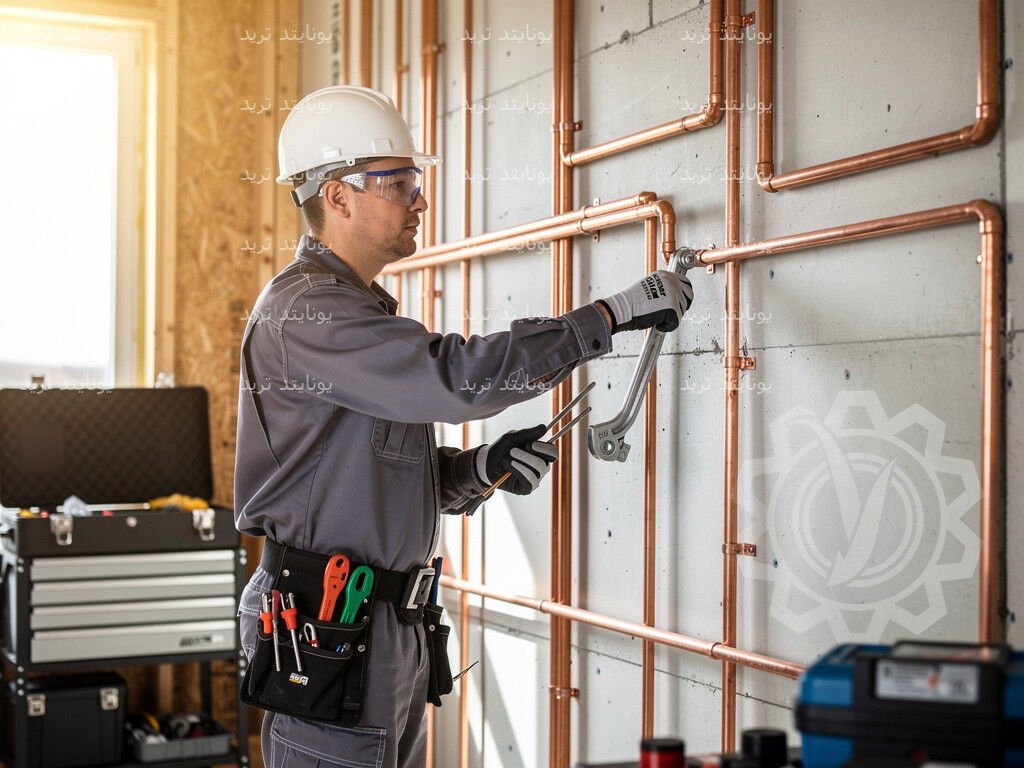
Comparison of copper types used in plumbing and cooling installations
Implementing plumbing and air conditioning projects requires choosing the appropriate grade of metal to ensure resistance to various operational stresses, as pipes are classified globally into three main categories that differ in wall thickness and the ability to withstand mechanical and thermal stress within buildings and industrial facilities.
| Tube type | Color coding | Wall thickness | Main areas of use |
|---|---|---|---|
| Type K | Green | Highest thickness | Underground main feed lines and high pressure applications |
| L type | Blue | Medium | Internal hot and cold water installations and air conditioning and refrigeration networks |
| Type M | Red | The thinnest | Home heating networks and light waste water drain lines only |
Specialized technical tools for cutting and preparing copper lines
The quality of the connections is directly dependent on the accuracy of the initial setting of the metal, as uneven edges create disturbances in fluid flow and increase the possibility of frictional wear within the network over time.
- Circular pipe cutter to obtain perfectly even vertical cuts at a ninety degree angle without creating elliptical distortion in the pipe shell.
- Deburring knife to clean the cavity of sharp edges and metal shavings formed after the cutting process to prevent water cavitation.
- Metal wire brushes to clean the exterior and interior surfaces of the overlap areas until a pure metallic luster appears before proceeding with assembly.
Steps to implement stress tests and verify network integrity
Hydrostatic or pneumatic inspection represents the crucial stage to ensure that the paths are free of any microscopic gaps before covering the walls or insulating the extensions with various building materials. This is done through a strict implementation sequence that takes into account public safety standards.
- Block all free exits with tight threaded plugs and temporarily isolate the main control valves to protect them from high pressures.
- Filling the tracks with dry nitrogen gas or clean water and gradually raising the pressure until it reaches one and a half times the approved design operating rate.
- Monitor the calibrated pressure gauge indicator for twenty-four continuous hours, while checking all connections manually with a foam detection solution to ensure complete stability.
represents Installation of copper pipes An essential pillar for ensuring the efficiency of cooling systems and fluid transportation networks for long periods of time. This article helps you understand the correct engineering mechanisms for laying and installing networks accurately, which will avoid problems of pressure leakage or metal corrosion in residential and commercial facilities.
Quick answer
Installing copper pipes is an engineering process that aims to install copper lines through precise cutting and expansion, then mechanical bonding or silver welding, with the application of thermal insulation to protect cooling, gas and water paths from leakage and energy loss, giving the network a lifespan exceeding thirty years when adhering to technical standards.
Tools and equipment needed to complete the work accurately
This process requires the use of specialized equipment that maintains the roundness of the inner tube and prevents deformation during handling. Choosing the right tool reduces the chance of any invisible dents affecting fluid movement and operating pressure rates.
- Sharp-bladed copper pipe cutter for even, 90-degree cuts.
- Internal deburring tool to smooth the pipe mouth and prevent hydraulic turbulence.
- Manual or hydraulic expansion device to prepare overlap joints before welding.
- Radial pipe bending kit to avoid twisting and damaging the walls.
- Oxyacetylene welding equipment with silver bars and appropriate disinfection powder.
- Vacuum pump and digital manometer to check sealing efficiency and final installation.
Steps to install copper pipes systematically
The work stages begin by making geometric measurements of the planned paths before starting the actual cutting. As a result, the technician ensures no wastage of materials and avoids additional connections in enclosed spaces, which supports the integrity of the overall network and its resistance to high pressures.
Tip preparation and surface cleaning
Cleaning the inner and outer copper terminals with a wire brush or steel wool is essential to successful bonding. This step removes layers of oxidation and oily impurities that may prevent the penetration of the soldering alloy into the capillary voids. In addition, metal filings should be vacuumed out to prevent them from leaking into the valves later.
Carrying out bending and expansion operations
Pipe bending requires the use of mechanical benders with rollers precisely suited to the diameter of each pipe. This method prevents the reduction of the internal diameter that causes suffocation in the flow of gas or liquid. Accordingly, expansion is carried out in gradual, regular movements to avoid microcracks in the soft copper wall.
Technical comparison between types of copper pipes and their uses
Copper tubing varies according to wall thickness and nominal ability to withstand pressure and temperatures. It should be noted that choosing the wrong type may lead to early failure of the air conditioning or heating system, and therefore the fundamental differences shown in the following data should be known.
| Code type | Wall thickness | Pressure tolerance level | Ideal area of use |
|---|---|---|---|
| Type K | Very thick | Extremely high, exceeding 700 lbs | Buried underground lines and heavy-duty industrial networks |
| L type | Medium thickness | High and suitable for common pressures | Air conditioning and refrigeration extensions and internal hot water lines |
| Type M | Thin wall | Medium to low | Internal drainage networks and domestic water supply are low cost |
| Type ACR | Uneven and laminated | Designed for high Freon pressures | Closed refrigeration circuits that require maximum purity and dryness |
Requirements for safe welding of copper tracks
Silver welding is the standard method for assembling refrigerant lines to ensure resistance to continuous mechanical vibrations. For example, inert nitrogen gas must be passed into pipelines during low-pressure heating to avoid the formation of a black carbon oxide layer inside the path, which causes damage to the air conditioning compressor.
The importance of these engineering standards is clearly evident when embarking on... Air conditioning installation Air, as the wall thickness of the copper tube directly affects the integrity of the Freon gas cycle and the cooling efficiency. Therefore, proper connection requires extreme precision in welding the connections and choosing the appropriate diameters to withstand high gas pressures without leaking.
Furthermore, the heat should be distributed in a uniform gradient over both ends of the joint so that the solder alloy melts with the latent heat of the copper and not with the direct flame of the torch. This procedure ensures that the molten metal flows into the overlap by capillary action, producing a tight bond free of micropores or air gaps.
It is a stage Establishing pipes Internal extensions are the basic foundation that determines the efficiency of water and gas systems later, as ensuring their durability requires choosing precise paths that avoid sharp bends and allow for easy maintenance. These pipes must also be secured against mechanical shocks inside the walls to ensure uniform pressure distribution and to avoid any future leaks that may affect the integrity of the concrete structure.
The efficiency of the refrigeration cycle and the integrity of the gas paths depend on the procedure Regular air conditioning maintenance Detect early any leakage that may occur in copper connection points under the influence of continuous vibrations. Regular inspection of the pipes also ensures that the filters are cleaned and pressure levels are measured, which protects the compressor from damage and extends the operational life of the system as a whole.
Successful completion of the network extension requires strict engineering standards to be followed Air conditioning installation To ensure the flow of the refrigerant with complete efficiency. This includes carefully installing the units and aligning the connections to minimize heat loss and avoid compressor fatigue. Adherence to these controls reduces energy consumption and extends the life of the entire system.
The efficiency of these extensions practically starts from one stage Establishing pipes Cooling and water are precisely engineered, taking into account the paths of walls and floors to avoid sharp bends. This initial procedure ensures that the copper pipes are protected from future damage and facilitates subsequent maintenance and thermal insulation operations.
The efficiency of the refrigeration cycle and the safety of copper networks depend on the procedure Regular air conditioning maintenance For early detection of any venting or corrosion at welding points exposed to continuous vibration. This regular technical inspection contributes to adjusting refrigerant pressures and protecting the compressor from damage caused by mismatched piping stress.
The quality of these pipes is closely linked to the integrity of the refrigeration cycle, as proper connections prevent gas leaks that deplete the compressor's efficiency and increase failure rates. For this reason, procedures are formed Regular air conditioning maintenanceSpecifically, checking gas pressures and the integrity of copper lines is the cornerstone for extending the life of the system and avoiding sudden damage to the units.
The importance of choosing the appropriate type of these pipes becomes clearer when starting... Air conditioning installation Air, as the wall thickness matches the refrigerant pressures to prevent any possible future leaks. The precision in insulating the copper wiring also ensures that heat exchange efficiency is maintained and energy consumption in the system as a whole is reduced.
The efficiency of these extensions practically starts from one stage Establishing pipes Feeding and drainage according to approved engineering plans, where the precise distribution of diameters and burial paths ensures that any drop in flow pressure is avoided. Tight fitting of pipes inside walls and floors also contributes to absorbing the thermal expansion of the metal and preventing future leaks.
It is a stage Air conditioning installation Air is crucial in selecting high quality copper piping that meets the specified pressure standards for the refrigerant, as these approved piping ensures efficient refrigerant flow and prevents future leaks. Therefore, the success of extensions depends primarily on the quality of the foundation and materials used to ensure a long lifespan for the entire system.
Insulation and pressure testing procedures before operation
Protecting pipes with sealed elastomer thermal insulation is an imperative step to prevent moisture condensation and cold loss. On the other hand, neglecting insulation leads to corrosion of the outer surface of the copper due to the surrounding air humidity, as well as an increase in the electrical energy consumption of the entire system.
- Cover all parts of the pipe with rubber insulators of appropriate density and secure the joints with tight adhesive tapes.
- Injection of the piping network with dry nitrogen gas under pressure up to 250 psi.
- Monitor the stability of the pressure indicator for a period of not less than twenty-four hours to ensure that there are no minor leaks.
- Use specialized soap foam to reveal the integrity of solder points and visible mechanical connections.
- Empty the network using a vacuum pump to reach a level of 500 microns to completely remove moisture before filling with Freon.
Common errors that lead to failure of copper lines
Some technicians make the mistake of clamping pipes with uninsulated iron clamps, which results in rapid galvanic corrosion due to the contact of two dissimilar metals. Therefore, compatible rubber or copper lined clamps should always be used to prevent this harmful chemical reaction and to mitigate the effect of natural thermal expansion and contraction.
In other words, some people ignore the permissible bending distances, so they resort to bending the pipe forcefully, which narrows the fluid flow. As a result, the stress on pumps or compressors increases and the efficiency of coolant flow decreases, which precipitates frequent and costly mechanical failures that can be avoided by following technical rules.
Frequently asked questions
What is the correct way to insulate external copper tracks?
Covering is carried out using UV-resistant flexible foam insulators with a minimum thickness of 19 mm. The insulation must be wrapped with a protective layer of aluminum or weather-resistant cloth tape to prevent damage to the insulating material by direct sunlight.
How to avoid burning walls while installing copper pipes?
The technician uses thermal barriers made of ceramic fibers or reflective metal sheets behind the weld areas close to the surfaces. This procedure protects the paint, concrete and adjacent electrical wiring from the risk of direct flame exposure during heating.
Can copper pipes be mixed directly with galvanized iron pipes?
They should not be connected directly because this leads to rapid galvanic corrosion that destroys the iron pipes. It is necessary to install electrically insulating connectors made of bronze or specialized polymers to safely separate the two metals.
Why is it preferable to use oxygen-free nitrogen during welding?
Nitrogen prevents the formation of dark oxidation scales inside the inner cavity of the copper tube during high heating. This technology keeps synthetic oils clean and protects the delicate valve passages in cooling units from clogging.
When should you replace old copper lines instead of repairing them?
The network requires extensive replacement when general corrosion appears in the pipe walls and multiple leakage areas caused by fine needle punctures. In this case, the cost of recurring maintenance becomes higher than the cost of re-laying new, guaranteed lines.
Final tips for achieving the best results
Adherence to engineering standards in the installation of copper pipes ensures that your investments and equipment are protected for many years without interruption or malfunctions. Always start by choosing the appropriate thickness and use standard tools for shaping to ensure the quality of hydraulic and mechanical performance, and review and test the network paths periodically to avoid any decrease in operational efficiency.
















Community dialogue
0 comments