
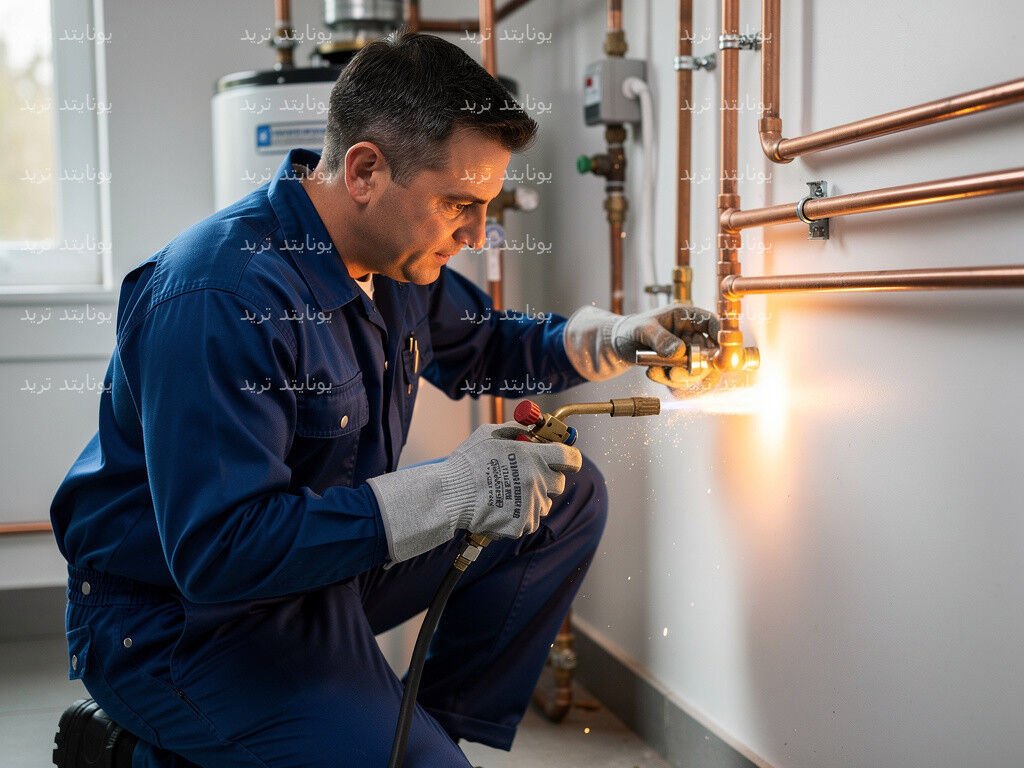
Guide to selecting pipe diameters and thicknesses according to the type of application
It requires completion Installation of copper pipes Correctly carefully study the flow rates and operational pressure within the system, as miscalculation of the diameter leads to a sharp drop in pressure or the issuance of whistling sounds and vibrations inside the walls as a result of excessive fluid velocity.
| Type of use | Recommended outer diameter | Standard tube type | Typical pressure level |
|---|---|---|---|
| Feeding domestic gas lines | 1/2 to 3/4 inch | Type L or K steel | Low to medium pressure |
| Main feed water networks | 3/4 to 1 inch | Type L steel | 40 to 60 psi |
| Sub-distribution points for laundries | 1/2 inch | Type M or L | 30 to 50 psi |
| Central air conditioning intake lines | 5/8 to 1 1/8 inch | Vacuum and cleaned type ACR | High refrigerant operating pressures |
| Liquid lines in cooling | 1/4 to 3/8 inch | Flexible or rigid ACR type | Ultra-high cooling pressures of up to 450 psi |
The most common mistakes while laying and installing copper pipes
Some technicians make fundamental mistakes during the course of work that shorten the life span of the extensions and expose them to early malfunctions. Avoiding these pitfalls increases the quality of the operational system.
Ignoring electrical insulation between different metals
Direct contact between copper and galvanized iron or carbon steel is a catastrophic error resulting in rapid galvanic corrosion. Should in Installation of copper pipes The use of non-conductive insulating joints prevents the interaction of electrons and corrosion of the weaker metal at the junction areas.
Excessive use of oxidation removal paste
Leaving excessive amounts of fusing agent inside the flux after welding is complete leads to chemical reactions that cause fine internal etching in the pipe wall, which requires wiping the connections inside and out with a damp cloth immediately after completing each connection point.
Install the supports very far apart
Failure to observe the geometrically specified distances between pipe fasteners causes sagging of the lines over time, and the accumulation of air or sediment in low points. The basic rules of reinforcement include the following points:
- Install a support every 1.5 meters for pipes with small diameters of less than one inch.
- Provide stands close to each elbow or branch, not more than thirty centimeters away, to absorb water hammer shocks.
- Lining the cleats with rubber rings to prevent metal-to-metal friction and absorb noise resulting from fluid flow.
Installing copper pipes is the cornerstone of ensuring the efficiency of cooling and water supply systems in modern facilities. Proper installation protects the building from the risk of leakage and sudden pressure loss. This specialized guide helps you understand the precise applied stages of preparing and installing copper pipelines with high professional efficiency. We will discuss the steps of mechanical and thermal connection, highlighting the technical standards that guarantee a long operating life without unexpected malfunctions.
Quick answer
Copper pipe installation is a technical process aimed at extending cooling or water networks using welded or pressurized copper pipes to ensure stable flow without leakage. The procedure requires cutting the pipes with a specialized tool, carefully cleaning the inner edges, then applying silver welding or mechanically tightening joints with immediate thermal insulation to prevent condensation and pressure drops.
Select appropriate pipe diameters and weights for the application
The success of the project depends entirely on accurately determining the pipe wall thickness and diameter in proportion to the operating pressure and system capacity. As a result, the type of engineering application must be taken into account whether it is for pure water lines or industrial and commercial refrigeration and air conditioning networks.
Operational differences between rigid and flexible pipes
Copper tubes are manufactured in two main types: rigid vacuum tubes that cannot be bent by hand, and soft spiral tubes that are easy to form. For example, technicians prefer to use the solid type in straight, visible paths for its high durability and organized appearance. In contrast, soft tubing is used in hidden runs that require multiple bends without additional welds.
Standard thickness classifications on the market
According to the standard thickness, pipes are divided into three internationally approved types: Type K, which is the thickest, Type L, which has medium thickness, and Type M, which has the thinnest wall. Therefore, Type K is used in underground installations and high pressure networks. While Type L covers most air conditioning and indoor plumbing installations with balanced economic and technical efficiency.
Necessary tools and equipment before starting installation
Field work requires the provision of professional tools intended to cut and shape copper without damaging its mechanical structure or causing internal distortions. It should be noted that the use of inappropriate tools may cause the inner diameter to shrink and the fluid flow to become blocked over time.
- Sharp manual pipe cutter to ensure even, round cuts at a ninety degree angle.
- A tool for skimming and emptying the internal feathers to prevent eddies and flow disturbances.
- Mechanical pipe bender with appropriate radius to avoid pipe wall compression.
- Oxy-acetylene welding torch with silver alloy intended for high pressure.
- Precise tape measure and digital water scale to adjust incline and incline.
Steps to install copper pipes in a precise geometric manner
The actual work begins with careful field measurements of the route, while determining the meeting and turning points with extreme precision. In addition, the outside of the copper ends should be cleaned with a soft wire brush to remove the surface oxide layer before bonding.
- Cut the tube with the hand cutter slowly to prevent ellipticality of the geometric shape of the opening.
- Empty the internal and external valves with great care to ensure the flow of liquid and gas.
- Apply a chemical fusing agent to the terminals when using tin solder.
- Heat the contact point evenly until it acquires a soft cherry color.
- Inserting the soldering iron so that it flows evenly through the capillary action within the joint cavity.
- Allow the connection to cool completely naturally without pouring cold water to avoid embrittlement of the metal.
Comparison of specifications of copper pipe types
Knowing the differences between standard grades helps you make the right decision before starting to establish and equip. The following table shows a detailed comparison of the most common options in engineering projects.
The efficiency of the refrigeration cycle depends entirely on the accuracy of the work carried out Air conditioning installation According to sound engineering standards, the tight connection of gas and liquid lines ensures stable refrigerant pressures and protects the compressor from premature damage. Controlling pipe inclinations and good thermal insulation also contribute to preventing condensation water leakage and maximizing energy efficiency.
The efficiency of the entire wiring network depends on its phase Establishing pipes Conditioning and feeding according to well-studied paths that avoid sharp bends and mechanical stress points. Thermal insulation and tight installation within the walls must also be taken into account to ensure that lines are protected from damage and prevent condensation while stabilizing flow rates.
The accuracy of the installations is a crucial step in ensuring cooling efficiency, as it requires projects Air conditioning installation Matching the diameters of copper pipes precisely with the internal and external unit capacity to avoid compressor fatigue. The perfect thermal insulation of these pipes also contributes to preventing moisture condensation and achieving the highest levels of operational energy performance.
The efficiency of the entire cooling cycle depends on the accuracy of the copper connections and their safety from possible blockages or leaks, which highlights the utmost importance of implementing procedures Regular air conditioning maintenance To check pressures and reset charges. This technical compliance helps avoid damage to the compressor due to sediment buildup or a sudden change in refrigerant flow.
This precise determination of the dimensions is linked to the extent of the stability of the system in the long term, as it facilitates the procedure Regular air conditioning maintenance Protects the compressor from mechanical stress and refrigerant leakage. Choosing the appropriate paths and copper thickness that matches the specifications reduces the possibility of clogging or corrosion of the connections over time.
The outside diameter and wall thickness precisely determine how well a pipe can withstand the mechanical and thermal stresses it is exposed to in modern plumbing systems. So, it depends Choose the ideal specifications Pipes should be tailored to the nature of the actual application, whether intended for hot or cold water networks or central heating systems, to ensure the sustainability of the installations and prevent any future leaks.
The operational efficiency of piping is related to the extent to which inspections are regularly paid attention to, as procedures are included Air conditioning maintenance Regular air circulation early detection of any refrigerant gas leakage at welding and connection points. This continuous checking helps maintain stable set pressures, preventing compressor fatigue and extending the life of the entire system.
He depends Establishing pipes Extensions mainly depend on matching the outer diameter and wall thickness to the operating pressure requirements, to ensure flow stability and avoid premature mechanical stresses. The nature of the transported fluid and its temperature must also be taken into account when choosing the appropriate type of pipes, as the accuracy of choosing pipe diameters contributes to prolonging the life of the system and avoiding future leaks.
| Tube type | Wall thickness | Permissible pressure level | Common usage |
|---|---|---|---|
| Type K green | Very heavy thickness | Very high pressure exceeding 400 lbs | Central cooling lines and ground extension |
| Type L blue | Standard medium thickness | Operating pressure up to 300 psi | Installation of copper pipes for air conditioning and plumbing |
| Type M red | Low wall thickness | Low pressure for light water | Home heating networks and drain lines |
| Type DWV yellow | Less commercial thickness | Drainage without hydraulic pressure | Wastewater drainage and air conditioning |
The importance of insulation and installing supports on tracks
Thermal insulation represents the first line of defense to protect the system from loss of thermal energy and condensation of ambient moisture on surfaces. Accordingly, neglecting insulation leads to corrosion of the metal structure and the leakage of condensation water into ceilings and structural walls.
These engineering standards stand out clearly when embarking on Air conditioning installation With its various systems, the efficiency of cooling and the quality of heat exchange are related to the extent of compatibility between the unit’s capacity and the diameters of the copper extensions. Adherence to these measurements ensures that the compressor is protected from mechanical stress and avoids problems with refrigerant leakage over time.
Effective thermal insulation techniques
Closed-cell flexible foam insulation is the ideal choice for covering piping of cooling media and hot liquids. Furthermore, insulation joints should be sealed with moisture-proof tape to avoid warm outside air leaking onto the cold copper surface.
Distribution of cleats and wall mounts
Copper pipes require mounting brackets lined with insulating rubber to prevent friction and dampen vibrations caused by the movement of compressors and pumps. As a result, it is preferable that the distance between one stand and another does not exceed two meters on horizontal lines, and be reduced near bends and branch points.
Mistakes that must be avoided to ensure the sustainability of the network
Many implementers make mistakes that dramatically shorten the lifespan of the copper system. For example, excessive heating of copper during welding causes the metal particles to burn and increase its structural fragility.
Avoid direct contact between copper metal and non-galvanized iron metal to prevent rapid galvanic corrosion due to electrical potential difference. In addition, it is prohibited to bend the tubes manually without using a forming spring or a dedicated machine, because twisting of the inner diameter causes mechanical throttling of the movement of the refrigerant.
Frequently asked questions
What gas is used as internal protection during copper welding?
Dry nitrogen gas at very low pressure is used during welding to prevent the formation of black copper oxide scales inside the tube. This technology ensures circuit cleanliness and protects expansion valves and compressors from future mechanical blockage.
How to test the quality of copper pipe installation and ensure that it does not leak?
The network is pressurized with dry nitrogen gas to a pressure equivalent to one and a half times the operating pressure for twenty-four hours. The technician follows the pressure gauge indicator to ensure it is completely stable, in addition to checking the welding points with specialized soap foam.
Why is it preferable to use copper over plastic pipes in gas and cooling networks?
Copper is characterized by its superior resistance to high gas pressures and its complete impermeability to oxygen and light. In addition, it has excellent thermal conductivity and the ability to withstand extreme temperature variations without excessive expansion.
When should old copper pipes in a building be replaced?
It must be replaced as soon as signs of severe spot wear appear or recurring leaks occur in more than one place. It should be noted that changing the external color of copper to green does not mean damage unless it is accompanied by thinning of the wall thickness.
Is the method of welding water pipes different from air conditioning pipes?
Yes, air conditioning grilles rely on strong, high-temperature welding and a silver-phosphorus alloy to withstand extreme pressures and vibrations. In contrast, drinking water networks use soft soldering with completely lead-free tin to avoid poisoning.
Integrated engineering implementation in the installation of copper pipes provides the highest levels of efficiency and durability for your facility without worry of leaks and malfunctions. Always adhere to technical standards and use the appropriate tools to ensure safe flow and protect your construction investment for many years to come.
















Community dialogue
0 comments