
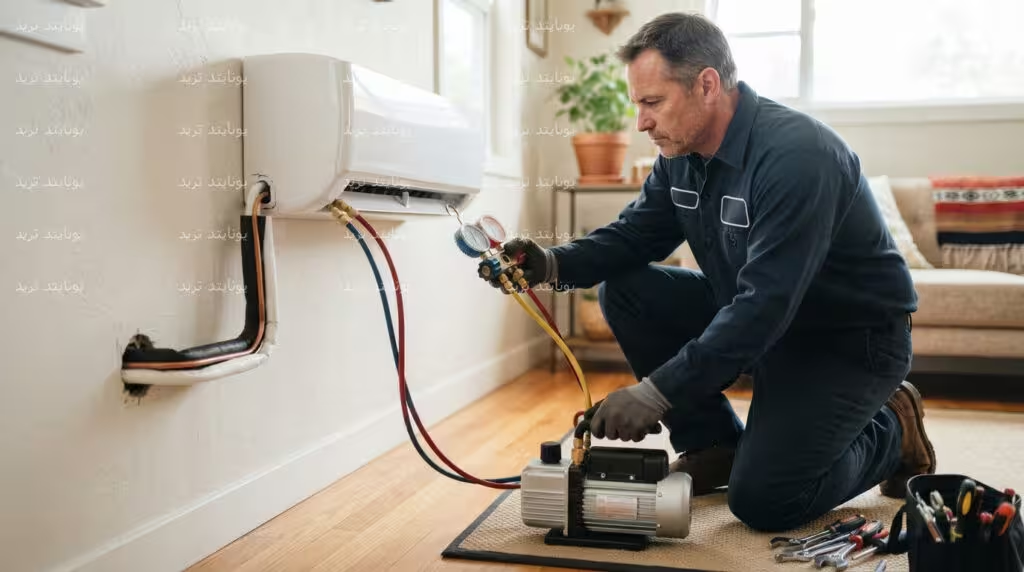
practical Air conditioning installation It's not just about installing units on the walls, it's precision engineering that ensures efficient cooling and longevity of the device. It requires choosing the right capacity for the space, ensuring good ventilation, and using professional tools to extract moisture from the circuit. These instructions are intended to provide expert insight on how to accurately complete this task to avoid future breakdowns and reduce energy consumption.
Technical criteria for choosing cooling capacity
Choosing the right air conditioning capacity (BTU) for the space is the cornerstone of any... Air conditioning installation Successful and effective. Choosing a smaller capacity than necessary will cause the device to constantly operate without reaching the required temperature, which consumes additional energy and damages the compressor.
❓ Calculate capacity according to climate
Hot areas need high efficiency, with 500 to 600 British thermal units (BTU) per square meter recommended. Ignoring this equation will result in loss of cooling capacity during peak summer times, so consult a technician to accurately estimate the heat load based on the room's location and number of windows.
External installation foundations to ensure performance
requires Air conditioning installation Professional selection of an ideal location for the outdoor unit to ensure effective heat exchange and reduce stress on the engine. The unit should be placed in a shaded, well-ventilated place away from direct sunlight as much as possible.
- ✓Leave a distance of at least 30 cm between the unit and the walls to ensure air flow.
- ✓Make sure the unit is mounted on a level, sturdy base to reduce vibrations and noise.
- ✓Avoid installing the outdoor unit in closed or confined spaces that prevent hot air from draining out.
Adhering to these distances ensures less energy consumption, as the accumulation of hot air around the unit raises the operating temperature and leads to increased unnecessary electrical loads.
The importance of vacuum
The process of using a “vacuum pump” is the most vital step in... Air conditioning installation Updated to ensure the circuit is free of air and moisture. Ignoring this technical step will inevitably lead to damage to the compressor and corrosion of the internal parts within a few months of operation.
❓ Consequences of neglecting emptying
Moisture in the remaining air inside the ducts reacts with the cooling oil, causing the formation of harmful acids. These acids corrode the compressor's electrical coils and cause sudden and costly malfunctions that may require replacing the entire device.
The diagram above shows the correct process of operation, starting from location and reaching the critical air intake stage before opening the Freon valves.
| item | Optimal technical standard |
|---|---|
| Ventilation distance | 30 cm minimum |
| Capacity per meter | 500-600 BTU |
| Unloading stage | Mandatory before operation |
| Filter maintenance | Periodically |
The effect of installation on electricity consumption
Related to efficiency Air conditioning installation Directly in the value of the monthly electricity bill, as cooling systems consume 10% of the total electricity globally. Incorrect installation or selection of a capacity larger than necessary leads to unjustified power consumption.
It is a stage Installing air conditioning ducts Copper is the backbone of any successful cooling system, as it requires extreme precision in installations to ensure smooth paths for the refrigerant. Taking care to implement and secure these extensions inside the walls from the beginning protects the device from future Freon leaks and ensures sustained performance with the highest possible efficiency.
Maintaining this ideal performance is not complete once the installation is completed, as it is still a step Regular air conditioning maintenance It is the real guarantee of continued air flow efficiency and avoiding refrigerant gas leakage. This includes cleaning filters, checking electrical connections, and adjusting pressure levels, which prevents sudden malfunctions and extends the life of the device for many years.
The efficiency of the entire refrigeration cycle depends on our professionalism Installation of copper pipes Which transports the refrigerant between the internal and external units. This requires choosing pipe diameters with extreme precision and mastering welding processes to ensure that no Freon leakage occurs, as well as applying tight thermal insulation that protects the lines from energy loss and maintains the maximum efficiency of the device.
The actual success of this system begins from one stage Establishing cooling pipes Very carefully, the appropriate copper diameters must be chosen and thermally insulated to prevent water condensation and loss of cooling energy. Careful laying also requires avoiding sharp bends and specifying precise drainage paths, ensuring smooth refrigerant flow and protecting the compressor from premature fatigue.
This system is not complete unless a regular plan is followed Air conditioning maintenance Air it periodically to ensure it continues to operate at the same initial efficiency. This includes thoroughly cleaning filters, checking refrigerant levels, and inspecting electrical connections to avoid any sudden drop in performance.
The quality of the installation is not complete without a periodic follow-up plan that ensures the sustainability of high performance, as it constitutes Air conditioning maintenance The building is an essential pillar to prevent the leakage of Freon gas and the accumulation of dust inside the filters and evaporator. This regular inspection helps catch electrical and mechanical faults in the bud, saving energy consumption and protecting the compressor from premature wear.
❓ Smart rationalization methods
Energy consumption can be reduced through simple practices, such as cleaning filters regularly which increases efficiency by 5% to 15%. In addition, raising the air conditioning temperature by just one degree saves about 3% of the energy consumed.
This precise engineering begins with the cooling network extension phase, which is a step Establishing copper pipes Correctly form the cornerstone for the flow of refrigerant without any bottlenecks or leaks. Choosing appropriate pipe diameters and thermally insulating them to the highest quality standards ensures that the system is protected from energy loss and moisture condensation inside the walls.
Frequently asked questions
❓ Why should a vacuum pump be used when installing air conditioning?
The pump is used to draw air and moisture from copper pipes; Because the presence of any moisture interacts with Freon gas and quickly causes damage to the internal compressor.
❓ What is the ideal distance to install the outdoor unit?
A distance of at least 30 cm must be left between the outdoor unit and the wall to ensure air circulation and prevent the device from overheating while working.
❓ Does the chosen cooling capacity affect electricity bills?
Yes, choosing a capacity larger than the room size leads to the device working intermittently and consuming high electricity, while a smaller capacity consumes a lot of energy without sufficient cooling.
❓ How often do I need to clean air conditioning filters?
It is recommended to clean the filters every month during periods of heavy use, to ensure clean air flow, reduce motor effort, and save electricity.
❓ Can the air conditioner be installed in a place exposed to the sun?
It is best to avoid sunny locations of the outdoor unit; Because direct heat increases electricity consumption and reduces the efficiency of heat exchange and room cooling.
Conclusion
Investing in Air conditioning installation According to the correct engineering standards, it saves you future malfunctions and high electricity bills. Always follow manufacturers' instructions and use the expertise of certified technicians to ensure the best performance of your device.
















TQTAG76 Community dialogue
0 comments