
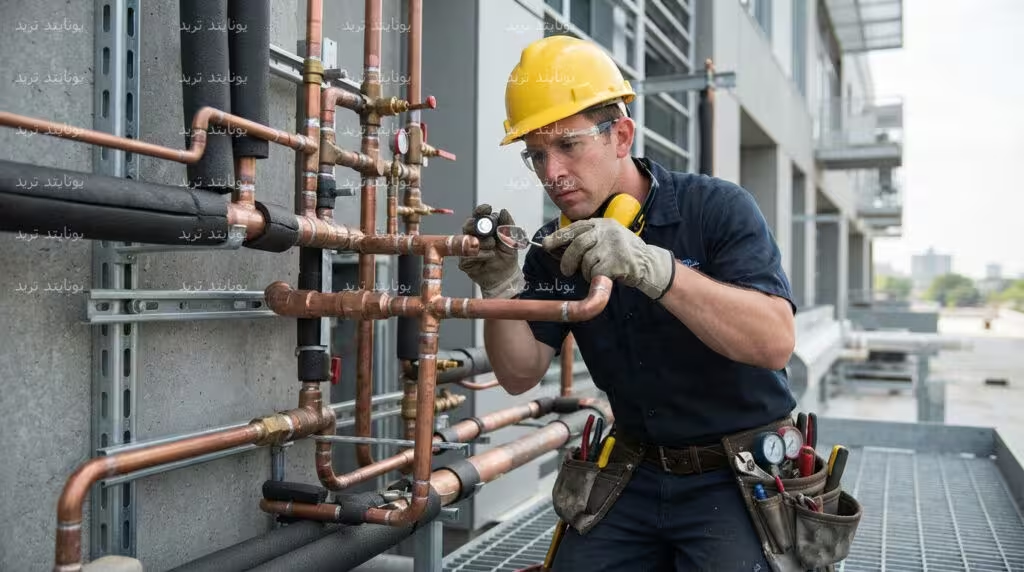
It is considered practical Installation of copper pipes The basic foundation for ensuring the efficiency and long-term sustainability of cooling systems. This procedure requires high technical precision, as the quality of cooling directly depends on the integrity of the copper tracks and their ability to transport the cooling medium without any heat loss or leaks. By adhering to precise engineering standards, property and building owners can avoid common HVAC malfunctions and get the most out of their equipment.
Why is choosing copper the gold standard in cooling systems?
Copper is the world's best choice for air conditioning installations Its superior thermal conductivity It has high resistance to corrosion and rust. International industry requires standards such as ASTM B280 for seamless copper, which ensures a purity of at least 99.9%, which prevents micro-leaks that could lead to loss of Freon gas.
❓ The effect of the quality of materials on the lifespan of the air conditioner
High-purity materials reduce the accumulation of impurities inside the refrigeration circuit, which keeps the compressor clean and extends its operational life. Using poor-quality copper pipes increases the possibility of holes due to high pressure, which makes... Installation of copper pipes With standard specifications, it is a necessary investment to protect the device from sudden malfunctions.
Engineering criteria for choosing appropriate diameters
Pipe diameters must be specified precisely, such as 1/4, 3/8, 1/2, or 5/8 inch, based on the air conditioning capacity measured in British Thermal Unit (BTU). Choosing an incompatible diameter causes turbulence in the coolant flow, resulting in reduced cooling efficiency and undue stress on the engine.
The previous diagram shows the essential steps to ensure the success of the technical establishment. Engineering requirements prevent the presence of any welds inside the buried tracks to reduce the risk of leakage.
The importance of thermal insulation for cooling pipes
Thermal insulation with a thickness of at least 3/8 inch is an essential step that cannot be overlooked Installation of copper pipes. Insulation works to prevent moisture condensation (sweating), which causes damage to walls and ceilings, and protects pipes from losing cold during their transfer from the outdoor unit to the indoor unit.
❓ The results of neglecting the thermal insulation of the pipes: A gradual loss in the coolness of the air coming out of the air conditioner. An increase in the operating load on the compressor to compensate for the thermal loss. A noticeable increase in monthly electrical energy consumption. The risk of corrosion of the pipes due to constant humidity. Technical facts about the installation of copper pipes. Item Technical standard Copper purity 99.9% minimum Insulation thickness 3/8 inch minimum Welds prohibited inside walls Pressure testing Mandatory before closing This table helps summarize the most important technical practices that must be observed to ensure installation Professionalism that avoids common manufacturing defects. How to perform a pressure test and ensure safety. The crucial step before completing the installation of copper pipes is to perform a pressure test with nitrogen, where gas is pumped under high pressure to ensure that there are no leaks in the connections. If the meter remains constant for a specified period of time, this is a strong indicator of the integrity of the foundation and the quality of the work performed. The air conditioning installation process goes beyond simply installing the devices in place, to become an integrated system of engineering steps that ensure optimal performance and balanced air distribution. The success of this installation depends on choosing the strategic location of the units and securing the electrical and mechanical connections according to the highest safety standards, which extends the life of the device and prevents future malfunctions. The success rate of the installation with pressure testing. The test reduces the possibility of leakage by a large percentage. These technical indicators show that relying on field tests significantly increases the reliability of the system compared to random installation. The real success of this system begins with the stage of establishing air conditioning and refrigeration pipes with great care before completing the final finishes. This step includes precisely determining the ideal paths and using diameters that match the operational capabilities of the units to ensure smooth flow and protect the network from future faults. In order to maintain this operational efficiency and protect the network from sudden malfunctions, it is important to perform periodic air conditioning maintenance to early detect any decline in pressures or deposits within the paths. This continuous inspection ensures that technical issues are addressed before they become worse, extending the life of the device and keeping the air flowing at the highest quality. The real success of this system begins with the stage of establishing air conditioning and cooling pipes inside the walls and ceilings according to carefully studied paths. This initial step ensures that the refrigerant lines are protected from mechanical damage and avoids sharp bends that may impede the flow of Freon, paving the way for a safe and highly efficient final installation. The importance of the system does not stop at proper installation, but extends to include periodic follow-up that ensures continued high performance. Maintaining air conditioners on a regular basis is the first line of defense against sudden malfunctions, as it contributes to cleaning the filters and checking the refrigerant gas levels to maintain the life of the device. Once the proper establishment is completed, commitment to regular air conditioning maintenance programs becomes the real guarantee of continued performance and avoiding sudden malfunctions. Regular technical inspection contributes to detecting any defect early and treating it before it worsens, which extends the life of the device and maintains ideal energy consumption. This system is not complete without following the principles of professional air conditioning installation, which ensures that the internal and external units are installed in locations suitable for air flow, which protects the compressor from thermal stress and ensures that cold is distributed evenly within the space. Accurately adjusting the installation scales and connecting the cooling lines also contributes to reducing electrical consumption rates and avoiding annoying vibrations during continuous operation. The real success of this system begins with the stage of establishing air conditioning and refrigeration pipes inside the walls and ceilings according to carefully studied paths. This step ensures that the copper lines are protected from mechanical damage and that sharp bends that impede the flow of the refrigerant are avoided. Tight installation and pre-insulation during installation also contribute to maintaining energy efficiency and facilitating future maintenance without damaging the structural structure. This system is not complete without following professional air conditioning installation principles that ensure the tight installation of the internal and external units and the precise adjustment of air flow balances. Proper engineering connection between extensions and devices protects the circuit from unbalanced pressures and gives the system maximum operating capacity with minimal energy consumption. Frequently Asked Questions: Can used copper pipes be used in a new installation?
It is absolutely not recommended to use used pipes, as they are susceptible to internal corrosion and the accumulation of impurities that may cause damage to the compressor or blockage of the Freon cycle.
❓ What is the right time to install copper pipes?
Copper pipes must be installed during the foundation phase of the building, specifically after completing the bonework and before starting the finishing and painting works.
❓ How do I check the quality of the copper used?
Make sure there is a technical standard stamp (such as ASTM B280) on the pipes, and check the flexibility of the copper and that there are no visible dents or scratches on the outer surface.
❓ Do the many bends in the pipes affect the cooling efficiency?
Yes, too many sharp bends cause obstruction to the flow of the refrigerant; Therefore, professional pipe bending tools must be used to make smooth bends.
❓ What happens when copper pipes are not well insulated?
Poor insulation causes pipes to sweat and lose heat, which increases the electricity bill and reduces the life of the device due to constant work pressure.
Conclusion
Commitment to standards Installation of copper pipes The shown guarantees you ideal cooling and long lasting durability of your air conditioning devices. Always make sure to seek the help of specialized technicians who perform pressure tests to ensure that the tracks are free of any future leaks that may cost you a lot.
















TQTAG76 Community dialogue
0 comments