
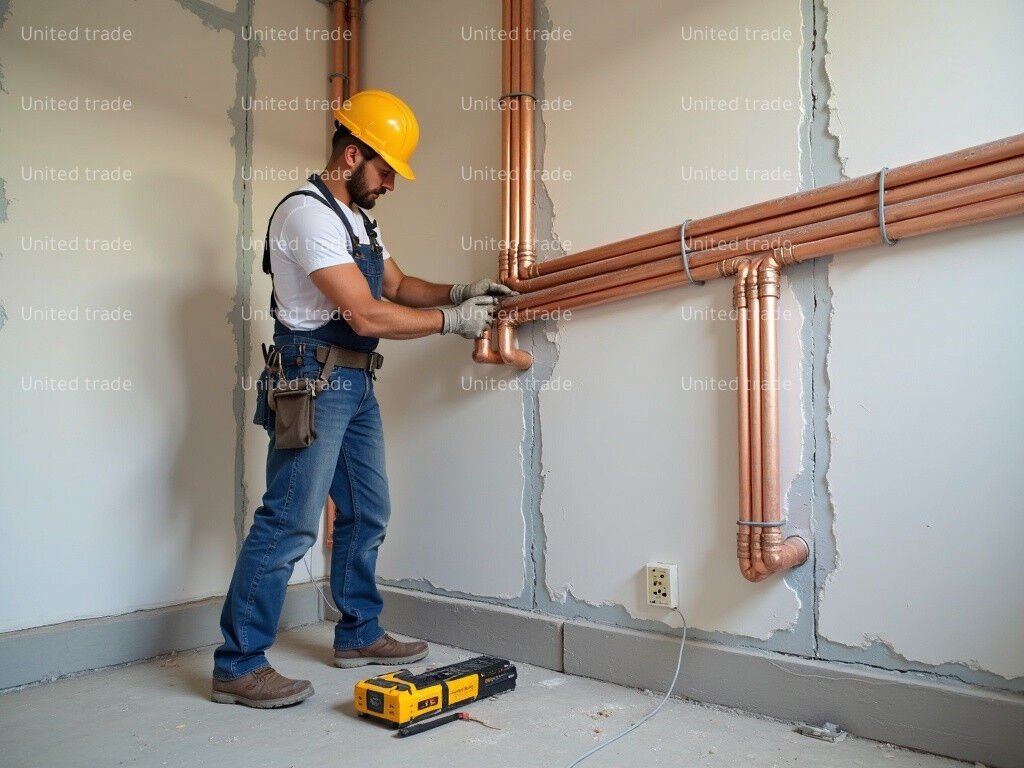
Common mistakes in pre-priming air conditioners that should be avoided
It is a stage Installing air conditioning ducts It is a sensitive process that may have serious consequences if a simple technical error occurs. The most prominent of these errors is not calculating the inclinations of water drainage pipes accurately. There must be a constant and continuous slope towards the drain point to ensure the flow of water and not reflux into the unit, causing water leaks that may damage paints and furniture later. Another mistake is choosing copper pipe diameters that do not match the cooling capacity of the device that is planned to be installed, as this leads to excessive pressure on the “compressor” and significantly reduces the lifespan of the device.
Some people also forget to insulate copper pipes individually. The golden rule is to insulate the intake line and the ejection line completely separately, as touching uninsulated pipes leads to significant heat loss and reduces cooling efficiency, in addition to the possibility of water condensation occurring inside the walls if the insulation is incomplete or made of poor materials. Negligence in the quality of the thermal “spongy” insulation material means moisture leakage and mold formation behind the walls, which is a problem that is difficult to address after completing the final finishing works.
Effect of sharp angles on copper tracks
Non-specialized technicians make the mistake of bending copper pipes at sharp angles (breaking the pipes), which leads to choking the inner diameter of the pipe, and this hinders the movement of the refrigerant “Freon”. This type of damage is not visible after closing the walls, but it clearly appears when the air conditioner is turned on for the first time, as the customer notices a severe weakness in cooling or the production of abnormal sounds as a result of the high gas pressure at the narrowing point.
Criteria for selecting raw materials and materials used in extensions
Don't stop being efficient Installing air conditioning ducts It depends not only on the skill of the labor force, but also on the quality of the raw materials. Here is a list of the most important technical specifications that must be checked before purchasing materials:
- Copper thickness: Copper with a thickness that is proportional to the pressure of the Freon gas used must be used, especially in modern air conditioning systems such as (R410A) that operate at high pressure.
- Quality of thermal insulation: It is preferable to use high-density black rubber insulation, which has a superior ability to resist moisture and high temperature.
- Power cables: Copper cables with cross sections that match the device specifications (cable capacity in amps) must be used, making sure they are fire-resistant and insulated with additional protective layers.
- Quality of drainage pipes: It is preferable to use high-quality UPVC pipes with sufficient rigidity to withstand construction pressures, while ensuring that the connections are sealed with strong adhesives to prevent any future leaks.
Comparison table between common types of air conditioning ducts
| Material type | Features | Disadvantages | Recommended use |
|---|---|---|---|
| Brass lined (original) | High durability, corrosion resistance, long life | High cost, requires professional technician for installation | Permanent residential and commercial buildings |
| Welded copper | Ease of formation in narrow spaces | Weakness in weld areas, possible leakage | Minor modifications or limited locations |
| Reinforced plastic (for water) | Low cost, easy to install | It is not used for Freon at all | Drain condensation water only |
Frequently asked questions about the establishment phase
Is it possible to add air conditioners in a room that has already been finished?
Yes, it is possible, but at a higher cost and in a way that is completely different from hidden incorporation. Extensions are used that are visible (on the wall surface) and covered with plastic (decorative) channels, which is a less aesthetic option compared to pre-establishing inside the walls.
What is the ideal distance between the indoor and outdoor unit?
The distance must be within the limits allowed by the device manufacturer. Very long distances require additional charges of Freon and lead to strain on the device’s pump, while very short distances may cause vibrations and noise resulting from high gas pressure.
Why should a nitrogen pressure test be performed before sealing walls?
Pressure testing is a crucial step to ensure that the pipes are free of any holes or cracks that may have occurred during the laying process or as a result of manufacturing defects in the copper. Nitrogen is pumped at high pressure and meters are monitored for a period of time; If the indicator stabilizes, this means that the extensions are safe and able to withstand continuous work.
Planning electricity paths and power outlets
Connecting the air conditioning unit to the power source is an integral part of the process Installing air conditioning ducts. The electrical layout must be independent for each unit, so that an electrical breaker in the main distribution panel (Circuit Breaker) is allocated for each air conditioner separately. This prevents overloading other electrical circuits and allows power to be disconnected from one appliance for maintenance purposes without affecting the rest of the home's appliances.
You must also take into account the location of the disconnect switch near the outdoor unit, for easy handling in emergency situations or when performing regular maintenance. Make sure that the wires used comply with local standard specifications, and that they pass through protective hoses (conduits) inside the walls to prevent electrical short circuits resulting from moisture or heat generated by the copper adjacent to them.
Coordination between the air conditioning engineer and the electrical engineer at this stage ensures that loads are distributed in a balanced manner, and reduces the risk of burning wires or malfunctioning of devices due to electrical voltage fluctuations, which is an essential point that many overlook when focusing only on copper pipe routes.
It is considered practical Installing air conditioning ducts The most important step in the interior finishing stages of any residential or commercial building to ensure the efficiency of cooling devices later. This article aims to clarify the technical and professional standards that must be followed to implement these extensions in a way that prevents any future operational problems. By understanding the origins of the profession, you will be able to ensure the quality of work and maintain the aesthetic appearance of the walls.
Quick answer
Installing air conditioning ducts It is the process of installing copper extensions and electricity cables inside the walls before the final finishing work to connect the internal and external units. The quality of this process depends on choosing high-quality insulated copper pipes and ensuring proper water drainage to prevent leaks.
The importance of choosing foundation materials carefully
The efficiency of the cooling system depends directly on the quality of the materials used in the foundation inside the walls. Using copper piping of inappropriate thickness may result in dents during bending, which hinders the movement of Freon within the circuit and reduces cooling capacity. It should be noted that insulating pipes using high-quality materials protects the system from water condensation, which causes damage to paints and plaster.
require Air conditioning maintenance Homes are meticulously periodic, starting with checking the efficiency of the compressor and ensuring the cleanliness of the internal filters to ensure the flow of fresh air. Conducting a comprehensive inspection periodically contributes to extending the life of the device and significantly reduces electrical energy consumption.
Standard specifications for copper pipes
Copper pipes must be chosen that conform to international specifications to ensure that they can withstand high gas pressures. Pure copper provides enough flexibility to bend without cracks, making it the perfect choice for sustainable projects. In addition, the thermal insulation (foam) must cover the entire copper path without any breaks.
Moisture accumulation inside the indoor unit due to poor drainage inevitably leads to damage to the walls and the appearance of unpleasant odors over time. So stick to a regular schedule of Air conditioning maintenance The house ensures that the integrity of the drainage paths is checked and cleaned of any deposits that may impede the flow of water and cause unwanted leaks.
Requires operations Dismantling and installing air conditioners Extreme precision in handling copper connections and installing units to ensure that no refrigerant leaks or annoying vibrations occur. Hiring a technician who specializes in disassembling and installing air conditioners ensures that the device’s operational efficiency is maintained and its lifespan is extended, free from damage resulting from poor installation.
Moisture accumulation in these pipes may lead to internal leaks that damage the walls and require... Air conditioning maintenance An expensive periodic procedure to correct the resulting malfunctions. Therefore, ensuring accurate installation from the beginning protects the efficiency of the device and significantly extends its lifespan.
To ensure the best sustained cooling performance, it stands out Carrier air conditioners As an ideal choice that combines advanced technology and manufacturing durability that can withstand harsh operating conditions. Relying on these systems requires similar precision in the establishment stages to ensure exploitation of the cooling efficiency provided by Carrier air conditioners and to avoid any leaks that may affect the quality of the installation.
The importance of choosing is highlighted here Sharp air conditioners It features precision engineering that meets professional construction standards, reducing the possibility of water leaks or noise resulting from poor installation. Relying on this type of device guarantees the user high cooling efficiency while maintaining the integrity of the internal installations in the long term.
It is a process Installing air conditioning ducts The basic foundation for ensuring cooling efficiency and the longevity of the device, as the success of the entire system depends on the accuracy of implementing these extensions in the initial construction phase. Choosing high-quality materials and determining the correct geometric paths prevents annoying Freon leaks and ensures ideal air distribution within architectural spaces.
Air conditioning care does not stop only at the establishment stage, but also extends to the necessity of following precise technical steps during operation Air conditioning transportation To ensure safe disassembly and installation of the device that maintains the efficiency of the cooling cycle. Professional handling of the disassembly and installation details protects the pipes from damage and prevents the leakage of impurities and moisture that may negatively affect the life of the air conditioner.
To achieve the highest levels of cooling efficiency, it stands out Carrier air conditioners As an ideal choice thanks to its advanced technologies that require extreme precision in the establishment steps. Adherence to the correct installation standards ensures the sustainability of the performance of these devices and their superior ability to provide a comfortable and quiet atmosphere in various climatic conditions.
Count Sharp air conditioners It is one of the systems that requires extreme precision in installation to ensure ideal cooling efficiency and avoid water leakage inside the walls. Therefore, adhering to the installation standards of Sharp air conditioners ensures stable performance and a longer lifespan of the device.
Count Sharp air conditioners It is one of the engineering systems that requires extreme precision in construction to ensure efficient cooling and avoid water leaks resulting from moisture accumulations. Therefore, taking care of the extension paths ensures the continued performance of Sharp air conditioners and prevents any damage to the decorations surrounding the air conditioning unit.
Requires operations Dismantling and installing air conditioners Extreme precision in handling the cooling and copper lines to avoid Freon leaks and ensure the efficiency of the device. Therefore, specialized technicians must be used to ensure that disassembly and reinstallation procedures are carried out according to the correct engineering standards that preserve the lifespan of the air conditioner.
In this context, efficiency emerges Carrier air conditioners An ideal choice that combines technological development with high reliability, which reduces the possibility of operating problems resulting from poor installation. Investing in Carrier air conditioners guarantees users superior cooling performance and a precise engineering design that complies with the highest international quality standards.
Requires operations Dismantling and installing air conditioners Extreme precision in handling copper connections and discharging the Freon charge professionally to avoid any future leakage. The use of a specialized technician ensures that the units are reinstalled in a balanced position that prevents vibrations and ensures the maximum cooling efficiency of the device.
Dust accumulation inside air conditioning units leads to clogged drains and damage to the evaporator, requiring action Air conditioning maintenance Periodically to maintain cooling efficiency and extend the life of the device. Paying attention to cleaning filters and checking Freon gas levels ensures that sudden malfunctions are avoided and significantly reduces energy consumption.
require Air conditioning maintenance Homes should be inspected regularly to ensure that water flows without any obstructions into the drains. Neglecting this essential step often leads to the accumulation of sediment and dust, causing water leaks that may damage the walls and furniture surrounding the unit.
require Air conditioning maintenance Houses periodically inspect water drainage paths to ensure that they are free of any blockages that may lead to moisture leaking into the walls. Paying attention to the quality of thermal insulation of the pipes also contributes to increasing the cooling efficiency and significantly extending the life of the device.
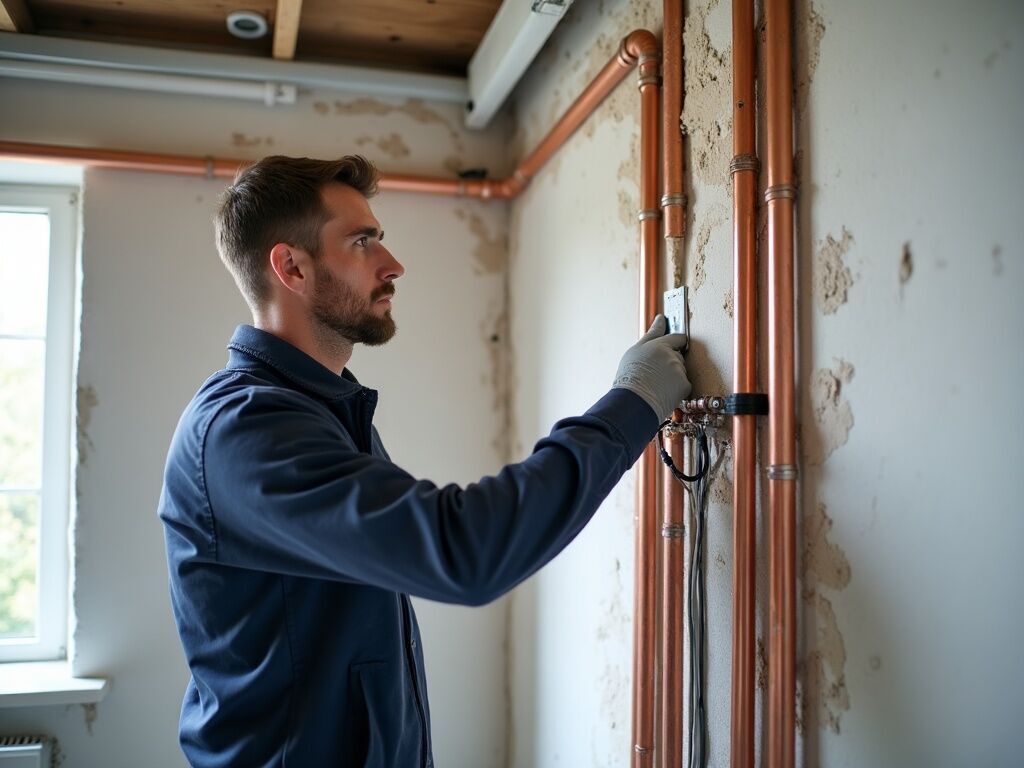
Determine extension paths inside the walls
Air conditioning duct routes should be determined based on the exact location of the indoor unit and outdoor unit to avoid sharp turns. The straight path reduces pressure loss and facilitates regular maintenance in the future if needed. The responsible engineer should consider the distribution of furniture to ensure that extensions do not interfere with door or window openings.
Avoid errors in pipes interfering with other services
It is necessary to maintain a safe distance between air conditioning pipes and electrical or plumbing installations to prevent technical interference. For example, heat generated by electrical cables adjacent to copper pipes may reduce the efficiency of thermal insulation. As a result, it is always preferable to allocate separate paths for each service within the wall partitions.
 Installing air conditioning ducts” loading=”lazy” style=”max-width:100%;height:auto;border-radius:12px”>
Summary table of the stages of establishing air conditioning ducts
| Action stage | Technical details |
|---|---|
| Planning | Determine the locations of the units and the drainage path |
| Crushing | Make a wall incision of appropriate depth and width |
| Extension | Lay copper, insulation and control cables |
| Testing | Pressurize the pipes with nitrogen to ensure there are no leaks |
| Closing | Carefully cover the tracks with cement materials |
Steps to pressure test extensions before closing
The nitrogen pressure testing stage is the crucial step that ensures that there are no pinholes in the foundation path. Nitrogen gas is pumped at a specified pressure for several hours to monitor the stability of the indicator in the pressure gauge. If the indicator drops, this means there is a defect in the welds or a dent in the copper that requires immediate repair.
- Ensure that all connections are professionally welded.
- Use accurate and calibrated measuring meters.
- Leave the pressure on for at least 12 continuous hours.
- Photograph the tracks before covering for future reference.
Common mistakes to avoid during establishment
Many people make the mistake of not providing sufficient slope for water drainage pipes, which leads to water backing up into the room. Also, using electrical cables that do not match the electrical capacity of the device may cause risks of burning or damage to the control panel. Therefore, you should review the device catalog before purchasing power cables to ensure that the diameter (cross-sectional area) matches the required current.
The effect of sharp angles on the Freon cycle
Bending pipes at sharp angles chokes the gas path, which puts additional pressure on the air conditioning compressor. Instead, specialized pipe benders should be used that ensure a smooth bend. Doing this procedure protects the device from sudden malfunctions and significantly extends its lifespan.
Frequently asked questions
What is the ideal depth to bury air conditioning pipes?
The depth of cracking must be sufficient to cover the pipes and insulate them with a layer of not less than 2 cm of cement mortar. This ensures that the pipes are protected from external pressures without affecting the integrity of the wall.
Can copper pipes be extended under the floor?
It is not preferable to extend air conditioning pipes under the floors due to the difficulty of reaching them in the event of a leak. It is always preferable to make the path through walls or through false ceilings to facilitate maintenance.
Why should separate piping be used for each unit?
Allocating an independent path for each unit to prevent interference in water drainage or electrical contact. It also makes it easier to replace or move the device without affecting other units in the building.
When should air conditioning duct installation work begin?
This stage begins immediately after the completion of the brick work and before starting the plastering work. Early coordination prevents the need for re-plastering after finishing the walls.
How do I ensure that pipes are not damaged during plastering?
Pipe openings should be covered well with plastic covers or strong adhesive tape. It is also preferable to place clear signs on the walls showing the route of copper to alert plastering workers.
Final evaluation of the establishment process
| Standard | Rating |
|---|---|
| Quality of materials | 5/5 |
| Accuracy of tracks | 4.5/5 |
| Pressure test | 5/5 |
| Cost versus quality | 4/5 |
Overall rating: 4.6/5. Your commitment to these steps guarantees you an air conditioning system that will operate efficiently for many years. Start implementing the foundation now by hiring specialized technicians to ensure the best results.
















Community dialogue
0 comments