
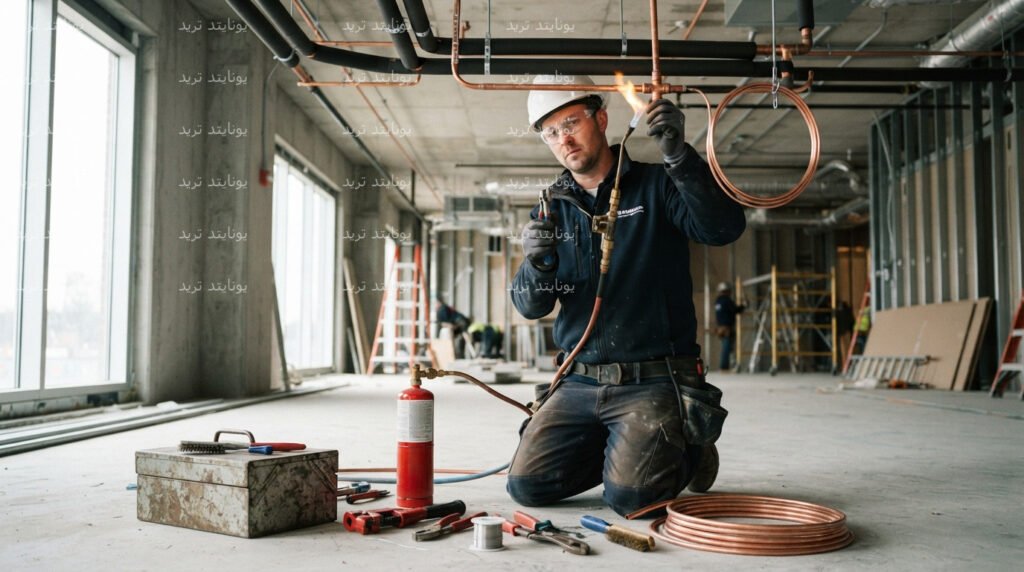
practical Installation of copper pipes It represents the basic foundation for ensuring the efficiency of air conditioning systems and preventing refrigerant gas leakage. The performance of your device depends directly on the quality of the copper tracks, which makes precision in selecting materials and implementing welds a critical factor in continued cooling. This article explains the engineering steps and standards necessary to achieve professional extensions that protect your investment and extend the operational life of the system.
Criteria for selecting appropriate copper pipes
Thick-walled copper pipes are the ideal choice to withstand high Freon gas pressures and prevent corrosion over time. You must always ensure that the internal diameter of the pipes matches the specifications of the device manufacturer, as any discrepancy in diameter leads to disruption of the cooling cycle and increased energy consumption.
❓ The importance of thermal insulation of pipes
Good thermal insulation prevents energy loss and protects pipes from water condensation that may lead to wall damage or rust. We usually use high density polyethylene insulation to cover the push and pull lines separately; This ensures complete thermal efficiency and avoids any direct contact between the two pipes that may reduce the quality of performance.
Steps for professional establishment of copper networks
It requires an operation Installation of copper pipes Careful planning of the paths inside the walls to reduce sharp angles that hinder the movement of gas. The professional technician begins by cleaning the terminals well before starting the connection procedures, as the presence of any impurities or dust inside the paths will inevitably lead to clogging of the expansion valve or damage to the compressor in the long term.
The welds are then inspected using nitrogen pressure to ensure the system is free of any tiny, invisible leaks. This step is very crucial and ensures that refrigerant is not lost after turning on the device, saving future maintenance costs and ensuring stable performance.
Comparison of types of extension joints
Copper delivery methods vary based on location and pressure requirements; Professionals prefer brazing to ensure the durability of a connection that cannot be easily dismantled. The following table summarizes the basic differences between common delivery options on sites:
| Evaluation standard | Brazing 🏆 Editor's choice | Mechanical couplings |
|---|---|---|
| Durability | 9.5/10 ✓ | 7.0/10 ✗ |
| Ease of implementation | 7.5/10 ✓ | 9.0/10 ✓ |
| Pressure resistance | 9.8/10 ✓ | 6.5/10 ✗ |
| Risk of leakage | Very low | Medium |
We always recommend using thermal welding technology in hidden extensions inside walls or false ceilings due to its high reliability. In contrast, mechanical connections may only be acceptable in visible locations that are easily accessible for routine maintenance when needed.
Advantages and disadvantages of copper extensions
Features:
- High resistance to corrosion and rust in various weather conditions.
- Excellent ability to withstand high and low Freon gas temperatures.
- Easy to shape and bend to fit complex extension paths.
- Long life span of more than 15 years when properly implemented.
Disadvantages:
It requires an operation Air conditioning installation Follow precise protocols that begin with determining the optimal location of the indoor unit to ensure ideal air distribution, taking into account the distance from the outdoor unit. Accurately installing the metal holders and evacuating the cooling circuit of air and moisture are essential steps to ensure safe and sustainable operation of the device.
This competence begins early with the stage Installing air conditioning ducts Inside the walls and ceilings according to well-studied engineering plans that ensure the shortest possible path and the fewest number of bends. This procedure requires insulating the intake and exhaust lines with extreme precision to avoid water condensation and protect the structural structure from any potential leaks.
Requires a step Air conditioning installation Taking into account the smallest technical details to ensure complete harmony between the internal and external units and the safety of the Freon cycle. Adherence to sound engineering standards helps avoid premature breakdowns and reduces energy consumption, ensuring the maximum possible cooling efficiency of the space.
The efficiency of the system does not depend only on the quality of the initial installation, but maintaining ideal cooling pressure requires periodic procedures that include checking the integrity of the circuits and piping and thoroughly cleaning the filters. Commitment to a regular schedule of services Air conditioning maintenance The air protects the compressor from thermal stress and ensures continuous flow of cold air with the highest possible operating efficiency.
The professional construction of cooling paths requires adherence to precise standards, from choosing the appropriate copper thickness for pressure, all the way to applying nitrogen welding techniques to prevent internal oxidation. If follow Pipe installation principles Copper ensures a closed and tight cooling cycle is maintained, which extends the life of the system and prevents any future leaks that may hinder efficient performance.
require Air conditioning maintenance Air conditioning periodically checks the cooling paths to ensure that they are free of any cracks that may lead to corrosion of the pipes or wastage of gas. Adhering to a regular preventive maintenance schedule directly contributes to extending the life of the device and maintaining its optimal cooling capacity.
The preliminary stage requires great precision Installing air conditioning ducts Buried, to ensure its protection from structural factors and avoid bottlenecks in the flow of the cooling medium. This extension is carried out according to studied inclinations and short paths that reduce pressure loss, while each line is independently thermally isolated to prevent condensation formation and damage to the walls.
require Air conditioning maintenance Regular periodicity to maintain ideal gas pressure and ensure the heat exchangers are clean of stuck-on dust. Specialized periodic inspection contributes to detecting malfunctions before they escalate, which extends the life of the device and ensures lower energy consumption.
This competence begins early in the stage Installing air conditioning ducts Buried inside walls, it is necessary to determine the paths as short as possible while avoiding sharp bends. This proper planning ensures that the Freon lines are protected from future mechanical damage and facilitates smooth refrigerant flow between the indoor and outdoor units.
- ✓High material cost compared to alternative aluminum options.
- ✓There is an urgent need for highly experienced technicians to carry out welds properly.
- ✓Performance is negatively affected if the quality of external thermal insulation is not taken care of.
Frequently asked questions
❓ How do I ensure the safety of installing copper pipes after completion?
This is confirmed by using a nitrogen test under high pressure for a period of no less than 24 hours to monitor the stability of the indicator. If the pressure drops, this means there is a leak that requires all welds to be re-checked immediately.
These technical standards for pipes integrate with the comprehensive stages required by the process Air conditioning installation Professionally, starting from the balanced installation of the internal and external units to precisely connecting the electrical circuits. Adherence to these integrated procedures contributes to avoiding annoying vibrations and ensuring air flow with the highest possible operational efficiency.
❓ Can used copper pipes be used in new construction?
This is never recommended because used copper may have fine cracks or internal oil deposits that may contaminate the new refrigeration cycle. Using new, clean pipes ensures system efficiency and protects the compressor from damage.
❓ What is the difference between flexible copper and solid copper in extension?
Flexible copper comes in rolls and is easy to bend and shape without the need for connecting angles, while solid copper comes in straight pieces and is used for long, straight runs. The choice of type depends on the desired geometric path design.
❓ Why is it preferable to insulate each pipe separately?
The insulation of each pipe prevents heat transfer between the intake line and the push line, which is essential to prevent unwanted heat exchange that reduces the overall cooling efficiency of the device.
❓ When should copper pipes in air conditioning be replaced?
They must be replaced if repeated leaks are detected that cannot be repaired, or when the capacity of the device is changed with a system that requires different pipe diameters. Noticeable corrosion on the outer surface of the copper is also a clear indication that renovation is necessary.
Our overall evaluation of the process Installation of copper pipes It is 9.4/10 due to its extreme importance in the continuity of air conditioning performance. This option suits owners who are looking for long-term solutions and do not mind investing in high-quality materials. The final result of the decision depends entirely on the skill of the implementing technician, so always choose a work team with a proven track record of professional accuracy and adherence to technical standards.
Remember that investing in good materials and proper foundation will avoid costly breakdowns in the future. Start with confident steps and be sure to follow up regularly with a specialized technician to ensure optimal cooling performance in your home.
















Community dialogue
0 comments