
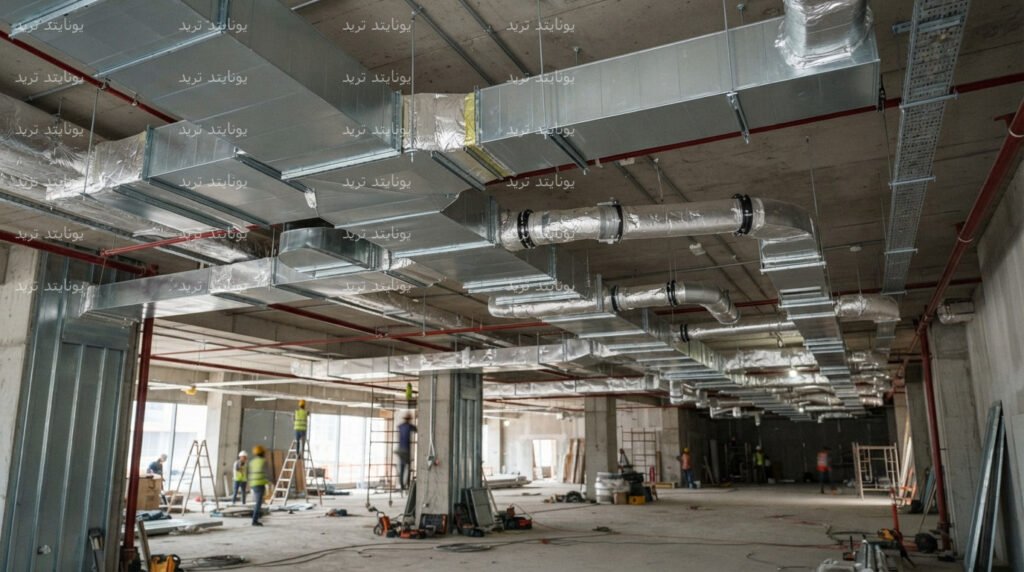
is a process Air conditioning duct extension A critical and indispensable step to ensure strong and sustainable cooling performance in buildings and residential units. The proper engineering construction of these pipes contributes to maintaining the operational life of the device, reducing electrical energy consumption rates, and avoiding Freon gas leakage malfunctions that may appear later. By understanding the precise technical standards followed in this field, owners and engineers alike can ensure the quality of the installations and avoid additional maintenance costs resulting from random installation errors.
Approved technical standards for establishing air conditioning duct extensions
Professional incorporation is process based Air conditioning duct extension To a set of technical controls that ensure the safety of the refrigeration cycle within the system. The work begins by selecting copper pipes with thicknesses and specifications that match the air conditioner's cooling capacity (BTU), where the diameter of the pipe is directly linked to the size of the device to prevent bottlenecks in the gas flow.
❓ Pipe diameters according to the capacity of the air conditioner
The required pipe sizes vary depending on the cooling capacity. 1.5 HP air conditioners typically require a 1/4 inch for liquid line and 3/8 inch for gas line. In contrast, 3-hp air conditioners need larger sizes, such as 3/8 inch for liquid and 5/8 inch for gas, to ensure balanced operating pressures.
❓ The importance of thermal insulation in extensions
All copper pipes must be coated with thermal insulation with a thickness of no less than 9 mm to ensure efficient cooling and prevent condensation. Weak or damaged insulation leads to water dripping into the walls, causing structural damage over time, so experts stress the use of high-quality insulation materials and installing them tightly.
Optimal lengths to ensure stable cooling performance
It is always recommended that the length of copper piping range from 3 to 15 meters to ensure optimal cooling performance [1]. Shortening the pipes less than 3 meters leads to the transmission of noise and annoying vibrations between the indoor and outdoor units, while exceeding 20 meters causes a decrease in cooling efficiency and a significant increase in electrical energy consumption as a result of loss of pressure.
❓ Comparison table of technical standards for foundation Technical standard Ideal foundation - Editor's choice Limited foundation Pipe length 3 - 15 meters ✓ Less than 3 meters ✗ Insulation thickness 9 mm and more ✓ Less than 6 mm ✗ Pressure test Nitrogen (full) ✓ Compressed air ✗ Overall rating 9.8/106.5/10 The above table shows the fundamental difference between foundation that complies with engineering standards and practices that may reduce the lifespan of The virtual device or its operational performance is impaired. Field implementation steps to ensure the quality of the extension. Determine the optimal path for the pipes to reduce sharp bends that may cause copper twisting. Implement the welding process for the connections using high-quality silver alloys to ensure the integrity of the connections. Conduct a pressure test using nitrogen gas to ensure that there are no leaks before closing the walls. Secure the pipes inside the walls with strong clamps to prevent them from moving or vibrating in the future. Be careful not to use regular compressed air in the test, as it contains moisture that may damage the air conditioner compressor. (compressor) after operation, which makes the use of dry nitrogen an indispensable option. Avoid common mistakes in installing air conditioning pipes Most of the recurring air conditioning malfunctions result from simple errors during installation that can be avoided with technical awareness. The most prominent of these mistakes is the use of low-quality copper, or not covering both ends of the pipe to prevent the entry of dirt and dust during the construction and finishing process, which leads to subsequent blockage of the expansion valve or damage to the internal system parts. Advantages and Disadvantages
Features:
- Distributing cooling in a balanced and regular manner within the rooms.
- Maintaining the aesthetic appearance by hiding extensions inside the walls.
- Reducing additional costs resulting from crushing in the future.
Disadvantages:
By understanding the technical challenges associated withAir conditioning installation Compliant with quality standards, professionals can choose ideal ducting paths that ensure smooth refrigerant flow and prevent excessive pressure on the compressor. The precision in this stage prevents the accumulation of moisture or blockage of the drainage paths, which provides an ideal environment that increases the overall cooling efficiency in various climatic conditions.
Correct criteria, start step Establishing cooling pipes By determining precise paths inside walls and ceilings, taking into account tight thermal insulation to prevent water condensation. This early planning ensures smooth refrigerant flow between the indoor and outdoor units, protecting the system from mechanical stress and providing a safe and efficient operating environment.
The next stage requires careful attention Air conditioning installation In its various parts, the internal and external units must be installed in precise alignment and proper air flow is taken into account to ensure the highest cooling efficiency. Adherence to sound technical standards during installation helps avoid annoying vibrations and prevent waste water from leaking into the space.
The success of this establishment is not complete without commitment to periodic and deliberate procedures Air conditioning maintenance The building, where regular checks of the piping network and air filters ensure efficient refrigerant flow and protect the compressor from premature damage. This proactive approach helps in the immediate detection of any corrosion or blockage, providing a safe operating environment that ensures maximum cooling levels and lowest energy consumption.
By understanding the finer technical details, the importance of... Air conditioning maintenance Periodically to ensure the efficiency of the entire system. Regular cleaning of filters and checking refrigerant levels helps enhance overall performance, extending the life of the device and preventing sudden malfunctions that may cost a lot.
Correct criteria, start step Installing air conditioning ducts By determining the shortest and safest paths inside the walls to avoid any sharp bends that may impede the flow of the refrigerant. This procedure also requires choosing the appropriate copper diameters and thermally insulating them with extreme precision to prevent condensation and protect the building structure in the long term.
Once the establishment phase is completed, adherence to regular maintenance programs becomes an absolute necessity to maintain the efficiency of the devices and protect them from premature damage. Regular technical follow-up ensures that any technical problems are detected before they escalate, which enhances the performance of the air conditioner and significantly extends its lifespan. Operations are considered Air conditioning maintenance The most important preventive step to avoid sudden malfunctions and maintain cooling quality.
Correct criteria, start step Installing air conditioning ducts By identifying the shortest and safest paths within walls and ceilings to protect them from damage and mechanical stress. This procedure requires the use of pure, carefully insulated copper electrodes to avoid moisture condensation and ensure smooth refrigerant flow between the indoor and outdoor units. Thus, the cooling system infrastructure is completed according to the highest levels of engineering efficiency and operational safety.
- Higher cost of initial establishment compared to virtual extension.
- It requires high engineering precision in locating paths.
❓ Editor's judgment and final rating
Our rating for this procedure is 9.4/10; Where we see that the pre-establishment of the process Air conditioning duct extension It is the smartest investment for any homeowner seeking to avoid chronic cooling problems and save on their electricity bill in the long run.
The next stage requires starting Air conditioning installation The air is supplied according to precise technical standards to ensure the efficiency of cooling and the safety of electrical and mechanical connections. This includes installing the internal and external units in appropriate places that allow air to flow freely, while tightly connecting the Freon gas and air exhaust pipes to ensure that the system operates at its highest efficiency.
The flow chart above shows the correct path followed by professional technicians, where nitrogen pressure testing is the cut-off point to ensure the integrity of the entire system before final finishing.
Frequently asked questions
❓ How can I be sure of the quality of the copper used in the extension?
It must be ensured that the pipes comply with standard specifications (such as ASTM standards) and are of sufficient thickness to withstand high operating pressures without cracking.
❓ Is it possible to extend the air conditioning ducts after finishing?
Yes, but this forces you to use external extensions that may be clearly visible, which reduces the aesthetics of the place and requires partial demolition in some cases.
❓ Why is it preferable to use nitrogen in testing air conditioning pipes?
Nitrogen is an inert and completely dry gas. It ensures that there is no moisture inside the pipes and helps detect the smallest leaks with greater accuracy than compressed air.
❓ What happens if the pipes are too long?
Excessive piping length increases the pressure on the compressor, which reduces cooling efficiency and leads to significantly higher electricity consumption.
❓ When should old air conditioning pipes be replaced?
It must be replaced when frequent leaks occur, or when the capacity of the air conditioner is changed to a larger type, or if the copper shows severe signs of oxidation and corrosion.
It remains practical Air conditioning duct extension The basic foundation of any successful and stable cooling system. Make sure to hire specialized technicians and adhere to technical standards to ensure the comfort of your home during hot summers.
















Community dialogue
0 comments