
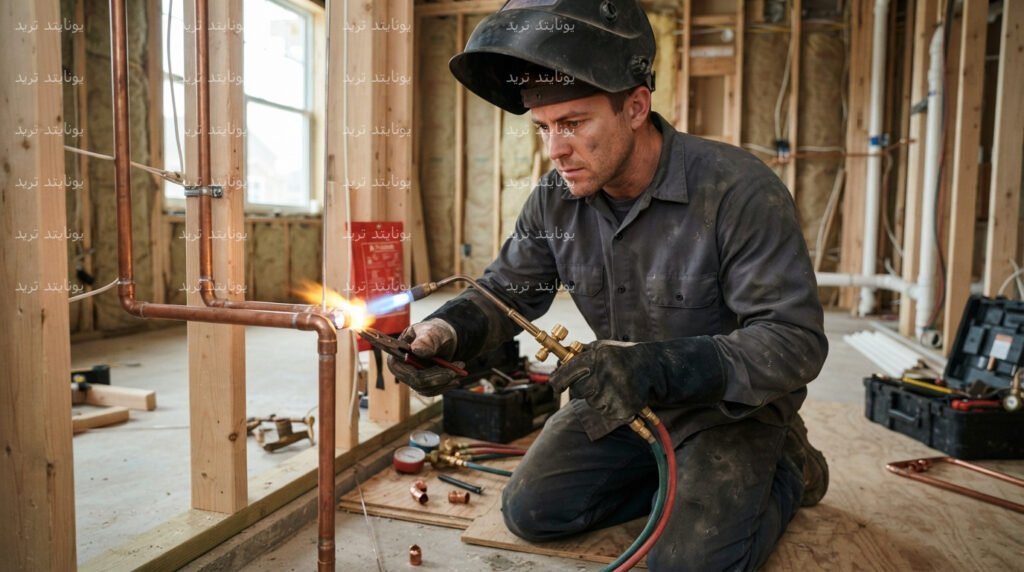
It counts Installation of copper pipes The basic foundation for ensuring the efficiency of cooling systems and ensuring their operation for the longest possible period without technical failures. Selection of pipes with international specifications and their precise installation prevent refrigerant gas leaks, keeping system pressure stable and reducing electricity consumption by up to 30%. In this article, we reveal the secrets of professional foundation and the best technical practices that certified technicians follow to ensure sustainable performance.
Why is choosing the type of copper a crucial step?
He depends Installation of copper pipes We use materials that meet international standards such as ASTM B280 to ensure that they can withstand high pressures. High-quality copper pipes withstand operating pressures of up to 700 PSI, which protects the system from explosions or micro-cracks resulting from pressure fluctuations within the cooling circuit.
❓ Approved pipe specifications
Certified pipes such as JIS-H3300 provide high copper purity, reducing the occurrence of internal corrosion. The use of thin or uncertified tubes inevitably leads to poor heat transfer, which stresses the compressor and significantly reduces its lifespan.
The effect of thermal insulation on energy consumption
Effective thermal insulation of pipes is a technical necessity that prevents loss of cold and prevents condensation. Using a thermal insulator with a thickness of no less than 3/8 inch ensures that heat is not exchanged with the external environment, and protects the walls from moisture resulting from the sweating of pipes.
❓ The importance of insulation in maintaining Freon pressure
When piping is properly insulated, the refrigerant remains in its ideal state within the circuit, increasing performance efficiency. This procedure reduces heat loss and contributes directly to saving energy consumption by between 20% and 30%, which are numbers documented in international maintenance standards.
Professional welding and pipe connection
The process of brazing pipes requires great skill in cleaning the surface and removing burrs to ensure tight connections that do not allow any leakage. You should avoid performing any welding inside walls or hidden places to ensure ease of maintenance in the future in the event of any emergency defect.
This diagram shows the basic steps to ensure a quality installation. Adhering to this sequence reduces the possibility of any human errors during installation.
Determine the sizes based on the air conditioning capacity
The choice of pipe diameter depends directly on the cooling capacity of the device in refrigeration tons. Improper sizing installation (such as using 1/4 inch instead of 3/8 inch in a certain path) leads to compressor fatigue and reduced room cooling efficiency.
| Standard | Approved pipes | Economic option |
|---|---|---|
| Conformity to specifications | ✓ (ASTM B280) | ✕ |
| Pressure tolerance (700 PSI) | ✓ | ✕ |
| Ease of formation | ✓ | ✕ |
| Overall evaluation | 9.8/10 (Editor's Choice) | ★ 5.2/10 |
Advantages and disadvantages
Features:
It requires an operation Air conditioning installation High technical skill ensures regular air distribution and avoids annoying noise during operation. Success in this path is based on choosing the strategic location of the indoor unit away from heat sources, while carefully securing the electrical connections to ensure safe and sustainable operation.
- Ensuring high efficiency in transporting cooling inside the house.
- Significantly reduce electrical energy consumption.
- Longevity of the system when correct installation standards are followed.
Disadvantages:
This process begins with the implementation of a phase Installing air conditioning ducts According to well-studied geometric dimensions, it ensures the shortest and most streamlined path for the refrigerant flow. Proper establishment requires carefully burying the lines inside the walls and completely thermally insulating them to avoid condensation and protect the network from future structural shocks.
The efficiency of the devices does not stop only at the installation stage, but also extends to comprehensive periodic follow-up that protects the internal components from corrosion and the accumulation of impurities. The procedure Regular air conditioning maintenance Ensures pure airflow and detects early abnormalities in the Freon cycle, extending the life of the device and maintaining peak cooling performance.
The professional installation of copper ducts requires high engineering precision in selecting paths and insulating the pipes to prevent energy loss, ensuring maximum cooling efficiency in various climatic conditions. The mastery Secrets of establishment and perfect performance It represents the real guarantee to avoid future malfunctions and reduce operational costs in the long term.
A professional incorporation process requires a commitment toPipe installation principles Copper by choosing the appropriate diameters and using precise welding techniques that prevent any minute leaks. The application of these technical standards ensures that the refrigerant flows smoothly within the closed cycle, which protects the system from operational stress and increases cooling efficiency in the harshest climatic conditions.
This ideal efficiency starts from one stage Installing air conditioning ducts Cooling is carried out in a thoughtful, geometric manner within the walls and floors before the final finishing. This pre-preparation ensures that the shortest and most streamlined refrigerant flow paths are selected, protecting the network from mechanical wear and preventing sudden bends that may impede future gas movement.
Besides the quality of construction, it stands out Air conditioning maintenance Periodically as a first line of defense that extends the life of the device and ensures its ideal performance in the harshest temperature conditions. Relying on a comprehensive routine inspection contributes to the early detection of any imbalances in the flow of Freon, which saves you expensive repair costs and ensures that your home remains a comfortable and refreshing oasis.
Refrigeration systems require cycling Air conditioning maintenance Periodic for early detection of any wear in connections or blockage in filters, which protects the compressor from excessive operational stress. Adhering to this preventative schedule ensures regular flow of fresh air and significantly extends the life of the device.
requires Air conditioning installation With high efficiency, taking into account proper air distribution and choosing the ideal locations for the internal and external units to avoid any thermal rebound. Hardware balancing and secure mounting eliminate annoying vibrations, providing an ideal operating environment that ensures maximum cooling performance and longest system life.
This efficiency begins with precise steps that ensure... Establishing cooling pipes According to the correct engineering standards, taking into account tight thermal insulation to avoid condensation and energy loss. This path also requires determining pipe diameters and bend angles with extreme precision, to avoid any mechanical stress that may affect the flow of the refrigerant compound and the safety of the compressor in the long term.
It requires an operation Air conditioning installation Following precise engineering standards, starting with choosing the ideal location for the indoor and outdoor units to ensure smooth air distribution. It also includes adjusting electrical connections and tightly insulating the cooling lines to avoid power loss and protect the compressor from premature damage.
- The cost of certified raw materials is higher compared to commercial options.
- It requires high welding skill that non-specialized workers do not possess.
- It takes longer to establish to ensure the quality of the connections.
❓ Editor's judgment and final rating
Overall rating is 9.5/10. This is the ideal option for anyone looking to establish a sustainable air conditioning system that will prevent future breakdowns. The final results depend on choosing a specialized technician who adheres to engineering standards and does not limit himself to the superficial foundation.
Frequently asked questions
❓ What is the ideal thickness for copper pipe insulation?
The thickness of the thermal insulation must not be less than 3/8 inch to prevent condensation and ensure no loss of coolness, which is the basic criterion for professional installation of copper pipes.
❓ Is it possible to weld pipes inside the wall?
It is strictly prohibited to perform any welding inside the walls to avoid the risk of future refrigerant gas leaks that may require breaking down the walls for maintenance.
❓ How does pipe diameter affect the compressor?
Choosing a pipe size that is not compatible with the compressor capacity increases operating pressure, which stresses the equipment, reduces its life and impairs cooling.
❓ What is the difference in performance between certified and uncertified copper?
Certified copper withstands pressures up to 700 PSI and prevents internal corrosion, while non-certified pipes may burst or leak under high pressure.
❓ Does installing copper pipes incorrectly increase your electricity bill?
Yes, incorrect installation or poor insulation reduces the efficiency of the system, forcing the compressor to run for longer periods, thus increasing electricity consumption by up to 30%.
Investing in quality materials and installation skill ensures long-lasting comfort. Do not hesitate to request the services of certified technicians to ensure the implementation of work Installation of copper pipes According to approved engineering principles.
















Community dialogue
0 comments