
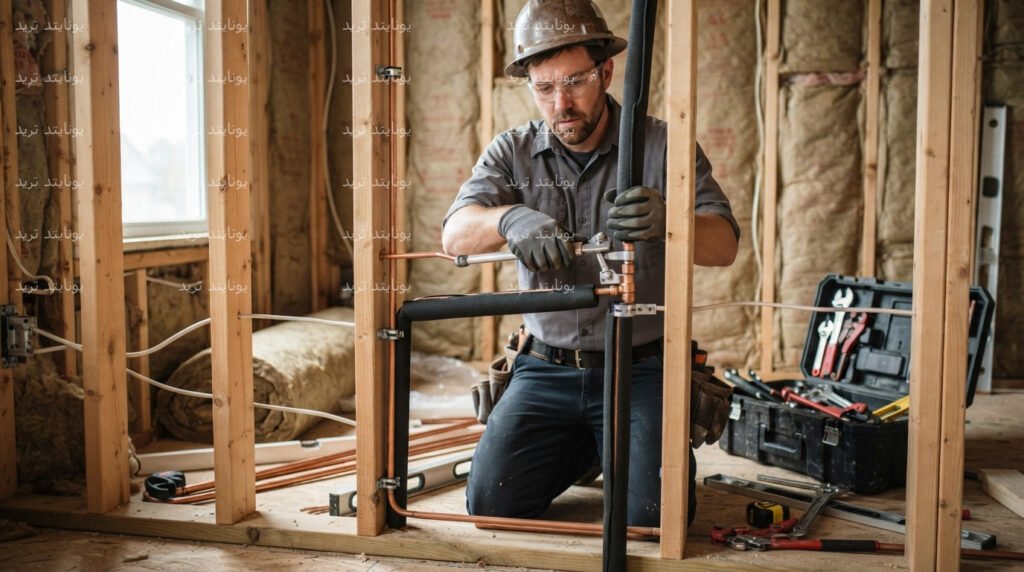
practical Establishing pipes Air conditioning It is the first technical step that ensures the efficient performance of air conditioning devices in real estate and establishments in the long term. This essential measure is the basis for avoiding Freon leakage problems, reducing excessive energy consumption, and protecting the structural structure from moisture damage resulting from thermal condensation. Through careful engineering planning of copper piping paths and drainage inclinations, a professional technician ensures a longer compressor life and optimal thermal comfort, making proper installation a technical investment that saves the owner expensive regular maintenance costs in the future.
Technical standards for selecting and extending copper pipes
Process based Establishing pipes Air conditioning To use copper pipes with precise diameters that are directly proportional to the air conditioning capacity (BTU) to ensure the flow of coolant without stress. It is technically prohibited to have any welds inside the wall at all, because the weld forms a weak point that is susceptible to leaking over time due to the expansion and contraction of the pipes.
❓ Standard specifications for diameters and thermal insulation
Brass diameters (1/4, 3/8, 1/2, 5/8 inch) should be selected based on the technical specifications of the device. In addition, thermal insulation of copper pipes with rubber or foam with a thickness of no less than 3/8 to 1/2 inch is a basic requirement to prevent condensation. Weak or torn insulation increases electricity consumption by 25% to 40%, which burdens the compressor due to the loss of cold as it travels to the air conditioner.
Air conditioning water drainage strategies to ensure flow
Establishing the air conditioning drain requires precision in determining the angle of inclination to ensure the flow of water and prevent its accumulation inside the drain pipes. Clogged drains often lead to water leaking into rooms, so a separate path must be allocated for each air conditioner and not randomly connected between the paths of several devices.
These steps illustrate the methodology used in implementing the foundation, as the technician begins with the geometric planning of the path and then moves to the isolation and compression stage to ensure the integrity of the connections before final closure.
Summary table of technical specifications for establishing air conditioning ducts
| Establishment clause | Technical specifications 🏆 Editor's choice |
|---|---|
| Copper insulation (thickness) | 3/8 to 1/2 inch ✓ |
| Nitrogen test | Mandatory before finishing ✓ |
| Welding inside the wall | ✗ Technically prohibited |
| Drainage inclination angle | Accurate inclination degree ✓ |
| Technical evaluation | 9.8/10 ✓ |
The importance of testing nitrogen pressure before shutting down
Pressure testing using nitrogen gas is a crucial procedure to verify the integrity of all connections before permanently sealing the walls. Nitrogen detects any minute leaks in the external welds made outside the wall, which prevents the occurrence of technical problems after the finishing and painting works are completed.
❓ Advantages and disadvantages
Features:
- Increase cooling efficiency and reduce annual electricity consumption.
- Significantly extends the life of the compressor.
- Protecting walls and paints from moisture damage and water leakage.
- Preventing the leakage of Freon gas inside closed circuits.
Disadvantages:
It requires a stage Air conditioning installation Extreme precision in choosing the correct geometric paths, while ensuring that copper pipes are professionally thermally insulated to prevent condensation. It is also necessary to ensure that the appropriate inclinations of the water drainage lines are set to ensure smooth moisture removal, which prevents any leaks inside the walls.
- Higher establishment cost compared to traditional surface extensions.
- It requires specialized technical labor and precise measuring equipment.
- Difficulty in making major modifications after completion of structural closure.
Frequently asked questions
❓ Why is it important to install air conditioning ducts before finishing?
Pre-priming prevents the leakage of Freon, protects the walls from moisture resulting from condensation, and ensures ideal air distribution without the need for external extensions that distort the overall appearance.
With the completion of the installation and establishment stages, the urgent need arises Regular air conditioning maintenance To maintain cooling accuracy and continuity of desired operational efficiency. Regular inspection of mechanical and electrical parts helps in early detection of any dip in coolant levels or clogged drains before they become worse.
The accuracy of the installation depends on choosing ideal paths that ensure smooth movement of Freon and avoiding sharp bends that may hinder cooling efficiency, with the necessity of insulating the pipes with high-quality thermal materials to prevent condensation. The commitment toPrinciples of installing air conditioning piping The correct one represents the protective shield that ensures the safety of installations inside the walls and prevents sudden operating malfunctions in the future.
Implementing these extensions requires avoiding common bending errors and using copper with a thickness that does not meet specifications, which quickly leads to blockage of the Freon path or the occurrence of hidden leaks that are difficult to correct later. So the focus is on Installing air conditioning ducts With engineering precision, it protects the facility from crushing damage and expensive maintenance costs after the finishing work is completed.
However, the stability of the system is not complete once it is properly established. Rather, maintaining this efficiency requires the application of programs Regular air conditioning maintenance For early detection of any decline in the cooling level or blockage in the drains. This constant check ensures that filters are cleaned and gas pressures are calibrated, extending the life of the units and preventing sudden breakdowns resulting from constant operational stress.
After the extension and structural preparation stages are completed, the next stage requires the implementation of steps Air conditioning installation With extreme precision, including installing the internal and external units and adjusting the water drainage paths. Adherence to engineering standards at this stage helps avoid annoying vibrations and ensure balanced airflow with maximum cooling levels.
With the completion of the proper installation stages, there is an urgent need to implement a systematic plan that includes: Regular air conditioning maintenance To monitor the performance of mechanical and electrical parts. This continuous inspection helps in the early detection of any clogged drain lines or a drop in gas pressure before malfunctions worsen and affect the overall cooling efficiency.
After completing the preparation of the copper extensions, there comes a stage Air conditioning installation According to sound engineering standards to ensure that the internal and external units are installed with utmost precision. This step ensures that the cooling lines are tightly connected and air is evacuated from the circuit, giving you optimal airflow and safe operation that extends the life of the device.
❓ Why is it prohibited to perform in-wall welding in copper pipes?
The welds inside the wall are susceptible to leakage as a result of cooling pressures and thermal expansion of the pipes, which makes accessing them for repair impossible without cracking the walls later.
❓ How does poor thermal insulation affect electricity consumption?
Poor insulation causes a loss of cold, which forces the compressor to work for longer periods to reach the required temperature, and this raises the electricity bill by up to 40%.
❓ Is nitrogen pressure testing optional or mandatory?
It is mandatory in engineering standards to ensure the safety of pipes, as it provides verification that they are free of any leaks before closing the paths with cement or gypsum permanently.
❓ What slope is required for the air conditioner drain to prevent clogging?
There must be sufficient slope at a precise angle to ensure smooth movement of water by gravity, which prevents the accumulation of stagnant water inside the pipes and prevents the appearance of unpleasant odors.
Professional Foundation deserves a rating of 9.8/10 due to its direct impact on device performance and energy saving. This option is particularly suitable for homeowners in the construction or renovation phase, where saving on the cost of construction is now a technical risk that is not recommended at all, because the end result is an air conditioning system that operates smoothly without frequent maintenance or annoying leaks.
Always remember that quality Establishing pipes Air conditioning It depends on the accuracy of implementation and the use of original insulation materials. Start with the right engineering planning with a professional, and you'll ensure sustainable cooling comfort for years to come.
















Community dialogue
0 comments