
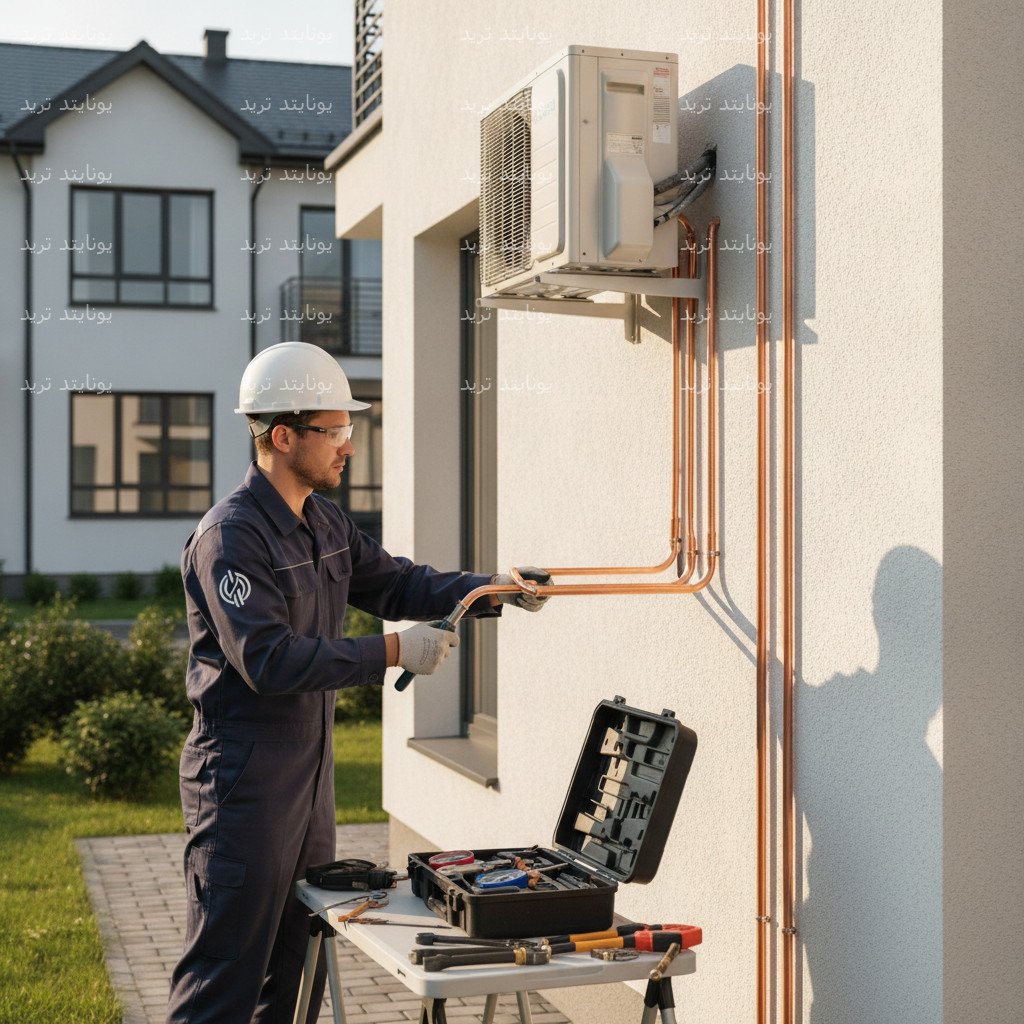
It is considered practical Air conditioning duct extension The most critical step in setting up home and commercial refrigeration systems, the exact route and quality of materials used directly affect compressor performance and equipment life. Adherence to precise technical standards during installation contributes to preventing loss of coolness, which leads to a reduction in electricity consumption by between 20% and 40% thanks to effective thermal insulation. In this article, the reader will learn about the correct engineering principles to ensure optimal refrigerant flow and avoid common technical malfunctions.
Engineering assets for selecting and extending pipes
The diameter of the copper pipes must be chosen based on the cooling capacity of the air conditioner to ensure smooth flow of Freon gas without any excessive pressure. Relying on inappropriate sizes directly leads to poor cooling efficiency and increased operational noise, and may cause damage to the compressor in the long run.
❓ Determine the sizes according to the capacity of the air conditioner
The needs of air conditioning devices vary in terms of the diameter of the pipes and according to the horsepower of the device. A 1.5 HP air conditioner typically uses 1/4 inch pipes for the liquid line and 3/8 inch pipes for the gas line. In contrast, a 3-hp air conditioner requires piping that is 3/8 inch for liquid and 5/8 inch for gas, to maintain balanced pressure within the cycle.
❓ Thermal insulation and installation controls
Thermal insulation is a vital element in Air conditioning duct extension To ensure that temperatures are maintained inside the pipes. Rubber insulation with a thickness of at least 9 mm must be used to ensure efficient insulation. In addition, nitrogen pressure testing is a mandatory step to ensure that all connections are free from any minute leaks before final commissioning of the device.
Comparison between extension materials and technical specifications
The quality of the materials used in the extension directly affects the longevity of the entire cooling system. The following table shows the basic criteria for selecting components and ensuring high performance:
| Technical standard | High quality copper pipes (🏆 Editor's choice) | Economical copper pipes |
|---|---|---|
| Wall thickness | ✓ Conforms to international specifications | ✗ Less than approved |
| Flexibility when bending | ✓ High (no cracks) | ✗ Prone to warping |
| Thermal insulation efficiency | ✓ 9.5/10 | ✗ 6.0/10 |
| Pressure resistance | ✓ 9.8/10 | ✗ 7.2/10 |
| Overall evaluation | ★ 9.7/10 | ★ 6.5/10 |
Steps to implement the extension in a professional manner
Professional technicians follow a specific methodology when starting out Air conditioning duct extension To ensure that no sharp bends occur that may impede the flow of refrigerant. Start by selecting the shortest, straightest path between the indoor and outdoor unit to reduce piping length and avoid pressure loss.
The process involves the use of specialized tools to ensure that no cracks occur in the copper. The use of “bending zippers” is necessary to maintain the inner diameter of the pipes at the rotation angles, which ensures a smooth flow of Freon without any technical obstacles.
❓ Common mistakes during construction: Neglecting complete pipe insulation, which causes water condensation and damage to the walls. Using smaller pipe sizes than recommended in the manufacturer’s catalog. Sharp bending of pipes without using the correct bending tools. Not performing a pressure test before completing the finishing work. Analyzing the efficiency of the cooling system’s performance after extension. Evaluating the performance of the cooling system after completing the extension of the air conditioning ducts is crucial to ensuring continued efficiency. Modern statistics help determine indicators of operational success and energy saving based on the quality of the foundation followed. Electricity saving35▲ 5%Maximum savings rateFreon pressure95▲ 2%Pressure uniformityCooling response92▲3%Cooling speedSpan life88▲4%Expected device dataThe data indicate that adherence to technical standards increases the efficiency of the air conditioner’s response by up to 92%. It also reduces operational stress on internal components, which reflects positively on the monthly consumption bill. Frequently Asked Questions How can I ensure the quality of the air conditioning ductwork in my home?
The quality is verified through a nitrogen pressure test to ensure that there are no leaks, and to ensure that the entire length of the pipes is covered with thermal insulation of no less than 9 mm.
Once the extensions are completed, the stretching phase begins Air conditioning installation Actual, which requires high precision in installing the internal and external units to ensure the balance of the system and prevent annoying vibrations. This proper installation ensures a balanced distribution of the refrigerant gas, which increases the efficiency of heat exchange and protects the device from sudden malfunctions in the long term.
Requires implementation of Installing air conditioning ducts An engineering layout ensures that the pipes are insulated with the finest materials and avoids sharp bends that may impede the flow of the refrigerant. Pre-inspection of the wall and floor grid also contributes to safely installing the tracks and protecting them from future damage during finishing work.
The next stage immediately requires the application of clear engineering foundations Air conditioning installation Air supply to ensure that the indoor and outdoor units are installed completely evenly. This secure fit ensures smooth airflow and prevents mechanical vibrations that could damage the cooling paths and reduce overall cooling efficiency.
However, the stability of this system is not complete without applying periodic measures that include: Air conditioning maintenance Check air and refrigerant pressure and filter cleanliness regularly. These preventive steps protect the pipe paths from internal damage and ensure that the compressor operates at the highest possible operational efficiency.
Reaching the highest operational efficiency requires applying foundations Professional extension of air conditioning ducts With extreme precision, starting with choosing the appropriate copper diameters and tightly thermally insulating them to avoid condensation and wasted energy. Adjusting bend angles and avoiding bottlenecks in the refrigerant path also contribute to protecting the compressor from stress and ensuring a smooth and sustainable flow of cold air.
Once you complete the establishment phase, you stand out Air conditioning maintenance As a basic pillar to ensure sustainable operational efficiency and prevent sudden malfunctions. Regularly checking the filters and cleaning the outdoor units helps maintain ideal air flow, which extends the life of the device and reduces the costs of major repairs.
The work requires the implementation of a stage Establishing copper pipes According to studied diameters and tight thermal insulation that prevents moisture condensation inside the walls and false ceilings. Taking into account sound engineering tendencies and avoiding sharp bends also ensures that the refrigerant flows very efficiently, which maintains the stability of the system’s operating pressure in the long term.
Besides good foundation, it stands out Air conditioning maintenance Periodically as an imperative necessity to maintain the efficiency of the system and ensure its continuity of operation without sudden malfunctions. Regular technical inspection and cleaning of filters effectively contribute to improving air quality and saving energy, extending the operational life of the device and reducing costly repair costs.
To ensure this operational efficiency, a stage is required Installing air conditioning ducts Pre-engineering planning before finishing work, which includes determining the duct paths, choosing appropriate copper diameters, and insulating it precisely to protect it from moisture and damage. Implementing these initial preparations in accordance with proper standards will avoid any future cracking of the building and ensure the smooth and safe flow of the refrigerant.
❓ Why does the length of the pipe path cause poor cooling?
Exceeding the permissible path length leads to an increase in the load on the compressor and the loss of part of the coolness of the gas before it reaches the indoor unit, which reduces refrigeration efficiency.
This stage is completed by moving on to steps Air conditioning installation According to engineering principles that ensure the secure installation of the internal and external units and the adjustment of air flow balances. This requires high skill in connecting the copper connections and insulating them precisely to avoid any leakage that may negatively affect the efficiency of the entire cooling cycle.
❓ Can used pipes be used to extend air conditioning ducts?
This is not recommended at all because used pipes may contain internal impurities or micro-cracks resulting from disassembly and installation, which harms the quality of the air conditioner compressor.
❓ What is the difference between copper pipes and aluminum pipes in air conditioning?
Copper pipes are superior to aluminum in their ability to withstand high gas pressures and their flexibility in formation, making them the safest and most sustainable choice for cooling systems.
❓ When should regular maintenance be performed on air conditioning ducts?
It is preferable to check the thermal insulation and condition of connections once a year before the beginning of the summer to ensure that the pipes are not affected by external weather factors.
❓ What is the best way to avoid damage to air conditioning ducts during installation?
Using specialized bending tools and ensuring that the pipes do not intersect with hot electrical wires helps protect the pipes and ensure the safety of the system.
❓ How does the poor quality of the extension affect electricity consumption?
Poor expansion leads to cold leakage or obstruction of gas movement, forcing the compressor to work for longer periods and with double effort, which significantly increases electricity consumption.
Based on the mentioned technical standards for the process Air conditioning duct extensionWe give this trend an overall rating of 9.4/10. This option suits owners looking for long-term sustainability and real savings on their electricity bills. The final result of the decision depends entirely on the selection of original copper materials and the use of professional technicians who adhere to the necessary pressure tests before operation.
Investing in quality foundation from the beginning saves you from costly future maintenance costs. Start now by choosing materials that meet technical specifications to ensure a comfortable summer and highly efficient cooling.
















Community dialogue
0 comments