
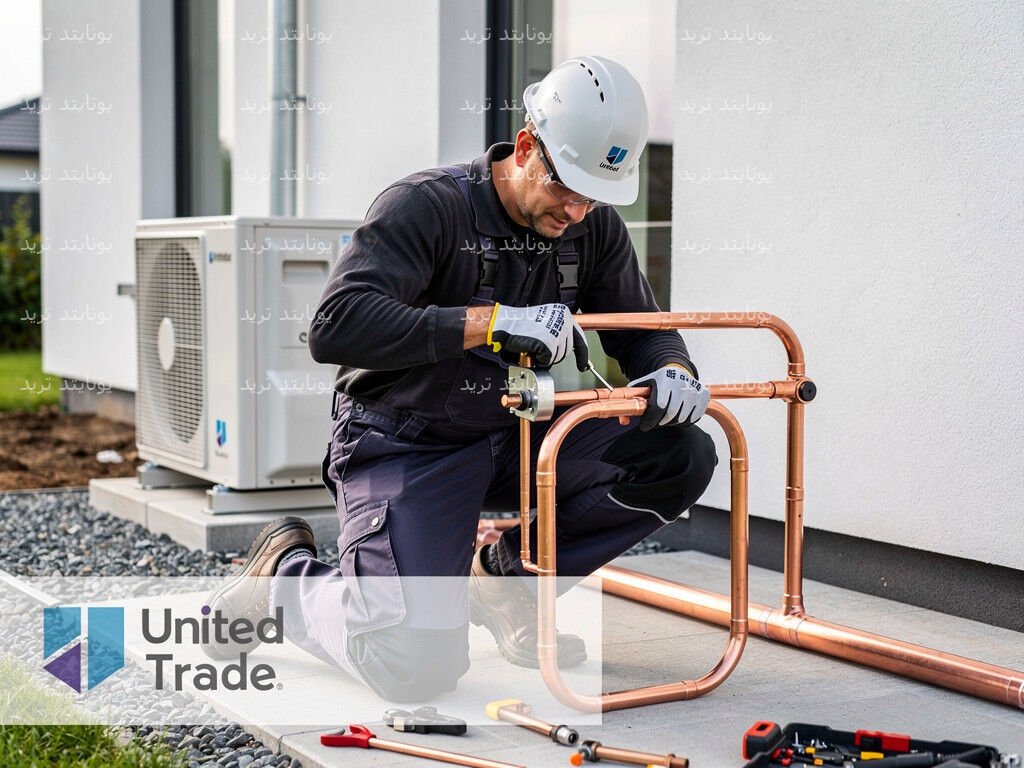
The process of extending A/C pipes requires strict application precision to ensure cooling efficiency and to protect the compressor from premature damage, as any fault in pipe diameters or thermal insulation adversely affects electricity consumption. This field guide provides a compendium of technical experiences to help you choose materials that meet standard specifications, and avoid common installation errors within residential and commercial buildings with ease.
Quick answer: What are the basic rules for the extension of air conditioning pipes?
Extension of A/C piping is the installation of insulated copper lines to transport the refrigerant compound between the indoor and outdoor units with short and calculated paths. For its success, it is required to use pure copper pipes to a degree of not less than 99.9%, and to apply separate rubber thermal insulation for each line, with dry nitrogen pressure tests to avoid leaks before operation.
How to choose the right A/C pipe extension materials?
The choice of cooling pipes is based on the wall thickness and purity of copper to withstand high gas pressures, especially with the spread of Freon R410A and Freon R32. Moreover, the use of poor qualities exposes the system to microscopic holes that lead to the leakage of gas and the difficulty of processing it later within the walls.
Standard Specification for Refrigeration Copper
Certified copper for cooling: It is solid pipes or coils that are cold drawn, deflated and sealed at their ends. It is always preferable to resort to pipes classified according to the American Society for Testing and Materials (ASTM B280). In contrast, low-thickness sanitary water pipes are prohibited due to their inability to withstand high cooling cycle pressure.
Types of Approved Thermal Insulators
Elastomeric Foam insulation provides superior protection against condensation and heat energy loss. Therefore, a minimum insulation thickness of 13 mm in hot areas should be selected, with the insulation covered with UV resistant tapes in the exposed external paths to prevent their degradation over time.
Technical comparison between types of copper used in air conditioning
The following classification table helps technicians and property owners determine the appropriate pipe according to the nature of the building and the needs of the available cooling network:
| Type | Relative thickness | Most prominent uses | Operational Benefits |
|---|---|---|---|
| Type K | Ultra-thick wall | Buried tracks and industrial areas | Exceptional resistance to corrosion and very high pressures |
| Type L | Medium wall thickness | General Residential and Commercial Installations | Excellent balance between flexibility and mechanical durability |
| Type M | Relatively thin wall | Paths not intended for Freon | Not suitable for Freon networks and used for plumbing only |
Practical steps to accurately implement cooling pathways
Establishment begins by determining the shortest possible path between the indoor and outdoor units to relieve the mechanical load on the gas compressor. In addition, sharp 90 degree angles should be avoided by relying on specialized hand crimps that prevent the pipe from being choked or cracked.
- Cleaning structural openings and passing plastic sleeves to protect pipes from contact with reinforced concrete.
- Withdraw the gaseous suction line and the liquid-liquid line after measuring the required lengths without removing the protective covers to prevent dust from entering.
- Install thermal insulation on each line separately and avoid placing the two lines inside one insulating hose to prevent heat transfer between them.
- Install pipes with rubber-lined supports at regular distances not exceeding 1.5 meters to absorb vibrations during operation.
- Apply silver soldering using inert nitrogen gas inside the pipes to protect them from the formation of black internal copper oxide.
Determinants of lengths and paths of cooling lines
Longitudinal distances and vertical heights directly affect the speed at which the lubricating oil returns to the compressor, forcing manufacturers' recommendations to be strictly adhered to. It should be noted that exceeding the maximum recommended length leads to a sharp decrease in cooling capacity and a significant increase in electricity consumption.
Oil Trap: It is a U-shaped bend made in the vertical suction line every 5 to 6 meters to facilitate the return of oil to the compressor. These traps help collect the rising oil droplets and push them back due to the gas velocity towards the engine. As a result, the engine remains permanently lubricated and is less likely to burn out due to a lack of constant mechanical lubrication.
Testing and handing over procedures after extension of A/C pipes
No track preparation is complete without applying an engineering testing protocol to verify the integrity of the welds and fasteners against any manufacturing defects. For example, many workers make the mistake of testing lines directly with Freon, which wastes gas and harms the environment.
The crucial stage begins after the extensions are completed in implementation Air conditioning installation According to engineering standards that ensure secure installation of the internal and external units and take into account water drainage tendencies. This includes performing vacuum tests to ensure that the circuit is completely free of moisture and impurities before opening the refrigerant valves to ensure quiet operation and balanced performance. These precise steps prevent leaks and extend the life of the device with the highest possible operating efficiency.
This vital stage begins with adjusting the burial paths and precisely determining the bending angles to avoid suffocation of the cooling medium, as it represents Establishing copper pipes Under the architectural finishes is the basic foundation on which the performance of the entire system is built. It is also necessary to pressurize the network with nitrogen and test it early to verify that it is free of any hidden leaks before construction work is completed.
It is a stage Air conditioning installation Correctly, the pivotal step that translates the quality of the installations into actual and sustainable performance, as the internal and external units must be installed with precise balances to avoid leakage of condensation water or increased engine vibrations. Evacuating air and moisture from the circuit before pumping the refrigerant also ensures that the system operates at the highest possible thermal efficiency without undue mechanical stress.
Prepare procedures Air conditioning maintenance Rotating pillar is essential to maintain integrity Copper wiringTo prevent the leakage of Freon gas over time. Regularly checking the pressure level and cleaning the filters and condenser helps detect any fault in the refrigerant path early before it causes compressor stress or damage to the entire circuit.
The efficiency of the system does not depend only on the quality of the installation. Rather, the stability of refrigerant pressures and the protection of mechanical parts are linked to the extent of adherence to procedures Regular air conditioning maintenance Rely on accurate measuring tools. Regular inspection of the coils and cleaning of the air ducts helps avoid common operational errors that increase the load on the compressor and increase energy consumption.
The efficiency of the system does not stop at the proper establishment stage only, but the sustainability of performance requires adherence to a periodic schedule that includes: Air conditioning maintenance Air conditioning and checking the refrigerant cycle and filter cleanliness regularly. This preventive measure helps avoid sudden malfunctions and maintains the life of the cooling unit with the highest possible operating efficiency.
These steps practically begin with proper planning of a stage Installing air conditioning ducts And bury it inside the walls before plastering work, taking into account the selection of shorter paths to avoid sharp bends that impede the flow of the cooling medium. It is also necessary to seal the ends of the pipes and test them with compressed nitrogen to ensure that Freon does not leak in the future.
The efficiency of the cooling system does not stop at the limits of good establishment of the piping network, but rather requires adherence to a periodic schedule that includes Air conditioning maintenance Air to ensure stable Freon gas pressure and cleanliness of the evaporator coils. This regular inspection helps in the early detection of any blockages or leaks that may overwhelm the compressor, maintaining optimal performance and extending the life of the entire system.
This vital stage begins with adjusting the copper paths and determining the drainage tendencies inside the walls before plastering work, as it ensures the implementation of... Installing air conditioning ducts Meticulously avoiding any subsequent cracking in the finishes. Choosing a shorter and less curved path also contributes to maintaining stable refrigerant pressure and extending the life of the air conditioning units.
- Pressure the mesh with dry nitrogen to 450 psi for 24 continuous hours to ensure indicator stability.
- Use specialized soap suds to detect air bubbles at all joints and exposed seams.
- Completely empty the air and moisture from the lines using a vacuum pump to reach a pressure of less than 500 microns.
- Check the straightness of the accompanying water drainage lines and ensure a slope of at least 1% per meter to ensure smooth drainage.
Common faults that impair the efficiency of the extension of cooling networks
Bending copper by hand is one of the most common mistakes, as this causes an internal dent that limits the normal flow of Freon. In addition, neglecting to protect the pipe ends during construction and finishing operations leads to dust and gypsum residues settling inside the path, which leads to blockage of the expansion valve upon actual start of operation.
It is considered a stage Air conditioning installation An essential pillar that translates the precision of installations into stable operational performance, as the correct installation of the internal and external units ensures ideal air flow and safe water emptying. Tight technical adjustment during installation also helps avoid annoying vibrations and refrigerant leaks, which increases the efficiency of the device and extends its lifespan.
On the other hand, the use of electrical cables that do not conform to the specified loads within the common piping channel increases the risk of a short circuit. Therefore, it is always recommended to separate the electrical current path into a separate outlet along the cooling line to avoid any thermal interference or physical damage resulting from the exchange of heat.
Frequently asked questions
What is the maximum length of split air conditioner ducts?
The maximum permissible length usually ranges from 15 to 25 meters in home air conditioners, depending on the capacity of the unit and the manufacturer’s manual. A specific amount of Freon must be added for each additional meter beyond the manufacturer's standard length to ensure that cooling remains effective.
How to protect air conditioning duct extensions in places exposed to the sun?
Insulators are protected from solar damage by wrapping them with aluminum foil tape or passing them through specialized metal or plastic ducts. These covers prevent drying out and corrosion of the flexible foam, keeping the tracks for decades without thermal loss.
Can old air conditioning ducts be used with modern appliances?
It is not preferable to use old pipes without checking their thickness and the type of oils deposited inside them, especially when upgrading from R22 Freon to R410A. If the pipes are buried and difficult to replace, they must be flushed with specialized chemicals and nitrogen gas used to flush out old, incompatible oils.
What is the difference between soldering copper with silver and soldering with tin?
Silver solder has a high melting point and superior mechanical durability that makes it the only one suitable to withstand the high pressures of refrigerant gases. On the other hand, tin solder is limited to low-pressure water pipes and cannot be used inside air conditioning systems at all.
Where is the oil trap placed in vertical air conditioning installations?
The oil trap is placed at the base of the updraft line, then repeated every 5 to 6 meters vertically if the outdoor unit is higher than the indoor unit. This engineering method ensures that frequent oil drops are prevented and helps the refrigerant rise smoothly to protect the compressor mechanical parts.
Final advice to ensure the highest quality
Extending air conditioning ducts represents a long-term structural investment that will determine the efficiency of the cooling system within the building for many years to come. Be sure to review the engineering standards and document the pressure and vacuum tests in writing with the specialized technician before approving final operation, to ensure a comfortable indoor environment and low operational costs throughout the year.
















Community dialogue
0 comments