
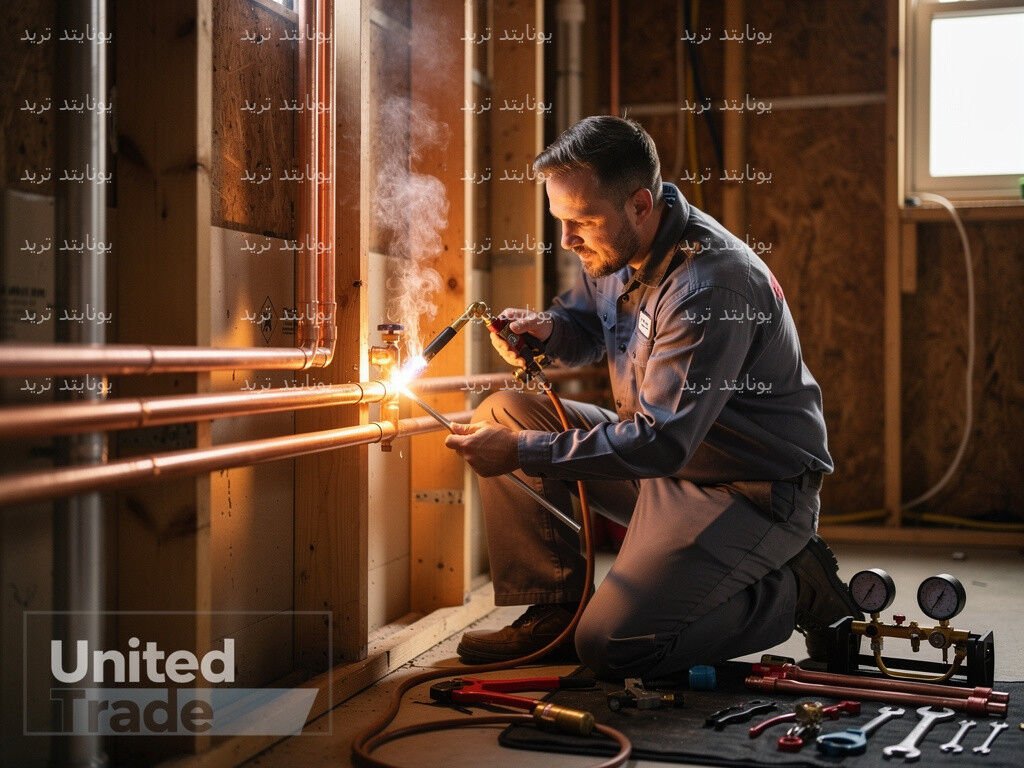
represents Installation of copper pipes The backbone of the efficiency of modern cooling and plumbing systems, as it ensures the smooth flow of liquids and gases under varying operating pressures. This field guide provides in-depth engineering insight into selecting proper diameters, welding techniques, and avoiding internal blockages to ensure the network will last for many years without sudden failures.
Quick Answer: How to install copper pipes safely?
Copper piping installation is the process of connecting and installing metal piping intended for transporting refrigerants or water using copper-silver soldering or pressurized mechanical connections. Successful implementation requires cutting the pipes with a rotary tool without crushing their walls, meticulous removal of the inner burrs, then uniform heating of the connections with a flow of nitrogen gas to prevent the formation of black copper oxide, followed by pressure testing to verify that the path is completely leak-free.
Selection of engineering grades for copper tubes
The safety of the system depends on determining the wall thickness appropriate to the nature of the pressure and temperature. There are three main classifications available in the market that are subject to international standards. Choosing the wrong type is a major cause of mechanical ruptures later.
Heavy-duty grade K copper tubing
This variety has the thickest mineral wall of all commercially available species. It is mainly used in underground installations and very high-pressure refrigerant transport networks, such as commercial refrigeration systems and large central air conditioning, as it provides exceptional resistance to mechanical stress and harsh environmental factors.
Class L copper pipes for medium use
This type is the most balanced and widespread option between high quality and economical cost. Technicians rely on this type for internal water lines and separate home air conditioning installations, due to its high ability to withstand high gas pressures such as R410A gas without the risk of swelling or cracking.
Class M copper tubing for low pressure applications
This variety is characterized by a thin wall and light weight compared to previous varieties. Its use is limited to light drainage lines and low-pressure internal supply lines, and it may not be used at all in refrigeration and air conditioning networks due to the risk of its rupture under the influence of high gas pressure.
| Classify the tube | Wall thickness | Operating pressure level | Recommended areas of use |
|---|---|---|---|
| Type K (green) | Very thick | very high (strenuous) | Underground installations, industrial cooling, main gas lines |
| Type L(Blue) | Average thickness | High to medium | Split air conditioning systems, heating networks, residential plumbing |
| Type M (red) | Relatively thin | low | Light domestic water lines, non-pressurized supply systems |
Certified craft tools for conditioning copper pipes
Preparing the copper tracks requires extreme precision to prevent deformation of the circular section of the pipe, as any decrease in the internal diameter leads to flow disturbance and loss of system efficiency. Using custom kit ensures industry-standard results without damaging the material.
- Rotary pipe cutter: Provides a straight cut at a perfect right angle without creating burrs or pressing the pipe walls inward.
- Mechanical Pipe Expander: Creates a symmetrical cavity that allows the two pipes to overlap precisely before beginning the heat welding step.
- Interior and exterior blade scraper: Removes sharp edges and excess metal that may later come off and clog sensitive expansion valves.
- Manual pipe bender: allows bends and angles to be formed without applying random pressure that will collapse the pipe and choke the flow.
- Flare Kit: Creates standard 45 degree conical flanges to securely connect mechanical nuts.
Steps to install copper pipes according to the principles of the profession
The path passes through several successive stages that require focus and attention to the cleanliness of the internal working environment of the pipe. Each step directly affects the next step, so the approved engineering sequence must be adhered to to ensure that the work is completed with high quality.
- Cleaning metal surfaces: The outer and inner ends of the tube are rubbed with coarse wire wool or non-metallic sandpaper to remove layers of oxidation and stuck oils, facilitating the flow of molten silver metal.
- Application of the fusing chemical: A very thin layer of flex material is applied to the outer surface of the pipe only, to prevent excess from entering the circuit and contaminating the compressor oil later.
- Assembling the parts and checking the depth: The end of the pipe is inserted into the designated joint until the full inner edge is reached, to ensure that the maximum contact area is covered by the filler metal.
- Heating and Soldering Tip: The oxy-acetylene torch flame is directed in a uniform circle around the connection, then the silver solder wire touches the edge of the connection once the copper reaches cherry red, allowing it to be drawn inward by capillary action.
- Gradual cooling and final cleaning: Leave the joint to cool naturally in the surrounding air without pouring cold water on it, then wipe the outer surface with a damp cloth to remove acidic flex residue and prevent external corrosion.
Oxidation prevention techniques during heat welding
Injecting dry nitrogen gas into the pipes during the heating process is an essential procedure that cannot be compromised in cooling networks. The absence of this action causes the hot internal copper to react with air oxygen, creating black carbon scales that peel off with the movement of the refrigerant and clog the fine filters.
In addition, the nitrogen regulator should be set to a very slow flow with a pressure not exceeding 2 to 3 psi. For example, this low pressure ensures that air is displaced without creating a back pressure that expels the molten weld metal out of the capillary space, achieving a clean and completely solid weld.
Track installation and safety testing procedures
Copper pipes need strong, regularly spaced mounting supports to prevent loosening and vibration caused by rotating motors and compressors. It should be noted that neglecting proper mechanical fixation leads, over time, to fatigue of the welding points and the appearance of invisible hairline cracks.
The next stage requires extreme precision to ensure the integration of the entire system, as it includes: Air conditioning installation steps Installing the internal and external units and adjusting the water drainage paths with studied engineering precision. Following the correct standards at this stage helps avoid Freon leakage and ensures the highest levels of cooling with the lowest energy consumption.
Furthermore, hydrostatic or nitrogen pressure testing is performed after complete assembly is completed. The network pressure is raised with nitrogen to the specified design value, and left for a period of not less than 24 hours to monitor the stability of the pressure gauge indicator, while checking all connections and welds with specialized soap foam to ensure that there are no microscopic leaks.
Reaching this level of proficiency requires extreme precision at a stage Establishing pipes Extensions, where the correct engineering paths are determined before starting insulation and final installation work. This advanced stage ensures that the lines are protected from mechanical vibrations and avoids any sharp bends that may hinder the movement of fluids later.
Maintaining the integrity of these copper connections requires regular procedures that include checking Freon gas pressures and thoroughly cleaning the filters. Programs are grounded Air conditioning maintenance Professional air conditioners are able to address any deposits or vibrations that may prematurely stress the welding points, ensuring maximum cooling efficiency and preventing damage to the compressor.
requires Air conditioning duct extension Great care was taken in installing the tracks to ensure optimal heat exchange and stability of the refrigerant pressure between the two units. Adhering to the technical principles during installation and securing the fixing points protects the network from mechanical vibrations that may lead, over time, to avoiding Freon leakage and maintaining the system’s efficiency.
The first construction stages require extreme precision during construction Establishing pipes Various extensions to ensure smooth paths and avoid sharp bends that may hinder flow efficiency later. This includes installing engineering supports and taking into account drainage tendencies and safe spacing before completing the burial or final wall covering operations.
The quality of copper network extension is directly integrated with software Regular air conditioning maintenance Ensure that coolant levels are checked and any mechanical vibrations are addressed early. This regular preventive measure contributes to maintaining the integrity of the welding points and increasing the operational efficiency of the compressor over time.
The efficiency of these copper installations is only complete with strict adherence to procedures Regular air conditioning maintenance Ensures that refrigerant paths are free of leaks and maintain stable operating pressure within the closed circuit. This regular inspection helps avoid the accumulation of impurities and deposits around welding points and valves, which extends the life of the compressor and prevents sudden malfunctions.
The subsequent stage of preparing the pipeline network requires following precise engineering standards Air conditioning installation To ensure that the refrigerant circulates with the highest efficiency. This includes mounting the indoor and outdoor units in perfect alignment and emptying the circuit of air and moisture before trial runs to avoid compressor fatigue.
The elementary stage requires extreme precision when... Establishing pipes The system ensures smooth paths that reduce pressure losses and prevent subsequent mechanical stresses. Proper planning to align the lines and secure them securely protects the network from the risk of future vibrations and leaks, which increases operating efficiency and ensures the safety of the entire infrastructure.
At the culmination of preparing the piping network with precision, comes a stage Air conditioning installation Air is supplied according to technical standards to connect the internal and external units and adjust the refrigerant charge with extreme precision. This procedure ensures that air and moisture are carefully removed from the circuit to achieve the highest energy efficiency and keep the compressor safe from premature wear.
Common mistakes to avoid when extending copper pipes
Some technicians make field errors that weaken the efficiency of flow lines and accelerate their damage before the end of their expected lifespan. As a result, it is always recommended to carefully review the following mechanical details to prevent financial losses and high repair costs.
Bend pipes manually without using guide tools
Bending by hand without an internal spring or hydraulic crimp will cause the copper wall to snap and narrow the duct. In turn, this tightening creates a zone of thermal throttling and unbalanced pressure, which stresses pumping motors and dangerously raises operating temperatures.
Excessive use of flame heat during welding
Overheating of copper connections causes the flex to burn and damage the base metal, making it brittle and susceptible to rapid breakage. Therefore, the flame must be moved in a continuous, smooth motion and let the metal draw the welding wire with its own heat without concentrating the fire in one spot for a long time.
Frequently asked questions
What gas is best for protecting pipes during welding?
Oxygen-free nitrogen gas is the standard and internationally approved option. The flow of this inert gas inside the extension lines prevents the formation of the black oxide layer resulting from the combustion of oxygen with copper at high temperatures.
How to bend solid copper pipes without breaking them?
Rigid pipes are bent after lightly heating the bending area to soften the metal, then using mechanical benders with rollers matching the outer diameter of the pipe. This method ensures that the track is formed completely smoothly without creating dents in the inner diameter.
Can lead solder be used in drinking water networks?
It is strictly prohibited to use soldering alloys containing lead in any network intended for human consumption water, as it poses a severe threat to public health. The safe alternative is based on lead-free soldering wires consisting mainly of tin, silver and pure copper.
What are the causes of gas leakage from mechanical flap joints?
Leakage is often due to cracking of the flap edge due to excessive expansion, or the presence of metal impurities between the conical surface and the valve body. In addition, tightening the nut in excess of the specified torque causes damage to the copper flange and leads to slow gas leakage.
When should old copper lines be completely replaced?
Copper lines should be replaced when severe chemical corrosion is observed and the appearance of dense green spots accompanied by frequent microscopic holes, or when a solid blockage occurs inside the circuit as a result of the burnout of an old compressor and contamination of the walls with sludge and burnt varnish.
Mastering the installation of copper pipes requires following precise engineering standards in cutting, oxidation-free soldering, and balanced mechanical fastening. Always perform comprehensive pressure tests and regular cleaning, and consult professional technicians to ensure safe and efficient paths for your home or facility.
















Community dialogue
0 comments