
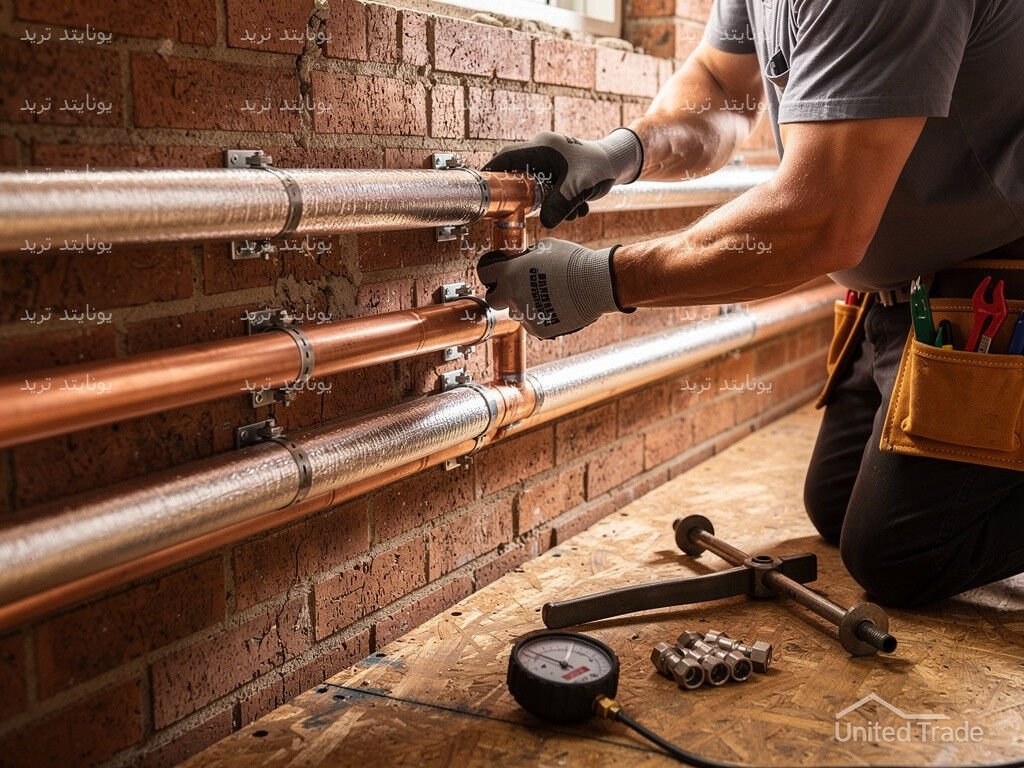
Early planning of cooling networks represents an essential step to protect modern buildings from random cracking and paint damage. Therefore, implementing the Establishing pipes Proper air conditioning saves future maintenance costs by more than 40%. This guide gives you the precise technical standards for selecting materials, adjusting tendencies, and avoiding refrigerant leakage errors, ensuring operational efficiency that lasts for many years without sudden malfunctions.
Quick Answer: What are the golden rules for establishing cooling paths?
Establishing pipes Air conditioning is the process of preparing and burying insulated copper lines, drainage and electrical extensions inside walls or ceilings before the plastering and finishing stage. This process is characterized by adopting copper diameters corresponding to the capacity of the device (such as one-quarter and three-eighths of an inch), while using thermal insulation with a density of at least 9 mm and drainage tendencies of at least 1% to avoid moisture and building damage.
Timing to start preparing architectural air conditioning networks
Mechanical work usually begins after the construction of the partitions and red blocks is completed and before the shell plastering work begins. Moreover, early coordination must be made with the electrical contractor to determine the location of distribution panels and supply sufficient power to the external units.
As a result, the property owner avoids wasting huge sums of money resulting from cracking in reinforced concrete. For example, it is strictly forbidden to break structural beams or columns carrying copper lines. Rather, pre-openings are made through specialized core technology or through pre-determined openings during the casting stage.
Criteria for selecting approved copper pipes for the project
Modern R410A Freon refrigerants require copper piping to withstand operating pressures exceeding 400 psi. Therefore, experts prefer to use Korean or American copper with high thicknesses, due to its high ability to resist rust and internal corrosion.
It should be noted that low-thickness pipes are easily bent and broken during bending and wire pulling operations. In contrast, the standard diameters recommended by manufacturers provide a smooth flow of refrigerant gas without causing mechanical stress on the air conditioning compressor.
Steps for proper installation and burying of cooling paths
The process of preparing cooling networks requires extreme precision, starting with determining the architectural levels and preparing the designated ducts inside the walls. Field procedures can be summarized through the following organized steps:
- Determine the location of the indoor unit precisely, taking into account the landing of the gypsum board and leaving a distance of no less than 20 cm from the ceiling to ensure air circulation.
- Breaking the path extending from the point of the internal unit all the way to the external installation location using the electric missile exclusively to prevent cracking of the walls.
- The suction and exhaust lines are thermally insulated separately using Aeroflex with sufficient thickness to prevent internal condensation.
- Wrap the entire copper network with signal and control cables with high quality and durable vinyl protective tape.
- Fixing the pipes inside the wall using galvanized iron jumpers every 60 cm to ensure the stability of the path before covering it with cement mortar.
Approved technical specifications for buried cooling networks
The following data shows the standard differences necessary for selecting materials and installation specifications during the line burial phase:
| Technical standard | Engineering approved specifications | A common mistake to avoid |
|---|---|---|
| Copper type | South Korean Seamless Zero Carbon Copper Pipe | Use light copper not intended for refrigeration pressures |
| Thermal insulation thickness | Flexible rubber insulation with thickness between 9mm to 13mm | Insulate the two tubes together in one casing |
| Drain pipe diameter | Minimum 1 inch diameter PVC polymer pipes | Use of poor quality flexible hoses that bend inside the wall |
| Exchange tendencies | A downward slope of at least 1 cm per linear meter towards the drain | Flatness of the line, which leads to water accumulation and mold |
| Control cables | Multifilament flexible copper wires matched to loads | Use aluminum cables or weak single wires |
Reasons for failure to establish air conditioning pipes and damage to circuits
Blockage of the refrigeration circuit and damage to the compressor often result from neglecting to close the ends of the pipes during the hauling and burial process. In addition, the entry of dust particles or cement mortar residue into the inside of the pipe immediately leads to the destruction of the mechanical expansion valve after the air conditioner is turned on.
Furthermore, using sharp angles and manually bending pipes without a dedicated mechanical bending tool causes congestion in the route. As a result, gas pressure suddenly rises inside the unit, causing the motor to burn out and the energy bill to rise by record levels.
Pressure tests and securing the extension network
Dry nitrogen pressure testing is the line between professional and haphazard. A check valve is welded at both ends of the line, then nitrogen gas is injected at a pressure of up to 250 psi and left for 24 hours to monitor the movement of the indicator and ensure there is no venting.
When the final installation stage of the units is reached, an operation is required Air conditioning installation High geometric precision to adjust the mounting levels and tightly insulate the copper connections. This procedure ensures that cooling efficiency is increased to the maximum capacity, in addition to preventing mechanical vibrations that may negatively affect the building walls and the integrity of the concrete structure.
Maintaining the efficiency of the cooling system is not limited to the quality of the initial establishment, but also requires continuing to implement programs Regular air conditioning maintenance To detect Freon gas levels and clean filters accurately. This preventive measure ensures prolonged compressor life and increased energy efficiency, protecting the entire system from sudden malfunctions and dust accumulation inside the air ducts.
Moving to the field implementation phase requires strict adherence to engineering standards to ensure the safety of the entire network, as the success of the system depends on mastery Installation of copper pipes According to the approved plans and prepare the extension paths carefully to avoid any bends that impede the flow of the refrigerant. Proper installation and use of high-quality insulation materials also contribute to preventing leaks and protecting pipes from constant mechanical stress.
The integration of interior design and cooling efficiency requires mastery Secrets of architectural preparation and operation Before starting the final finishing work. This engineering coordination ensures that the Freon lines are passed and the drain paths slope with extreme precision, which protects the air compressor from stress and increases the system’s effectiveness for many years.
Upon completion of the wall extensions, the next stage requires elaborate technical procedures to ensure efficient operation of the units and economical energy consumption. requires Air conditioning installation Air mounts are installed precisely and the copper connections are tightly insulated to prevent loss of refrigerant medium. Adjusting the air flow and emptying the circuit of moisture also contribute to extending the life of the device and avoiding sudden malfunctions.
To ensure the sustainability of these extensions and the efficiency of the cooling media flow, the importance of adhering to a periodic procedure schedule is highlighted Comprehensive air conditioning maintenance Detects early clogs and prevents corrosion of copper lines. This preventive measure helps avoid complex malfunctions and reduces power consumption to its lowest operational levels.
The issue is not limited to the quality of the initial installation, but maintaining cooling efficiency requires continuity in the process Regular air conditioning maintenance Ensures fresh air flow and filters free of impurities. This periodic inspection prevents the accumulation of mechanical faults and keeps energy consumption within normal levels throughout the summer.
In other words, this test detects any pinholes in copper welds before starting the final plastering and painting work. For example, unseen Freon leaks are very difficult to fix after the home is occupied, as they require ceramic cracking and expensive decorations, so proactive inspection gives you continued peace of mind.
The next stage requires the application of precise requirements that ensure efficient refrigerant flow and smooth water drainage without causing any damage to the walls, as the stability of the devices’ performance throughout the year depends on implementing Professional air conditioning installation It takes into account the recommended distances and isolates the connections perfectly. This precise balancing and mounting of the units prevents annoying vibrations and significantly reduces energy consumption.
The most important instructions for draining air conditioner water and protecting the building
Draining water resulting from air moisture condensation is an essential complement to system safety. Therefore, strict engineering practices must be followed to ensure the flow of water away from concrete bases and building facades, which include the following:
- Connecting the drainage line directly to the gray drainage network via a dedicated siphon prevents the reflux of unpleasant odors into the rooms.
- Insulating drainage pipes passing over suspended ceilings to prevent surface condensation and water droplets falling on gypsum boards.
- Install inspection maintenance points that can be opened and cleaned annually using air pressure to remove accumulated dust.
- Check the gravity path by pouring a trial amount of water through the unit basin and ensuring that it comes out completely at the final outlet.
Frequently asked questions
What is the most appropriate time to install air conditioning ducts in the building?
The most appropriate time to carry out this step is the first stage of bonework and finishing after completing the cutting and building of the walls and before the shell is fired. This timing allows you to easily drill copper and drain lines into the brick and avoid damaging the concrete or subsequent layers of paint.
What is the maximum distance allowed between the indoor and outdoor units?
The standard distance between the two units ranges from 5 to 15 meters, according to manufacturers’ recommendations, to ensure efficient cooling and oil flow to the compressor. If the distance exceeds that, oil traps must be added on the vertical lines and the refrigerant charge must be increased according to studied engineering calculations.
Can air conditioning ducts be buried under floors instead of walls?
Yes, lines can be passed under floors provided they are placed inside solid, pressure-resistant protective sleeves such as heavy PVC pipes. Any welding joints within the path buried under the tiles must be avoided to ensure that no leaks occur that will be impossible to access later.
How do I protect copper pipes from theft or damage during site finishing?
The copper network can be protected by closing the visible openings, covering it with tight plastic pieces, and burying it with a cement protection layer immediately after testing it. Moreover, it is recommended to leave the copper line pressed with a check meter, which will confuse tamperers and make it clear to you that any breach in the track has occurred immediately.
What is the best type of insulation for buried cooling pipes?
Closed-cell flexible rubber insulation that is resistant to moisture and heat absorption, such as Aeroflex or Armoflex, is considered the best and ideal choice. This insulator is characterized by preventing dew drops from forming on the pipe wall, which protects the surrounding walls from moisture spots and internal mold.
Is it necessary to weld air conditioning pipes during the foundation stage?
The original is to avoid soldering altogether and use the copper coil as one continuous piece from the indoor unit to the outdoor unit. If the technician has to weld over very long distances, a high-quality silver alloy must be used and nitrogen gas must be pumped into the tube to prevent the formation of a black carbon layer.
Adherence to sound engineering rules during implementation Establishing pipes Air conditioning protects your real estate investment and ensures the highest cooling efficiency with the lowest possible energy consumption. Start planning today with a professional technician, and be sure to carefully check the pressure and insulation of the lines before completing the rest of the finishing stages in your home.
















Community dialogue
0 comments