
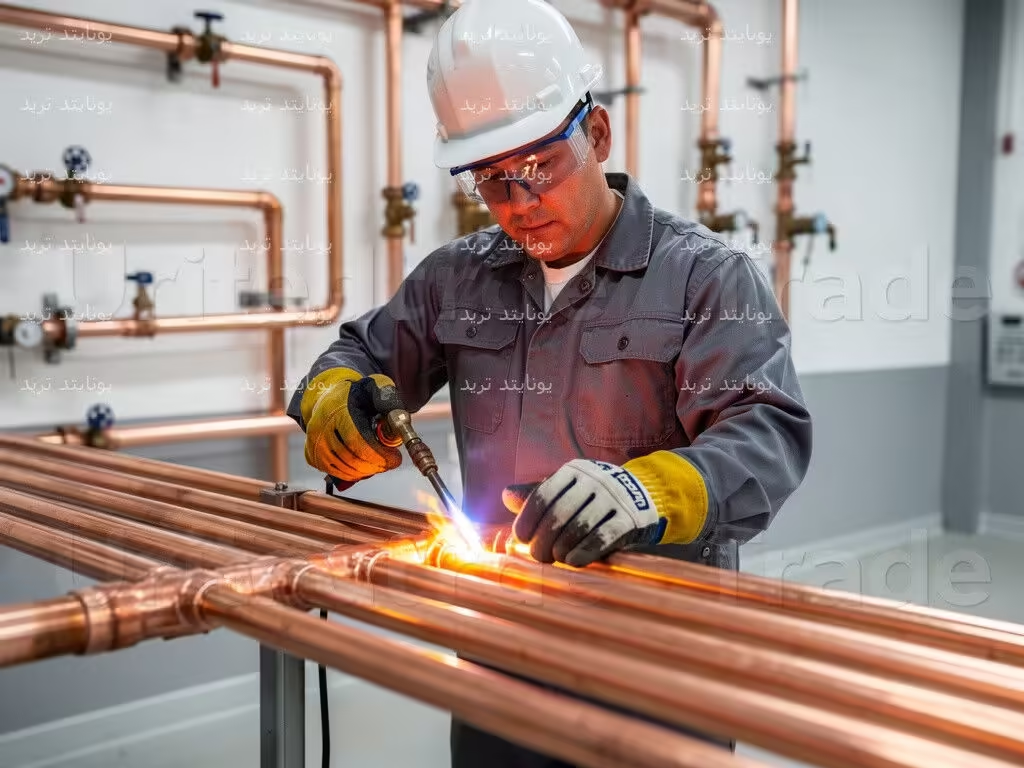
Installing copper piping is a critical construction step to ensure the safety and efficiency of the flow of liquids and gases in various architectural and industrial systems. In this practical guide, you will learn the precise mechanism for implementing connections and inspecting quality with complete professionalism, which will save you expensive maintenance costs and increase the operational life of the network.
Quick Answer: How to install copper pipes successfully?
Installing copper pipes is an engineering process that depends on precisely cutting the pipes and preparing their ends by removing the excess and applying a melting agent, then connecting them by silver soldering or mechanical pressing and fixing them at standard distances that prevent bending. These measures achieve complete leak-tightness and ensure stable internal pressure for many years without corrosion.
Choose the appropriate pipe diameters and thicknesses for your project
Selection of appropriate pipe diameters and thicknesses depends on the type of application, whether it is for hot and cold water supplies or cooling and gas networks. Therefore, the standard classification of each pipe type must be checked before proceeding with the purchase to ensure that it can withstand high operating pressures and avoid sudden explosion under high load.
Differences between rigid and flexible pipe specifications
Rigid pipes have exceptional mechanical resistance that makes them the first choice for straight, visible lines within large installations. In contrast, flexible pipes are extremely easy to bend, reducing the number of connections required and speeding up work in tight spaces and curved paths with remarkable efficiency.
Approved thickness classifications
Copper tubes are divided into standard grades of specific size and inner wall to meet diverse engineering needs:
- Ultra-thick wall Type K for buried, underground and extreme conditions applications.
- Type L is of medium thickness and is considered the gold standard for internal water systems and commercial air conditioning.
- Type M is light wall and is intended for light housework and low pressure drain lines.
Tools and equipment needed to complete the work
The process of installing copper pipes requires the provision of a specialized professional tool package to ensure safe execution and quality finish without damaging the metal. For example, the use of a circular pipe cutter ensures perfectly smooth vertical edges compared to traditional hand saws that cause serious distortions in the pipe structure.
Measuring, cutting and cleaning tools
A metric tape measure and precise marking pen help in setting distances without any margin for structural error. In addition, the internal edge stripper and specialized wire brushes play a crucial role in removing suspended oxides and impurities, preparing the surface for the solder alloy to adhere with absolute, timeless strength.
Modern welding and pressing equipment
Conduction equipment includes advanced gas torches such as propane or acetylene torches that are capable of providing uniform, rapid heat. In addition, modern hydraulic press machines provide a modern and fast alternative to fire welding, as they allow connections to be completed within a few seconds and with a maximum degree of site safety.
| Tube type | Relative thickness | Most prominent uses | Maximum operating pressure |
|---|---|---|---|
| Type K (heaviest) | Very thick wall | Buried installations and fuel lines | Very high exceeding 50 bar |
| L type (medium) | Medium strength wall | Main water and cooling networks | Effectively withstands up to 35 bar |
| Type M (light) | Thin wall | Internal feeding and simple gutters | Suitable for moderate pressures up to 20 bar |
Steps to install copper pipes in an organized, professional manner
The process of installing copper pipes takes place in a precise timeline, starting with advance engineering planning and ending with final safety testing. Accordingly, neglecting any preliminary technical step leads to the complete failure of the connection and the occurrence of hidden leaks that may suddenly damage the infrastructure surrounding the pipes.
Field preparation and preparation stage
The preparatory steps include straightening paths and preparing the work environment in the following order:
- Accurately measure the required distance and add the depth of the inner cavity of the connection connector used.
- Cut the pipe at exactly right angles using the designated cutter and avoid excessive pressure to avoid distortion of the diameter.
- Remove internal and external burrs with a scraping tool to avoid mechanical disturbance in fluid movement.
- Sand the outer end of the tube and the inner end of the fitting until the original copper shine appears completely.
- Apply a thin, even layer of flexo fusing agent to prevent rapid oxidation during heating.
Heating and thermal stabilization stage
This stage begins by directing the torch flame evenly over the outer connection to raise its temperature to the appropriate point for the alloy to melt. It should be noted that feeding the welding wire must be in contact with the hot metal itself, without direct contact with the flame, as the capillary action ensures that the molten metal is drawn to fill the void with extreme precision.
Installation and support standards to prevent vibration and noise
Straight running of copper piping requires regular mechanical fixing by isolating collars and holders that prevent transmission of operational vibrations to walls and ceilings. As a result, consider using rubber or plastic-lined holders to completely isolate the copper from other metals and avoid the risk of corrosive electrochemical rust.
Standard distances between mounting brackets
Small diameter horizontal pipes need support stands no more than 1.2 meters apart to avoid sagging due to the weight of the liquid. In contrast, for large diameters the distance can be increased by up to a full two metres, while vertical lines require anti-slip anchors at each floor with an additional support point at the centre.
Calculating thermal expansion and contraction
Copper metal expands significantly when exposed to high temperatures resulting from hot water flow or heating media. Therefore, professional technicians create flexible connections and U-rings in long lines to give the pipes freedom of transverse movement without straining the essential connection points.
It requires an operation Air conditioning installation Extreme precision in connecting the pipe network and ensuring thermal insulation to avoid refrigerant gas leakage and ensure efficient heat exchange within the facility. Correct installation of the indoor and outdoor units ensures optimally balanced air distribution and reduces unnecessary energy consumption in the long term.
Pressure tests and ensuring hydraulic tightness
Stress testing is the critical procedure to verify the quality of implementation before extensions are covered or the network is put into active service. This means that verifying the safety of the system under test pressures that exceed the actual operating pressure by 50% gives complete peace of mind to the user and protects property from accidental floods.
The efficiency of any wiring system begins with proper planning of the network paths before the actual installation, which requires a stage Establishing distribution pipes Careful consideration of engineering tendencies and structural connection points. This prior procedure ensures that the lines are protected from mechanical stresses and facilitates subsequent insulation and maintenance operations according to the highest technical standards.
Maintaining the efficiency of cooling lines after installation requires periodic adherence to procedures for comprehensive inspection of Freon gas pressure and cleaning of filters and condensers. Business contribute Air conditioning maintenance Air Continuously detects any early leaks and protects the compressor from sudden malfunctions, ensuring optimal thermal performance and low energy consumption.
Successful completion of these connections requires consideration of the smallest technical details, as it represents High efficiency air conditioning installation To truly guarantee the flow of the refrigerant without any leaks that may harm the system. Commitment to appropriate heights and preparing the site according to engineering principles also contribute to stabilizing gas pressure and prolonging the lifespan of operating units.
Refrigeration systems require careful attention when implementing gas lines, as the process is based Air conditioning duct extension We choose copper diameters with geometric accuracy that suit the unit’s capacity to ensure the efficiency of the Freon cycle. Vertical and horizontal paths must also be secured with sturdy supports that prevent vibrations and ensure tight thermal insulation along the network to avoid energy loss.
The correct start of any extension system requires engineering planning that ensures the distribution of paths and the installation of supports before pouring concrete or closing the walls. Therefore, the success of the network mainly depends on the accuracy Establishing feeding pipes And drainage to avoid any breakages or excessive pressure in the future, making the initial installation the cornerstone of the entire system.
Parallel to these precise connections comes the importance of... Air conditioning maintenance Air periodically to ensure that the pipes are not exposed to corrosion or refrigerant gas leakage. Regular system inspection not only protects devices from sudden malfunctions, but also enhances cooling efficiency and significantly reduces energy consumption in the long term.
The importance of copper wiring goes beyond the foundation stage, as it remains... Air conditioning maintenance Rotating air is essential for maintaining cooling efficiency and preventing Freon leaks. Regular technical inspection of these connections ensures optimal refrigerant flow, which protects the compressor from premature damage and extends the life of the entire system.
It requires an operation Air conditioning installation Extreme precision in connecting the copper network to the internal and external units to avoid any leakage of Freon gas and ensure maximum cooling efficiency. The ideal performance of the system also depends on tight installation and good thermal insulation of the pipes to avoid water condensation and wasted energy.
The first stage requires careful study of the paths and identification of distribution points before starting the installation and insulation operations, which is where the step contributes Establishing extension pipes In a correct engineering manner to avoid any conflict with other construction structures. This advance planning also ensures that the network is stable and can withstand various operational pressures in the long term without leakage.
Implementing copper wiring requires extreme precision when configuring the cooling paths, as the efficiency of Freon gas circulation is directly related to the success of the process Air conditioning installation According to approved engineering standards. The tight connection between the internal and external units prevents the leakage of cooling media, ensuring ideal airflow and balanced energy consumption in the long term.
Testing methods with air and nitrogen
The system is isolated and dry nitrogen gas is introduced under regulated pressure, usually between 10 and 15 bar in refrigeration systems. In addition, the system is left pressurized for a period of time of at least 24 continuous hours while monitoring the pressure gauge indicator, as any unexplained decrease indicates the presence of a micro-leak that requires immediate treatment.
Testing using foam solutions
The use of effective foaming solutions is a classic, ultra-precise method for detecting micro-vent location around weld points and connections. When air bubbles of increased size appear around a specific area, the position is immediately marked and the pressure released to reprocess and clean the joint before repeating the comprehensive inspection.
Common mistakes during delivery and how to avoid them?
Some craftsmen make fundamental errors that shorten the life of the copper system and generate unexpected problems. For example, excessive heating of the metal causes the flex material to burn and turn into insulating carbon impurities that prevent the penetration of the soldering alloy and cause hidden pores that lead to fluid leakage later.
Avoid galvanic corrosion phenomenon
Rapid galvanic corrosion occurs when copper pipes come into direct contact with galvanized iron pipes without a dielectric insulator separating them. Therefore, plastic or bronze conversion connectors must be used that separate the two metals mechanically and stop electronic exchange that is destructive to the water and sewerage network.
Beware of incorrect pipe bends
Manual bending of pipes without using spring benders or hydraulic devices causes severe narrowing of the internal flow path and cracking of the pipe wall. As a result, the rate of water friction increases within these tight spots, causing annoying whistling and accelerating the corrosion of the copper wall until micro-holes occur.
Frequently asked questions
What is the recommended standard distance between copper pipe holders?
The standard distance for horizontal pipes ranges from 1.2 meters for small diameters to 2 meters for large diameters, with vertical pipes fixed at each floor with vibration-absorbing rubber anchors.
How do you ensure that the welding process is successful without leaking?
This can be confirmed by filling the network with nitrogen gas or water under a pressure equivalent to one and a half times the operating pressure for 24 hours and carefully monitoring the stability of the pressure gauge.
Can copper pipes be installed without using direct flame?
Yes, of course. Modern mechanical pressing systems and connectors with built-in rubber rings can be used to provide a tight and quick connection without the need for heat torches.
Why should a flexo flux aid be used before welding?
The flex material prevents oxidation of the copper surface during heating and helps the molten alloy flow and spread smoothly within the joint due to the capillary action.
What is the fundamental difference between rigid copper tubes and flexible copper tubes?
Rigid tubes are more durable and suitable for long, straight runs, while flexible tubes are easier to shape and bend in complex locations, reducing connection points.
Are the installation requirements for copper pipes different for gas and water?
Yes, gas lines require thick type piping with high melting point silver solder and very stringent pressure tests that prevent any possibility of leakage.
Mastering the installation of copper piping is an essential foundation for building a reliable infrastructure that will last for decades without breakdowns or costly leaks. Start applying these technical standards now, and do not hesitate to use modern tools to achieve the best professional results in your next project.
















TQTAG76 Community dialogue
0 comments