
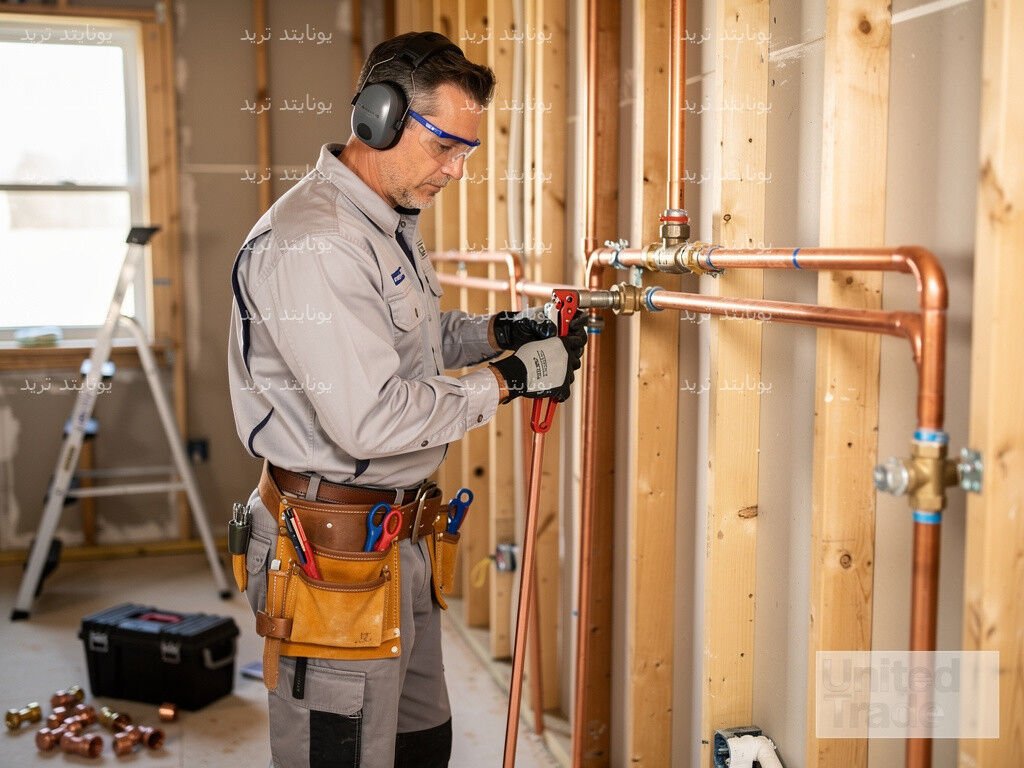
Copper pipe classifications according to wall thickness and use
The standard standards adopted when choosing pipe materials vary, as the wall thickness determines the extent to which they can withstand various operational pressures, and they are classified globally into three main types symbolized by English letters:
| Tube type | Inner wall thickness | Approved color coding | Most popular applications |
|---|---|---|---|
| Type K | The thickest and strongest | Green | Buried underground extensions, main feeding lines and gas networks |
| L type | Average thickness | Blue | Refrigeration and air conditioning systems, internal water lines and building heating |
| Type M | Thinest and lightest | Red | Domestic supply networks with low pressures and treated water drainage |
Procedures for deflating the air and charging the system after mechanical connection
Completing the process of installing copper pipes for air conditioning systems requires steps to ensure that the path is free of moisture and non-condensable gases, which, if they remain, lead to damage to the Freon compressors and an increase in operating pressures above normal levels.
Steps to extract moisture via vacuum pump
- Connect the multi-port meter to the service valve of the outdoor unit after tightening the suction line and liquid line.
- Operate the vacuum pump to reach a negative pressure of less than five hundred microns to ensure the evaporation of any water droplets stuck inside the inner wall.
- Close the valves and monitor the stability of the pressure indicator for twenty minutes to ensure that there are no minute leaks through the filler or welding points.
- Open gas valves slowly to allow refrigerant to flow into the closed path evenly while monitoring the temperature of the exhaust and intake lines.
Applying these sequential steps helps maintain heat exchange efficiency and avoids acid corrosion that could damage the delicate parts of the expansion valve or internal evaporators.
Completing the installation of copper pipes requires extreme precision and extensive engineering knowledge to ensure the efficiency of modern cooling and plumbing systems without any wastage of energy or leakage of gases. This practical guide provides clear practical instructions for making connections and securing mechanical connections using reliable field methods that ensure the durability of the lines for many years while reducing regular maintenance costs.
Quick answer
Installing copper pipes is a technical process aimed at connecting Feeding networks Air conditioning uses flexible or rigid pipes that are highly resistant to corrosion and can withstand high pressures. Correct installation is achieved by cutting the pipe at a right angle, hollowing out the metal edges, and then sealing the connection via silver or flash welding to ensure completely correct flow and prevent any possible leakage of fluids and gases.
The importance of selecting pipe diameters before starting work
The inner pipe diameter determines the volumetric flow rate and level of pressure drop within the conveying network. Therefore, choosing an incompatible size increases the operating load on the compressors or pumps, which shortens the life of the system and increases the rate of unexpected mechanical failures.
Furthermore, track distances must be measured very precisely to minimize sharp bending angles within walls and false ceilings. It should be noted that the use of standardized, engineering-approved sizes allows connections to be connected with high precision and prevents the occurrence of water hammer phenomena in water networks, in addition to controlling the flow speed of the refrigerant in central and split air conditioning systems.
Basic steps for preparing metal lines and connections
Field preparation begins with a rigorous measuring process to determine the actual path of the lines with extreme precision. As a result, it is easier to avoid construction obstacles and unwanted intersections with electrical cables before installing the wall brackets.
- Cut the copper tube using a rotary tube cutter to ensure the edge is flat and free of kinks.
- Remove internal excess metal with reaming tool to prevent flow obstruction and reduce internal friction.
- Clean the external and internal surfaces with a soft metal wire to remove layers of oxidation and stuck-on impurities.
- Conical flange formation or end expansion according to the type of mechanical connection adopted in the system.
- The pipe is fixed in its final path with clamps lined with insulating rubber that absorbs operational vibrations.
Indispensable tools in installing copper pipes
Dedicated equipment ensures that the work is completed quickly and prevents damage to pipes during bending and cutting. For example, attempting to bend the pipe manually without an assistive tool results in the inner wall closing in and stopping fluid flow regularly, disrupting the entire network's operation.
- Manual pipe cutter with sharp steel blade to make clean vertical cuts without distorting dimensions.
- Mechanical pipe bender with angle indicator to adjust bends from zero to one hundred and eighty degrees with a regular radius.
- Flare tool for shaping copper flanges at a forty-five degree angle for connecting nuts.
- Oxygen torch welding device with silver and copper rods to achieve stable thermal connections.
- Air vacuum pump and pressure gauge to test the tightness of the lines before filling the system.
Comparison of traded copper varieties
Copper pipe ratings vary according to wall thickness and their ability to withstand extreme pressures and varying temperatures. Based on the project requirements, the most appropriate engineering type is selected to ensure operational safety, as the following table shows:
| Tube type | Wall thickness | Pressure tolerance level | Common usage |
|---|---|---|---|
| Type K (green) | Very thick | Too high | Underground burial and heavy construction lines |
| Type L(Blue) | Medium thickness | High and stable | Air conditioning extensions and internal water networks |
| Type M (red) | Light and fluffy | Medium | Home heating and light water supply networks |
| Type ACR | Processed and clean | Super gas | Advanced cooling and Freon media circulation lines |
Standards for preventing leakage during the installation of copper pipes
Effective thermal insulation is a crucial step to protect lines from water condensation and prevent thermal energy loss. Therefore, closed-cell rubber covers with a thickness of no less than nineteen millimeters must be used, with the joints sealed with adhesive tape intended to resist high humidity.
Requires implementation of Air conditioning installation work With high efficiency, taking into account the accuracy of connecting these pipes and installing them according to the correct sizes to avoid leakage of cooling media. Adherence to sound technical standards during construction contributes to ensuring stable gas pressure and distributing cold air as effectively as possible.
In contrast, excessive tightening of brass nuts causes the cone flange to crack and damage the contact point over time. On the other hand, a mechanical torque wrench should be used to tighten the connections according to the manufacturer’s instructions without exceeding the permissible force, to avoid causing microscopic cracks that are difficult to detect until after the actual start of operation.
Implementing supply and air conditioning networks requires extreme precision at a stage Establishing pipes Copper to ensure efficient flow and long-term leak resistance. A precise understanding of the characteristics and thickness of each type helps in installing extensions with the appropriate diameters inside walls and floors according to sound engineering standards.
Cooling lines require periodic inspection to ensure that they are free of cracks or leakage of refrigerant under high pressures, which is an essential procedure within the work of Air conditioning maintenance Air to maintain compressor efficiency. Neglecting to monitor the integrity of these connections leads to a decline in cooling performance and a noticeable increase in energy consumption.
The success and sustainability of the system requires the application of precise procedures that ensure... Extension of copper pipes according to specifications Certified engineering for the safety of facilities and lines. This includes carrying out pressure and leakage tests in a rigorous and systematic manner, while taking protective measures to absorb vibrations and resist continuous thermal expansion.
Implementing distribution and cooling networks requires high precision, starting from one stage Establishing copper pipes Choose the appropriate sizes for each path, in order to avoid leakage of cooling media or a drop in pressure inside the system. Proper installation and adherence to standard bends also ensure that the pipes are protected from mechanical damage and extend their service life.
Maintaining the efficiency of these connections and checking them for leaks requires action Regular air conditioning maintenance By specialized technicians to ensure stability of refrigerant pressures. This continuous inspection contributes to detecting any wear in the walls of the copper pipes early and protecting the compressor from sudden damage.
Maintaining the efficiency of these copper connections and preventing refrigerant leaks requires action Regular air conditioning maintenance For early detection of any microscopic cracks that may result from continuous vibrations. This technical follow-up contributes to protecting the compressor from damage and ensuring the stability of the pressures designed according to the type and thickness of the pipes used.
Requires implementation of Air conditioning installation work With high efficiency, taking into account the accuracy of matching pipe diameters and thicknesses with the cooling media pressures specified by the manufacturer. This mechanical fit ensures smooth Freon flow and avoids the risk of drafting or reduced thermal torque of the system in the long term.
Distribution and cooling networks require high precision when carrying out work Establishing copper pipes To ensure efficient flow and leak resistance under extreme pressure. This includes choosing the correct engineering paths and appropriate installation and insulation methods for each type of pipe according to its wall thickness and the nature of its use.
Choosing the appropriate thickness of pipe is closely related to ensuring the safety and efficiency of the stage Air conditioning installation Air and avoid leakage of cooling media. The precise connections between the internal and external units require high precision in insulation and copper soldering to withstand high operational pressures in complete safety.
Compression tests and ensuring structural tightness
Dry nitrogen testing is the basis for verifying the integrity of welds and mechanical connection points. As a result, the system is injected with inert gas at a pressure of up to four hundred pounds per square inch for twenty-four continuous hours while carefully monitoring the pressure gauge indicator.
Furthermore, a foam detector solution is applied to all joints during the compression phase to immediately detect any micro-venting. It should be noted that emptying the network of moisture and air with a deep vacuum pump up to a level of five hundred microns protects the cooling media from chemical reaction and the formation of harmful acids inside the mechanical compressor.
Frequently asked questions
What is the best type of duct for home air conditioning extension?
Type L or ACR ducts treated against moisture and oxidation are the ideal choice for home air conditioning systems. These types withstand high refrigerant pressures and provide good flexibility while steering within narrow paths without being prone to twisting.
How to bend a copper tube without damaging it?
The pipe is bent using mechanical benders compatible with the outer diameter of the pipe or using internal and external steel springs. These tools prevent snapping of metal walls and ensure smooth flow without hydraulic obstruction within the line.
Can tin soldering be used for cooling lines?
No, it is prohibited to use regular tin in cooling networks due to its low melting point and poor tolerance to high pressures and vibrations. Silver and copper bars must be used with temperatures exceeding six hundred degrees Celsius to ensure a strong molecular bond.
Why is it preferable to insulate copper pipes separately?
The suction line is isolated from the liquid line to prevent heat transfer between the two lines and maintain the design cooling efficiency. Separate insulation also protects adjacent surfaces from constant condensation and moisture damage that leads to damage to paint and ceilings.
What is the correct distance to install pipe stands?
Structural supports are installed at distances ranging from one to one and a half meters to the horizontal lines, according to the diameter of the pipe used. This uniform spacing prevents the pipes from bending under their own weight and reduces the effect of mechanical vibrations caused by fluid flow.
When should the old copper tube be completely replaced?
The pipe must be replaced when obvious chemical corrosion appears, leaks occur at more than one point, or there are bends that block more than fifteen percent of the internal cross-section, to ensure the stability of the system and protect the devices connected to it.
Adherence to engineering standards in the installation of copper pipes leads to the construction of stable and highly secure flow networks for all installations. Always use professional tools and conduct comprehensive pressure tests to ensure efficient cooling and plumbing for years to come without unexpected breakdowns.
















Community dialogue
0 comments