

Common mistakes that non-specialists make while dealing with air conditioning units
The process of moving air conditioners from one place to another, or even dismantling them for regular maintenance purposes, is a task that seems simple in the eyes of some, but in reality it contains precise technical details, neglecting which results in huge financial losses. One of the most common mistakes is not closing the service valves before removing the connections, which leads to a complete loss of the Freon charge into the atmosphere, which is harmful to the environment and incurs unnecessary additional costs to the customer when restarting. In addition, some people tend to violently unscrew copper pipes without using specialized cutting and shaping tools, causing cracking of the copper or accumulation of metal filings inside the circuit that later leads to blockage of the expansion valve.
Another no less important mistake concerns installing the outdoor unit in places not prepared for ventilation. Some unskilled technicians place the unit in tight corners or behind barriers that prevent the expulsion of hot air. This makes the air conditioner work at double pressure to try to cool the place, which raises the temperature of the compressor and leads to its frequent automatic disconnection (overload). We also note the neglect of good insulation of copper pipes, which is necessary to prevent condensation. Uninsulated pipes cause water to drip into the rooms and lead to copper oxidation and rapid corrosion due to weather factors.
Essential tools and equipment to ensure quality performance
It requires an operation Dismantling and installing air conditioners Use a set of specialized tools that ensure accuracy of work and maintain the integrity of the device components. Relying on traditional hand tools that are not intended for air conditioning often ends in disastrous results in the short term. Below is a review of the most important tools that the work team must have:
Measuring and pressure equipment
- Manifold Gauge: It is very necessary to confirm the pressure levels within the cycle before and after dismantling, and it is the basic tool for detecting the presence of a leak.
- Vacuum Pump: It cannot be replaced by any other means; It is responsible for drawing air and moisture from inside the pipes before opening the gas. Without it, the moisture will mix with the oil and subsequently cause the compressor motor to burn.
- Water Level (Spirit Level): To ensure that the internal unit is tilted to a precise degree that allows water to drain smoothly into the designated hose.
Forming and installation tools
- Pipe Cutter: Ensures that copper is cut with smooth, regular edges without leaving any burrs that may obstruct the gas flow.
- Pipe expansion device (Flaring Tool): to create pipe heads in a precise conical shape that ensures tight connection and prevents any gas leakage from the connection places.
- Torque Wrench: used to tighten nuts with the force specified by the manufacturer; Because excessive tightening may break the connections, and weak tightening leads to gas leakage over time.
Comparison table between the operational condition of the air conditioner before and after professional maintenance
| Comparison | Before performing the professional service | After implementing the professional service |
|---|---|---|
| Electrical energy consumption | High due to dust accumulation and poor pressure | Low thanks to heat exchange efficiency |
| Noise level | Loud sound and vibrations in the units | Complete quiet and balanced fan movement |
| Air quality | Unpleasant odor and fungal growth in filters | Clean and sterilized air thanks to cleaning the evaporator |
| Cooling speed | Very slow and takes hours | Instant cooling of the entire place |
| Condition of pipes | Exposed and susceptible to corrosion | Protected with high quality thermal insulation |
Criteria for choosing the optimal location for indoor and outdoor units
The success of the process Dismantling and installing air conditioners It depends not only on artistic skill, but also on intelligent site planning. When choosing the location of the indoor unit, you must completely avoid placing it above sensitive electrical appliances such as a television or computer, and avoid directing the cold air stream directly towards people’s seating areas to avoid health problems. It is also necessary to ensure that the unit is close to the water drainage hole to ensure smooth movement and no need to install additional water pumps that may break down in the future.
As for the outdoor unit, the standards are more stringent. It should be installed in a place with excellent natural ventilation, away from direct sunlight as much as possible to reduce the heat burden. Sufficient space must also be provided in front of the exhaust fan to ensure that hot air does not reflux back into the condenser. Placing the unit in narrow places or under a low ceiling without taking into account safety distances causes the device’s temperature to rise abnormally, which reduces its lifespan significantly, and makes technicians face extreme difficulty in performing any regular maintenance in the future.
The importance of cleaning the unit after transportation and installation
Many people believe that the transfer process is sufficient to clean the air conditioner, but reality proves otherwise. During disassembly, fine dust accumulates inside the evaporator and condenser fins due to movement and vibration. It is very necessary to chemically clean the coils using specialized non-corrosive solutions, and get rid of any dirt stuck in the drain. The filters must also be washed and the distribution fan must be checked to ensure that it is free of any obstructions. Starting by installing a clean air conditioner ensures healthy air flow from the first moment of operation, and prevents the emission of unpleasant odors that may appear as a result of the decomposition of dust adhering to moisture at startup.
You should also focus on checking the electrical connections after the new installation, as moving operations may lead to loosening of some cables inside the control panel. The professional technician connects all electrical connections and ensures the integrity of the insulators, while measuring the device’s electrical current draw to ensure that it is within the normal rates written on the factory’s data plate. These simple preventive measures ensure that the device continues to operate at high efficiency without sudden malfunctions that may force you to request maintenance during peak summer times.
practical Dismantling and installing air conditioners It requires high precision and specialized technical expertise to ensure that the integrity of the device is maintained and that the refrigerant gas is not lost. In this article, you will learn about the basic steps, required tools, and technical standards to ensure that your air conditioner operates at high efficiency after reinstallation. Following the correct instructions protects you from the additional costs of malfunctions resulting from poor installation.
Quick answer
Dismantling and installing air conditioners is a technical process aimed at transporting the air conditioner safely by first drawing Freon gas into the external unit, then carefully separating the electrical and mechanical connections. These steps ensure that refrigerant pressure is maintained and avoid gas leaks or short circuits when restarting in the new location.
Tools and equipment required to handle air conditioning units
Every process of dismantling and installing air conditioners requires a specialized set of tools to ensure that the work is carried out without damaging the pipes or units. Using ordinary screwdrivers or non-specialized tools may bend the copper pipes, significantly reducing the efficiency of refrigerant flow.
Basic hand tools
- Adjustable wrench (French) for precise loosening of coupling nuts.
- Insulated screwdriver set for handling control panels and electrical wires.
- Copper pipe cutter to keep pipe ends from deforming during separation.
- Insulating adhesive tape to protect against moisture and impurities during transportation of units.
Measuring and pressure equipment
Freon pressure meters are a vital tool to ensure the condition of the device before dismantling and after installation. The gas pressure must be constantly checked to ensure that there are no leaks, which is necessary to maintain the air compressor and ensure a long life of the device.
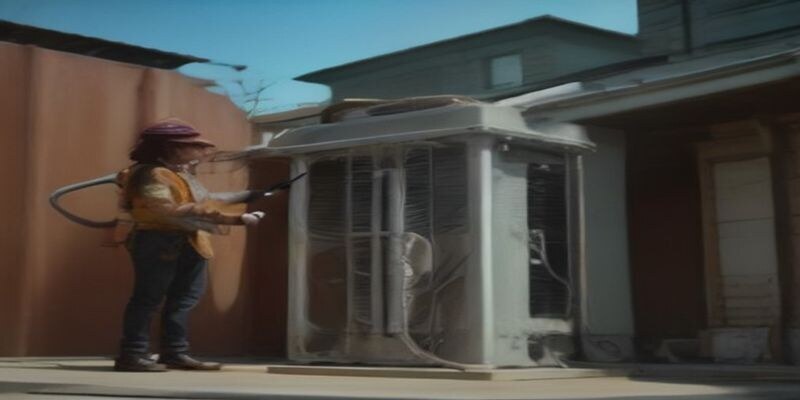
Steps to safely disassemble the air conditioning unit
The steps to disassemble the device begin by turning the air conditioner on cooling mode to allow the coolant to return to the outdoor unit. This procedure is the professional secret to prevent gas loss, as the liquid valve is closed first and then the suction valve shortly after.
Failure to close the service valves during disassembly will result in complete leakage of Freon gas, causing damage to the compressor or a sharp decrease in cooling efficiency. Therefore, dealing with the refrigeration cycle requires extreme precision in discharging pressures and using calibrated measuring tools to avoid serious malfunctions in the system Cooling system.
Securing units and pipes
After closing the valves, the electrical current is completely disconnected from the device before touching any wires. The ends of the open pipes must be covered to prevent the entry of dust or moisture, because any contamination within the closed circuit may lead to the expansion valve becoming blocked later.
Failure to close the cooling valves during disassembly leads to... Freon gas leak completely, causing a decline in cooling efficiency and permanent damage to the compressor. Dealing with sensitive air conditioning parts requires extreme precision, as any negligence in connecting the copper connections inevitably leads to costly malfunctions.
Failure to tighten the copper connections will lead to refrigerant leakage, which is essentially the case for the stage Installing air conditioning ducts Which requires high precision in insulation and welding. Any negligence in securing the internal paths of these pipes inside the walls will cause premature corrosion or blockages that hinder cooling efficiency and require costly maintenance operations later.
Failure to seal the Freon connections during dismantling leads to a complete leakage of the refrigerant gas, which immediately impairs the efficiency of the device and incurs huge costs for the owner to recharge. So, the Mishandling With the cooling cycle, it represents a direct threat to the life of the air conditioner, and necessarily requires specialized technical assistance to ensure the safety of the compressors and pipes.
Failure to seal the copper connections leads to the leakage of Freon gas, which increases the risk of errors Installing air conditioning ducts Which may lead to corrosion of the walls or damage to the entire equipment. Therefore, you must ensure that the pipes are professionally insulated and their paths are smooth to avoid any additional pressure on the air compressor.
Service valves not closed tightly Carrier air conditioners When the units are dismantled, the Freon gas completely leaks out, which radically impairs the cooling efficiency. Therefore, these systems must be handled with high technical precision to ensure that there is no damage to the air compressor or loss of the required cooling pressure.
Failure to seal the copper connections leads to the leakage of Freon gas, which also occurs at some point Installing air conditioning ducts Which requires extreme precision in the tracks and welds to ensure efficient cooling and avoid moisture. Any compromise in the quality of extension materials or bending angles during construction permanently disrupts the device’s performance and shortens its lifespan.
Considered dealing with Sharp air conditioners In particular, it is something that requires deep technical knowledge due to the development of its built-in refrigeration and purification technologies, as any unconsidered interference in its electrical circuits or its Freon system may lead to permanent damage to the compressor or a defect in the quality sensors. Therefore, relying on uncertified technicians to maintain these devices specifically weakens the cooling efficiency and significantly reduces the lifespan of the air conditioner.
Sustaining cooling efficiency requires careful monitoring of warning signs that it is necessary Urgent technical interventionEspecially when performance is affected by humidity and harsh climatic conditions. Therefore, adhering to the technical steps followed during periodic inspection ensures that air conditioning units are protected from sudden damage and their operational life is extended.
requires Choose Carrier air conditioning It is appropriate to carefully balance the capacity of the device and the space of the room, taking into account the effect of thermal insulation to ensure efficient cooling. Smart operating technologies also contribute to enhancing performance and significantly reducing energy consumption inside your home.
Here the importance of dealing with... Sharp air conditioners According to the precise engineering standards specified by the manufacturer, any negligence in following the approved installation instructions may lead to a leak of Freon gas or a significant decline in cooling efficiency. Compliance with these technical controls ensures the protection of the device's sensitive components and extends its life in difficult operating conditions.
The service valves are not closed tightly when disassembling Carrier air conditioners It leads to a complete leak of Freon gas, which impairs the cooling efficiency and requires a new charge of the system. Also, careless handling of the delicate electrical connections in these devices may cause malfunctions in the main control board that are difficult to repair later.
Count Sharp air conditioners It is one of the devices that requires extreme precision in dealing with the cooling cycle and electrical connection points to ensure its operational efficiency. Therefore, any negligence in disassembling the copper connections or installing them incorrectly may lead to the leakage of Freon gas, which reduces the lifespan of the device and significantly impairs the performance of Sharp air conditioners.
Valves not closed tightly Carrier air conditioners When the unit is dismantled, it results in Freon gas leaking, which directly impairs the cooling efficiency and threatens the safety of the compressor. Adherence to precise technical standards in dealing with these equipment ensures the longevity of the device and maintains its ideal performance in various climatic conditions.
Failure to seal copper connections leads to refrigerant leakage, which often occurs as a result of poor repair Installing air conditioning ducts From the beginning. Relying on poor materials or ill-considered paths during the establishment phase weakens the efficiency of the entire system and exposes the unit to continuous technical malfunctions that require exorbitant maintenance costs.
Failure to close the connection holes or the technician was negligent Installing air conditioning ducts It directly impairs the efficiency of the cooling system. Relying on poor-quality copper pipes or implementing paths at sharp angles leads to suffocation of the Freon gas, which causes additional pressure on the compressor and reduces its lifespan.
Some also go beyond the importance of a stage Installing air conditioning ductsPoor wiring or lack of professional copper insulation leads to refrigerant gas leaks and wall damage. Lack of precision in connection paths significantly impairs cooling efficiency and accelerates damage to the entire unit over time.
Failure to close the cooling valves during disassembly leads to complete leakage of Freon gas, causing corrosion of the compressor and stopping cooling suddenly. Therefore, professional handling of copper pipes ensures preservation Cooling efficiency It protects internal components from damage as a result of moisture or dust leaking into the system.
Failure to close the cooling valves properly leads to the complete leakage of Freon gas, causing corrosion of the compressor and stopping cooling suddenly. Therefore, relying on inaccurate measuring tools or neglecting to clean the internal paths inevitably leads to... Deterioration of device efficiency Increasing electrical energy consumption.
Failure to close the cooling valves during disassembly leads to... Freon gas leak Completely, which impairs cooling efficiency and leads to long-term damage to the compressor. Incorrect handling of copper connections without using specialized fastening tools causes micro-cracks that prevent the air conditioner from reaching the required temperatures.
Standards for proper installation at the new site
Installing the air conditioner in a new place requires choosing a suitable inclination angle for the indoor unit to drain water smoothly. The indoor unit holder must be installed strictly horizontally with a water level to avoid water dripping into the room or making annoying noise during operation.
Copper connections and thermal insulation
Copper connections must be thermally insulated separately for each pipe to prevent condensation and corrosion of the pipes. The quality of thermal insulation directly affects electricity consumption, as good insulation reduces the loss of cold gas during its transmission between the two units.
| item | Technical details |
|---|---|
| Unloading the cargo | Gas must be drawn to the outdoor unit first |
| Links | Use new copper pipes when needed |
| electricity | Make sure the voltage and unit are grounded |
| Testing | Pressure leak and ensure drainage |
Comparison between self-installation and professional installation
Some may wonder about the possibility of implementing the service independently, but the technical differences between amateurs and professionals remain significant. The professional has precise tools such as a vacuum pump that removes moisture from the pipes before opening the valves, something that cannot be provided in traditional manual installation.
The importance of calling a specialized technician
Hiring a professional technician guarantees you a warranty on the installation and bears responsibility in the event of any operational error. Technicians follow safety standards that prevent the risk of fire or electrical leaks that may result from loose connections.
Frequently asked questions
How do I ensure that the process of dismantling and installing air conditioners is successful?
The success of the process is confirmed by measuring the gas pressure after installation and observing the cooling speed of the room. If the device cools quickly and without abnormal sounds, this means that the installation was done properly.
Is it possible to move the air conditioner without losing Freon gas?
Yes, this is possible through a process called gas collection (Pump Down) inside the external unit. The technician closes the service valves while the device is running so that the gas is stored safely inside the compressor.
What are the risks of installing the air conditioner incorrectly?
Incorrect installation leads to Freon leakage, which increases the electricity bill and impairs cooling efficiency. It may also lead to the compressor being completely damaged due to moisture leaking inside or pressure imbalance.
When should copper pipes be changed during transportation?
Pipes must be changed if there are sharp bends or signs of corrosion. Damaged pipes cause a slow gas leak that is difficult to detect at first, forcing the customer to charge the device repeatedly.
How long does it take to dismantle and install the air conditioner?
The process usually takes two to three hours under normal circumstances. Duration varies based on location of units and ease of access to installation locations.
Final evaluation of the service
| Standard | Rating |
|---|---|
| Technical accuracy | 5/5 |
| Speed in completion | 4.5/5 |
| Value for price | 4.5/5 |
| Professionalism and security | 5/5 |
In conclusion, your investment in a professional air conditioning dismantling and installation service is the real protection for the life of your device and the efficiency of your energy consumption. Contact certified technicians to ensure that the work is carried out according to the required engineering standards and to avoid any future technical problems.
















Community dialogue
0 comments