

Choosing the ideal geometric paths for copper extensions
The process of choosing the path through which the air conditioning pipes will pass is considered one of the most important stages that precedes the actual installation, as the wrong path not only causes difficulty in maintenance in the future, but may directly affect the cooling efficiency of the device. When planning the path, the minimum possible length of the pipes between the indoor unit and the outdoor unit must be taken into account, because the excessive length of the pipes requires greater effort from the “compressor” to pump Freon gas, which reduces the lifespan of the device and increases electrical energy consumption.
Golden rules for extending copper inside walls
- Avoid sharp corners or violent bends (breaks) in the pipes, as specialized bending tools (benders) must be used to prevent suffocation in the gas path.
- Maintain a safe distance between air conditioning pipes and electricity cables to avoid any electromagnetic interference or risks of short circuits in the event of a leak in the insulation material.
- Ensure that the pipes pass in straight paths as much as possible to facilitate the process of pulling or replacing cables and wires later in emergency situations.
- Avoid passing pipes under room floors; It is always preferable to pass it through false ceilings or inside designated walls to facilitate access when necessary.
Thermal insulation techniques for Freon pipes and their importance
Insulation not only protects copper from the elements, but is an integral part of the efficiency of the refrigeration cycle. Heat loss from poorly insulated pipes causes the temperature of Freon to drop before it reaches the indoor unit, which reduces the actual cooling capacity of the device. Furthermore, uninsulated pipes cause moisture to condense around them, which can lead to moisture spots on paint and walls and mold over time.
Recommended insulating materials
Armflex type thermal insulator or equivalent closed-pore rubber material must be used, making sure to cover all copper parts. The connections must be welded with high precision, and the connection areas must be covered with strong thermal adhesive tape to prevent any heat leakage from the interspaces. In areas with high temperatures, it is preferable to add an additional protective layer (gauze or external insulation layer) to ensure that the insulating material is not damaged as a result of exposure to direct sunlight before the process of burying in the wall.
A comparison table between the types of copper pipes used in air conditioning
| Comparison | High quality copper (thick) | Commercial (light) copper |
|---|---|---|
| Pressure tolerance | Very high and suitable for inverter systems | Weak and the device may leak |
| Flexibility | Flexible and bendable without cracking | Hard and susceptible to breakage when bent |
| Shelf life | It is very long and extends for many years | Short and needs early replacement |
| Price | Relatively high | low |
Pressure tests before closing walls
Before starting to plaster the walls or close the ceilings, a pressure test must be performed to ensure the integrity of the installations. Nitrogen gas is pumped into the pipes at a pressure greater than the device's normal operating pressure, then the meter is left to monitor the drop in pressure for a period of not less than 24 to 48 hours. If the technician notices any decrease in the indicator, this means that there is a leak in one of the welds, and here the importance of this test emerges, as it saves huge costs in the event that the defect is discovered after completing the final finishes.
The effect of electrical installations in establishing air conditioning
The installation process is not limited only to copper and drainage pipes, but also includes electrical installations (cables). It is necessary to choose the cable thickness based on the air conditioning capacity (tons/hp) and the distance between the main panel and the air conditioner. Weak cables cause the wires to become hot, which leads to the melting of the plastic insulation and may cause a fire, God forbid. A special “breaker” switch must also be placed for each air conditioner to easily disconnect the power during maintenance or emergencies, while ensuring that the loads are distributed in a balanced manner on the main electrical panel in the house to avoid repeatedly disconnecting the breakers when operating the air conditioners.
Frequently asked questions about the challenges of setting up an air conditioning unit
Why does a “clicking” sound appear in the pipes after installation?
This sound is often caused by the expansion and contraction of pipes due to temperature changes between the operating and stopping state. The solution lies in fixing the pipes with insulating “clips” that prevent direct contact of the copper with the concrete structure of the wall.
Is there a difference in installation between traditional split air conditioners and inverter systems?
Yes, inverter systems require copper pipes of higher quality and specific thickness to withstand different gas pressures, and the quality of thermal insulation must be of higher specifications to ensure accuracy of work and avoid any loss of energy.
Is it possible to change the location of the air conditioner after establishment?
Changing the location after foundation is considered a very complex and expensive process, as this requires breaking down the walls and re-extending the pipes, which affects the integrity of the structural structure and the aesthetics of the finishes, so you must ensure that the furniture is distributed before starting the foundation process.
Common mistakes novice technicians make
Many technicians forget to provide a “services connection” at the external unit, which is an additional piece of copper that allows...Dismantle and install Air conditioning in the future without the need to cut the pipes. Some people also make the mistake of reversing the direction of inclination of drainage pipes, as the inclination must always be outward and at an angle of no less than 1-2 percent to ensure the flow of water due to gravity. It is also a serious mistake to leave the ends of the pipes open while working, which allows dirt and dust to enter the copper; In the future, this dust may lead to the “expansion valve” inside the air conditioner becoming clogged and the device stopping cooling suddenly, which requires a complex cleaning process for the pipes (Flush) using special chemicals.
It is a process Installing air conditioning ducts It is one of the most important construction stages that ensures the efficient performance of cooling devices later, as it requires extreme precision in planning and implementation. Through this article, you will gain complete knowledge about the correct engineering standards, required materials, and professional steps for implementing installations, which will help you avoid future problems such as Freon leakage or water condensation. This information aims to enable you to supervise the foundation work in your home or office with confidence and professionalism.
Quick answer
Installing air conditioning ducts It is the process of preparing the copper, electrical and water drainage tracks inside the walls before the final finishing works, to ensure an aesthetic appearance and stable operational performance. This process is carried out by carefully determining the locations of the internal and external units, taking into account the inclinations of the drainage pipes and the integrity of the copper thermal insulation.
The engineering importance of the foundation stage
The greatest importance lies in... Installing air conditioning ducts Before the plastering and painting stage, this reduces the need to break down the walls later. Advance planning ensures optimal air distribution within rooms, which prevents devices from being placed in ineffective places that increase electricity consumption.
Technical standards for determining paths
Piping paths must be determined so that there is the shortest possible distance between the indoor and outdoor unit to reduce cooling losses. Furthermore, sharp bend angles should be avoided that may choke Freon lines or obstruct the flow of oil returning to the compressor.
The effect of thermal insulation on efficiency
Good thermal insulation of copper pipes is the first line of defense against condensation and moisture. The use of high-quality insulation materials prevents heat exchange with the surrounding environment, which keeps the Freon gas cool and prevents damage to the walls due to water droplets.
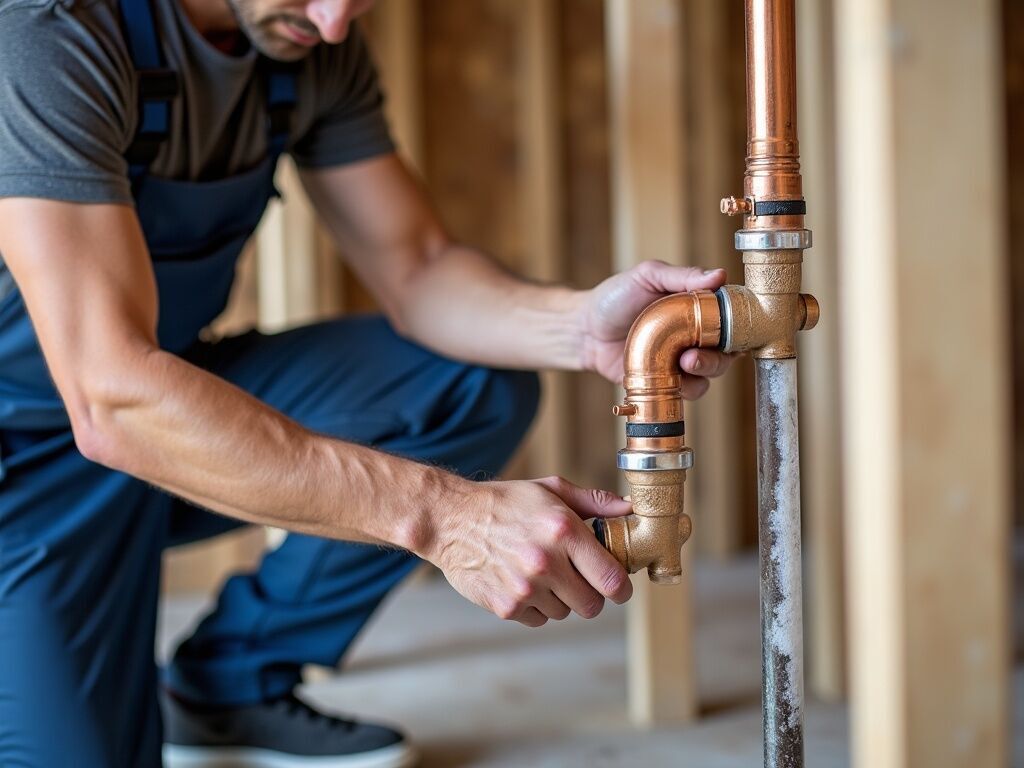 Installing air conditioning ducts” loading=”lazy” style=”max-width:100%;height:auto;border-radius:12px”>
Tools and materials used in foundation
It requires an operation Installing air conditioning ducts A range of specialized materials ensure the longevity of the system. Choosing the original copper types and the appropriate insulation thickness is a necessary investment to reduce regular maintenance costs.
Maintaining long-term HVAC performance requires action Air conditioning maintenance Periodicity ensures that the paths are free of any sharp bends or obstacles that may impede the flow of the refrigerant. Adhering to a regular inspection schedule for pipes and connections contributes to avoiding Freon gas leaks and significantly extends the actual operational life of the device.
comes importance Air conditioning maintenance Periodically to ensure the smooth flow of refrigerant into the pipes, which prevents sudden blockages that may exhaust the compressor and impair overall performance. Adhering to a careful inspection schedule extends the life of the system and maintains optimal cooling efficiency within different spaces.
Therefore, thoughtful planning of routes facilitates operations Air conditioning maintenance Later, it ensures easy access to connections and valves when any technical malfunctions occur. Keeping these critical points in visible and repairable locations reduces material costs and prevents the need for wall break-ups or complex structural modifications.
In addition, operations are imposed Air conditioning maintenance It is necessary to leave sufficient spaces around the units to ensure easy access and periodic checks to be carried out without obstacles. The intelligent engineering design of the tracks not only improves operational performance, but also extends the life of the system and reduces the costs of frequent breakdowns.
Count Carrier air conditioners It is one of the most sensitive devices to the accuracy of these extensions, as its high performance depends on the smooth movement of the refrigerant gas within the copper pipes without sharp bends. Therefore, adhering to straight geometric paths ensures that the device's compressor is protected from additional pressures, which enhances the life of the device and maintains its usual operating efficiency.
In this context it stands out Sharp air conditioners As a model that takes into account precision performance, its advanced technologies require avoiding sharp bends in the paths to ensure the refrigerant gas flows completely smoothly. Adhering to straight, ergonomically designed paths ensures that the compressor's life is maintained and gives you optimal cooling efficiency.
The process of moving the air conditioner from one place to another requires high technical precision to ensure the safety of the mechanical parts and avoid refrigerant gas leakage. So, follow Technical steps followed The installation process in the new location ensures continued cooling efficiency and significantly extends the life of the device.
The process of dismantling and transporting air conditioning devices requires high precision to ensure that the refrigerant gas does not leak or damage sensitive mechanical components, as it ensures that professional steps are followed to maintain Quality of operational performance Continuity of cooling efficiency after reconstitution. Dismantling the connections and carefully discharging the Freon is the cornerstone of avoiding future malfunctions and ensuring the safety of the air compressor.
Count Carrier air conditioners An ideal model requires careful consideration of these paths to ensure the flow of refrigerant without obstructions, as straight and direct paths contribute to enhancing the technical performance of the device and reducing pressure on the compressor. Commitment to thoughtful engineering paths gives Carrier air conditioners a longer lifespan and cooling efficiency that exceeds expectations in various climatic conditions.
In this context, it stands out Sharp air conditioners As a role model in performance efficiency, as it requires high engineering precision when specifying expansion paths to ensure the refrigerant gas flows completely smoothly. Adherence to technical standards during installation ensures optimal exploitation of the operational capabilities of Sharp air conditioners, and significantly extends the life of the device.
It is more reliable Sharp air conditioners It is a strategic choice at this stage, due to its engineering precision that requires high compatibility with the expansion paths to ensure the flow of the refrigerant with optimal efficiency. Adherence to precise technical standards when installing Sharp air conditioners guarantees the user stable performance and tangible savings in energy consumption in the long term.
For pipes to reduce pressure loss, it is necessary to avoid sharp bends that may impede the movement of refrigerant gas and cause continuous technical malfunctions. So, the Dismantling and installing air conditioners It requires extreme precision in routing to ensure optimal flow, which extends the life of the device and maintains stable performance.
Count Carrier air conditioners A model of technical development that requires extreme precision in the extension paths, to ensure the flow of refrigerant gas without obstacles that increase the compressor load. Adhering to straight paths and avoiding sharp curves when installing Carrier air conditioners ensures the sustainability of the device’s high performance and maximum energy efficiency.
For copper pipes to reduce pressure loss and maintain the flow of refrigerant completely smoothly, while avoiding sharp bends that may lead to suffocation in the path. Careful planning of engineering paths also ensures ease of operations Dismantling and installing air conditioners Later without the need to break the walls or damage the internal installations.
require Air conditioning maintenance Houses periodically inspect the extension paths to ensure that there are no sharp bends that impede the flow of the refrigerant. Maintaining the thermal insulation integrity of these pipes reduces energy loss and significantly extends the operational life of the compressor.
- Copper pipes with a thickness proportional to the air conditioning capacity (ton scale).
- Thermal foam insulation, resistant to fire and high humidity.
- Electrical wires conform to approved technical specifications.
- Plastic drainage pipes of sufficient diameter to ensure water flow.
- Thermal adhesive tape to attach and secure the insulation.
| item | Required specifications |
|---|---|
| Copper type | Pure copper with a diameter proportional to the capacity of the device |
| Insulation | Heat resistant thick rubber insulation |
| Conjugation | PVC pipes with a slope of at least 1% |
| electricity | Insulated copper cables according to loads |
Steps for establishing field work
The process involves sequential steps that begin with site identification and end with final tests. Adherence to this arrangement ensures that there is no interference between air conditioning and plumbing or electrical work on site.
Requires operations Air conditioning maintenance Thorough periodic checks are carried out to ensure the safety of these paths from any kinks or leaks that may hinder the movement of refrigerant gas. Maintaining the quality of the initial installation contributes fundamentally to prolonging the life of the device and reducing the frequency of the need for complex technical interventions.
Determine unit locations and plan routes
You must coordinate with the interior design engineer to determine the locations of the units so that they do not conflict with the decor. The tracks are drawn on the walls before breaking them down, making sure that there is enough space to maintain the unit later.
Drainage installation and pipe insulation
Installing drainage pipes with a precise slope prevents the backflow of water into the room. After that, the copper pipes are extended and completely covered with insulation, taking care that there are no exposed parts that may be exposed to rust or loss of coolness.
Common mistakes in incorporation and how to avoid them
Technical errors at the foundation stage lead to problems that are difficult to solve without ruining the finishing work. The most common of these mistakes is not taking into account the slope of the drain or using poor-quality copper pipes that cannot withstand high Freon pressure.
Risks of poor insulation of Freon pipes
Negligence in copper insulation inevitably leads to water accumulating and mold forming behind the walls. Poor insulation also reduces the air conditioner's ability to cool, forcing the compressor to run longer and consume more energy.
The importance of checking for leaks before closing
Before closing the walls, nitrogen pressure must be applied to the pipes to ensure that there are no leaks in the welds. This preventive measure saves a lot of time and effort, and prevents damage to paint and decoration works if a leak is discovered later.
Frequently asked questions
What is the right time to start installing air conditioning ducts?
Foundation begins immediately after the completion of the construction work of the structural structure and immediately before the start of plastering and painting work, to ensure the integration of pipes into the walls.
Do air conditioning ducts differ depending on the type of device?
Yes, the diameters of copper pipes vary depending on the air conditioning capacity (number of horsepower) and the type of gas used in the device, so you must review the technical catalog before purchasing.
How can I be sure of the quality of copper used in the foundation?
You must ensure that the copper bears the quality mark and is flexible enough to bend without cracking. It is also preferable to rely on well-known brands in the market.
Can the air conditioning drain be placed with the plumbing drain?
It is always recommended to separate the air conditioning drain from the plumbing drain to avoid unpleasant odors refluxing into the room through the air conditioning vent.
What are the risks of neglecting the slope of drain pipes?
Neglecting the slope leads to water collecting inside the pipes, causing their blockage and subsequent water leakage from the indoor unit into the room and damage to the furniture.
Final evaluation
| Standard | Rating |
|---|---|
| The importance of planning | 5/5 |
| Material quality | 4.5/5 |
| Precision in installation | 5/5 |
| Value for price | 4/5 |
Overall rating: 4.6/5
Investing is a process Installing air conditioning ducts Properly installed will save you a lot of maintenance costs and structural problems in the future. Always make sure to contract with specialized technicians to ensure that every step is carried out in accordance with the approved technical standards to ensure maximum efficiency of your device.
















Community dialogue
0 comments