
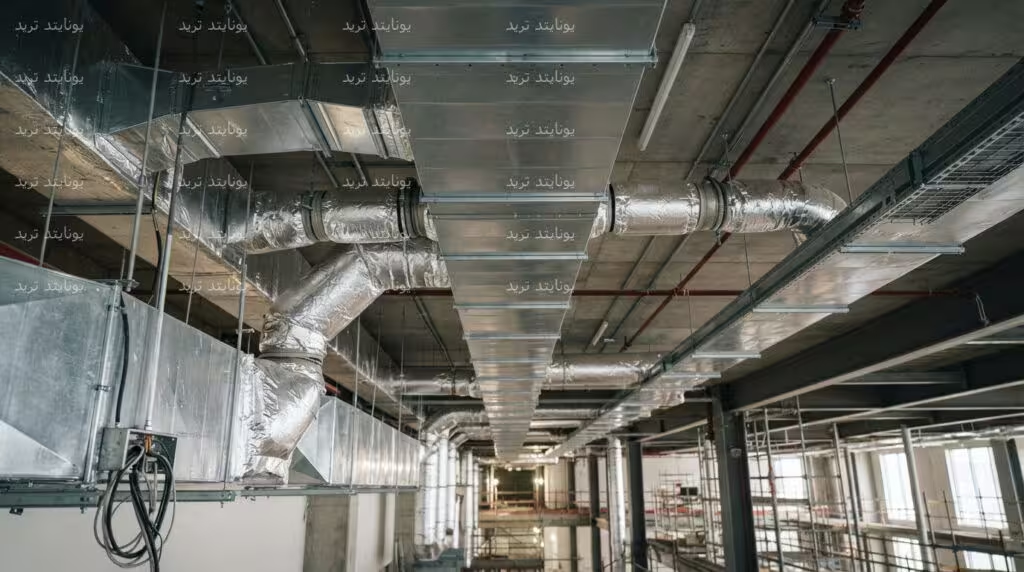
It is a process Air conditioning duct extension Copper is the mainstay to ensure efficient performance of the cooling system in any residential or commercial space. Careful establishment of these paths before the finishing stage preserves the aesthetic appearance of the place and protects the pipes from external damage. Compliance with technical standards, such as good thermal insulation and the use of appropriate pipe diameters, directly contributes to reducing electricity consumption and extending the operational life of the air conditioner. This article aims to clarify the steps and principles that must be followed to obtain an ideal installation that will last for years without technical problems.
Why is early installation of air conditioning ducts considered an engineering necessity?
It is always advisable to carry out operations Air conditioning duct extension In the initial foundation phase of the building and before starting any finishing work on the walls or ceilings. This procedure ensures that all pipes are hidden inside the walls in an organized geometric manner, preventing distortion of the general appearance of the rooms due to external extensions.
Moreover, early installation facilitates the coordination of copper piping and the drainage and electrical work associated with the air conditioning device. This layout reduces the possibility of structural conflicts occurring in the future, and protects the pipes from mechanical stresses that they may be exposed to if they remain visible or exposed to shocks. Therefore, investing in route planning from the beginning saves time and effort and ensures continuity of cooling.
Criteria for choosing the diameters of copper pipes according to the capacity of the air conditioner
The efficiency of refrigerant flow depends directly on matching the diameters of the copper pipes to the cooling capacity of the air conditioner, which is often measured in horsepower or BTU. Using inappropriate diameters increases the load on the compressor, resulting in unnecessary energy consumption and possibly damage to the device over time.
The following table shows the standard correspondence between air conditioner capacity and copper pipe diameters:
| Air conditioner capacity (hp) | Intake pipe diameter (inch) | Exhaust pipe diameter (inch) |
|---|---|---|
| 1.5 hp | 3/8 | 1/4 |
| 2.25 hp | 1/2 | 1/4 |
| 3 hp | 5/8 | 1/4 |
| 5 hp | 3/4 | 1/2 |
It should be noted that these diameters are the standard sizes adopted in most common residential air conditioners. You should always check the specifications of the device manufacturer before starting operations Air conditioning duct extension To ensure full compliance with pressure and Freon flow requirements.
The importance of thermal insulation for copper pipes
Good thermal insulation of copper pipes is an essential step to prevent the occurrence of condensation, known as “sweating, ” which causes water leakage into walls and damage to paints and ceilings. Insulation acts as an effective barrier that maintains the temperature of the refrigerant inside the pipes, preventing heat exchange with the outside environment.
In addition to protecting the walls, insulation contributes to reducing the operational load on the compressor, as it prevents loss of cold during the gas transition from the outdoor unit to the indoor unit. Using high-quality insulation materials, such as rubber foam, ensures high efficiency and prevents fungal growth or moisture accumulation around pipes in closed spaces.
After completing the preparation and testing of the copper tracks, there comes a step Air conditioning installation Accurately and in accordance with approved standards to ensure the stability and safety of the devices. This requires professionally installing the indoor and outdoor units and tightening the cooling connections to ensure highly efficient airflow and economical energy consumption.
Extension steps and checking the integrity of connections
Go through a process Air conditioning duct extension Through precise stages that begin with planning and end with strict quality testing. Pressure testing with nitrogen is an indispensable step; The pressure inside the pipes is raised to monitor any decrease that may indicate a leak in the welding points or connections before closing the walls permanently.
require Incorporation process Choose precise paths away from electrical intersections, while ensuring that the refrigerant gas flows completely smoothly without any sharp bends that may hinder performance. The use of high-quality insulation materials is also an essential step to prevent moisture condensation, which ensures a long lifespan for the air conditioning system and protects the walls from possible leaks.
The success of this elaborate technical establishment is not complete without periodic follow-up Regular air conditioning maintenance It ensures the smooth flow of Freon and prevents any sudden blockages or leaks. Early detection of compressor efficiency and filter cleanliness protects the system from serious malfunctions and extends the lifespan of the entire cooling network.
It requires an operation Installation of copper pipes Extreme precision in choosing the appropriate diameters and high craftsmanship in welding operations, to ensure preventing any leakage of the refrigerant and maintaining system pressure. Integrated thermal insulation of the pipes is also an essential and indispensable step, as it acts as a protective shield that prevents temperature loss and ensures the highest possible cooling efficiency.
It requires an operation Installing air conditioning ducts High precision in selecting expansion paths to ensure smooth flow of refrigerant, while ensuring the integrity of the welds and preventing any leakage that may affect the system’s performance in the future. This advance planning helps avoid breakage or costly structural modifications after the decoration and final finishing works are completed.
The success of this establishment is not complete without developing a periodic plan that includes: Air conditioning maintenance With all its mechanical and electrical parts to ensure its continued operation with the same efficiency. Regularly checking refrigerant levels and cleaning filters and condensers contributes to avoiding sudden malfunctions and extending the life of the entire system.
The efficiency of the system does not depend only on the quality of establishment, but also extends to periodic follow-up through procedures Regular air conditioning maintenance Ensures fresh air flow and stable Freon gas pressure. This continuous inspection helps detect any clogged filters or premature leaks in pipes, which preserves the life of the compressor and significantly reduces energy consumption.
It requires an operation Air conditioning installation Professionalism in choosing the optimal location for indoor and outdoor units to ensure ideal air distribution and smooth flow for maintenance operations. Specialized technicians must also take into account the balance of pressures within the cooling circuits and install the units with engineering precision that prevents annoying vibrations during operation, which significantly extends the life of the device.
The success of this system requires following deliberate steps that begin with one stage Installing air conditioner piping Inside the walls and ceilings with high engineering precision, taking into account the correct inclinations and direct paths. This prior procedure ensures that any bottlenecks in refrigerant flow are avoided and facilitates future maintenance without damaging the building's structural structure.
It requires a process Air conditioning installation Professionalism carefully chooses unit locations to ensure ideal air distribution and avoid annoying direct drafts. During the installation phase, specialized technicians also ensure tight electrical and mechanical connections, which enhances the life of the device and prevents future refrigerant leaks.
Frequently asked questions
❓ What are the risks resulting from neglecting to insulate air conditioning pipes?
Neglecting insulation directly leads to moisture condensation on the surface of the pipes, causing wet spots on walls or ceilings and paint damage. This also reduces cooling efficiency and forces the compressor to run for longer periods, which significantly raises the electricity bill.
❓ Can air conditioning ducts be extended over very long distances?
Yes, it is possible, but it must be done within the engineering standards specified by the device manufacturer, as long distances affect the compressor's capacity. Extension over large distances may require additional charging of Freon gas to compensate for the loss in pressure resulting from the length of the path.
❓ How do I ensure the quality of welding copper pipes?
The process of ensuring the quality of the weld is done through a nitrogen pressure test, where the gas is pumped under high pressure and the meters are monitored for a specific period of time. If the pressure remains constant, this confirms that all connections are in place Air conditioning duct extension Completely tight and free of any leaks.
❓ When should old air conditioning pipes be replaced?
Pipes should be replaced if they show signs of corrosion, or if recurring refrigerant leaks are detected that cannot be repaired by welding. It is also preferable to replace them when changing the air conditioner to another with a larger capacity that may not be compatible with the diameters of the old pipes.
❓ Does the air conditioning duct extension path affect the device’s performance?
Yes, it is preferable for the path to be as straight as possible while minimizing sharp bends, because excessive bends impede the smooth flow of Freon. The competent technician must take care when... Air conditioning duct extension The bending angles should be wide and smooth to avoid choking the pipes.
In conclusion, paying attention to the smallest details of construction represents a long-term guarantee of the efficiency of your cooling system. We always recommend cooperating with specialized technicians who follow the aforementioned engineering standards to avoid costly technical malfunctions in the future.
















TQTAG76 Community dialogue
0 comments