
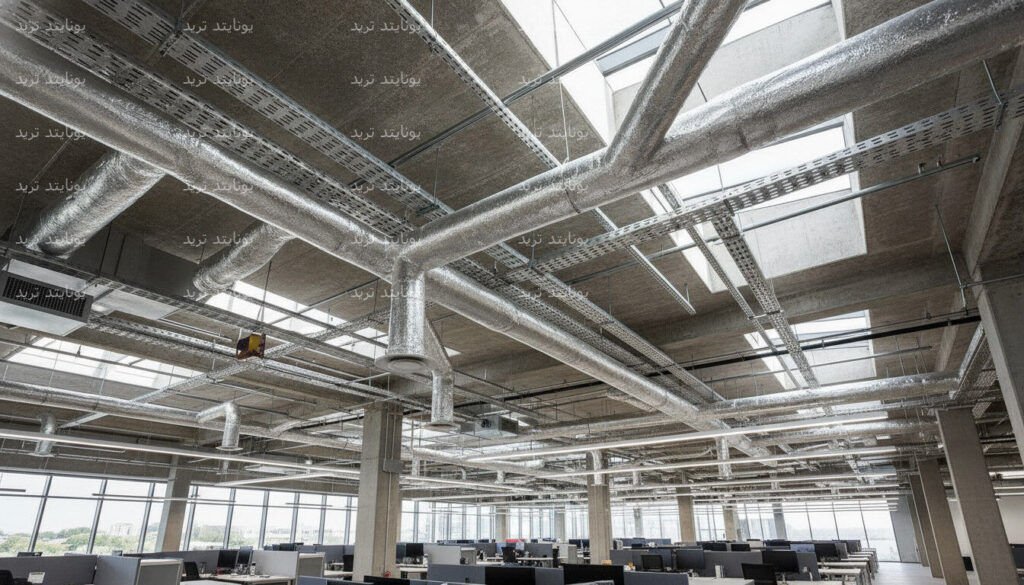
represents Air conditioning duct extension The basic foundation for ensuring that the cooling system operates with high operational efficiency for many years without experiencing sudden mechanical failures; Therefore, this procedure requires following precise engineering requirements that protect the compressor from damage and prevent refrigerant gas leakage. This article provides a technical examination of all the requirements for proper extension, outlining field best practices to protect your air conditioning investment and reduce electricity consumption.
What is air conditioning duct extension and what is its importance for the cooling system?
Air conditioning duct extension: It is the process of connecting the internal unit to the external unit through an integrated network of insulated copper tubes to transfer the refrigerant compound between parts of the system safely and completely efficiently. In addition, this process ensures that gas pressure is maintained and the lubricating oil flows into the compressor smoothly, preventing internal friction and increasing the life of the air conditioner.
Common errors during laying of this network, e.g Sharp bends Or poor thermal insulation, leading to suffocation of the gas path and a significant decrease in cooling efficiency. Therefore, the quality of cooling is closely linked to the integrity of the pipes and the accuracy of their geometric diameters approved by the factory.
Technical criteria for choosing suitable copper pipes
The efficiency of the cooling cycle depends entirely on the quality of the copper ore used in the delivery network, so it is always recommended to choose... 99.9% pure copper Free of impurities and conforming to international specifications. Furthermore, the inner walls of the pipe must withstand high refrigerant pressures, especially with the use of modern refrigerants such as R-410A and R-32 that operate at pressures exceeding 400 psi.
The diagonal sizes should also be chosen very carefully according to the device manufacturer's manual, as using a smaller size will lead to... Compressor stressWhile using a diameter larger than required causes a decrease in the flow speed of the cooling compound and its inability to return the cooling oil to the engine.
The previous graph shows the large variation in pressure-bearing capacity between copper ores available on the market, which highlights the necessity of avoiding inferior, low-thickness products to protect the cooling network from explosion and sudden leakage.
Stages of implementing the pipeline route professionally and avoiding bottlenecks
A successful route requires advance planning before starting drilling or installation operations inside walls or across suspended ceilings, with the aim of reducing the number of elbows and bends as much as possible. For example, each additional 90-degree bend generates hydraulic resistance to the gas flow equivalent to adding approximately 0.5 to 1 meter of straight length of pipe.
In return, use helps Mechanical pipe benders (Pipe Benders) instead of random manual bending prevent any internal beading in the copper wall, which keeps the inner diameter constant and ensures the stability of the refrigerant flow rate without disturbance.
The previous diagram summarizes the mandatory engineering sequence for installing the connection network, where the vacuum test is highlighted as a crucial condition before releasing the Freon charge to fully ensure that the path is free of any microscopic gaps that may cause gas leakage later.
Thermal insulation and protection of the pipe network from condensation
Thermal insulation represents the basic foundation for preventing heat losses along the suction line and the liquid line, and protects the building from problems Condensation water leakage Inside gypsum walls and ceilings. Therefore, insulators made of high-density foam rubber such as elastomer insulator (Armaflex) with a thickness of at least 9 to 13 mm should be used.
It should be noted that insulating each copper tube separately is a non-negotiable engineering rule, as bundling the intake and exhaust lines within a single insulating jacket results in unwanted heat exchange between the two lines, which destroys the efficiency of the thermodynamic cooling cycle.
- Suction line insulation: It prevents condensation of atmospheric moisture on the cold pipe and protects walls and paints from damage and rot.
- Liquid line insulation: It maintains the physical condition of the refrigerant compound and prevents it from gaining external heat that affects its evaporation ability.
- Sun-resistant outer packaging: The insulation in exposed areas is wrapped with aluminum tape to protect it from disintegration due to ultraviolet rays.
Principles of mechanical bonding, pressure and vacuum testing
Pipe connections are made either by silver welding or by using mechanical flap joints, both of which require extreme precision to prevent gas leakage in the long term. For example, requires Silver welding Pass dry nitrogen gas with light pressure into the tube to prevent the formation of a black oxidation layer (carburization) inside the copper duct, which may clog the expansion valve or gas filter.
These technical equipments are directly integrated with the step Air conditioning installation The air is in accordance with approved factory standards, as the tight installation of the internal and external units ensures ideal air flow without annoying vibrations. Balancing Freon pressures and proper electrical connection also contribute to increasing the efficiency of energy consumption and extending the life of the device.
This system begins with a stage Establishing copper pipes Inside walls and ceilings according to carefully studied paths to avoid sharp bends that impede the flow of the cooling medium. This preparation requires insulating the intake and exhaust lines with high-quality thermal materials and installing them with strong supports that protect them from mechanical stresses during subsequent finishing works.
These extensions are integrated with a stage Air conditioning installation Directly to the air, as it requires a precise balance between installing the internal and external units and adjusting water drainage levels. Proper implementation of this step ensures avoiding mechanical vibrations and ensuring airflow with the highest possible cooling capacity within the targeted space.
require Air conditioning maintenance Homes and establishments must regularly check for corrosion or blockages in the copper paths, to ensure that the refrigerant gas flows at ideal pressure and to prevent moisture accumulation that may lead to compressor corrosion. Adhering to a rigorous inspection schedule ensures the integrity of vital parts and extends the life of the entire system.
Proper installation of air conditioning ducts goes beyond just random laying Origins of architectural equipment For a longer operational life that protects construction investments from future damage. These careful engineering practices ensure that refrigerant flows smoothly between units, reducing thermal loads and preventing undue mechanical stresses on the compressor.
require Air conditioning maintenance Periodically check the integrity of copper pipes and ensure the quality of the surrounding thermal insulation to prevent condensation and loss of Freon gas. Commitment to a regular scheduleAir conditioning maintenance Maintains optimal compressor performance and extends the life of the device by avoiding common malfunctions resulting from system leaks.
This system begins with a stage Installation of copper air conditioning pipes Very carefully inside the walls and ceilings before finishing work, taking into account choosing the appropriate diameters and protecting them with thermal insulation that prevents condensation. This pre-conditioning ensures a safe path for refrigerant flow and reduces the possibility of future sharp bends or leaks.
The periodic maintenance process for air conditioners depends mainly on checking the integrity of the pipes and ensuring the quality of the surrounding thermal insulation, as this contributes to enhancing the efficiency of heat exchange and preventing the accumulation of moisture that may lead to corrosion of copper lines. Careful attention to programs Air conditioning maintenance It ensures that ideal Freon pressure is maintained and significantly extends the life of the device.
Process dependent Installing air conditioning ducts Essentially, it depends on the accuracy of the paths specified inside the walls and ceilings, to ensure the smooth flow of refrigerant gas and to avoid any sharp bends that may hinder the movement of the compressor. This stage also includes selecting copper materials that conform to standard specifications, and carefully insulating them thermally to prevent condensation and protect the system from corrosion.
Moreover, no installation step is complete without a procedure Air intake and discharge (Vacuum) using a specialized vacuum pump to achieve a pressure of less than 500 microns; Because air and moisture molecules remaining inside the circuit interact with the cooling oil and form acids that lead to the irreparable combustion of the compressor electrical coils.
These equipments are integrated with a stage Air conditioning installation Air is provided according to precise standards, starting with tightly installing the internal and external units and adjusting the tilt scales to drain water smoothly. Adherence to these steps ensures balanced airflow that increases cooling efficiency and reduces energy consumption.
| Technical standard | Correct engineering application | Common mistake and its effect |
|---|---|---|
| Pipe insulation method | Each copper line is completely insulated with a separate jacket | Merge the two lines together; It causes heat exchange and poor cooling |
| Copper bending method | Use a dedicated mechanical bending tool | Manual bending; It causes the tube to jam and gas to choke |
| Heat welding | Silver welding with inert nitrogen infusion | Direct air welding; It creates oxidation that burns the compressor |
| Vacuum air and moisture | Deep air extraction up to 500 microns with pump | Expel air with Freon; Leaves moisture that forms harmful acids |
| Pipe installation | Mounting brackets with rubber pads every one and a half metres | Leave the tubes free; It causes permanent vibrations and cracks |
The previous table shows the fundamental differences between professional method and wrong practices, which confirms that investing in field measurement and inspection tools represents the real guarantee for the stability of air conditioning performance in the long term.
Common challenges when extending air conditioning ducts and how to avoid them
Installation operations face multiple field challenges, most notably exceeding the permissible length of the piping network or exceeding the vertical height difference between the two units, which requires precise engineering solutions to protect the engine. As a result, technicians are obligated to add Oil traps (Oil Traps) every 5 to 7 meters in the ascending vertical paths to ensure the return of the lubricating oil to the compressor and prevent it from drying out completely.
In addition, neglecting to account for the additional cooling charge for long routes results in a noticeable drop in performance; Therefore, the additional amount of gas is carefully weighed and calculated according to the manufacturer’s recommendations, which usually range between 15 to 30 grams for every additional meter exceeding the standard length specified for the device.
- Study the structural plan: Avoid iron tracks and concrete columns to prevent cracking the structural structure or creating sharp angles in the pipes.
- Install oil traps: Install a U-shaped trap at the indoor unit's upward outlet to ensure smooth oil collection and withdrawal.
- Nitrogen pressure test: Inject the network with dry nitrogen at a pressure of 450 PSI for 24 hours to verify that there are no microscopic leaks.
- Freon shipment weight: Use an accurate digital scale to add make-up gas based on the actual extension length.
Frequently asked questions
❓ What is the maximum length allowed when extending air conditioning ducts?
The maximum permissible duct length varies depending on the capacity of the air conditioner and the manufacturer's specifications, but is generally between 15 and 25 meters in split home air conditioners. On the other hand, crossing this distance requires installing advanced VRF systems or adding Freon charges that are carefully studied with engineering precision.
❓ Can old air conditioning pipes be used when replacing the device?
They can be used provided they are completely intact, match the recommended diameters for the new device, and are free of any dents or chemical corrosion. In addition, old pipes must be chemically cleaned with a special solvent and nitrogen pressure to flush out accumulated oils that may not be compatible with the new type of refrigerant.
❓ How does the diameter of the copper pipe affect the cooling efficiency?
The diameter of the pipe determines the speed and rate of flow of the refrigerant within the circuit; Therefore, using a smaller diameter causes suffocation of the gas flow and high engine temperature, while a larger diameter causes a decrease in the gas velocity and its inability to carry the lubricating oil back to the compressor, which leads to its rapid damage.
❓ Why does the external air conditioning pipe sweat and drip water?
Sweating of the external air conditioning pipe is due to the humidity of the surrounding air coming into contact with the surface of the cold pipe that is not well insulated. In other words, water falling externally indicates damage or poor quality of the thermal insulation, which requires immediate renewal of the insulation to prevent wasting cooling energy.
❓ When should an oil trap be installed in the air conditioning piping network?
The oil trap must be installed when the outdoor unit is located at a higher level than the indoor unit with a vertical difference exceeding 3 to 5 meters. This trap helps collect compressor oil drops and push them up with the gas stream and prevent oil from getting trapped inside the home evaporator.
Represents mastery Air conditioning duct extension A real guarantee of sustainable cooling and protection of the air compressor from costly catastrophic failures; Therefore, always be sure to adhere to precise technical principles and seek the help of qualified engineering teams to implement a safe cooling network that will last for many years.
















Community dialogue
0 comments